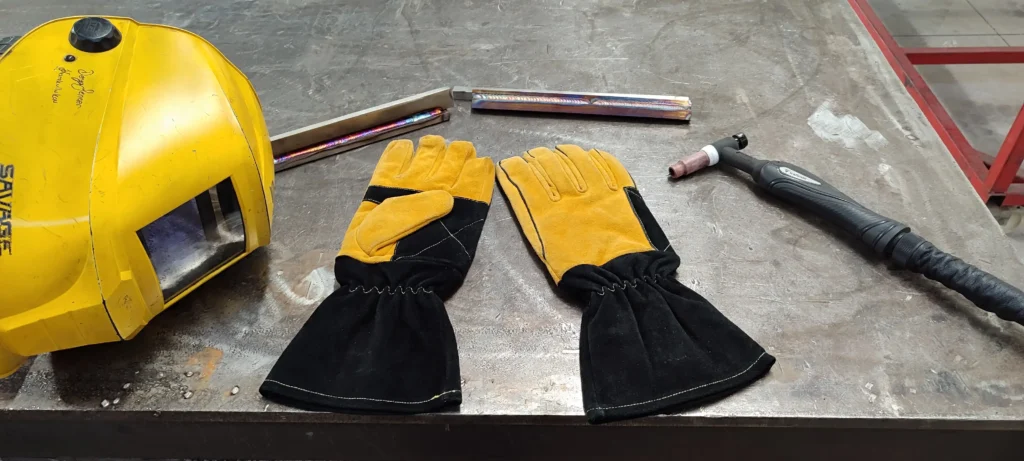
How to Clean and Maintain Leather Welding Gloves Safely
Every welding session leaves something behind on your gloves — weld spatter, dried slag, sweat, and fine metal dust that work their way into the leather. Left alone, this buildup stiffens the hide, weakens stitching, and shortens the glove’s protective life long before it actually wears out. This guide covers how to clean, dry, condition, and store leather welding gloves properly, so you protect both your hands and your investment in certified PPE.
In short: clean leather welding gloves by brushing off debris, spot-cleaning gently with a damp cloth or pH-neutral cleaner, air-drying away from heat, and storing them somewhere dry – never machine-wash or dry them near direct heat.
For a broader look at glove types, materials, and safety standards, see our complete guide to welding gloves.
Quick Navigation
Use the links below to clean, dry, condition, and store your welding gloves properly — and to know when it's time to replace them instead.
What Do You Need to Clean Welding Gloves?
You don’t need specialty products to clean welding gloves properly — just a few basic supplies used the right way. A soft-bristle brush and a slightly damp, lint-free cloth handle most routine cleaning, removing dust, dry slag, and surface grime without stressing the leather. For heavier buildup, a pH-neutral leather cleaner or saddle soap lifts embedded dirt without stripping the hide’s natural oils. Keep a small amount of leather conditioner on hand for occasional conditioning, and always clean and dry gloves in a well-ventilated area away from direct heat.
Welding Glove Cleaning Supplies Checklist
| Supply | Purpose | Use With Caution |
|---|---|---|
| Soft-bristle brush | Removes dry dust, slag, and debris from the leather surface | Avoid stiff wire brushes — they can scratch or tear leather |
| Slightly damp, lint-free cloth | Wipes away surface dirt and light grime | Never soak the cloth — excess water can stain or warp leather |
| pH-neutral leather cleaner or saddle soap | Lifts embedded dirt and light stains without stripping natural oils | Test on a small hidden area first; avoid harsh detergents or bleach |
| Leather conditioner | Restores flexibility and helps prevent cracking or stiffness | Apply sparingly — heavy oil-based products can affect flame resistance near sparks |
| Cool water (small amount) | Used to lightly dampen a cloth, not to soak gloves | Never fully submerge leather welding gloves |
| Well-ventilated, dry space | Where gloves are cleaned and left to air dry | Keep away from heaters, radiators, and direct sunlight |
cleaning leather welding gloves requires a soft-bristle brush and a damp lint-free cloth for routine dirt, a pH-neutral leather cleaner or saddle soap for embedded grime, and a leather conditioner used sparingly to prevent cracking. Welding gloves should never be soaked, machine-washed, or dried near direct heat.
How to Clean Welding Gloves Safely (Step-by-Step)
Leather is a living material – aggressive scrubbing, harsh chemicals, and excess water damage it faster than the residue you’re trying to remove. The gentlest method that gets the job done is always the right one.
The type of grime you’re dealing with also depends on what you weld. MIG welding gloves tend to collect fine spatter and soot from wire-fed welding, TIG welding gloves pick up more sweat and handling residue from precision work, and Stick welding gloves deal with the heaviest slag and flux buildup of the three. The cleaning approach below works for all of them.
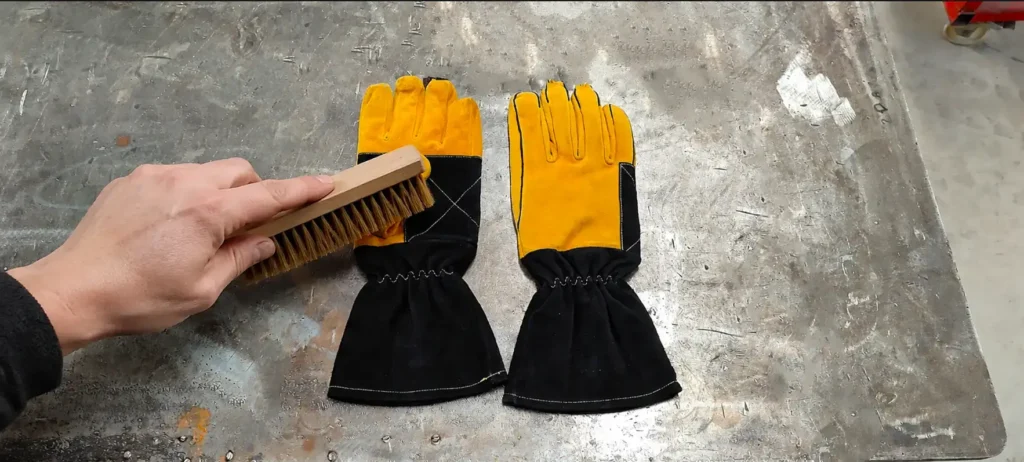
- Brush off loose debris first. Use a soft-bristle brush to remove dry dust, slag, and loose spatter before introducing any moisture, so you’re not grinding grit into the leather.
- Clean with compressed air, if available. If you’re in a factory or workshop with access to an air compressor, use an air gun to blow out the glove’s interior and seams. Brushing only clears the surface — fine dust, metal filings, and small spark residue settle deep inside the leather fibers, and compressed air is the most effective way to force that embedded debris back out.
- Wipe down with a damp cloth. A slightly damp, lint-free cloth lifts light surface dirt and sweat residue without oversaturating the leather.
- Test any cleaner on a small area first. Before using a pH-neutral leather cleaner or saddle soap on the whole glove, apply it to a small, hidden spot to check for discoloration or stiffening.
- Work the cleaner in gently, in circular motions. Focus on the palm and finger areas where grime builds up fastest, using light pressure rather than scrubbing.
- Wipe away residue with a clean, damp cloth. Leftover cleaner or soap left to dry into the leather can cause stiffness later.
- Avoid fully submerging the glove. Unless the manufacturer specifically states the glove is designed to be soaked, keep water contact limited to a damp cloth.
- Move on to drying. Once the glove is clean, how you dry it matters just as much as how you cleaned it — covered in the next section below.
Expert Tip From 12+ Years of Welding Experience: In a busy shop, it’s tempting to grab whatever degreaser or automotive cleaner is already sitting on the bench. I’d avoid that. Most shop-grade degreasers are too harsh for glove leather — they strip out natural oils faster than the dirt itself would ever damage the hide, leaving gloves drier and more prone to cracking within weeks. Stick to a proper pH-neutral leather cleaner or saddle soap, even if it means keeping a separate bottle just for gloves.
Can You Wash Leather Welding Gloves in a Washing Machine?
No. Machine washing and drying leather welding gloves causes shrinkage, hardening, and warping that hand-cleaning never will. Repeated soaking and agitation strip the leather’s natural oils and distort its shape, permanently changing both fit and flexibility.
Always hand-clean welding gloves using the steps above, and check the manufacturer’s specific care instructions first – some glove constructions are more moisture-sensitive than others.
How to Remove Tough Stains, Grease, and Spatter from Welding Gloves
Some residue needs more than a quick wipe-down. Oil, hardened spatter, and baked-on slag each call for a slightly different approach than routine surface cleaning.
- Oil and grease stains: Blot — don’t rub — the area with a clean, dry cloth first to lift excess oil, then follow with a small amount of pH-neutral leather cleaner. Oil left sitting doesn’t just stain; it soaks into the fibers and can make the leather more of a fire risk near sparks and molten metal, so treat grease spots promptly rather than waiting until end of shift.
- Hardened slag or spatter: Let it cool completely, then gently flex the leather to loosen the bond before brushing it away. Never scrape or pick at stuck spatter with a metal tool — it tears the surface fibers.
- Stains that won’t lift: If discoloration remains after cleaning, or the leather underneath feels thin, brittle, or scorched, the issue may be more than cosmetic. Our guide on how long welding gloves last and when to replace them covers how to tell a glove that still needs cleaning from one that’s due for replacement.
How to Condition Leather Welding Gloves Without Compromising Fire Resistance
Leather naturally dries out with repeated heat exposure, and without occasional conditioning, welding gloves gradually stiffen, crack, and lose their flexibility. A light application of leather conditioner replenishes the oils lost to heat and use, keeping the hide supple and less prone to splitting at the fingers and palm. Apply conditioner sparingly with a clean cloth, work it evenly into the leather, and let it fully absorb and dry before the glove is worn again.
This last point matters more for welding gloves than for ordinary leather goods: because these gloves are regularly exposed to sparks and molten metal, oversaturating them with an oil-based conditioner can affect how the leather responds near flame, even on gloves rated to the EN 407 heat and flame standard. Use conditioner minimally, and only once the glove is completely clean, dry, and cool – the same caution that applies to any heat-resistant welding gloves exposed to repeated thermal stress.
Expert Tip From 12+ Years of Welding Experience: Don’t skip straight from brushing to conditioning. Compressed air clears embedded dust and metal filings that a brush alone leaves behind – conditioning over that residue just seals it into the leather instead of removing it. (see the cleaning steps above)
Is It Safe to Use Oil-Based Leather Conditioner on Welding Gloves?
es, but only in small amounts on a glove that is completely clean and dry. Oil-based leather conditioners restore flexibility and help prevent cracking, yet applying too much leaves the leather saturated with flammable oil on PPE that will be exposed to sparks and molten metal, which can affect its fire performance.
Always apply conditioner sparingly and let it fully absorb and dry before the glove is used again near heat or sparks.
EPER POINT:
Manufacturer-recommended products are safer than generic household oils, since they’re formulated for gloves that see repeated heat exposure.
How to Dry Welding Gloves the Right Way
Air dry welding gloves naturally at room temperature in a clean, well-ventilated space, away from any direct heat source. Never place them on a welding table, heater, radiator, or in direct sunlight to speed up drying — high heat causes leather to harden, shrink, and lose flexibility, even if the damage isn’t visible right away.
This applies whether the gloves got damp from routine cleaning or from sweat during a long shift. Drying them slowly, away from direct heat, is what keeps the leather flexible and crack-resistant over time.
How to Store Welding Gloves Between Uses
Store welding gloves in a dry, well-ventilated place, away from direct sunlight, heat sources, oil, grease, and other chemicals. Let gloves cool and dry completely before putting them away, and avoid compressing, folding, or stuffing them into a tight bag or drawer, especially while they’re still warm or slightly damp.
Poor storage is one of the most overlooked causes of premature glove failure — sunlight and heat dry out leather even when gloves aren’t in use, and compressing damp leather can cause it to harden into an uneven shape.
Good storage practices include:
- Keeping gloves in a dry, well-ventilated space
- Storing away from direct sunlight and heat sources
- Keeping gloves away from oil, grease, and other chemicals
- Avoiding compression or folding, especially when gloves are warm or damp
- Allowing gloves to dry fully before putting them away
Improperly stored gloves that shrink or stiffen over time can also start to feel tighter than they used to.
If your gloves no longer fit the way they once did, it’s worth checking our welding glove size guide to confirm you’re still in the right size before assuming it’s just wear.
How Often Should You Clean and Maintain Welding Gloves?
How often you should clean welding gloves depends on how heavily and frequently they’re used. Light or occasional-use gloves should be wiped down weekly and deep-cleaned monthly, while gloves used daily for MIG or Stick welding need wiping after every shift and a deeper clean every two to three weeks. Any visible contamination should be cleaned immediately.
This range exists because MIG and Stick welding produce far more spatter and slag than TIG welding, so heavier daily use naturally calls for more frequent attention. Cleaning on a consistent schedule, rather than waiting until gloves look visibly dirty, does more to protect their flexibility and service life than any single deep-clean.
Welding Glove Cleaning & Maintenance Schedule by Welding Process
| Usage Level | Wipe-Down Frequency | Deep-Clean Frequency | Notes |
|---|---|---|---|
| TIG Welding (Light/Precision Use) | Weekly | Monthly | Lower spatter and slag exposure; sweat and handling residue are the main concern |
| MIG Welding (Moderate to Heavy Use) | After every shift | Every 2–3 weeks | Fine spatter and soot accumulate quickly during wire-fed welding |
| Stick Welding (Heavy Use) | After every shift | Every 2 weeks | Heaviest slag and flux exposure of the three processes |
| Light or Occasional Use (Any Process) | Weekly | Monthly | Applies to part-time, hobbyist, or infrequent welding use |
| Heavy Daily/Industrial Use (Any Process) | After every shift | Every 2–3 weeks | Applies to any process when gloves are worn daily in production |
| Visible Contamination (Any Process) | Immediately | Immediately | Oil, grease, or heavy contamination should never wait for the regular schedule |
TIG welding gloves used for light or precision work should be wiped down weekly and deep-cleaned monthly. MIG welding gloves used moderately to heavily should be wiped after every shift and deep-cleaned every two to three weeks. Stick welding gloves, exposed to the heaviest slag and spatter, follow the same wipe-down schedule with deep-cleaning every two weeks. Any welding glove with visible oil, grease, or heavy contamination should be cleaned immediately, regardless of its regular schedule.
Does Leather Type or Welding Process Change How You Clean Your Gloves?
Yes, to some degree. Thicker split leather, common in MIG and Stick welding gloves, can handle firmer brushing and slightly more pressure during cleaning than the softer, thinner hides used for precision work. Goatskin and deerskin, often chosen for TIG welding gloves because of their flexibility, are more sensitive to scrubbing and should always be cleaned with lighter pressure and a gentler touch. The cleaning steps in this guide apply to all leather types — just adjust pressure to match the hide. For a deeper look at how different leathers perform, see our guides to welding glove materials, cowhide vs goatskin welding gloves, and split leather vs grain leather welding gloves.
If you’re not sure which category your gloves fall into, our guide to types of welding gloves: MIG vs TIG vs Stick breaks down the construction differences between all three.
Common Mistakes That Damage Welding Gloves During Cleaning
Even careful welders can shorten their gloves’ lifespan through cleaning habits that seem harmless. These are the mistakes worth avoiding:
- Machine washing or drying: Agitation and machine heat cause leather to shrink, harden, and warp — always hand-clean and air-dry instead.
- Drying near direct heat: Placing gloves on a heater, radiator, or welding table to speed up drying accelerates cracking and stiffness.
- Oversaturating with conditioner: Too much oil-based conditioner leaves leather over-saturated, which is a real concern for PPE regularly exposed to sparks and flame.
- Using harsh detergents or bleach: Household cleaners and bleach strip natural oils and can weaken stitching and leather fibers over time.
- Ignoring manufacturer instructions: Leather types and glove constructions vary, and skipping the specific care guidance for your gloves increases the risk of damage.
- Storing gloves damp: Putting gloves away before they’re fully dry traps moisture against the leather, encouraging mold, odor, and premature deterioration.
When Cleaning Isn't Enough: Signs You Need New Welding Gloves
Cleaning restores flexibility and removes contamination, but it can’t repair a glove that has already failed structurally. Holes, burn-through spots, and failed stitching all mean the glove’s protection is compromised, and no amount of cleaning will restore it. The same is true for fingertip abrasion and palm abrasion severe enough to expose the inner lining, since these high-contact areas wear through first. OSHA’s PPE maintenance requirements call for protective equipment to be kept in a sanitary and reliable condition, which is exactly why replacement — not cleaning — is the right call at that point. For the full breakdown of wear signs and replacement timing, see our complete inspection and replacement guide.
Need Certified Welding Gloves for Your Team, School, or Facility?
Well-maintained gloves are a better long-term investment when they're built right to begin with. ARASWELD supplies certified welding gloves to industrial buyers, welding schools, fabrication facilities, and automotive and aerospace suppliers, with bulk availability for teams of any size.
Explore our full range of ARASWELD welding gloves, including high-heat MIG gloves, precision TIG gloves, and impact- and abrasion-resistant gloves.
Contact us for product documentation, sizing, and specification enquiries and shipping.
Every ARASWELD welding glove is tested to EN 388 and EN 407 standards for mechanical and heat protection.
Frequently Asked Questions About Cleaning Welding Gloves
Can you wash welding gloves in a washing machine?
No. Machine washing and drying causes leather welding gloves to shrink, harden, and warp. Always hand-clean them using a damp cloth and a pH-neutral leather cleaner or saddle soap, then air dry away from direct heat. Check the manufacturer’s care instructions, since some glove constructions are more moisture-sensitive than others.
How do you get the smell out of welding gloves?
Odor usually comes from trapped sweat and moisture. Air dry gloves fully after every use in a well-ventilated space, wipe down the interior lining when possible, and never store them while still damp. Consistent airing out between shifts prevents the buildup that causes lingering odor in leather welding gloves.
Can you use leather conditioner on welding gloves?
Yes, but only in small amounts on a glove that is completely clean and dry. Leather conditioner helps prevent cracking and stiffness, but oversaturating the leather is a concern for PPE exposed to sparks and molten metal. Apply sparingly and let it fully absorb before the glove is used again.
How often should you clean welding gloves?
It depends on your welding process and usage level. Light or occasional use calls for a weekly wipe-down and a monthly deep clean, while heavy daily MIG or Stick welding needs wiping after every shift and a deeper clean every two to three weeks. See our cleaning schedule table above for exact recommendations by process.
Why do welding gloves get stiff or hard over time?
Welding gloves stiffen mainly from repeated heat exposure, skipped conditioning, and improper drying near direct heat sources. Each of these dries out the leather’s natural oils faster than they’re replaced. Regular gentle cleaning, sparing conditioning, and air drying away from heat all help keep leather flexible for longer.
Is saddle soap safe for welding gloves?
Yes, saddle soap is safe for most leather types used in welding gloves, including cowhide, goatskin, and split leather. Test it on a small, hidden area first to check for discoloration or stiffening, and always follow the manufacturer’s specific care instructions, since glove constructions vary between models.
Can you dry welding gloves with a hairdryer or heater?
No. Drying welding gloves with a hairdryer, heater, or any direct heat source causes the leather to harden, shrink, and lose flexibility. Always air dry gloves naturally at room temperature in a well-ventilated space, away from heaters, radiators, welding tables, and direct sunlight.