EN ISO 21420 Explained: General Requirements for Protective Gloves
EN ISO 21420:2020+A1:2024 specifies general requirements and test methods for protective-glove design, construction, material safety, comfort, sizing, dexterity, marking, and manufacturer information. It does not independently establish protection against specific hazards. Gloves must also be assessed against the relevant product-specific standards, such as EN 388 for mechanical risks, EN 407 for thermal risks, or EN 12477 for welding gloves.
The European Commission published its harmonized-standards decision in the Official Journal on 16 June 2026.

What Is eN ISO 21420?
EN ISO 21420 is a general requirements standard for protective gloves. It establishes common requirements and test methods for glove design, construction, innocuousness, comfort, efficiency, sizing, dexterity, marking, and manufacturer-supplied information.
It can also apply to arm protectors and certain gloves integrated into containment enclosures. It does not independently demonstrate protection against a specific workplace hazard.
Scope and purpose
The ISO 21420:2020 standard for protective-glove general requirements and test methods covers glove design and construction, innocuousness, comfort, efficiency, marking, and information supplied by the manufacturer.
The purpose of EN ISO 21420 is to establish a general framework for protective gloves before their performance against particular hazards is assessed. It addresses how a glove is designed and constructed, whether its materials meet applicable innocuousness requirements, and whether its fit, dexterity, marking, and accompanying information meet the relevant requirements.
In this context, innocuousness refers to requirements intended to help ensure that the glove materials do not adversely affect the wearer’s health under the conditions addressed by the standard. It does not mean that every glove is free from all chemicals or that allergic reactions are impossible.
The standard also addresses practical considerations such as sizing, comfort, and the information users need to identify and use the product correctly. These general requirements matter to industrial gloves because a glove must be suitable for its intended purpose as well as provide the specific protection claimed by its manufacturer.
What it does not establish
EN ISO 21420 does not independently assign performance levels for protection against heat, flame, cuts, abrasion, or other specific hazards. A glove that meets its general requirements should not automatically be described as heat-resistant, cut-resistant, or suitable for welding without the relevant supporting assessment and documentation.
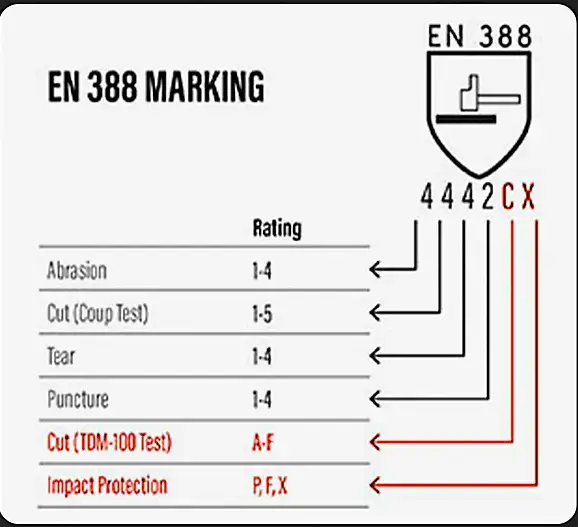
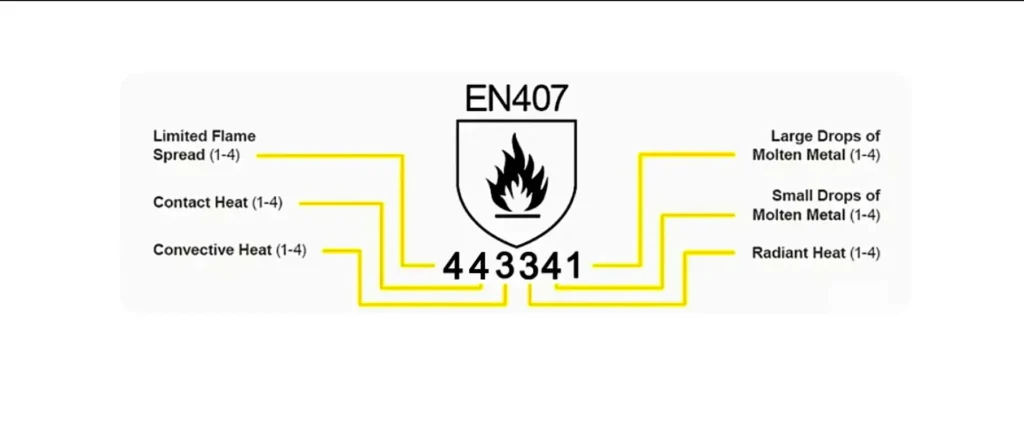
The specific standard depends on the intended use and protection claims. For example, EN 388 addresses mechanical risks, EN 407 addresses thermal risks, and EN 12477 addresses protective gloves for welding and related processes.
When evaluating protective gloves, buyers should therefore check which standards apply to the exact product and whether the supporting technical documents substantiate its stated performance. Referring to a glove as “EN ISO 21420 certified” without explaining the applicable conformity assessment can also be misleading: the standard itself is not a stand-alone hazard-protection certification.
For the specific hazards relevant to industrial gloves, consult the following ARASWELD resources:
-
Mechanical risks: EN 388 safety standard and standard
-
Thermal risks: EN 407 thermal protection standard
-
Welding protection: EN 12477 welding gloves standard
- Comparison: EN 388 vs EN 407
Why EN ISO 21420 Is Critical for Welding Gloves (EN 12477)
EN ISO 21420 matters for welding gloves because it addresses general requirements such as construction, material innocuousness, fit, dexterity, marking, and manufacturer information. EN 12477 addresses protective gloves intended for welding and related processes. EN ISO 21420 does not, by itself, establish that a welding glove provides adequate heat, flame, or molten-metal-spatter protection.
Welding gloves must be appropriate for the work they are intended to protect against. Their general requirements and specific protective performance should be assessed separately: a glove’s material, length, stitching, lining, and fit may affect its suitability, but those features alone do not prove compliance with a particular protection standard.
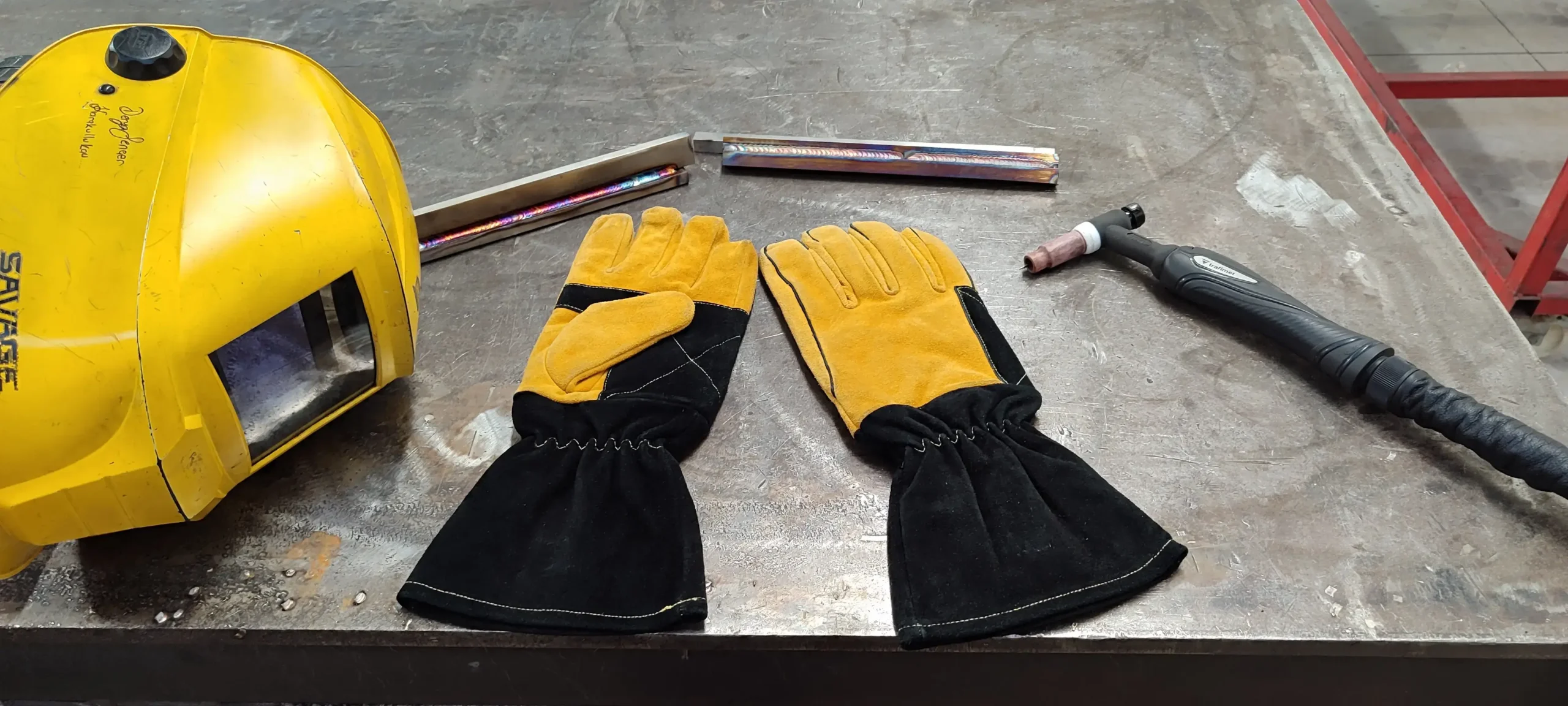
For procurement, the practical approach is to verify the exact model’s technical documentation, including its applicable EN 12477 assessment and relevant hazard-specific test results. Additional standards may be relevant depending on the manufacturer’s intended use and protection claims. Buyers should not infer a glove’s performance solely from its appearance, leather type, or product description.
Update History: From EN 420 to EN ISO 21420:2020+A1:2024
The Legacy Standard: EN 420:2003+A1:2009
EN 420:2003+A1:2009 was the earlier European standard for the general requirements and test methods for protective gloves. It established a common framework for glove design, sizing, innocuousness, dexterity, marking, and information supplied by manufacturers. EN ISO 21420 replaced EN 420 as the successor general-requirements standard, bringing the requirements into an international ISO framework.
The Global Shift to EN ISO 21420:2020
Published in 2020, EN ISO 21420:2020 adopted an ISO-based approach to general protective-glove requirements, aligning the European standard with an internationally published text. The revision addressed glove design and construction, chemical innocuousness, comfort, sizing, dexterity, marking, and manufacturer information.
The 2020 edition also updated the requirements concerning hand sizing and glove length, and added an informative annex listing substances and substance groups known to cause allergies. Its marking provisions introduced manufacturing-date or traceability information and an obsolescence date where applicable. These changes help buyers identify the product, assess material-safety information, and understand its intended service life.
The revised design provisions also address the practical use of reusable, multi-layered gloves. Layers should not become separated during donning or doffing, and the construction should support the intended use of the glove. Dexterity testing and grading are important parts of protective-glove assessment, but it is more precise to describe the 2020 edition as revising the general requirements rather than claiming that dexterity testing itself first appeared in 2020.
The EN ISO 21420:2020/A1:2024 Amendment
The European amendment EN ISO 21420:2020/A1:2024 is based on the international amendment ISO 21420:2020/Amd 1:2022. CEN approved the European amendment on 29 May 2024, and it was published in July 2024. CEN approved the ISO amendment text without modification.
A1:2024 is an amendment to the 2020 standard, not an entirely new edition. It updates specified normative references and technical wording, including references used for chemical innocuousness testing and certain design and warning provisions. The detailed changes are explained in the next section.
June 2026: EU Harmonisation Explained
On 12 June 2026, the European Commission adopted Implementing Decision (EU) 2026/1279, which was published in the Official Journal of the European Union on 16 June 2026. The decision included the amended protective-glove standard in the EU harmonized-standards framework.
A harmonised standard is a European standard whose reference has been published in the Official Journal of the European Union for the relevant EU legislation. Under Regulation (EU) 2016/425, using a cited harmonised standard can provide a presumption of conformity with the essential health and safety requirements covered by that standard. This is a recognised route to demonstrating conformity, not a statement that every legal requirement has been met automatically.
The decision also lists 16 December 2027 as the withdrawal date for the previous EN 420:2003+A1:2009 reference. Buyers should not interpret the date as automatic invalidation of every existing glove or certificate. Manufacturers, importers, and procurement teams should check the applicable conformity requirements, product documentation, and advice from the responsible notified body.
For the current status of harmonised PPE standards, buyers and manufacturers should consult the European Commission’s harmonised standards for personal protective equipment, which provides the official references published in the Official Journal of the European Union.
Standard Evolution Timeline of General Requirements for Protective Gloves
| Document | Date | Status | What It Means for Buyers |
|---|---|---|---|
| EN 420:2003+A1:2009 | 2003 / 2009 | Previous general-requirements standard; reference withdrawal scheduled | Older product documentation may refer to this version. Check the applicable transition and conformity requirements. |
| EN ISO 21420:2020 | 2020 | Successor standard | Introduced the ISO-based general-requirements framework for protective gloves. |
| ISO 21420:2020/Amd 1:2022 | July 2022 | Published international amendment | Introduced specified revisions to normative references and technical provisions in the 2020 standard. |
| EN ISO 21420:2020/A1:2024 | July 2024 | European amendment | European adoption of the international amendment, approved by CEN without modification. |
| EU harmonization listing | 16 June 2026 | Published in the Official Journal | The amended standard was included in the EU harmonized-standards framework for PPE. |
| EN 420 reference withdrawal date | 16 December 2027 | Scheduled withdrawal of the previous reference | Check product-specific conformity documentation and transition requirements rather than assuming that every older certificate becomes invalid automatically. |
How to interpret this timeline: EN ISO 21420:2020 is the successor to EN 420, while A1:2024 amends the 2020 standard. The June 2026 EU decision concerns harmonization under the PPE Regulation, and the December 2027 date concerns withdrawal of the earlier harmonized reference. These are related but distinct milestones.
Key Changes Introduced in the A1:2024 Amendment
The EN ISO 21420:2020/A1:2024 amendment updates specified normative references and technical provisions in the 2020 standard. It is not a complete rewrite of the standard. Several numerical chemical limits remain unchanged, but some test-method references and the wording of individual requirements have been revised. Buyers should distinguish these changes from requirements already present in the original 2020 edition.
Dated Normative References
A dated normative reference identifies the specific edition of another standard that applies. This matters because test methods can be revised over time, and a later edition may not be identical to the one cited in an earlier report.
The A1:2024 amendment updates the normative references and specified provisions used in the assessment of protective gloves. Manufacturers and testing laboratories should therefore check the cited editions when reviewing technical documentation rather than assuming that a report based on an older reference automatically addresses the amended requirements.
For buyers, the practical question is whether the evidence supports the exact glove model against the applicable edition and test methods.
Test-Method Wording for Chemical Innocuousness
The amendment updates certain chemical test-method references, while several numerical limits remain the same. However, it is not accurate to say that every chemical requirement is unchanged: the azo-colourant wording, in particular, was revised to specify the relevant test methods for textiles and leather.
The following table summarizes the main distinctions:
Chemical Requirements and Test-Method Changes in A1:2024
| Requirement | In the 2020 Edition | Changed in A1:2024? |
|---|---|---|
| Normative references | The standard cites supporting documents and test methods. | Yes. Specified references were updated to dated editions. |
| Chromium VI in leather | Maximum limit below 3 mg/kg. | The limit remains; the amendment specifies the applicable test-method references. |
| pH value | Greater than 3.5 and less than 9.5. | The numerical range remains; the cited methods for leather and other materials are specified. |
| Azo colourants | Requirements address carcinogenic aromatic amines derived from azo colourants. | Yes. The wording identifies the relevant test methods for textiles and leather and requires that the specified substances not be detectable by those methods. |
| DMFa in gloves containing polyurethane | Maximum limit of 1,000 mg/kg. | The limit remains; the amendment specifies the applicable test method. |
| Restricted PAHs in relevant rubber and plastic materials | Maximum of 1 mg/kg for each of the eight restricted PAHs. | The limit remains; the amendment specifies the applicable test method. |
How to interpret thes table: The chemical limits do not all change simply because the amendment is published. For example, the pH range and the stated chromium VI, DMFa and PAH limits remain the same, while test-method references are specified or updated. Azo-colourant wording also changes, so it should not be described as an unchanged numerical requirement.
What Did Not Change
A1:2024 did not replace every clause of EN ISO 21420:2020. The general framework for sizing and marking remains in the 2020 standard, while the amendment updates specified technical provisions and references.
Several numerical limits remain the same, including the pH range of greater than 3.5 and less than 9.5, the chromium VI limit for leather of less than 3 mg/kg, the DMFa limit of 1,000 mg/kg, and the limit of 1 mg/kg for each of the eight restricted PAHs in the relevant materials. The nickel-release limit also remains less than 0.5 μg/cm²/week for applicable metallic components in prolonged contact with the skin.
It is therefore more accurate to say that some numerical limits remain unchanged while specified test methods and other technical wording have been amended—not that all technical requirements remained unchanged.
Practical Implications for Manufacturers and Buyers
Manufacturers and suppliers should review the amended standard against existing test reports, technical files, and conformity documentation. Where necessary, they should obtain updated evidence using the applicable methods and references. Buyers should check that documentation identifies the correct glove model and supports the relevant conformity claims.
Older documentation should not be treated as automatically invalid solely because A1:2024 was published or harmonized. Its adequacy depends on the applicable legal requirements, product assessment, document scope, and transition arrangements.
A specialized tip: For procurement, ask the supplier to confirm which edition was used, which test methods were applied, and whether the evidence supports the exact glove being purchased. If the status of an existing EU type-examination certificate is unclear, request clarification from the supplier and the responsible notified body.
What Does the Core Standard Cover?
en ISO 21420:2020+A1:2024 covers the general requirements that protective gloves must meet, including design and construction, material innocuousness, sizing, dexterity, comfort, marking, and manufacturer information.
These requirements help ensure that gloves are suitable for their intended use without introducing avoidable risks to the wearer. The standard does not independently establish protection against specific hazards such as welding heat, flame, or mechanical injury.
Glove Design, Construction, and Dexterity Levels
Glove design and construction must support the intended task without compromising the glove’s protective performance. EN ISO 21420 addresses seam strength, construction, and the practical process of putting gloves on and taking them off. For reusable, multi-layered gloves, the layers must not become separated during donning and doffing, and the design should minimize the time needed to put the gloves on and remove them.
When assessing glove construction, manufacturers and buyers should consider:
Seams and joints: They must not compromise the glove’s overall performance or strength.
Donning and doffing: The glove should be practical to put on and remove, particularly when it has multiple layers.
Task suitability: The construction should allow the wearer to perform the intended activity while providing the protection required for the relevant hazards.
Dexterity is the ability to manipulate objects while wearing a glove. Under EN ISO 21420, the finger-dexterity test uses small steel pins to assess how easily a wearer can pick them up. The smallest pin diameter successfully picked up determines the performance level: the smaller the pin, the higher the dexterity level. If no pin can be picked up, the result is Level 0.
The standard defines Levels 1–5 as follows:
EN ISO 21420 Finger-Dexterity Performance Levels
| Performance Level | Smallest Pin Diameter | Interpretation |
|---|---|---|
| Level 1 | 11.0 mm | Lowest of the five numbered levels |
| Level 2 | 9.5 mm | Greater dexterity than Level 1 |
| Level 3 | 8.0 mm | Greater dexterity than Level 2 |
| Level 4 | 6.5 mm | Greater dexterity than Level 3 |
| Level 5 | 5.0 mm | Highest of the five numbered levels |
How to interpret this table: Level 5 represents the highest finger dexterity in this test, not the highest protection against heat, flame, cuts, or other hazards. Dexterity should be assessed when required for the glove’s intended application and alongside the specific protective performance the task demands.
Expert Point: EN ISO 21420 does not establish one universal minimum glove length for every type of protective glove. Where a specific application requires a minimum length, the relevant product-specific standard may define it. This is particularly important for welding gloves, where wrist and forearm coverage must suit the intended application.
Innocuousness and Material Safety (REACH- and CLP-Referenced)
Innocuousness means that the glove’s materials must not adversely affect the wearer’s health or hygiene under foreseeable conditions of normal use. EN ISO 21420 addresses specified chemical substances and material properties, including pH, chromium VI, nickel release, azo colourants, dimethylformamide (DMFa), and polycyclic aromatic hydrocarbons (PAHs).
The applicable requirements depend on the material or component being assessed. Use the following table as a practical guide to the principal limits.
Chemical Innocuousness Requirements for Protective Gloves
| Parameter | Applies To | Requirement | Relevant Test Method |
|---|---|---|---|
| Chromium VI (Cr VI) | Leather materials | Less than 3 mg/kg | ISO 17075-1 or ISO 17075-2 |
| Nickel release | Metal components in prolonged contact with the skin | Less than 0.5 µg/cm²/week | Applicable nickel-release test method |
| pH value | Glove materials | Greater than 3.5 and less than 9.5 | Applicable method for the material |
| Dimethylformamide (DMFa) | Gloves containing polyurethane (PU) | Less than 1,000 mg/kg | EN 16778 |
| Polycyclic aromatic hydrocarbons (PAHs) | Rubber and plastic materials in direct contact with the skin | Less than 1 mg/kg for each of the eight restricted PAHs | Applicable PAH test method |
| Azo colourants | Relevant dyed leather and textile materials | Must meet the requirement for the specified substances using the applicable test methods | Applicable method for leather or textiles |
How to interpret this table: These limits do not apply identically to every component of every glove. Testing depends on the materials present and the relevant requirement. For example, chromium VI testing concerns leather, DMFa testing concerns polyurethane-containing materials, and PAH testing concerns relevant rubber and plastic materials in direct contact with the skin.
a point to keep in mind: For welding-glove buyers, leather-related testing is particularly important, especially chromium VI and pH. However, textile linings, coatings, dyes, and metal components should also be considered where they are present in the product.
EN ISO 21420 references the wider chemical-regulatory framework, including REACH and the Classification, Labelling and Packaging (CLP) Regulation. Meeting the listed glove-standard requirements should not be presented as automatic proof of compliance with every applicable REACH or CLP obligation. Manufacturers and buyers should check additional substance restrictions where relevant.
Sizing, Comfort, and Water-Vapour Performance
Protective-glove sizing is based on the hand dimensions the glove is intended to fit, including hand circumference and hand length. The en ISO 21420 sizing scheme covers sizes 4–13, but that does not mean every manufacturer offers every glove model in all those sizes. Buyers should check the actual size range available and the sizing information supplied with the product.
A glove should provide a suitable fit without unnecessarily restricting movement. Dexterity is influenced by the thickness and flexibility of the materials, the construction, and the intended protective function. Gloves designed for more demanding hazards may use thicker materials or additional layers, which can limit finger movement. The correct choice balances the protection required by the task with the dexterity and fit needed to perform it safely neither comfort nor dexterity alone proves adequate hazard protection.
EN ISO 21420 also addresses water-vapour transmission and absorption as optional comfort-related requirements. These properties should not be described as identical mandatory performance criteria for every glove. Where the relevant property is claimed or applicable, the glove must meet the specified requirements and be supported by appropriate test evidence.
When comparing gloves, buyers should consider:
Fit and sizing: Confirm the product is available in the wearer’s appropriate size.
Dexterity: Check the test result when dexterity is relevant to the intended task.
Moisture management: Review supporting test results where water-vapour performance is claimed.
Protective performance: Confirm that any comfort features do not substitute for evidence against the relevant hazards.
Cleaning, Care, and Electrostatic Properties
Manufacturer-supplied information should explain appropriate care, cleaning, and storage requirements, including relevant limitations on use. Cleaning can affect glove performance, so users should follow the instructions for the specific model rather than assuming that a glove is washable or that its original performance will remain unchanged after washing.
For procurement and workplace use, check that the manufacturer’s information addresses:
Cleaning and care: Any permitted cleaning method and applicable restrictions.
Storage: Conditions needed to protect the glove before use and between uses.
Performance after cleaning: Relevant test evidence when the manufacturer provides cleaning instructions.
Limitations and warnings: Any conditions in which the glove should not be used or in which its performance may be compromised.
Electrostatic properties are relevant to specific applications rather than a universal performance requirement for every protective glove. Gloves intended for use in areas where flammable or explosive risks may be present need appropriate electrostatic assessment under the applicable requirements. EN 16350 is the relevant test standard when the specified electrostatic properties are claimed; the relevant performance and marking must be supported by the required evidence.
One point: A glove should not be assumed to be suitable for an explosive-atmosphere environment simply because it is made from leather or because its product description mentions industrial use.
Marking, Labeling, and Instructions for Use (IFU)
EN ISO 21420 specifies general requirements for protective-glove marking and manufacturer-supplied information. This information helps users identify the manufacturer and glove model, select the correct size, understand the intended use, interpret applicable hazard pictograms, and follow appropriate care and storage instructions. CE and UKCA marking arise from their respective conformity-assessment and regulatory frameworks, not from EN ISO 21420 alone.
What Information Must Appear on Protective Gloves?
The required information may appear on the glove itself or, where the standard permits because of the product’s characteristics, on its packaging or accompanying documentation. Markings must remain legible and identifiable throughout the glove’s foreseeable useful life.
Protective-Glove Marking Requirements
| Item | Where It Appears | Notes |
|---|---|---|
| Manufacturer name, trademark, or identification | Glove, packaging, or permitted accompanying information | Must identify the manufacturer or its authorized representative as required. |
| Product identification | Glove or permitted packaging | The commercial name or model code should identify the specific product. |
| Glove size | Glove or permitted packaging | Check the marked size against the manufacturer’s sizing information. |
| Manufacturing date or traceability information | Glove or permitted marking location | The manufacturing month and year or another means of ensuring batch traceability is required. |
| Obsolescence date, where applicable | Glove or permitted marking location | The applicable date is marked when required; it should not be assumed that every glove has a fixed expiry date. |
| Information pictogram and applicable hazard pictograms | Glove or packaging, as applicable | Relevant hazard pictograms must correspond to the specific standards and supported performance claims. |
| CE marking | PPE, or another legally permitted location where direct marking is not possible | Required under the applicable EU conformity framework; it is not granted by EN ISO 21420 alone. |
The table distinguishes product identification and traceability from hazard-specific performance information. A pictogram should not be used to claim compliance with a specific protection standard unless the glove meets the applicable requirements. CE marking is a separate legal conformity requirement under the EU PPE framework.
What Must the Instructions for Use Include?
The instructions for use (IFU) provide information that cannot be communicated adequately through markings alone. The manufacturer must supply the information required by the applicable standard and legislation so users can understand the glove’s intended use, limitations, and maintenance requirements.
Buyers and workplace safety teams should check that the supplied instructions cover:
Intended use: The tasks and hazards for which the glove is designed, including relevant specific standards and their editions.
Performance information: Applicable protection pictograms, performance levels, and explanations needed to interpret them.
Limitations and warnings: Conditions in which the glove should not be used, relevant risks, and any restrictions on protection.
Material and allergen information: Relevant warnings about substances that may cause allergic reactions, where applicable.
Cleaning and care: Permitted cleaning methods and any limitations that could affect protection.
Storage and service life: Appropriate storage conditions, product-life information, and relevant obsolescence information.
CE marking and UKCA marking must not be confused with compliance with the technical requirements of EN ISO 21420. CE marking relates to conformity under the EU framework, while UKCA marking relates to the applicable Great Britain framework. The applicable legal route depends on the market in which the product is placed.
For Category III PPE, the EU rules also require the identification number of the notified body involved in the relevant ongoing conformity-assessment procedure to follow the CE marking. This is a regulatory requirement, not an additional performance level awarded by EN ISO 21420.
Attention: For welding gloves, buyers should check that the instructions and markings identify the correct model and support the applicable welding and hazard specific performance claims. A general label such as “heat-resistant” is not a substitute for the relevant test results and conformity documentation.
Understanding EU PPE Categories (Regulation 2016/425)
Regulation (EU) 2016/425 classifies personal protective equipment into Categories I, II, and III according to the risks the equipment is intended to protect against. These categories determine the applicable conformity-assessment route and the involvement of notified bodies. They come from the EU PPE Regulation, not from EN ISO 21420, and should not be confused with the Type A and Type B classifications used for welding gloves under EN 12477.
What Are the Differences Between PPE Categories I, II, and III?
The three categories distinguish minimal risks, risks outside Categories I and III, and specified risks that may cause death or irreversible harm. The category determines how the manufacturer must demonstrate conformity before placing the PPE on the EU market.
EU PPE Categories and Conformity-Assessment Routes
| Category | Risk Scope | Conformity Route | Who Is Involved? |
|---|---|---|---|
| Category I | Specified minimal risks, such as superficial mechanical injury and contact with hot surfaces not exceeding 50 °C. | Module A: internal production control. | The manufacturer assesses conformity and maintains the required technical documentation. |
| Category II | Risks that are not included in Category I or Category III. | Module B: EU-type examination, followed by Module C: conformity to type based on internal production control. | A notified body conducts the EU-type examination. The manufacturer carries out the production-control obligations under Module C. |
| Category III | Specified risks that may cause death or irreversible damage to health, including certain extreme-temperature risks. | Module B: EU-type examination, followed by Module C2: supervised product checks at random intervals, or Module D: quality assurance of the production process. | A notified body is involved in the EU-type examination and the applicable ongoing surveillance route. |
Category II involves a notified body for EU-type examination, while the manufacturer manages the internal production controls required under Module C. Category III requires both the EU-type examination and an applicable ongoing surveillance procedure through Module C2 or Module D. Category I follows Module A, under which the manufacturer is responsible for the required conformity assessment.
How Should Buyers Verify a Glove’s PPE Category?
PPE categories are assigned according to the risks the equipment is intended to address, not simply its material, product name, or appearance. Buyers should verify the declared category against the product’s conformity documentation.
When reviewing a protective-glove supplier’s documentation, check:
The EU Declaration of Conformity: Confirm the applicable legislation, product identification, and declared conformity information.
The EU-type-examination certificate, where required: Confirm that the certificate identifies the correct model and relevant assessment.
The applicable standards: Verify that the glove’s performance is supported by the relevant specific standards.
The product marking and instructions: Check that the information matches the documentation supplied for the exact glove.
EN ISO 21420 addresses the general requirements for protective gloves. It does not assign the PPE category. The category comes from Regulation (EU) 2016/425, while EN 12477 distinguishes welding gloves by their welding-related performance and dexterity characteristics.
For further reading on the relevant standards, see ARASWELD’s safety standards and certifications resources.
Technical point for welding-glove buyers: Conventional EN 12477 welding gloves are commonly classified as PPE Category II, but this must be verified for the particular product. The intended risks and conformity assessment determine the category, so buyers should check the EU Declaration of Conformity rather than infer it from EN 12477 Type A or Type B.
Standards Comparison: EN ISO 21420 vs EN 388 vs EN 407 vs EN 12477
en ISO 21420, ev 388, en 407, and en 12477 serve different purposes in protective-glove assessment. EN ISO 21420 establishes general requirements, EN 388 addresses mechanical risks, EN 407 evaluates protection against thermal risks, and EN 12477 applies specifically to welding gloves. Buyers should review the applicable standards together to understand a glove’s general suitability and its documented performance against relevant hazards.
How Do These Four Standards Differ?
The standards are complementary, not interchangeable. A glove that meets the general requirements of EN ISO 21420 is not automatically resistant to mechanical hazards, high temperatures, or welding spatter.
en ISO 21420 vs en 388 vs en 407 vs en 12477
| Standard | Role | Hazards or Requirements | Typical Marking | Works Alone? | What to Request |
|---|---|---|---|---|---|
| EN ISO 21420 | General protective-glove requirements | Design, construction, innocuousness, sizing, dexterity, comfort, marking and manufacturer information | Manufacturer identification, product identification, size, applicable dates and required information markings | No. It does not independently establish protection against specific hazards. | Applicable test documentation and conformity information for the exact model, identifying the relevant edition. |
| EN 388 | Mechanical protection | Abrasion, blade-cut resistance, tear resistance, puncture resistance, and other applicable mechanical tests | Mechanical-risk pictogram with the applicable performance code | No. General requirements and any other relevant hazard standards must also be considered. | Applicable test report, performance code, and evidence supporting the mechanical-protection claims. |
| EN 407 | Thermal protection | Applicable tests for flame, contact heat, convective heat, radiant heat, and molten-metal splashes or other covered thermal hazards | Flame pictogram with the applicable performance code | No. General requirements and other relevant protection standards must also be considered. | Applicable test report, thermal performance code, and evidence for the specific heat-related claims. |
| EN 12477 | Protective gloves for welding | Welding-related protection requirements, including specified mechanical and thermal performance and dexterity | Relevant welding-glove marking and Type A or Type B classification, as applicable | No. It works with the applicable general requirements and incorporates specified mechanical and thermal performance criteria. | Applicable test and conformity documentation, welding-glove classification, and relevant performance results. |
Each standard answers a different question. EN ISO 21420 addresses general glove requirements, EN 388 and EN 407 provide evidence relating to specific mechanical and thermal hazards, and EN 12477 evaluates gloves intended for welding and related processes.
Note: The correct combination depends on the product’s intended use and the manufacturer’s protection claims.
For further information and details regarding standards, please consult the relevant Arasweld guides:
How the Standards Stack on One Welding Glove
Consider a hypothetical leather glove intended for MIG welding. Its suitability should be evaluated using the following layers:
EN 12477 — Welding-specific requirements
Assesses suitability for the intended welding application and establishes the relevant Type A or Type B classification.
EN 407
Relevant thermal and flame performance
EN 388
Relevant mechanical performance
EN ISO 21420 — General requirements
Design, innocuousness, sizing, dexterity, marking and manufacturer information
Tip: The diagram is a conceptual illustration, not a mandatory testing sequence.
EN ISO 21420 provides the general requirements, while the welding-specific standard incorporates relevant mechanical and thermal criteria. A supplier should provide evidence for the exact glove model rather than expecting the buyer to infer compliance from a diagram or product description.
For this hypothetical MIG glove, a buyer should verify:
General requirements: The applicable EN ISO 21420 documentation covers the exact model.
Welding classification: The product has the appropriate EN 12477 assessment and Type A or Type B designation.
Thermal and mechanical performance: The applicable reports support the glove’s stated performance and intended use.
Consistent identification: The model designation on the glove, test reports, declaration, and supporting documents matches.
Type A and Type B are welding-glove classifications, not EU PPE Categories.
Checklist: What Buyers Must Check in Glove Documentation
Before purchasing protective or welding gloves, buyers should confirm that the product identity, applicable standards, test results, conformity documents, and instructions all refer to the same model. A catalogue description alone does not demonstrate compliance. The following checklist provides a practical way to review supplier documentation before placing an order.
Protective-Glove Documentation Checklist
Use this checklist when evaluating a manufacturer, exporter, or wholesale supplier.
What Should You Do If a Document Is Missing?
Do not assume that a missing report, unclear standard reference, or mismatched product code can be resolved by the supplier’s general assurance that the gloves are certified. Ask the supplier for the missing information and confirm that the evidence relates to the exact model under consideration. Where EU conformity or certificate status is unclear, seek clarification from the responsible notified body.
For welding-glove procurement, this review is especially important because a glove must be suitable for the intended welding application and supported by the relevant performance documentation. Choose based on verified test results and conformity information, not on material appearance or a product description alone.
Asked Questions About EN ISO 21420
Can a glove be certified only to EN ISO 21420?
EN ISO 21420 alone does not establish protection against specific hazards. It covers general protective-glove requirements, including design, innocuousness, sizing, dexterity, marking, and manufacturer information. A glove claiming protection against heat, mechanical risks, or welding hazards needs the applicable specific-standard assessment and supporting evidence for those claims.
How do I check my welding gloves against the 2024 amendment?
Ask the supplier to confirm that the documentation covers the exact glove model and the applicable EN ISO 21420:2020/A1:2024 requirements. Review the relevant test reports, chemical innocuousness evidence, product identification, and conformity documentation. If an existing certificate refers to an earlier edition, ask the supplier and responsible notified body whether additional assessment is needed.
What changed in EN ISO 21420:2020/A1:2024?
The A1:2024 amendment updates specified normative references, test-method references, and technical wording in the 2020 standard. Several numerical chemical limits remain unchanged, while certain testing provisions and wording, including those concerning azo colourants, were revised. It is an amendment to EN ISO 21420:2020, not an entirely new standard.
Does EN ISO 21420 test heat resistance?
EN ISO 21420 does not independently establish a glove’s heat-resistance performance level. It addresses general requirements such as construction, innocuousness, sizing, dexterity, and marking. Buyers assessing thermal protection should review the applicable EN 407 results and, for welding gloves, the relevant EN 12477 documentation.
Do welding gloves need to meet EN ISO 21420?
Welding gloves placed on the EU market must meet the applicable legal requirements for personal protective equipment. EN ISO 21420 addresses general glove requirements, while EN 12477 addresses welding-specific protection. The applicable standards and editions should be verified against the product’s intended use, conformity documentation, and current regulatory requirements.
What documentation should buyers request from a protective-glove supplier?
Request documentation that identifies the exact glove model and substantiates its protection claims. Depending on the product and market, ask for:
EU Declaration of Conformity and the relevant EU type-examination certificate, where required.
Applicable EN ISO 21420, EN 388, EN 407, or EN 12477 test reports.
Relevant chemical innocuousness evidence, product markings, and instructions for use.
What do EN ISO 21420 pictograms mean?
EN ISO 21420-related information markings help users identify the information supplied with a protective glove, while hazard-specific pictograms communicate relevant protection claims. The applicable hazard pictograms and performance levels depend on the specific standards used to assess the glove. A pictogram alone does not prove protection beyond the performance supported by the product’s documentation.
Is EN ISO 21420 the same as EN 420?
No. EN ISO 21420 succeeded EN 420 as the general-requirements standard for protective gloves. EN ISO 21420:2020 introduced the ISO-based framework, and the European A1:2024 amendment updated specified provisions and references. When reviewing older product documents, buyers should check the cited edition and applicable transition arrangements rather than assuming the two references are interchangeable.
Is EN 420 still valid?
EN 420 has been superseded by EN ISO 21420 as the successor general-requirements standard. However, the status of the earlier EN 420 reference under EU harmonization has its own transition arrangements, including a scheduled withdrawal date. Buyers should verify the applicable requirements and the status of the specific product documentation rather than assuming every older certificate is automatically invalid.
Is EN ISO 21420 mandatory?
EN ISO 21420 is a technical standard, not legislation by itself. Under the EU PPE Regulation, manufacturers must satisfy the applicable legal health and safety requirements. Compliance with a harmonized standard whose reference is published in the Official Journal can provide a presumption of conformity for the requirements it covers. The applicable conformity route depends on the product and its intended risks.