Types of Welding Gloves: MIG vs TIG vs Stick

Choosing the right type of welding gloves depends on the welding process, heat exposure, spatter level, material handling risk, and how much finger control the welder needs.

TIG welding gloves are built for precision and dexterity. MIG welding gloves provide a balance of heat protection and flexibility. Stick welding gloves prioritize maximum protection for high-heat, heavy-duty welding.

The wrong glove can reduce control, increase burn risk, and cause faster glove wear. That is why professional welders choose gloves by process — not by comfort, price, or appearance alone.

For a complete overview of glove materials, safety standards, care, and buying factors, read our Complete Guide to Welding Gloves.
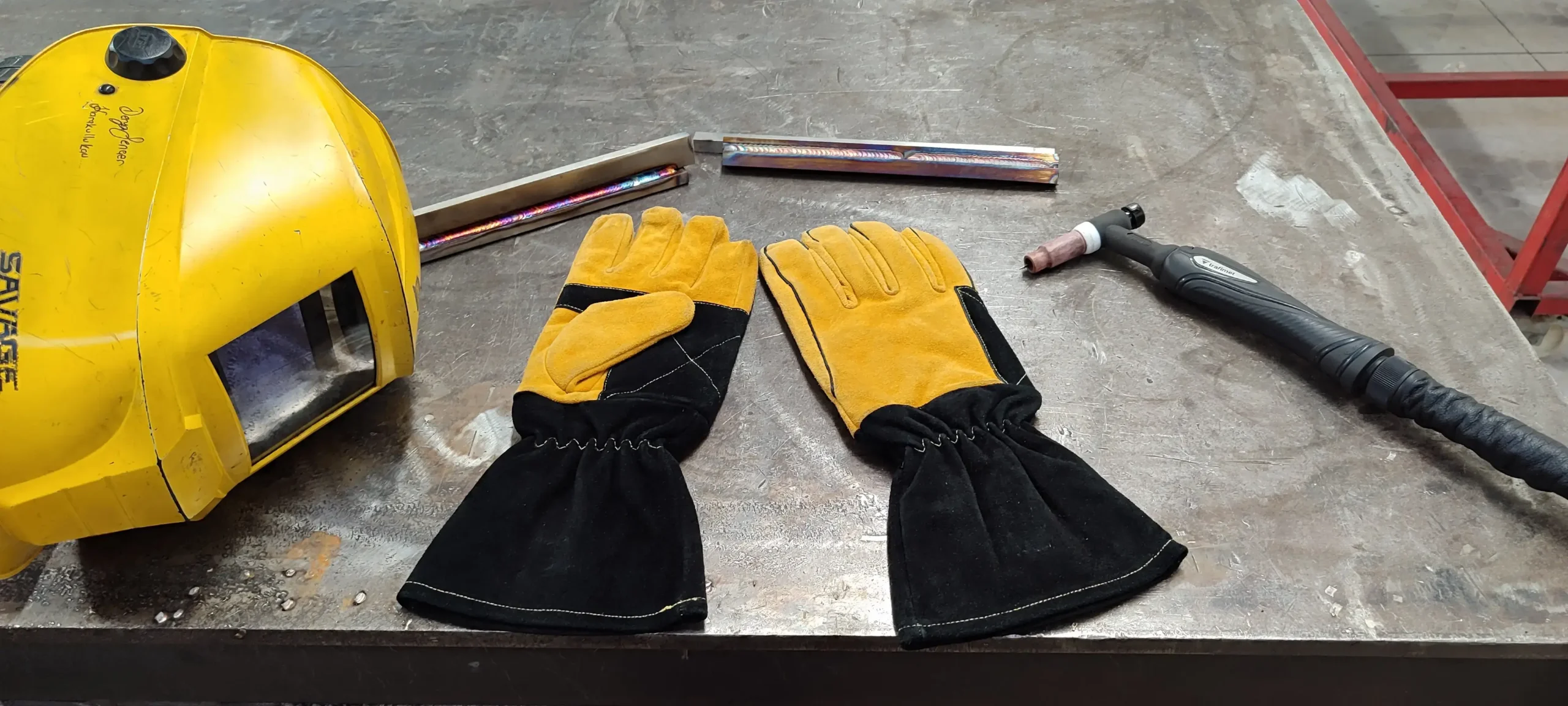
Arasweld High quality Cowhide leather welding gloves with a welding helmet and TIG torch, illustrating the durability, heat resistance, comfort, and abrasion resistance that make cowhide an ideal leather for MIG TIG and Stick welding applications.

TIG vs MIG vs Stick Welding Gloves

TIG gloves are best for precision. MIG gloves are best for balanced protection. Stick gloves are best for high-heat and heavy-duty welding.

Each welding method creates a different hazard profile. TIG requires finger sensitivity and torch control, MIG creates more sparks and spatter, and Stick welding usually requires the strongest heat and spark protection.

Quick comparison of TIG, MIG, and Stick welding gloves by heat resistance, dexterity, material, and best use.
Welding Glove Type Best For Heat Resistance Dexterity Common Material Main Trade-Off
TIG Welding Gloves Precision welding, filler-rod control, thin materials, detailed welds Low to medium High finger control and tactile feedback Goatskin, deerskin, or soft flexible leather Less protection against heavy sparks and high heat
MIG Welding Gloves General fabrication, workshop welding, production work, medium-to-high heat tasks Medium to high Moderate control with stronger protection Cowhide, split cowhide, or lined leather construction Less precision than TIG gloves
Stick Welding Gloves Heavy-duty welding, high-spatter work, structural steel, pipeline, outdoor welding Very high Lower finger movement, stronger protection Thick split cowhide, insulated leather, reinforced construction Bulkier feel and reduced fine control

In simple terms:
choose TIG welding gloves when precision and finger control matter most, choose MIG welding gloves when you need a balance of heat protection and flexibility, and choose Stick welding gloves when high heat, sparks, and heavy-duty protection are the priority.

EXPERT TIP:
When comparing welding gloves, focus on three factors first: heat resistance, dexterity, and application. Then check the glove’s material, stitching, cuff length, and safety standards before buying.

Ready to compare process-specific options?

Review ARASWELD’s:

precision TIG welding gloves
high-heat protection welding gloves
impact- and abrasion-resistant welding gloves

Choose gloves based on your welding process and work environment.

What Are Welding Gloves?

Welding gloves are specialized personal protective equipment (PPE) designed to protect the hands from heat, sparks, spatter, molten metal, abrasion, cuts, and puncture risks during welding and metal fabrication.

Unlike regular work gloves, welding gloves are built for welding processes such as TIG, MIG, and Stick, where heat exposure, hand movement, grip, and durability all affect safety and performance.

They are heat resistant, not permanently heat proof. Their protection depends on the glove material, thickness, lining, stitching, safety ratings, welding process, and condition of the glove. Learn more about whether welding gloves are heat resistant or heat proof.
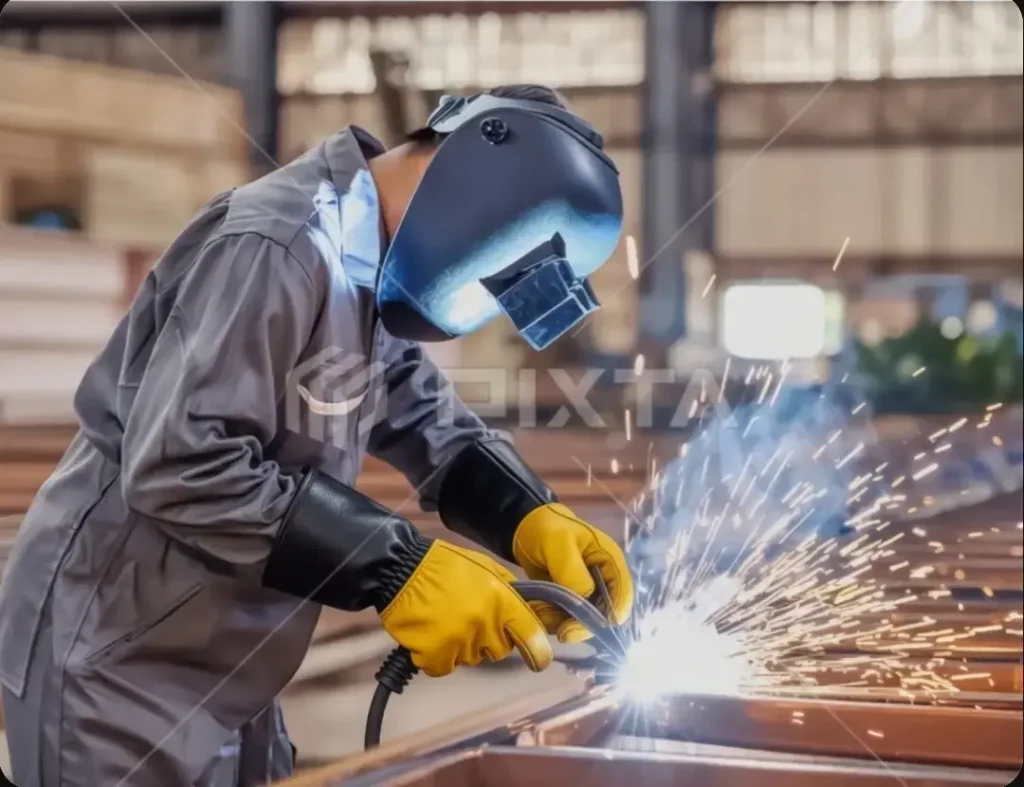
A welder is working on a Steel piece with sparks flying around it. He is working in a factory. He is wearing Arasweld heat-resistant welding gloves.

Key Functions of Welding Gloves

Welding gloves have four main functions:

  • Thermal protection: Helps protect the hands from heat, sparks, flame, spatter, and hot workpieces.
  • Mechanical protection: Helps reduce abrasion, cut, tear, and puncture risks when handling metal, tools, and rough surfaces.
  • Grip and control: Supports safer handling of the torch, filler rod, electrode holder, grinder, fixtures, and workpieces.
  • Process-specific performance: Balances heat resistance and dexterity depending on whether the work involves TIG, MIG, or Stick welding.

The correct glove is not just the thickest glove. It is the glove that matches the welding process, heat level, material-handling risk, and required hand control.

Why Welding Gloves Are High-Risk PPE

Welding gloves are considered high-risk PPE because welding can expose the hands to serious hazards, including burns, molten-metal splash, sharp edges, and mechanical injury.

In professional welding environments, gloves should be selected according to the actual task, not only by comfort or price. A glove that works well for TIG precision welding may not provide enough protection for MIG spatter or Stick welding heat.

This is why welding gloves are evaluated through standards such as EN 388, EN 407, and EN 12477, which help buyers compare mechanical protection, thermal protection, and welding-specific performance.

Welding Glove Safety Standards: EN 388, EN 407 and EN 12477

Welding glove safety standards help buyers compare protection against mechanical hazards, heat, flame, and welding-specific risks. The three most important standards for welding gloves are EN 388, EN 407, and EN 12477.

For TIG, MIG, and Stick welding, these standards matter because each process exposes the hands to different levels of heat, spatter, abrasion, cut risk, and dexterity requirements. To compare the two main protection standards in more detail, read our EN 388 vs EN 407 welding glove standards guide.

What Is EN 388?

EN 388 is the standard for mechanical protection in gloves. It measures how well a glove resists abrasion, blade cut, tear, puncture, and, where applicable, impact protection.

For welding gloves, EN 388 matters because welders often handle sharp metal edges, tools, fixtures, rough surfaces, and cut materials before, during, and after welding.

A strong EN 388 rating helps buyers evaluate glove durability and mechanical protection, especially for MIG welding, Stick welding, fabrication, construction, repair, and industrial metal handling. Learn more in our EN 388 mechanical protection standard guide.
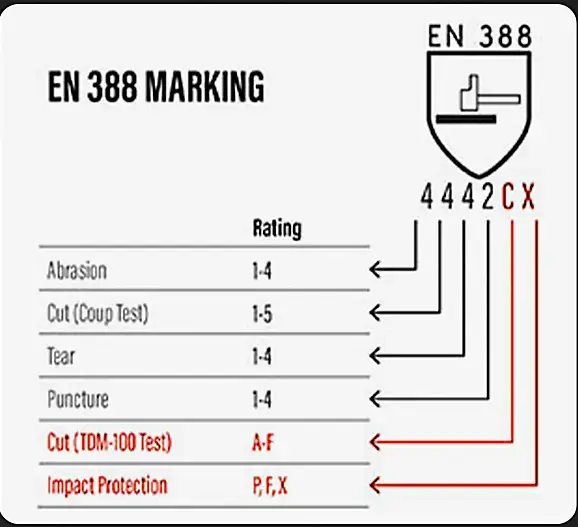
ARASWELD diagram explaining EN 388 rating 4X43CP for abrasion, Coup cut, tear, puncture, ISO 13997 cut and optional impact protection

What Is EN 407?

EN 407 is the standard for thermal protection in gloves. It evaluates protection against heat and flame risks, including flame behavior, contact heat, convective heat, radiant heat, small molten metal splashes, and large molten metal exposure.

For welding gloves, EN 407 is important because welding can expose the hands to hot workpieces, arc heat, sparks, spatter, and molten metal. This is especially relevant for MIG welding, Stick welding, and high-heat industrial work.

A glove’s EN 407 rating should be matched to the real welding process, heat source, contact time, and working conditions. Learn more in our EN 407 thermal protection standard guide.
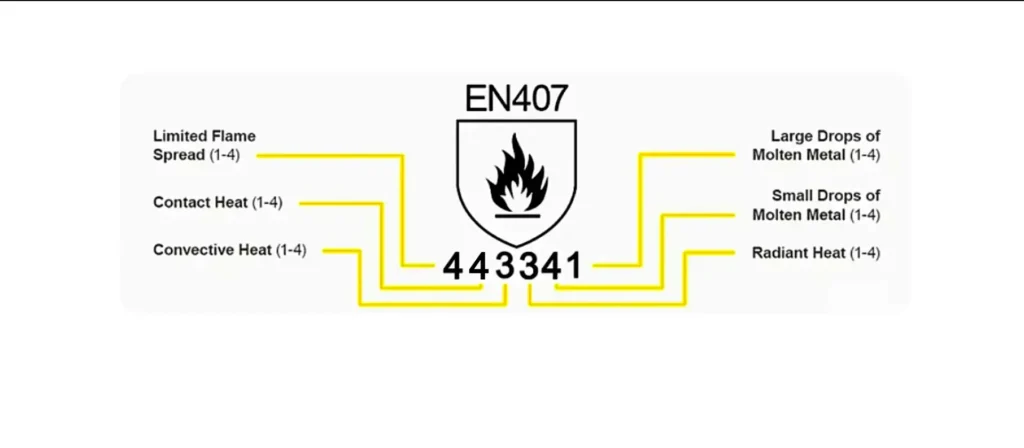
EN 407 standard heat resistance levels chart for ARASWELD welding gloves showing performance numbers 443341 for flame spread, contact, convective, radiant heat, and molten metal drops.

What Is EN 12477?

EN 12477 is the welding glove standard. It connects mechanical protection, thermal protection, and welding-specific usability into one standard for gloves used by welders.

This standard helps separate welding gloves from general work gloves because welding requires protection from both heat and mechanical risks at the same time.

EN 12477 is especially useful when comparing gloves for TIG, MIG, and Stick welding, because each process requires a different balance between protection and dexterity.

Type A vs Type B Welding Gloves

Type A welding gloves provide higher protection with lower dexterity. Type B welding gloves provide higher dexterity with lower protection.

Type A gloves are usually better for Stick welding, heavy MIG work, high heat, sparks, spatter, and rough industrial environments. They are typically thicker and more protective.

Type B gloves are usually better for TIG welding, precision work, filler-rod handling, and detailed torch control. They are usually more flexible and easier to move in.

expert tip:
The correct choice depends on the welding process. Do not choose Type A or Type B by name only; compare the glove’s material, thickness, cuff coverage, EN 388 rating, EN 407 rating, and intended use.

Welding glove safety standards comparison for EN 388, EN 407, EN 12477, Type A, and Type B welding gloves.
Standard or Type Direct Meaning What It Evaluates Best Use Why It Matters for Buyers
EN 388 Mechanical protection standard Abrasion, cut, tear, puncture, and where applicable impact protection Metal handling, fabrication, rough surfaces, sharp edges, MIG and Stick work Helps compare glove durability and protection against mechanical hazards
EN 407 Thermal protection standard Flame behavior, contact heat, convective heat, radiant heat, and molten metal splash Heat exposure, hot workpieces, sparks, spatter, MIG, Stick, and high-heat welding Helps compare glove protection against welding heat and flame-related risks
EN 12477 Welding glove standard Welding-specific glove performance using thermal, mechanical, and usability requirements Professional welding gloves for TIG, MIG, Stick, and related welding tasks Helps identify gloves designed specifically for welding, not just general work
Type A Higher protection, lower dexterity Stronger protection profile for higher heat and heavier welding tasks Stick welding, heavy MIG welding, spatter-heavy work, and high-heat environments Better when protection is more important than fine finger control
Type B Higher dexterity, lower protection Glove flexibility, finger control, and usability for precision welding TIG welding, filler-rod handling, precision welding, and detailed torch control Better when hand control and precision are more important than maximum heat protection

In simple terms:
EN 388 helps buyers compare mechanical protection, EN 407 helps buyers compare thermal protection, and EN 12477 helps identify gloves made for welding-specific use. For process selection, Type A is usually better for higher-heat welding such as Stick and heavy MIG, while Type B is usually better for TIG welding where dexterity and control matter most.

What Are the Different Types of Welding Gloves?

The main types of welding gloves are TIG welding gloves, MIG welding gloves, Stick welding gloves, and general-purpose welding gloves. Each type is designed for a different balance of heat resistance, dexterity, spatter protection, and material-handling durability.
The correct glove depends on the welding process. TIG gloves prioritize control, MIG gloves balance protection and flexibility, and Stick gloves prioritize maximum heat and spark protection.

Overview of TIG, MIG, Stick, and general-purpose welding gloves by use case, protection level, and dexterity.
Glove Type Best Use Protection Focus Dexterity Level Common Material
TIG Welding Gloves Precision welding, filler-rod control, thin materials, detailed torch work Moderate heat protection with maximum hand control High Goatskin, deerskin, or soft flexible leather
MIG Welding Gloves General fabrication, workshop welding, manufacturing, medium-to-high heat work Balanced heat, spark, spatter, and handling protection Moderate Cowhide, split cowhide, lined leather, reinforced construction
Stick Welding Gloves Heavy-duty welding, outdoor welding, structural steel, pipeline, high-spatter work Maximum heat, spark, spatter, and abrasion protection Low to moderate Thick split cowhide, insulated leather, long cuff construction
General-Purpose Welding Gloves Light welding, maintenance, training, occasional repair, basic fabrication Basic protection for lower-risk welding and handling tasks Moderate Cowhide, split leather, or mixed-material construction

In simple terms:
TIG gloves are best when precision and finger control matter most, MIG gloves are best when the welder needs a balance of protection and flexibility, and Stick gloves are best when heat, sparks, and heavy-duty protection are the main risks. General-purpose gloves can work for light tasks, but they are not the best choice for specialized TIG, MIG, or Stick welding.

TIG Welding Gloves

TIG welding gloves are designed for precision, control, and finger sensitivity. They are usually thinner and more flexible than MIG or Stick gloves, which helps welders control the torch and filler rod during detailed welding.
TIG gloves are commonly used for thin materials, stainless steel, aluminum, automotive work, aerospace-style precision tasks, and clean welds where hand control matters. The trade-off is that they usually provide less protection against heavy spatter and extreme heat.

For work where controlled torch movement and filler-rod handling are the priority, review ARASWELD’s precision TIG welding gloves\.
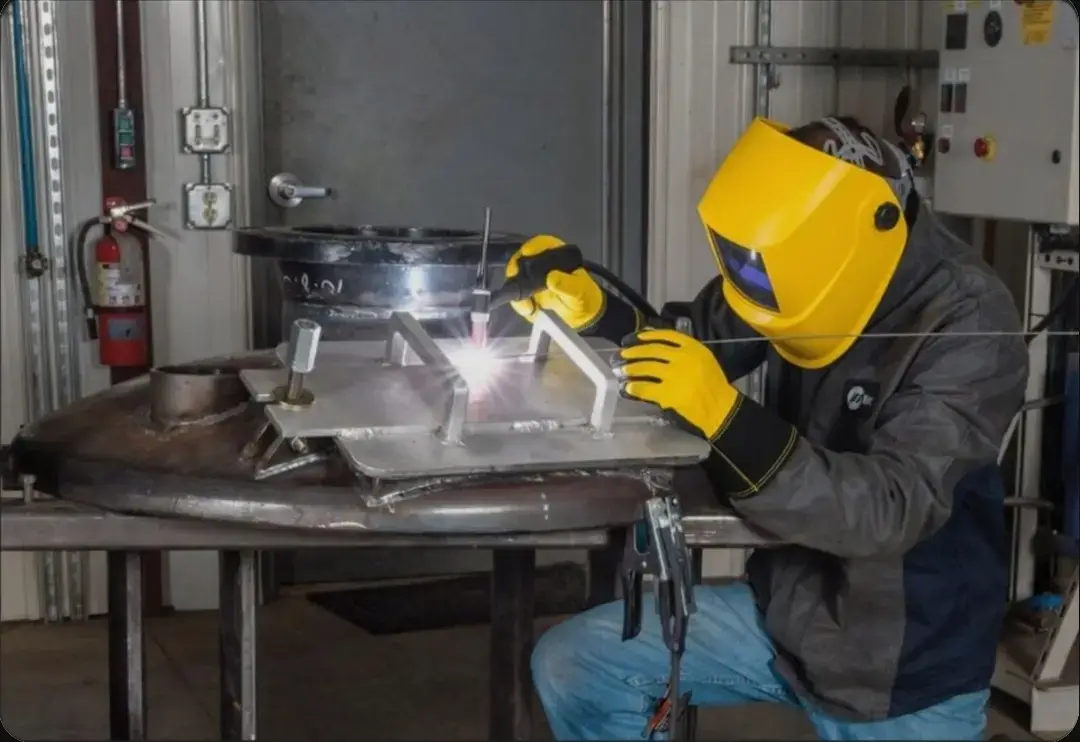
ARASWELD leather welding gloves used in aircraft fuselage and engine component TIG welding requiring EN 407 radiant heat and EN 388 cut protection

MIG Welding Gloves

MIG welding gloves are designed to balance heat protection, durability, and usable hand movement. They are usually thicker than TIG gloves but less bulky than heavy Stick welding gloves.
MIG welding creates more sparks, spatter, radiant heat, and hot workpiece exposure than TIG welding. For this reason, MIG gloves often use cowhide, split cowhide, reinforced stitching, lining, and longer cuffs for better protection during fabrication and production work.

For medium-to-high heat welding, workshop fabrication, and tasks where stronger thermal protection is needed, compare ARASWELD’s high-heat protection welding gloves.
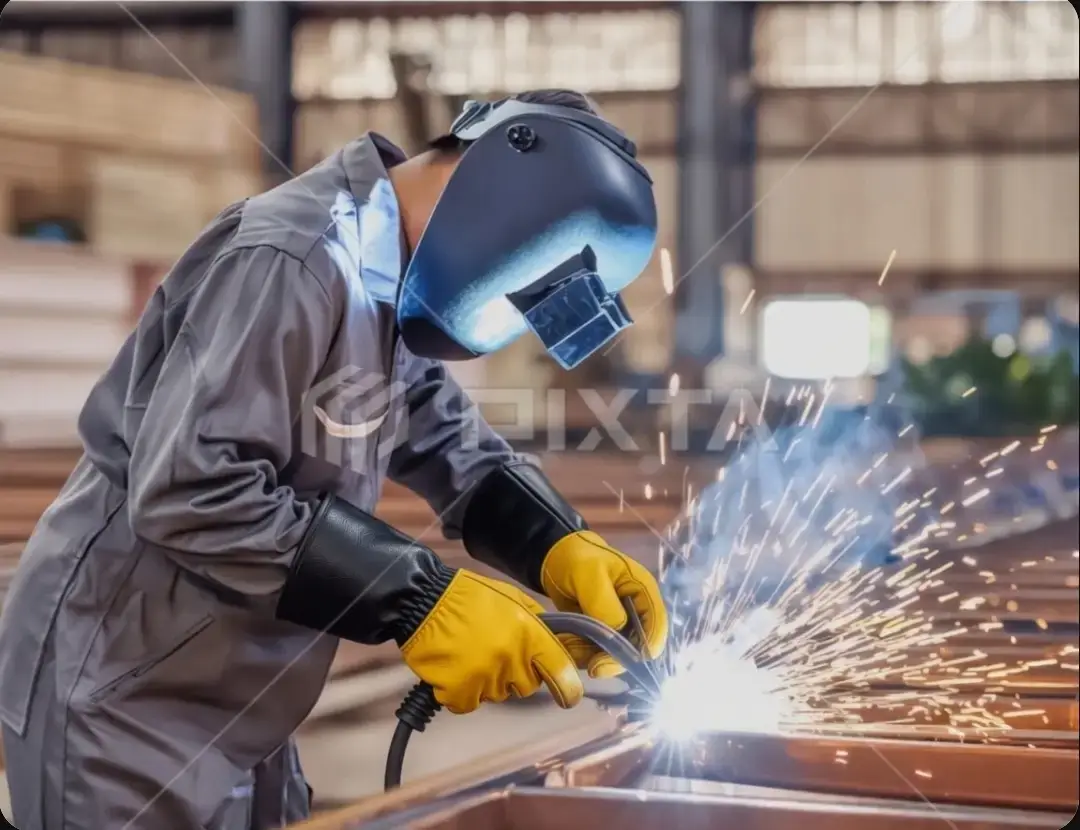
A welder is working on a Steel piece with sparks flying around it. He is working in a factory. He is wearing Arasweld heat-resistant welding gloves.

Stick Welding Gloves

Stick welding gloves are built for maximum protection in high-heat and high-spatter environments. They are typically thicker, more insulated, and more protective than TIG or MIG gloves.
Stick welding can produce heavy sparks, slag, radiant heat, and molten-metal exposure. These gloves are commonly used in structural steel work, pipeline welding, shipbuilding, outdoor welding, repair work, and other heavy-duty environments.

Where the job also involves rough steel, sharp edges, abrasion, puncture risks, or repeated material handling, review ARASWELD’s impact- and abrasion-resistant welding gloves.
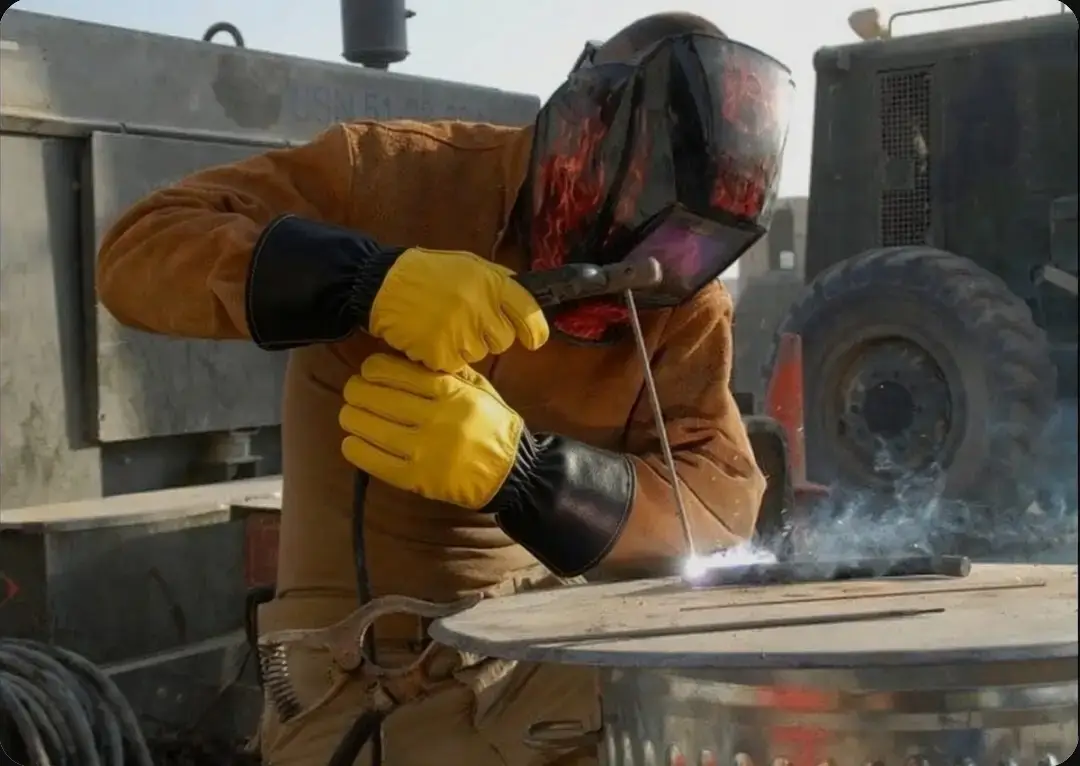
ARASWELD Impact Abrasion Resistant all purpose welding gloves workshop multi use protection

General-Purpose Welding Gloves

General-purpose welding gloves are multi-use gloves for light or occasional welding tasks. They can be useful for training, maintenance, light fabrication, and basic repair work where extreme heat or high precision is not required.

They are not the best choice for serious process-specific work. For TIG, MIG, or Stick welding in professional environments, a process-matched glove is usually safer and more effective than one general glove used for every task.

General-purpose gloves are best seen as a basic option, not a replacement for certified TIG, MIG, or Stick welding gloves matched to the actual hazard profile.

MIG vs TIG vs Stick Welding Gloves: Core Comparison

The core difference between TIG, MIG, and Stick welding gloves is protection versus dexterity. TIG gloves prioritize finger control, MIG gloves balance protection and flexibility, and Stick gloves prioritize heat resistance, spark protection, and durability.

For most welders, the right glove is not the thickest glove. It is the glove that matches the welding process, heat exposure, spatter level, material handling risk, and required hand control.

Core comparison of TIG, MIG, and Stick welding gloves by protection, dexterity, heat resistance, and best use.
Comparison Factor TIG Welding Gloves MIG Welding Gloves Stick Welding Gloves
Main Purpose Precision, filler-rod control, and torch movement Balanced protection for heat, sparks, and spatter Maximum protection for high heat and heavy-duty welding
Heat Protection Low to medium Medium to high High to very high
Dexterity Highest finger control and tactile feedback Moderate hand control with stronger protection Lower dexterity because of thicker protection
Spatter Protection Lower protection against heavy sparks and spatter Good protection for sparks and medium-to-heavy spatter Strong protection for heavy sparks, slag, and spatter
Common Materials Goatskin, deerskin, or soft flexible leather Cowhide, split cowhide, lined leather, reinforced leather Thick split cowhide, insulated leather, long cuff construction
Best Applications Thin metal, stainless steel, aluminum, automotive work, precision fabrication General fabrication, production welding, workshop welding, industrial repair Structural steel, pipeline work, shipbuilding, outdoor welding, heavy fabrication
Main Trade-Off Better control, but less protection against high heat and heavy spatter Balanced performance, but less precision than TIG gloves Stronger protection, but reduced finger movement and tactile feedback

In simple terms:
choose TIG welding gloves when precision and dexterity matter most, choose MIG welding gloves when you need balanced protection for sparks and spatter, and choose Stick welding gloves when heat resistance, long cuffs, and heavy-duty durability are the priority.

Welding Glove Materials and Construction

Welding glove performance depends on three core construction factors: leather type, glove thickness, and stitching quality. These factors control the balance between heat resistance, dexterity, abrasion resistance, durability, and comfort.

In simple terms, goatskin leather is usually better for TIG precision, cowhide leather is commonly used for MIG balance, and split cowhide leather is often preferred for Stick welding and heavy-duty heat protection.

For a broader safety overview, the American Welding Society notes that welding gloves should be heat resistant, cover the hand, wrist, and lower forearm, and fit comfortably. See their welding PPE guide.

Welding glove materials and construction comparison for TIG, MIG, and Stick welding gloves.
Material or Construction Factor Best Welding Use Main Benefit Main Trade-Off Buyer Priority
Goatskin Leather TIG welding, filler-rod handling, precision work High dexterity, soft feel, strong tactile feedback Lower heat protection than thicker welding gloves Finger control, flexibility, close fit, torch precision
Cowhide Leather MIG welding, fabrication, workshop welding Balanced heat resistance, durability, and flexibility Less tactile control than thin TIG gloves Protection, comfort, grip, repeated industrial use
Split Cowhide Leather Stick welding, heavy-duty work, high-spatter environments Strong heat resistance, abrasion resistance, and durability Lower dexterity because the glove is usually thicker Heat protection, cuff coverage, mechanical durability
Glove Thickness Process-specific selection for TIG, MIG, and Stick Controls the balance between insulation and hand movement Thicker gloves protect more but reduce finger control Match thickness to heat exposure and dexterity needs
Kevlar Stitching Professional welding, high-heat work, repeated industrial use Improves seam durability under heat and stress Better stitching improves durability but does not replace correct glove selection Seam strength, heat resistance, longer glove life

In simple terms:
welding glove material controls how the glove feels, protects, and wears over time. Choose goatskin when precision matters, cowhide when balance is needed, and split cowhide when heat, sparks, abrasion, and durability are the priority. Thickness and Kevlar stitching should be checked together because a strong leather glove can still fail early if the seams are weak.

Goatskin Leather for TIG Welding Gloves

Goatskin leather is commonly used for TIG welding gloves because it is soft, flexible, and precise. It helps welders control the torch and filler rod during detailed work.The main benefit is dexterity. The trade-off is lower protection against heavy sparks, spatter, and high heat compared with thicker MIG or Stick gloves.

For precision work where hand control matters most, review ARASWELD’s precision TIG welding gloves.

Cowhide Leather for MIG Welding Gloves

Cowhide leather is commonly used for MIG welding gloves because it offers a practical balance of heat resistance, durability, and flexibility. It is suitable for general fabrication, workshop welding, production work, and medium-to-high heat applications.MIG welding creates more sparks and spatter than TIG welding, so buyers should compare leather quality, lining, cuff coverage, reinforcement, stitching, and the glove’s EN 407 and EN 388 ratings.

For heavier MIG/MAG work and higher heat exposure, review ARASWELD’s high-heat protection welding gloves.
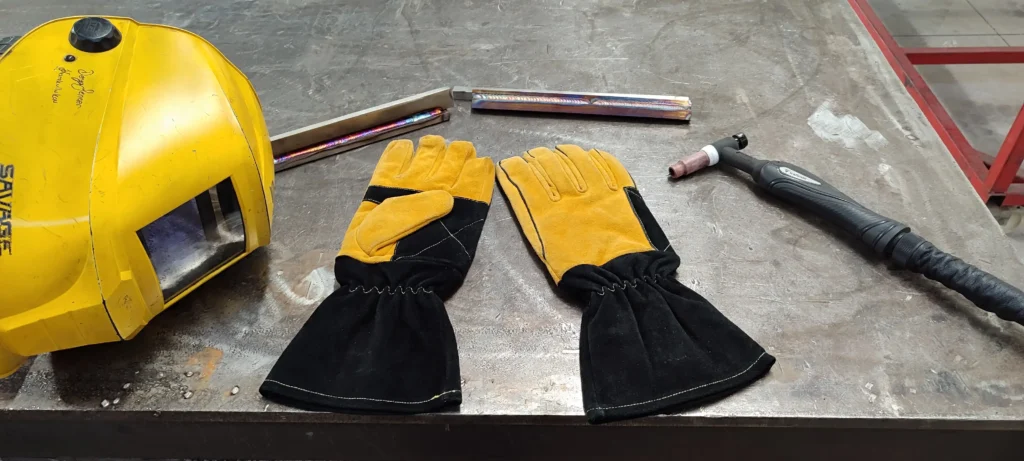
Arasweld High quality Cowhide leather welding gloves with a welding helmet and TIG torch, illustrating the durability, heat resistance, comfort, and abrasion resistance that make cowhide an ideal leather for MIG TIG and Stick welding applications.

Split Cowhide Leather for Stick Welding Gloves

Split cowhide leather is commonly used for Stick welding gloves because it is thick, durable, and heat resistant. It is a strong option for heavy-duty welding, structural steel, outdoor work, pipeline welding, and high-spatter environments.The main benefit is protection. The trade-off is lower dexterity, because thicker gloves usually reduce finger movement and tactile feedback.

For rough steel handling, abrasion, puncture risks, and heavy-duty fabrication, review ARASWELD’s impact- and abrasion-resistant welding gloves.

Glove Thickness and Performance

Glove thickness affects both heat protection and dexterity. Thin gloves improve finger control, while thicker gloves provide more insulation against heat, sparks, and hot workpieces.

A simple rule is: use thinner gloves for TIG precision, medium-thickness gloves for MIG balance, and thicker gloves for Stick welding and high-heat work.

There is no single best thickness for every welder. The best thickness is the one that matches the welding process, heat level, spatter exposure, and required hand control.

Kevlar Stitching and Seam Durability

Kevlar stitching improves welding glove durability because it resists heat and seam failure better than standard thread. This matters because glove failure often begins at the seams, not only on the leather surface.

Kevlar stitching is especially valuable in MIG, Stick, high-heat, and industrial welding tasks where the glove is exposed to repeated bending, sparks, friction, and heat.
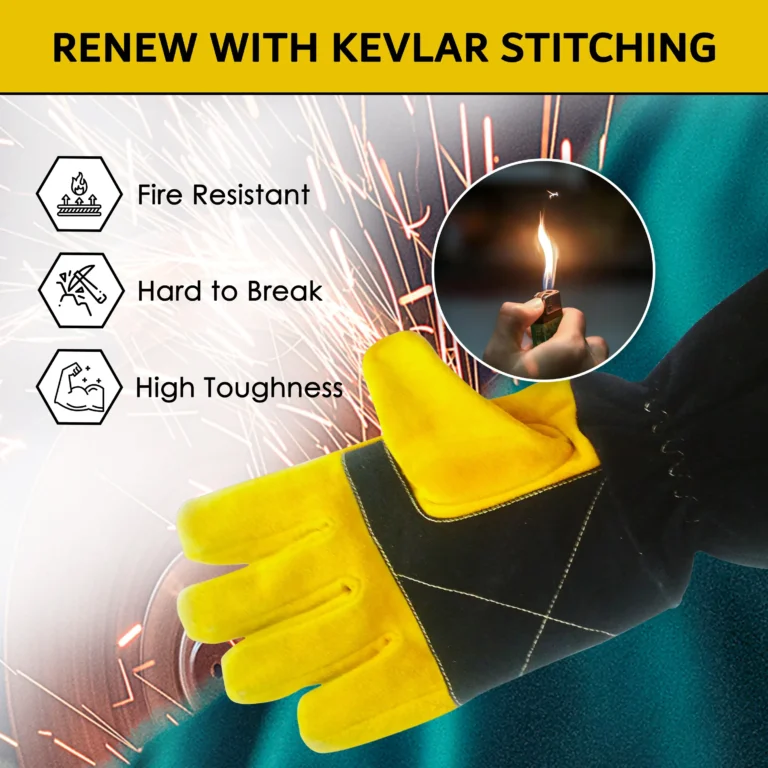
ARASWELD precision specialized gloves featuring fire-resistant Kevlar stitching and high toughness for TIG welding safety
A durable welding glove should combine the right leather, correct thickness, strong stitching, suitable cuff coverage, and documented safety ratings.

If you want to study this topic in depth, select welding gloves by leather type and safety standard please refer to our guide,
Complete Guide to Welding Gloves.

How to Choose the Right Welding Gloves

Choosing the right welding gloves depends on the welding process, heat exposure, spatter level, mechanical risks, and the amount of dexterity required for the task.There is no single best welding glove for every welder. TIG gloves are best for precision, MIG gloves are best for balanced protection, and Stick gloves are best for high-heat, heavy-duty work.
For a deeper buying process, read our How to Choose the Best Welding Gloves guide.

Welding glove selection guide for beginners, industrial welders, outdoor welders, pipeline welders, and precision welders.
User or Work Type Best Glove Type Main Priority What to Check Common Trade-Off
Beginners MIG-style or medium-protection welding gloves Balanced heat resistance, comfort, and basic control EN 407, EN 388, fit, lining, cuff length, and stitching quality Not specialized for extreme heat or high-precision TIG work
Industrial Welders MIG or Stick welding gloves Durability, heat protection, abrasion resistance, and long work cycles Split cowhide, reinforced palm, Kevlar stitching, EN 407, EN 388, and EN 12477 More protection usually means less finger sensitivity
Outdoor and Pipeline Work Stick welding gloves or heavy-duty welding gloves High heat resistance, spark protection, cuff coverage, and rugged durability Thick split cowhide, insulation, long cuffs, grip, abrasion resistance, and seam strength Heavier gloves can reduce dexterity and comfort
Precision Work TIG welding gloves Dexterity, filler-rod control, torch control, and tactile feedback Goatskin or soft leather, close fit, flexible fingers, EN 388, and suitable EN 407 protection Lower protection against heavy sparks, spatter, and extreme heat

In simple terms:
choose welding gloves by task, not by brand name alone. Beginners usually need balanced protection, industrial welders need durability, outdoor and pipeline welders need heavy-duty heat protection, and precision welders need high dexterity. The safest choice is the glove that matches the process, heat level, material handling risk, EN ratings, and required hand control.

What Are the Best Welding Gloves for Beginners?

The best welding gloves for beginners are medium-protection gloves that balance heat resistance, comfort, and hand control. For most beginners, a MIG-style glove is often easier to use than a very thick Stick glove.

Beginners should look for EN 407 heat protection, EN 388 mechanical protection, comfortable lining, flexible leather, and a fit that allows safe torch and material handling.Avoid choosing gloves only because they feel soft. The glove still needs enough protection for sparks, spatter, hot metal, and basic fabrication work.

What Are the Best Welding Gloves for Industrial Welders?

The best welding gloves for industrial welders are durable MIG or Stick gloves with strong heat resistance, abrasion resistance, and seam durability. Industrial welding often involves long work cycles, rough metal, sparks, spatter, and repeated handling.

Buyers should check for split cowhide, reinforced palms, Kevlar stitching, cuff coverage, EN 407 thermal protection, EN 388 mechanical protection, and EN 12477 welding-glove classification.For industrial welders, the goal is not maximum softness. The goal is reliable protection, durability, and safe performance during repeated welding and handling tasks.

Arasweld High quality Cowhide leather welding gloves with a welding helmet and TIG torch, illustrating the durability, heat resistance, comfort, and abrasion resistance that make cowhide an ideal leather for MIG TIG and Stick welding applications.

What Are the Best Welding Gloves for Outdoor and Pipeline Work?

The best welding gloves for outdoor and pipeline work are heavy-duty Stick welding gloves with high heat resistance, long cuffs, and rugged construction. These jobs often involve wind, dirt, rough surfaces, high spatter, and changing work positions.

Split cowhide, insulated lining, reinforced stitching, strong grip, and extended cuff coverage are important for outdoor welding, pipeline welding, shipbuilding, structural steel, and field repair.

The trade-off is reduced dexterity. For pipeline and outdoor work, protection usually matters more than fine finger movement.

ARASWELD Impact Abrasion Resistant all purpose welding gloves workshop multi use protection

What Are the Best Welding Gloves for Precision Work?

The best welding gloves for precision work are TIG welding gloves with high dexterity, close fit, and strong tactile feedback. These gloves help welders control the torch, filler rod, and hand position during detailed welding.

Precision welding often uses thinner gloves made from goatskin, deerskin, or soft flexible leather. These materials support finger control but usually provide less protection against heavy sparks and high heat.

For aerospace-style welding, automotive work, stainless steel fabrication, thin metal, and clean TIG welds, choose gloves that balance dexterity with the required EN 407 and EN 388 protection.

ARASWELD leather welding gloves used in aircraft fuselage and engine component TIG welding requiring EN 407 radiant heat and EN 388 cut protection
Tig Welding gloves should be made of high-quality leather to provide maximum protection for the user's hands in difficult conditions, and It must be gloves flexible so that the welder can do his job comfortably.

Common Mistakes When Choosing Welding Gloves

The most common mistake when choosing welding gloves is selecting by comfort, price, or appearance instead of matching the glove to the welding process and hazard level.

A safe welding glove choice should consider TIG, MIG, or Stick welding, heat exposure, sparks, spatter, abrasion, cut risk, glove thickness, dexterity, and safety standards such as EN 388, EN 407, and EN 12477.

Using the Wrong Glove Type

Using the wrong glove type can reduce protection or control. TIG, MIG, and Stick welding gloves are not interchangeable because each process creates a different mix of heat, sparks, spatter, and dexterity requirements.

Common examples include:

  • Using TIG gloves for MIG or Stick welding: increases burn risk because TIG gloves are usually thinner and less protective against heavy spatter.
  • Using Stick gloves for TIG welding: reduces finger control, filler-rod handling, and torch precision.
  • Using one general-purpose glove for every task: may work for light jobs, but it is not ideal for professional process-specific welding.

The correct glove should match the process: TIG for precision, MIG for balance, and Stick for high-heat protection.

Ignoring EN 388, EN 407 and EN 12477 Certifications

Ignoring welding glove certifications can lead to unverified protection. A glove may look thick or durable, but that does not prove its resistance to heat, abrasion, cut, tear, puncture, or welding-specific hazards.

Buyers should check:

  • EN 388: mechanical protection against abrasion, cut, tear, puncture, and applicable impact risks.
  • EN 407: thermal protection against flame, contact heat, convective heat, radiant heat, and molten metal splash.
  • EN 12477: welding-glove classification for welding-specific use, including Type A and Type B performance.

Certification does not replace a workplace risk assessment, but it gives buyers a clearer basis for comparing glove protection.

Choosing Comfort Over Protection

Comfort matters, but it should not replace protection. A glove that feels soft or flexible may still be unsafe if it lacks the heat resistance, cuff coverage, stitching strength, or mechanical protection required for the job.

A good welding glove should balance:

  • Protection: heat resistance, sparks, spatter, abrasion, cut, tear, and puncture resistance.
  • Dexterity: finger movement, grip, filler-rod control, and torch handling.
  • Durability: leather quality, glove thickness, lining, cuff design, and Kevlar stitching.
  • Fit: secure sizing without excess material that reduces control.

For TIG welding, dexterity is important. For MIG and Stick welding, stronger heat and spatter protection usually become more important.

Common mistakes when choosing TIG, MIG, and Stick welding gloves and how to avoid them.
Common Mistake What Can Happen Better Choice Main Standard or Factor to Check
Using TIG gloves for MIG or Stick welding Burn risk can increase because thin TIG gloves usually provide less protection against heavy sparks, spatter, and high heat. Use MIG or Stick gloves with stronger heat resistance, cuff coverage, and spatter protection. EN 407, glove thickness, lining, cuff length
Using Stick gloves for TIG welding Torch control, filler-rod handling, and finger sensitivity can be reduced. Use TIG gloves with better dexterity, close fit, and flexible leather construction. Fit, dexterity, finger articulation, intended use
Ignoring EN 388, EN 407, and EN 12477 The glove’s mechanical, thermal, or welding-specific protection may be unclear. Check the glove’s documented ratings before using it for professional welding tasks. EN 388, EN 407, EN 12477
Choosing comfort only A soft glove may feel good but may not provide enough protection for heat, sparks, spatter, sharp edges, or abrasion. Balance comfort with protection, durability, fit, and the welding process. EN ratings, material, thickness, stitching, cuff coverage
Using one glove for every welding process The glove may be too thin for high heat or too bulky for precision work. Match the glove to TIG, MIG, Stick, or general-purpose welding based on the task. Welding process, heat exposure, dexterity requirement

In simple terms:
most welding glove mistakes happen when the glove does not match the real task. Choose TIG gloves for precision, MIG gloves for balanced protection, and Stick gloves for high heat and heavy spatter. Then confirm the glove’s EN 388, EN 407, EN 12477, material, thickness, stitching, cuff coverage, fit, and intended use before buying.

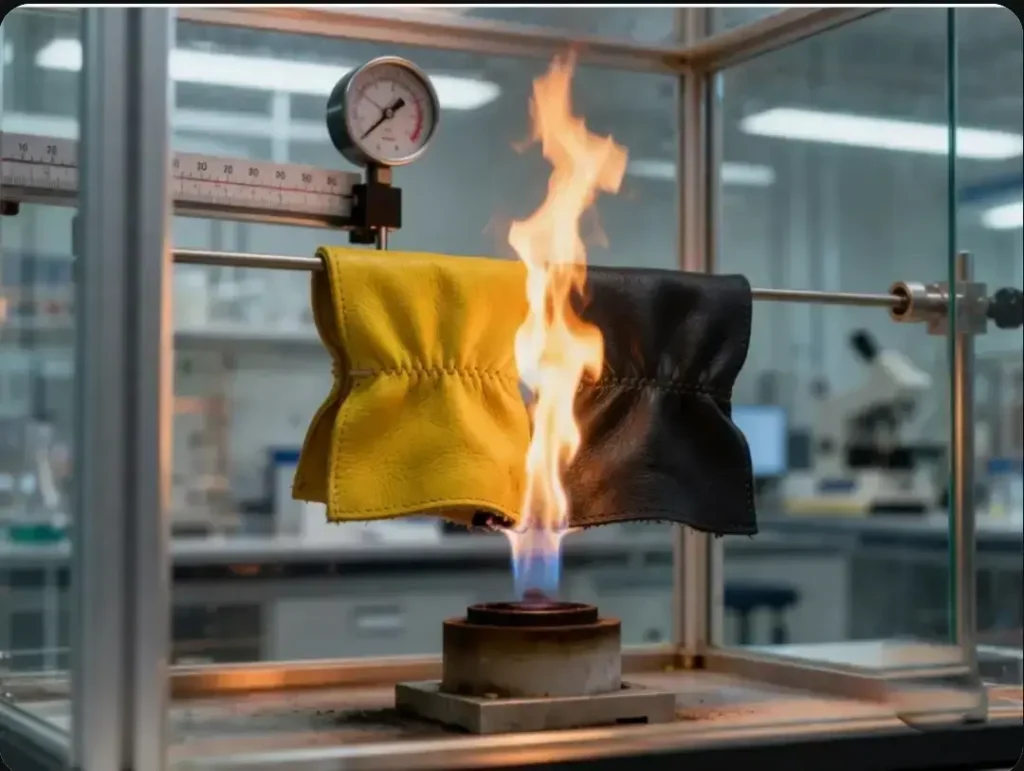
Welding Glove Buying Checklist

To choose the right welding gloves, match the glove to the welding process, heat exposure, mechanical risks, dexterity needs, and safety standards. Do not choose welding gloves only by price, comfort, or thickness.

Use this checklist before buying:

  • Choose TIG welding gloves if you need precision, filler-rod control, torch control, and high finger dexterity.
  • Choose MIG welding gloves if you need balanced heat protection, flexibility, spatter resistance, and durability.
  • Choose Stick welding gloves if you need maximum heat resistance, spark protection, long cuffs, and heavy-duty durability.
  • Check EN 407 for heat, flame, contact heat, radiant heat, and molten-metal splash protection.
  • Check EN 388 for abrasion, cut, tear, puncture, and mechanical protection.
  • Check EN 12477 for welding-specific glove classification, including Type A and Type B.
  • Match the material to the task: goatskin for TIG control, cowhide for MIG balance, and split cowhide for Stick and high-heat work.
  • Review glove thickness, lining, cuff coverage, and Kevlar stitching before choosing a glove.
  • Inspect fit and comfort, but never choose comfort at the expense of required protection.

A good welding glove should protect against the real hazards of the job while still allowing the hand control needed for the process.

Shop Welding Gloves by Process and Application

ARASWELD welding gloves are organized by welding process, heat exposure, and mechanical protection needs. Use the options below to compare the glove path that best matches your work.

  • For TIG welding and precision work:
    Choose precision TIG welding gloves when the job requires filler-rod handling, torch control, finger movement, and tactile feedback.
  • For MIG, MAG, and high-heat welding:
    Choose high-heat protection welding gloves when the work involves sparks, spatter, hot workpieces, radiant heat, and longer welding cycles.
  • For Stick welding, rough handling, and abrasive work:
    Choose impact- and abrasion-resistant welding gloves when the task involves sharp edges, rough steel, puncture risks, abrasion, and heavy-duty material handling.

For a full product overview, visit the ARASWELD shop and compare welding gloves by process, application, protection level, and working environment.

Frequently Asked Questions

Category 3 gloves are high-risk PPE designed to protect against serious or irreversible hazards. Welding gloves can fall into this category because welding exposes the hands to heat, sparks, molten metal, abrasion, cuts, punctures, and other industrial risks.

For welding work, Category 3 protection matters because the glove is not only for comfort. It helps reduce injury risk in high-hazard environments where the wrong glove can fail under heat or mechanical stress.

The best welding gloves depend on the welding process. TIG gloves are best for precision and finger control, MIG gloves are best for balanced heat protection and flexibility, and Stick gloves are best for high-heat, heavy-duty welding.

There is no single best glove for every welder. The right choice depends on heat exposure, spatter level, glove thickness, leather type, EN 407 rating, EN 388 rating, and the amount of dexterity required.

The main difference is the balance between heat protection and dexterity. TIG welding gloves are thinner and more flexible for precision work. MIG welding gloves are medium-weight gloves for balanced protection. Stick welding gloves are thicker and more protective for heavy heat, sparks, and spatter.

In simple terms: TIG = control, MIG = balance, and Stick = protection.

Level 5 gloves usually refer to a high cut-resistance rating under older EN 388 blade-cut testing. A higher cut rating means the glove offers stronger resistance against sharp edges and cutting hazards.

For welding gloves, cut resistance is useful when handling sheet metal, raw-cut steel, machined parts, sharp edges, or abrasive materials. Buyers should also check the newer EN 388 cut rating scale where applicable, including the A–F ISO 13997 cut test.

EN 407 is a safety standard used to evaluate glove protection against thermal hazards. It covers risks such as flame behavior, contact heat, convective heat, radiant heat, small molten-metal splashes, and large molten-metal exposure.

For welding gloves, EN 407 helps buyers compare heat and flame protection. This is especially important for MIG welding, Stick welding, high-heat work, hot workpieces, sparks, and spatter.

EN 388 is a safety standard used to evaluate glove protection against mechanical risks. It measures resistance to abrasion, cut, tear, puncture, and, where applicable, impact protection.
For welding gloves, EN 388 matters because welders often handle rough metal, sharp edges, tools, fixtures, and heavy materials before, during, and after welding.

Type A welding gloves provide higher protection with lower dexterity. Type B welding gloves provide higher dexterity with lower protection.

Type A gloves are usually better for Stick welding, heavy MIG work, high heat, sparks, and spatter. Type B gloves are usually better for TIG welding, filler-rod handling, and precision torch control.

The best leather depends on the welding process. Goatskin is often used for TIG welding because it is soft and flexible. Cowhide is commonly used for MIG welding because it balances durability and flexibility. Split cowhide is often used for Stick welding because it provides stronger heat resistance and heavy-duty protection.
Buyers should not choose by leather type alone. They should also check thickness, lining, cuff length, Kevlar stitching, EN 407 rating, EN 388 rating, and intended use.

Split cowhide is usually thicker, rougher, and more heat resistant, making it better for Stick welding, heavy fabrication, and high-spatter work. Goatskin is usually thinner, softer, and more flexible, making it better for TIG welding and precision work.
The main trade-off is simple: split cowhide gives more protection, while goatskin gives more finger control.

Glove thickness affects both heat protection and dexterity. Thicker gloves usually provide better insulation against heat, sparks, and hot workpieces, but they reduce finger movement and tactile feedback.
Thin gloves are better for TIG precision. Medium-thickness gloves are useful for MIG balance. Thick gloves are better for Stick welding and high-heat work.

Kevlar stitching is one of the best choices for welding gloves because it resists heat and improves seam durability. This matters because many welding gloves fail first at the seams, not only on the leather surface.
For MIG, Stick, high-heat, and industrial welding, buyers should look for heat-resistant stitching, reinforced seams, strong leather, and suitable cuff coverage.

Welding gloves are specialized PPE designed to protect the hands from heat, sparks, spatter, molten metal, abrasion, cuts, punctures, and rough surfaces during welding and metal fabrication.

They are different from regular work gloves because they are built for welding hazards. TIG, MIG, and Stick welding all require different glove designs because each process creates different heat, spatter, and dexterity demands.

In general, TIG gloves should not be used for MIG welding if the MIG task involves higher heat, sparks, or spatter. TIG gloves are usually thinner and built for dexterity, not heavy thermal protection.
For MIG welding, a medium-weight glove with stronger heat resistance, cuff coverage, spatter protection, and suitable EN 407 and EN 388 performance is usually safer.

Welding gloves are thick to help protect against heat, sparks, spatter, hot metal, abrasion, and mechanical hazards. Thicker leather and insulation can reduce heat transfer to the hand.
However, thicker is not always better. TIG welding often needs thinner gloves for finger control, while MIG and Stick welding usually need more protection.

Expensive welding gloves can be worth it if they provide better materials, stronger stitching, certified protection, improved durability, and a better fit for the welding process.
Price alone does not prove quality. Buyers should compare leather type, glove thickness, lining, cuff coverage, Kevlar stitching, EN 407 rating, EN 388 rating, and intended use before deciding.

Welding glove lifespan depends on the welding process, heat exposure, spatter level, material handling, glove quality, care, and frequency of use. Heavy Stick welding or high-spatter work will usually wear gloves faster than light TIG welding.
Inspect gloves before use and replace them if you see holes, burned areas, damaged seams, stiffness, reduced grip, worn leather, or any failure that could reduce protection.

Standard welding gloves are designed mainly for heat and mechanical protection, not as dedicated electrical-insulation gloves. They should not be relied on as the main protection against electric shock.
To reduce electrical risk, welders should follow proper welding safety procedures, keep gloves dry and undamaged, inspect equipment, and use PPE suitable for the electrical hazard involved.

Choose welding gloves that fit securely without restricting movement. The glove should allow safe grip, finger movement, wrist movement, and tool control without excess loose material at the fingertips.A glove that is too tight can reduce comfort and circulation. A glove that is too loose can reduce control, especially in TIG welding and precision work.

Shopping Cart
Scroll to Top