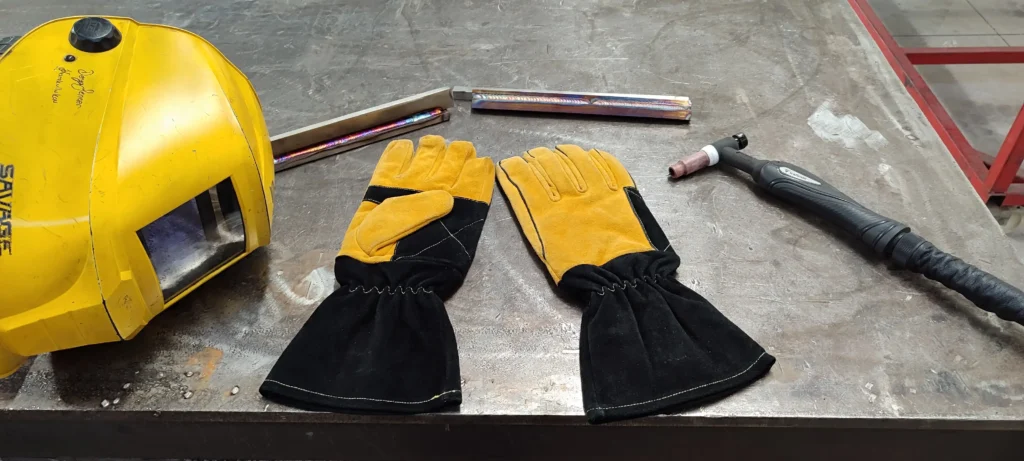
Stick Welding Gloves: Heat, Slag, Spatter and Heavy-Duty Protection
Stick welding gloves are built for the demanding heat, sparks, molten spatter and falling slag generated during shielded metal arc welding. The right glove must provide heavy-duty protection without becoming so stiff that it weakens electrode-holder control or increases hand fatigue. This guide explains how to compare leather, insulation, reinforcement, stitching, cuff length, fit and verified safety performance so you can choose SMAW welding gloves suited to the welding position, workload and surrounding mechanical hazards.
What Are Stick Welding Gloves?
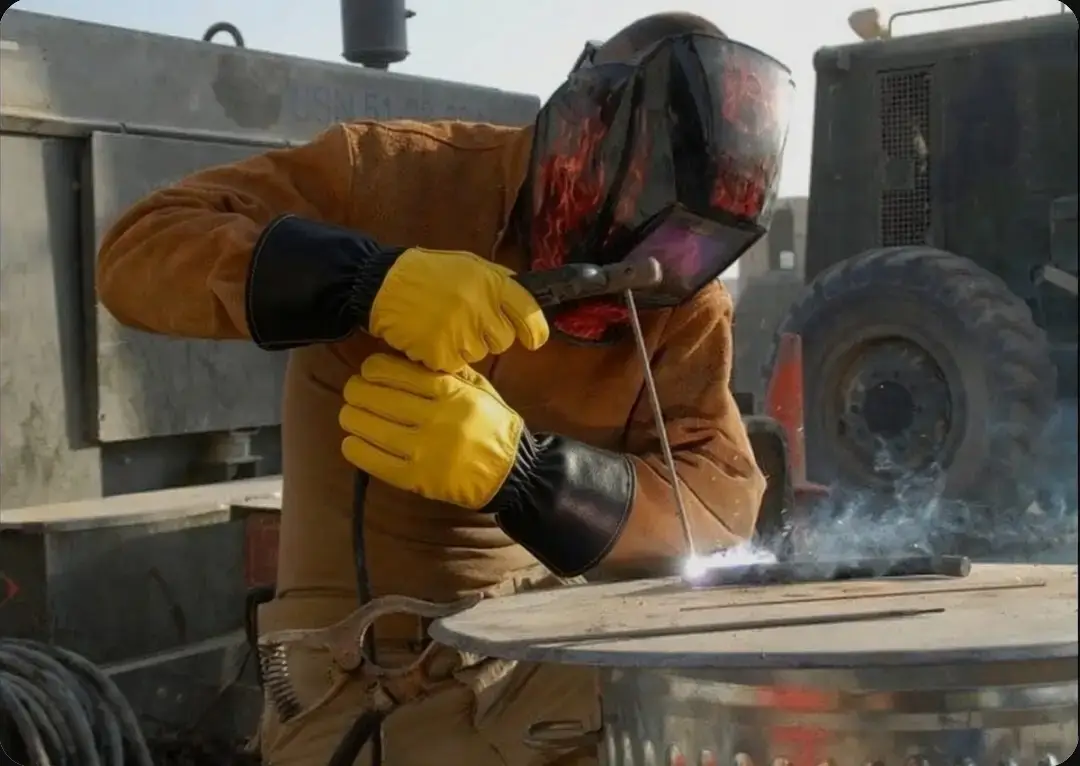
Stick welding gloves are insulated, heavy-duty protective gloves designed for shielded metal arc welding (SMAW). They help protect the hands and wrists from radiant heat, sparks, molten spatter, falling slag, hot electrodes and mechanical wear while allowing the welder to maintain a stable grip on the electrode holder.
Specialist insight from ARASWELD 12 years of welding experience:
Compared with lightweight TIG gloves, gloves for stick welding normally use thicker leather, more insulation, reinforced wear zones and longer cuffs. Their construction should match the welding current, arc-on time, welding position, workpiece temperature and exposure to abrasion or sharp metal edges.
Why Does Stick Welding Require Heavy-Duty Gloves?
Stick welding requires heavy-duty gloves because SMAW can expose the hands to intense radiant heat, hot slag, molten spatter, sparks, heated electrodes and abrasive metal surfaces. The glove must provide insulation, reinforced high-wear zones and sufficient coverage while retaining enough flexibility for stable electrode-holder control and manageable hand fatigue.
Radiant Heat, Spatter and Falling Slag
Shielded metal arc welding creates a concentrated arc and a protective slag layer over the weld. As the electrode burns, the welder may be exposed to radiant heat, sparks, molten spatter and hot slag particles, particularly when working vertically, overhead or in restricted positions.
The main hand-protection concerns include:
- Radiant heat from the arc and molten weld pool
- Hot slag released during welding or slag removal
- Spatter landing on the glove, cuff or sleeve area
- Heat conducted through the electrode and nearby workpiece
- Recently welded steel, fixtures and components
- Abrasion from plate edges, pipes and rough fabrication surfaces
For these conditions, heat-resistant stick welding gloves, spatter-resistant welding gloves and slag-resistant welding gloves normally require more insulation and coverage than lightweight precision gloves. Long arc-on periods and repeated weld cycles can also cause heat to accumulate even when the glove is not in direct contact with the weld.
However, welding gloves are heat-resistant, not heat-proof. Their protective capability depends on the leather, lining, seam construction, condition and verified performance of the individual model. For a more detailed explanation of thermal limitations, see Are Welding Gloves Heat Proof?.
Electrode-Holder Control and Hand Fatigue
Heavy protection should not make the glove so stiff that it interferes with the electrode-holder grip, commonly called stinger control. The welder must still be able to adjust electrode angle, maintain arc length, reposition the holder and release the electrode safely.
Excessive glove stiffness or poor finger proportions can contribute to:
- Reduced control of the electrode angle
- Greater gripping force around the holder
- Difficulty repositioning the electrode
- Restricted thumb and wrist movement
- Faster hand and forearm fatigue
- Less consistent control during long weld sequences
A professional stick glove therefore needs a controlled balance between insulation and mobility. Thicker construction may provide greater thermal buffering, but thickness alone does not guarantee better protection or durability. Leather quality, lining stability, glove pattern, reinforcement placement and seam design also affect performance.
What Are the Best Gloves for Stick Welding?
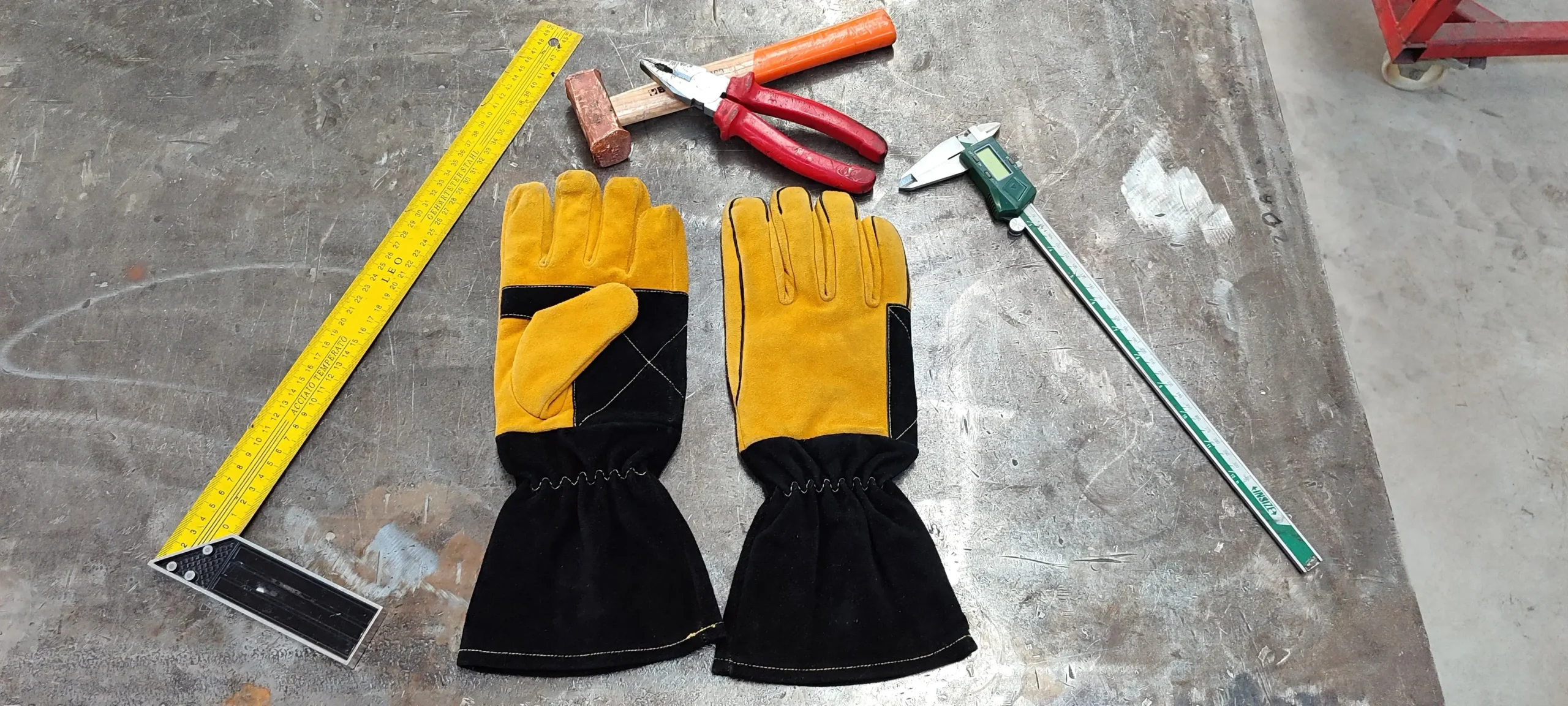
The best gloves for stick welding are insulated, durable and appropriately reinforced for the expected heat, slag, spatter and mechanical exposure. Selection should consider arc-on time, welding position, leather construction, lining, cuff coverage, fit and verified standards. The heaviest glove is not always best if excessive stiffness reduces electrode-holder control.
Heavy-Duty vs More Flexible Stick Welding Gloves
Heavy-duty stick welding gloves are generally more appropriate for prolonged welding, higher thermal exposure, overhead work and jobs involving frequent contact with hot or abrasive components. Their thicker leather, insulation and reinforced construction can improve protection and service life, but may reduce fine hand movement.
More flexible stick welder gloves may be suitable when the work requires frequent electrode changes, restricted access or greater wrist and finger movement. However, flexibility should not be achieved by removing necessary thermal protection from areas exposed to heat, spatter or falling slag.
Consider a heavier construction when the work involves:
- Long or repetitive arc-on periods
- Overhead or vertical stick welding
- Heavy slag and spatter exposure
- Structural steel or heavy fabrication
- Hot plate, pipe or fixture handling
- Repeated abrasion around the palm and thumb
Consider a more flexible construction when the work involves:
- Shorter, controlled weld sequences
- Frequent electrode replacement
- Restricted-access joints
- Greater electrode-angle adjustment
- Moderate heat exposure
Heavy-Duty vs More Flexible Stick Welding Gloves
| Selection factor | Heavy-duty construction | More flexible construction |
|---|---|---|
| Best suited to | Longer weld cycles, heavy fabrication, vertical or overhead welding | Shorter welds, restricted access and frequent electrode adjustment |
| Thermal protection | Generally greater because of thicker leather, lining and extended coverage | Task-dependent and usually lower when insulation is reduced |
| Electrode-holder control | Stable grip, but excessive stiffness may increase gripping effort | Easier finger, thumb and wrist movement when correctly fitted |
| Durability priority | High resistance to repeated heat, abrasion and rough handling | Mobility takes greater priority, so high-wear zones still require protection |
| Main trade-off | Greater bulk and potentially faster hand fatigue | Less insulation or durability if the construction is too light |
Selection summary: Heavy-duty gloves prioritize insulation, slag protection and durability, while more flexible stick welding gloves improve electrode-holder movement and may reduce fatigue. The correct choice depends on welding position, arc-on time, heat accumulation and surrounding mechanical hazards rather than glove thickness alone.
EXPERT POINT:
For a broader hazard-based method covering process, materials, fit and workplace exposure, read How to Choose Welding Gloves.
Considering heavy-duty protection? Review the construction and verified thermal performance of ARASWELD High Heat Protection Welding Gloves and compare the specifications with your stick-welding heat, slag, spatter and handling requirements.
Which Leather Is Best for Stick Welding Gloves?
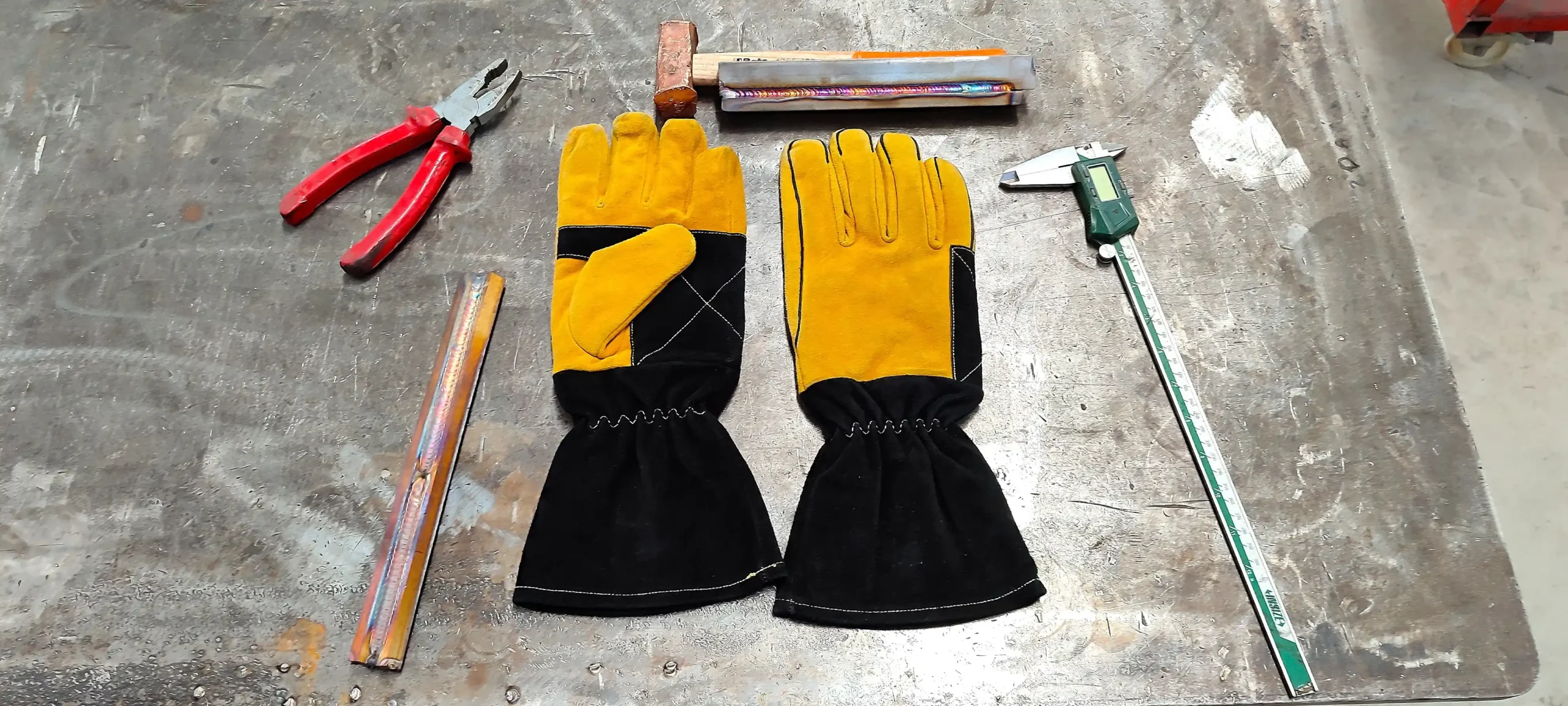
The best leather for stick welding gloves is usually a durable split cowhide, elkskin or hybrid construction matched to the actual heat, slag, spatter and abrasion exposure. Split cowhide generally prioritizes heavy-duty protection, while elkskin can provide greater flexibility. Leather thickness, lining, reinforcement and seam design matter as much as the animal hide.
Split Cowhide for Heat, Spatter and Abrasion
Split cowhide welding gloves are widely used for stick welding because the material can provide a strong balance of heat resistance, abrasion resistance and durability at a practical construction weight. Its fibrous surface also makes it suitable for areas exposed to sparks, spatter, rough steel and repeated contact with welding fixtures.
Split cowhide may be especially suitable for:
- Heavy structural and fabrication work
- Vertical and overhead stick welding
- Repetitive arc-on cycles
- High spatter and falling-slag exposure
- Contact with rough plate, pipe and fixtures
- Reinforced palms, thumbs, cuffs and seam welts
However, split cowhide quality varies. A thick but poorly patterned glove may become stiff and tiring, while a well-designed glove can provide substantial protection without unnecessarily restricting electrode-holder movement.
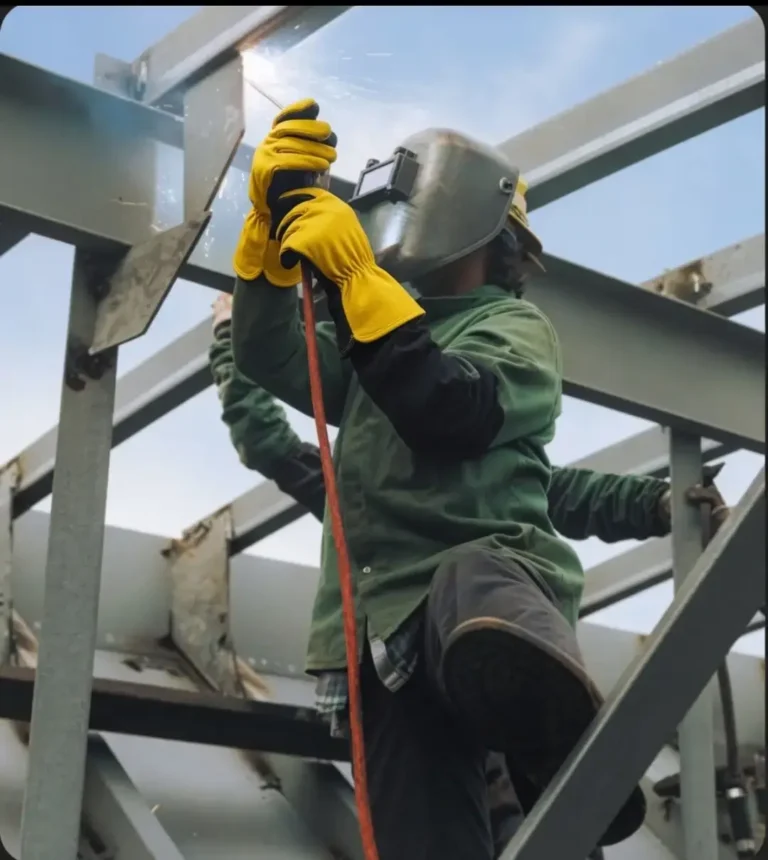
Buyers comparing cowhide stick welding gloves should examine:
- Leather thickness and uniformity
- Palm and finger pattern
- Lining construction
- Thumb mobility
- Reinforced wear zones
- Stitching protection
- Cuff length and sleeve overlap
For a broader explanation of grain leather, split leather and other glove materials, see the material section of the Complete Guide to Welding Gloves.
Elkskin for Flexibility and Thermal Protection
Elkskin stick welding gloves are often selected when the welder needs a heavy-duty glove that remains comparatively flexible. Elkskin can provide a soft, conforming feel and may support easier finger and wrist movement than a stiff, heavily built cowhide glove.
Potential advantages include:
- Improved flexibility around the fingers and thumb
- More natural electrode-holder movement
- Reduced resistance during repeated hand opening and closing
- Comfortable performance during longer welding sessions
- A useful balance between protection and mobility
Elkskin should not automatically be considered more protective than split cowhide. Performance still depends on leather thickness, tanning, lining, reinforcement, seam construction and verified thermal test results.
For this reason, a cowhide vs elkskin welding gloves comparison should focus on the complete glove rather than the leather name alone. A reinforced and properly lined split-cowhide glove may provide better protection for heavy slag exposure, while a well-constructed elkskin glove may be more suitable where flexibility and electrode-holder control are stronger priorities.
Hybrid Leather Construction
Hybrid leather welding gloves combine different materials across the palm, fingers, back of the hand, thumb and cuff so that each zone performs a specific function. This can provide a better balance than using one leather type throughout the entire glove.
A hybrid construction may use:
- Flexible leather across the fingers for electrode control
- Split cowhide in high-heat or high-abrasion areas
- Reinforced leather across the palm or thumb
- Heavier material on the back of the hand
- Split-leather cuffs for forearm coverage
- Leather welts to protect exposed seams
The palm and thumb may need abrasion resistance and grip, while the back of the hand and cuff may require greater protection from falling slag and spatter. Correct material placement can therefore improve durability without adding unnecessary bulk to every part of the glove.
Split Cowhide vs Elkskin vs Hybrid Stick Welding Gloves
| Leather construction | Main strengths | Possible limitation | Typical stick-welding suitability |
|---|---|---|---|
| Split cowhide | Durability, abrasion resistance and protection against sparks, spatter and slag | May become stiff if the leather, lining or pattern is excessively heavy | Heavy fabrication, structural steel and vertical or overhead welding |
| Elkskin | Flexibility, comfort and more natural finger and wrist movement | Protection varies with thickness, lining, reinforcement and construction quality | Stick welding requiring heavy protection with improved mobility |
| Hybrid leather | Places flexible and durable materials in the glove zones where each is most useful | Performance depends heavily on patterning, seam placement and reinforcement design | Professional and industrial stick welding requiring balanced protection and control |
Leather comparison summary: Split cowhide generally prioritizes resistance to heat, slag, spatter and abrasion, while elkskin can provide greater flexibility and comfort. Hybrid construction combines different leathers across specific glove zones to balance electrode-holder control, durability and thermal protection.
ARASWELD Expert Advice
Do not choose stick welding gloves from the leather name alone. From 12 years of professional welding experience, the most important differences are often found in leather thickness, palm pattern, lining stability, thumb movement and reinforcement placement. A durable split-cowhide glove can outperform a softer glove during heavy slag exposure, while a more flexible construction may reduce fatigue during controlled, repetitive work.
Should Stick Welding Gloves Be Fully Lined?
Stick welding gloves should usually include suitable insulation, but they do not always need the heaviest full lining available. Fully lined gloves are more appropriate for prolonged heat, overhead welding and repeated exposure to hot slag. Lighter or zoned linings may provide better electrode-holder control when the thermal exposure is moderate and carefully assessed.
When Full Insulation Is More Appropriate
Fully lined welding gloves are generally more suitable when radiant heat, spatter and workpiece temperature create sustained thermal exposure. Full insulation can help slow heat transfer across the palm, fingers and back of the hand, although its effectiveness depends on the lining material, thickness and complete glove construction.
Full insulation may be appropriate for:
- Longer arc-on periods
- Repetitive production welding
- Vertical and overhead welding
- Heavy slag and spatter exposure
- Preheated or heat-retaining components
- Structural steel and heavy fabrication
- Welding close to hot plate, pipe or fixtures
- Jobs where the back of the hand is exposed to falling particles
Common constructions include cotton-lined welding gloves, fleece-lined gloves, foam-backed linings and combinations of thermal materials. The lining should remain stable inside the glove and should not bunch around the fingertips or pull away when the hand is removed.
A heavily insulated glove may provide additional thermal buffering, but it can also reduce finger movement and make electrode changes more difficult. For moderate conditions, lined stick welding gloves with carefully controlled insulation may offer a better balance than the thickest available glove.
How Lining Affects Heat, Moisture and Hand Fatigue
Lining affects more than heat protection. It can also change the internal fit, moisture retention, finger movement and gripping effort required to hold the electrode holder.
A well-designed thermal lining should:
- Remain securely positioned inside the glove
- Avoid excessive bunching around the fingers
- Allow natural thumb movement
- Provide consistent insulation across exposed areas
- Avoid creating excessive palm thickness
- Support repeated hand opening and closing
During prolonged welding, moisture from sweat can reduce comfort and make the lining feel heavier or less stable. Damp gloves should not be treated as providing the same performance as dry gloves, particularly where heat and electrical welding hazards are present.
Excessive internal bulk can also increase hand fatigue because the welder must grip the electrode holder more firmly. This is why the comparison between lined vs unlined stick welding gloves should not be reduced to “more lining is always better.”
Unlined gloves are generally uncommon for demanding stick welding because they provide limited thermal insulation. However, the correct lining level must still match:
- Arc-on time
- Welding position
- Current and electrode size
- Workpiece temperature
- Ambient temperature
- Frequency of electrode changes
- Required hand mobility
Stick Welding Glove Lining Comparison
| Lining construction | Thermal protection | Mobility and feel | Typical use |
|---|---|---|---|
| Light or selective lining | Moderate and focused on exposed glove zones | Better finger and thumb movement with less internal bulk | Shorter welds, moderate heat and jobs requiring frequent electrode changes |
| Fully lined | Greater full-hand insulation, depending on the lining and glove design | More internal bulk and potentially greater gripping effort | Longer arc-on periods, heavy fabrication and higher slag exposure |
| Heavy multilayer insulation | Highest thermal buffering among the compared constructions | Lowest fine control and highest potential for hand fatigue | Severe heat exposure where protection takes priority over mobility |
Lining comparison summary: Fully lined stick welding gloves are generally better for prolonged heat, slag and spatter exposure, while lighter or selective linings preserve more hand mobility. The best construction provides enough insulation for the task without creating unnecessary finger bulk or excessive gripping effort.
For more detail on how leather, lining and construction influence thermal limits, read Are Welding Gloves Heat Proof?.
How Does Stick Glove Construction Affect Protection and Durability?
Stick glove construction determines how effectively the glove resists heat, spatter, falling slag and mechanical wear while maintaining electrode-holder control. Reinforcement, protected seams, heat-resistant stitching and extended cuffs improve durability when positioned correctly. However, excessive leather layers or bulky seams can reduce flexibility, increase gripping effort and accelerate hand fatigue.
Palm, Thumb and Side-Hand Reinforcement
Reinforced stick welding gloves should protect the areas that experience repeated contact with the electrode holder, workpiece, fixtures and rough steel surfaces.
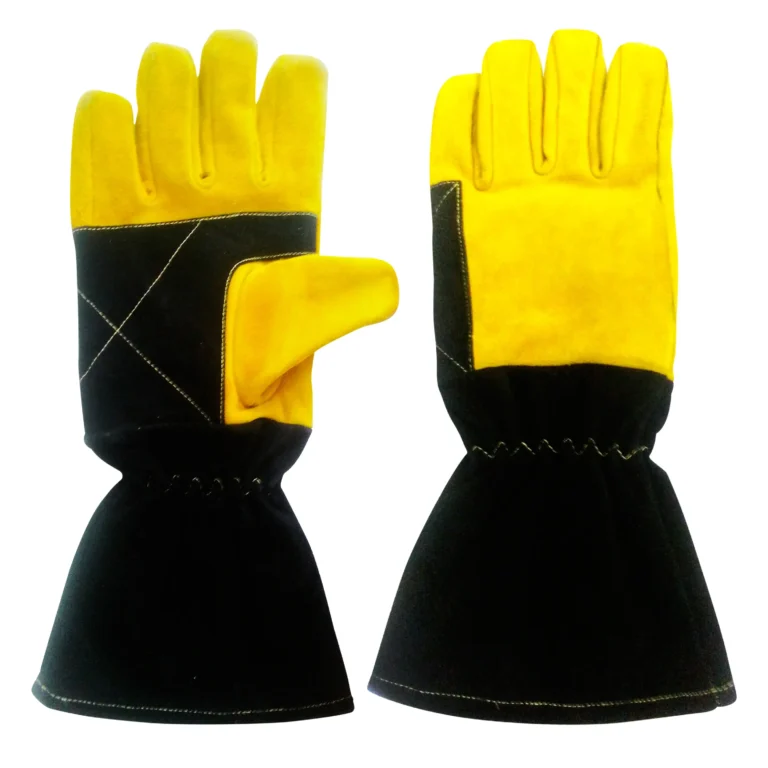
Useful reinforcement zones include:
- Palm heel
- Thumb saddle
- Side of the index finger
- Outer edge of the hand
- High-contact grip areas
A reinforced palm welding glove can resist abrasion and repeated handling, while a reinforced thumb welding glove may improve durability around the electrode-holder grip. Reinforcement should remain selective; large or stiff patches across the fingers can reduce movement and make electrode changes more difficult.
Protected Seams and Heat-Resistant Stitching
Exposed seams are common failure points because they can be damaged by heat, sparks, abrasion and repeated flexing. Protected-seam welding gloves may use leather welts, recessed stitching or reinforcement strips to reduce direct exposure.
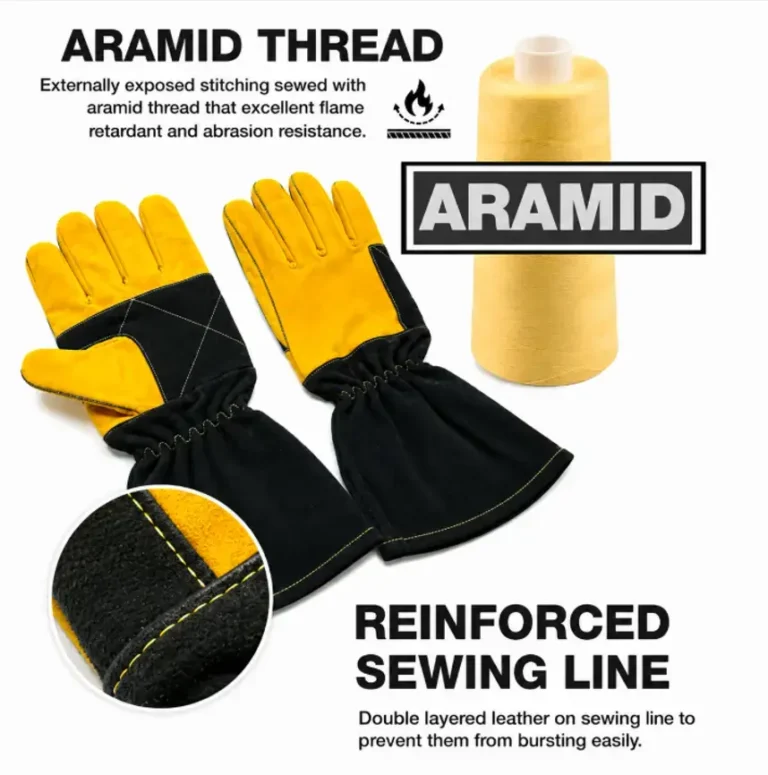
Kevlar-stitched welding gloves or gloves using other heat-resistant aramid thread can improve seam durability, but thread material alone does not guarantee a durable glove. Performance also depends on:
- Stitch placement
- Stitch density
- Leather quality
- Seam protection
- Repeated flexing
- Contact with abrasive surfaces
For a wider comparison of how construction differs between welding processes, see the MIG vs TIG vs Stick welding gloves guide.
Extended Cuffs and Sleeve Overlap
Long-cuff stick welding gloves and gauntlet stick welding gloves provide additional wrist and forearm coverage against sparks, falling slag and spatter. The cuff should overlap the welding-jacket sleeve without leaving an exposed gap.
A suitable cuff should provide:
- Secure sleeve overlap
- Wrist and lower-forearm coverage
- Space for natural wrist movement
- Enough stiffness to remain open
- Minimal interference with electrode-holder positioning
Longer cuffs are especially valuable during vertical, overhead and out-of-position welding, but an excessively rigid cuff can restrict wrist movement.
ARASWELD Expert Advice
Based on 12 years of professional welding experience, stick welding normally requires more insulation, reinforcement and coverage than precision TIG work. However, the heaviest glove is not automatically the safest or most practical choice. Excessive stiffness can weaken electrode-holder control, increase gripping pressure and accelerate hand fatigue. The best construction provides enough protection for the heat, slag and welding position while allowing the fingers, thumb and wrist to move naturally. For comparison, see the [TIG welding gloves guide](https://arasweld.com/resources/blogs-knowledge-hub/tig-welding-gloves-guide/).
How Should Stick Welding Gloves Fit?
Stick welding gloves should fit securely without compressing the hand or creating excessive material around the fingers. The glove must allow the welder to grip, reposition and release the electrode holder while maintaining wrist and thumb mobility. Both palm width and finger length should be checked because an incorrect fit can reduce control and increase fatigue.
Signs Stick Welding Gloves Are Too Tight or Too Loose
Signs the gloves are too tight:
- Restricted finger or thumb movement
- Pressure against the fingertips
- Difficulty opening the hand fully
- Tightness across the palm
- Visible stress around seams
- Faster hand and forearm fatigue
Signs the gloves are too loose:
- Excess material beyond the fingertips
- Glove rotation around the palm
- Reduced electrode-holder grip
- Lining movement or bunching
- Difficulty changing electrodes
- Unstable wrist or thumb positioning
A heavy-duty glove may feel firmer than a lightweight TIG glove, but it should not force the welder to maintain unnecessary gripping pressure. For broader sizing and hazard-selection considerations, refer to How to Choose Welding Gloves.
How Should Gloves Be Selected by Stick Welding Position?
Stick welding gloves should be selected according to where heat, slag and spatter are most likely to travel. Flat welding may require balanced palm protection, while vertical and overhead positions demand greater back-hand, cuff and forearm coverage. Pipeline and structural field welding also require reinforcement against abrasion, rough steel and repeated component handling.
Stick Welding Glove Selection by Welding Position
| Welding position | Main exposure | Recommended construction | Cuff requirement | Reinforcement priority |
|---|---|---|---|---|
| Flat and horizontal welding | Radiant heat, palm contact, sparks and moderate spatter | Fully lined or suitably insulated leather with balanced flexibility | Medium or long cuff with secure sleeve overlap | Palm, thumb saddle and side hand |
| Vertical welding | Descending sparks, slag and spatter near the wrist and forearm | Heavy-duty leather with protected seams and stable insulation | Extended gauntlet cuff | Back hand, thumb, cuff edge and seam zones |
| Overhead welding | Falling hot slag, sparks and spatter across the hand, wrist and sleeve | Heat-resistant, fully lined construction with protected stitching | Long gauntlet cuff with reliable sleeve overlap | Back hand, cuff, fingers and exposed seams |
| Pipeline and structural field welding | Heat, abrasion, rough steel, pipe contact and changing welding positions | Durable split-cowhide or hybrid construction with flexible high-wear reinforcement | Extended cuff that does not restrict wrist articulation | Palm heel, thumb saddle, side hand and cuff attachment |
Position-selection summary: Flat and horizontal stick welding generally requires balanced palm protection and mobility, while vertical and overhead welding demand stronger back-hand, seam and cuff protection against falling slag. Pipeline and structural work also require durable reinforcement for abrasion and repeated contact with rough steel.
Where Are Stick Welding Gloves Used Across Industries?
Stick welding gloves are widely used in industries that involve structural steel, heavy fabrication, field repairs and out-of-position welding. Common applications include construction, shipbuilding, pressure-vessel fabrication, pipelines, refineries and defense manufacturing, where welders may face substantial radiant heat, sparks, spatter, falling slag and mechanical wear.
- Construction and Infrastructure: Structural steel erection, bridge fabrication, railway projects, heavy equipment repair and on-site SMAW work.
- Shipbuilding and Marine: Hull fabrication, deck structures, confined-space repairs and vertical or overhead welding on heavy steel sections.
- Steel and Pressure Vessels: Tank fabrication, pressure-vessel production, thick-plate welding and repeated handling of rough or abrasive steel.
- Oil, Gas and Refineries: Pipeline construction, refinery maintenance, storage-tank fabrication and field welding in demanding industrial conditions.
- Aerospace and Defense: Military equipment fabrication, heavy structural assemblies, armor-related welding and field-repair operations requiring combined thermal and mechanical protection.
What Safety Standards Apply to Stick Welding Gloves?
Stick welding gloves should be assessed under EN 12477 for welding-specific protection, supported by relevant EN 407 thermal and EN 388 mechanical performance results. EN ISO 21420 covers general protective-glove requirements, while US employers must select hand protection through a task-specific hazard assessment. Always verify the complete markings and documentation for the exact glove model.
EN 12477 Type A vs Type B
EN 12477 is the central European standard for protective gloves used in manual welding, cutting and related processes. It classifies welding gloves according to their balance of dexterity and protective performance:
- Type A gloves provide higher minimum performance in several thermal and mechanical areas but have a lower minimum dexterity requirement.
- Type B gloves have a higher minimum dexterity requirement but different, generally lower minimum requirements in certain protective categories.
For demanding SMAW applications involving substantial heat, spatter and slag, an EN 12477 Type A welding glove may be appropriate. However, Type A is not automatically required for every stick-welding task, and Type B is not automatically limited to TIG. The exact classification must be verified for the individual glove and matched to the workplace hazards.
Type A and Type B are not quality grades. One is not universally better than the other; they represent different balances between protection and dexterity.
EN 407, EN 388 and General Hand-Protection Requirements
EN 12477 works with supporting standards that address different parts of glove performance. The complete test code and product documentation should be reviewed rather than relying on a single standard logo.
Stick Welding Glove Safety Standards at a Glance
| Standard or requirement | Relevance to stick welding gloves | What buyers should verify |
|---|---|---|
| EN 12477 | Welding-specific requirements covering dexterity, thermal performance, mechanical performance and glove construction | The exact Type A or Type B classification and supporting documentation for the identified model |
| EN 407 | Thermal performance against relevant heat and flame-related hazards | The complete six-position performance code and any positions marked as not tested or not applicable |
| EN 388 | Mechanical performance against abrasion, cut, tear and puncture hazards, with optional impact testing where applicable | The full performance code and its relevance to rough steel, plate edges, pipe and material handling |
| EN ISO 21420 | General requirements for protective-glove design, construction, comfort, efficiency, marking and manufacturer information | Correct sizing, product marking, supplied instructions and identification of the glove model |
| OSHA hand protection requirements and ANSI/ISEA 105 | US hazard-based glove selection and classification of relevant mechanical hand-protection performance | That the selected glove matches the task, exposure duration, workplace conditions and identified hazards |
Standards summary: EN 12477 is the welding-specific standard, while EN 407 and EN 388 provide supporting thermal and mechanical performance information. EN ISO 21420 covers general glove requirements, and US workplaces must select protection according to the actual task, exposure duration and workplace hazard assessment.
EXPERT POINT:
EN 388 covers abrasion, cut, tear and puncture performance; EN ISO 21420 covers general design, comfort, marking and manufacturer-information requirements. OSHA requires glove selection to reflect the task, conditions, duration and identified hazards, while ANSI/ISEA 105-2024 provides current US hand-protection classifications. For a comparison between EN 388 and EN 407 certifications, see this article. EN 388 vs EN 407.
ARASWELD Expert Advice
A certification code is the starting point, not the complete selection decision. Based on 12 years of professional welding experience, stick-welding glove selection should also consider electrode size, amperage, arc-on time, welding position, workpiece temperature, slag direction, material handling and glove condition. A certified glove can still be unsuitable when its construction does not match the actual exposure.
Important safety note: Welding gloves are heat-resistant, not heat-proof. Wet, contaminated, worn or physically damaged gloves may provide reduced protection and should be inspected before use. Welding gloves are also not electrical-insulating gloves for live electrical work; that hazard requires protective equipment specifically designed and certified for electrical insulation.
When Should Stick Welding Gloves Be Replaced?
Stick welding gloves should be replaced as soon as heat, wear or contamination compromises their protective construction, fit or grip. Do not continue using gloves with burn-through, exposed openings or unstable lining simply because the outer leather remains mostly intact. Stick welding can rapidly enlarge small defects when they are repeatedly exposed to heat, slag and abrasion.
Replace the gloves when you find:
- Burn-through or deeply charred areas
- Open, broken or heat-damaged seams
- Hardened, cracked or significantly shrunken leather
- Torn, displaced or heavily compressed lining
- Holes, thinning or exposed internal layers
- Heavy oil, chemical or unknown contamination
- Reduced grip on the electrode holder
- Damaged cuffs or loss of wrist and sleeve coverage
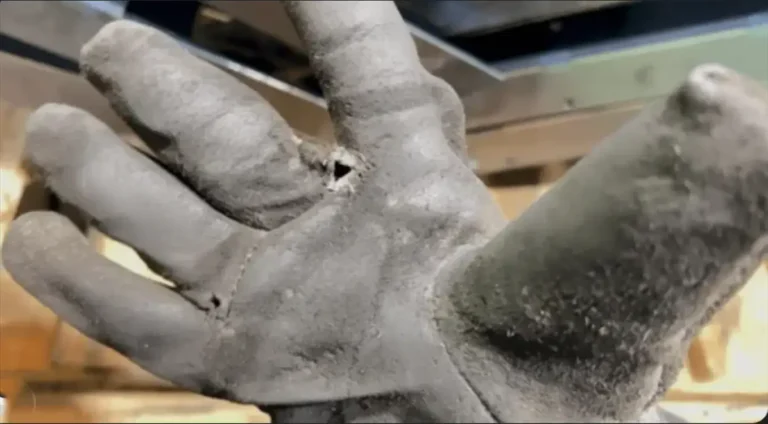
Inspect both gloves before each welding session, paying particular attention to the thumb saddle, palm, fingertips, side hand, seams and cuff edge.
Stick Welding Glove Selection Checklist
Use this checklist to compare stick welding gloves against the actual SMAW process, welding position and surrounding workplace hazards. The correct glove should provide enough thermal and mechanical protection without becoming so bulky that it restricts electrode-holder control, wrist movement or repeated electrode changes.
Stick Welding Glove Selection Checklist
| Selection criterion | What to check before choosing |
|---|---|
| Stick/SMAW-specific design | Confirm that the glove is designed for substantial heat, sparks, spatter and slag rather than precision welding alone. |
| Heat and spatter exposure | Consider amperage, electrode size, arc-on time, workpiece temperature and proximity of the hands to the weld zone. |
| Slag exposure | Assess whether falling or descending slag may reach the fingers, back of the hand, wrist, cuff or sleeve opening. |
| Leather construction | Evaluate leather type, thickness, uniformity, flexibility and placement across high-heat and high-abrasion zones. |
| Lining | Choose insulation that matches the thermal exposure without creating excessive fingertip bulk, liner movement or gripping effort. |
| Reinforcement | Check the palm, thumb saddle, side hand, fingers and other areas exposed to repeated abrasion, grip pressure or component handling. |
| Stitching | Look for heat-resistant thread, protected seams, leather welts and stitching positioned away from direct heat and abrasion. |
| Cuff length | Confirm secure sleeve overlap and sufficient wrist or forearm coverage for the welding position without restricting movement. |
| Fit | Check palm width, finger length, thumb position, wrist mobility and the ability to grip and release the electrode holder naturally. |
| Welding position | Match the glove to flat, horizontal, vertical, overhead, pipeline or structural field-welding exposure. |
| Mechanical risks | Consider rough steel, sharp plate edges, pipe handling, fixtures, tools, abrasion, impact and puncture hazards. |
| Verified standards | Verify the exact EN 12477 classification and relevant EN 407 or EN 388 performance codes for the identified glove model. |
| Current glove condition | Inspect for burn-through, open seams, hardened leather, damaged lining, holes, contamination, reduced grip and loss of cuff coverage. |
Checklist summary: The best stick welding gloves combine task-appropriate insulation, slag and spatter coverage, durable leather, protected seams, secure fit and verified performance. Selection should reflect the welding position and surrounding mechanical hazards rather than relying on glove thickness or leather type alone.
Explore ARASWELD Heavy-Duty Stick Welding Gloves
Explore ARASWELD Heavy-Duty Stick Welding Gloves
For stick-welding environments where rough steel, sharp edges, abrasion, impact and component handling are major concerns, compare the ARASWELD Impact Abrasion Resistant glove with the selection checklist above. Its verified construction includes 1.2 mm split cowhide, a reinforced palm, impact protection and EN 388 3X22DP performance. Review the full specifications and confirm that its thermal protection, fit and coverage match your exact SMAW application before selection.
Industrial buyers, fabrication facilities, welding schools, structural and field-welding contractors, automotive and aerospace suppliers, and procurement departments can request bulk pricing, product documentation, supply details, and size or specification support directly from ARASWELD.
Frequently Asked Questions About Stick Welding Gloves
What gloves are best for stick welding?
The best stick welding gloves use durable leather, suitable insulation, protected seams and extended cuffs to manage heat, sparks, spatter and slag. The correct glove should also allow secure electrode-holder control. Selection depends on arc-on time, welding position, workpiece temperature, mechanical hazards and verified safety performance.
Can you use MIG gloves for stick welding?
You can use some MIG gloves for stick welding when their insulation, cuff coverage and construction match the expected heat and slag exposure. However, lightweight MIG gloves may not provide enough protection for demanding SMAW work. Compare the differences in our MIG vs TIG vs Stick welding gloves guide.
Is cowhide or elkskin better for stick welding gloves?
Split cowhide generally prioritizes abrasion resistance, durability and protection against sparks and slag, while elkskin often provides greater flexibility and comfort. Neither leather is universally better. The best choice depends on leather thickness, lining, reinforcement, glove pattern, seam protection and the required balance between thermal protection and electrode control.
Should stick welding gloves be fully lined?
Stick welding gloves should usually have suitable insulation, but the heaviest full lining is not always necessary. Fully lined gloves are more appropriate for prolonged heat, overhead welding and repeated slag exposure. Lighter or selective insulation may provide better mobility when heat exposure is moderate and the glove’s performance has been properly assessed.
How long should stick welding glove cuffs be?
Stick welding glove cuffs should be long enough to overlap the welding-jacket sleeve and protect the wrist from sparks, spatter and falling slag. Extended or gauntlet cuffs are especially useful for vertical and overhead welding. The cuff must provide reliable coverage without becoming so rigid that it restricts wrist movement.
Are stick welding gloves heat-proof?
No, stick welding gloves are heat-resistant, not heat-proof. Their thermal protection depends on leather, lining, seam construction, condition and verified test ratings. Prolonged heat or contact with hot metal can exceed their limits. Learn more in Are Welding Gloves Heat Proof?
What is an EN 12477 Type A welding glove?
An EN 12477 Type A welding glove meets higher minimum requirements in several thermal and mechanical categories than Type B, but it has a lower minimum dexterity requirement. Type A can suit demanding stick-welding conditions, although the exact classification and complete performance ratings of the individual glove must always be verified.
Read the complete EN 12477 welding gloves standard guide.
When should stick welding gloves be replaced?
Replace stick welding gloves when burn-through, holes, thinning, open seams, hardened leather or damaged lining reduces their protection. Heavy contamination, reduced electrode-holder grip and damaged cuffs are also replacement triggers. Inspect the palm, thumb, fingertips, seams and cuff before welding because small defects can worsen quickly under repeated heat and slag exposure.
Are ARASWELD welding gloves available for individual and wholesale purchase?
ARASWELD welding gloves can be considered for both individual purchases and bulk industrial enquiries, subject to current product availability and ordering conditions. Individual buyers can review the relevant product page, while businesses, welding schools and procurement teams can request wholesale information through the ARASWELD B2B program.
How do ARASWELD volume pricing and shipping work?
ARASWELD volume pricing and shipping terms depend on the order quantity, destination, product specifications, packaging requirements and current supply conditions. Industrial buyers should request a tailored quotation that confirms unit pricing, minimum quantities, documentation, estimated lead time and shipping arrangements before placing a bulk order.