Welding Glove Materials: Cowhide, Goatskin, Deerskin, Elkskin and Aramid Explained
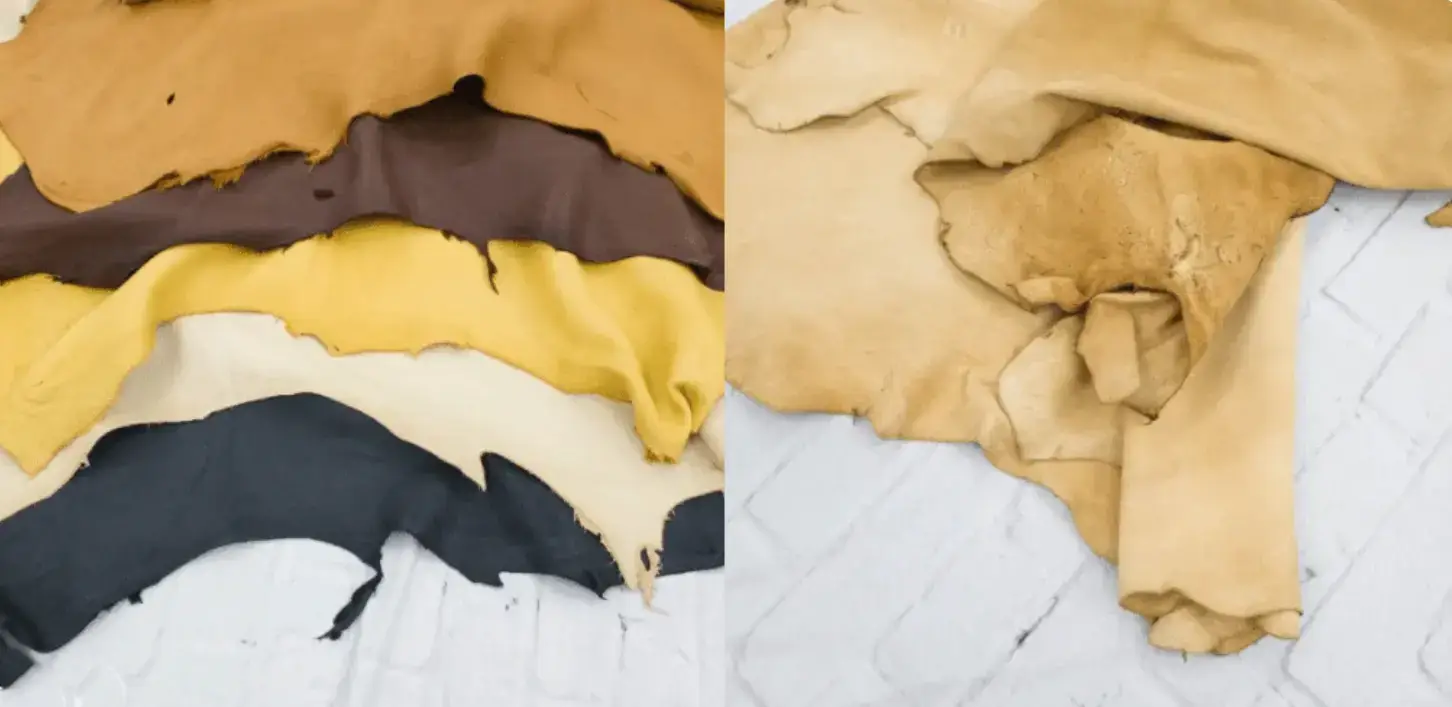
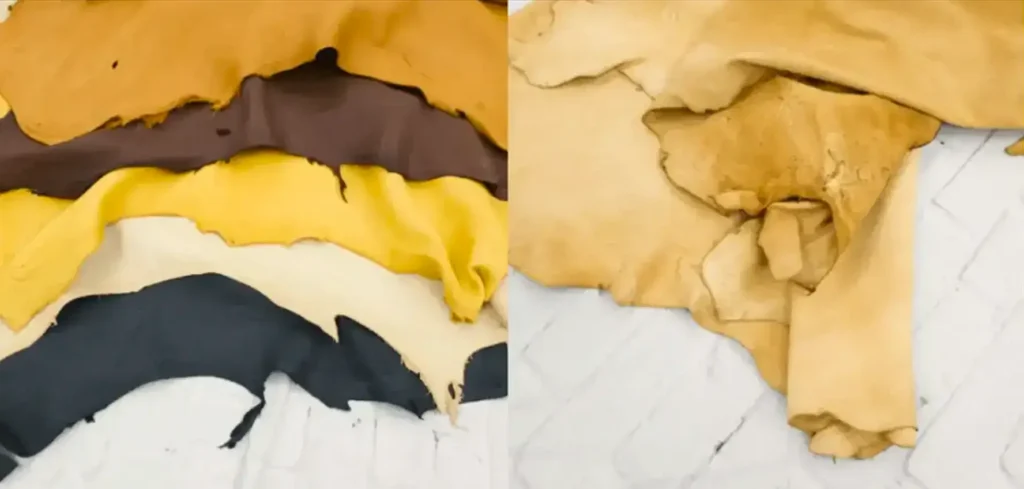
Most welding glove materials use leather as the primary outer shell because it provides a practical balance of durability, flexibility and protection against common welding hazards. Common welding glove leather types include cowhide, goatskin, deerskin, elkskin and pigskin.
However, there is no universally best material for welding gloves because TIG, MIG and Stick welding create different requirements for dexterity, insulation, spatter protection and abrasion resistance.
When asking what are welding gloves made of, the animal species is only one part of the answer. The hide area, grain or split layer, leather thickness, tanning consistency, lining, seam placement and reinforcement also influence the finished glove. Aramid is not leather; it is an engineered fibre that may be used for heat-resistant stitching, protective linings or reinforcement. The correct welding gloves material must therefore be evaluated as part of the complete glove construction and its intended welding application.
Use the quick navigation to compare welding glove leather types, understand how leather quality and construction affect performance, and select suitable materials for TIG, MIG, Stick and flux-cored welding.
What Are Welding Gloves Made Of?
Welding gloves are made from a coordinated material system, not simply one piece of leather. The outer shell provides the main protective barrier, while the lining, sewing thread, reinforcements, seams, cuff and fit work together to influence heat protection, abrasion resistance, comfort and dexterity. The most suitable construction depends on the welding process, working conditions and the glove’s tested protection levels.
Main components of a welding glove
- Outer leather shell
- Internal lining or insulation
- Sewing thread
- Palm and thumb reinforcements
- Finger and seam construction
- Cuff material and length
- Closures or elastic, where applicable
Main Materials Used in Welding Glove Construction
| Glove Component | Common Material Examples | Main Function |
|---|---|---|
| Outer shell | Cowhide, goatskin, deerskin, elkskin or pigskin | Provides the primary barrier against heat, abrasion, sparks and spatter |
| Lining | Cotton, fleece or engineered protective fibres | Supports comfort, insulation or mechanical protection |
| Sewing thread | Aramid or another suitable heat-resistant thread | Joins leather panels, seams and reinforcement components |
| Reinforcement | Additional leather or engineered protective material | Protects high-wear areas such as the palm, thumb and index finger |
| Cuff | Leather or another suitable flame-resistant material | Extends coverage over the wrist and lower forearm |
A welding glove’s performance depends on the complete construction. The leather shell, lining, thread, reinforcement, seams and cuff must work together to provide the required balance of protection, durability, comfort and hand control.
ARASWELD Expert Tip
Do not judge a welding glove by the leather name alone. From my 12 years of professional welding experience, I have seen two cowhide gloves perform very differently because of differences in leather thickness, grade, lining, seam placement, reinforcement and fit.
For a broader explanation of glove construction, welding processes and protection requirements, read the Complete Guide to Welding Gloves.
Why Is Leather Used for Welding Gloves?
Leather is widely used for welding glove shells because it can provide a practical balance of flexibility, physical durability and resistance to everyday workshop wear. It can also be processed in different thicknesses, grades and finishes, allowing manufacturers to create lighter gloves for precise hand control or heavier constructions for more demanding heat and spatter exposure.
Leather may contribute:
- A durable outer barrier
- Resistance to abrasion and workshop wear
- Flexibility that supports hand movement
- Different thickness and grade options
- Compatibility with linings and reinforcements
- A workable material for palms, fingers, cuffs and protective panels
However, leather is a natural material, so thickness, fibre structure, flexibility and surface quality can vary between hides and even across different areas of the same hide. Careful tanning, grading and cutting are therefore essential.
Different welding processes also require different leather constructions. TIG welding often prioritises dexterity, while MIG and Stick welding generally require greater insulation, reinforcement and spatter protection. Leather type alone does not establish a certified protection level, and leather should never be described as completely fireproof. The finished glove must be evaluated through its complete design, intended application and relevant test results.
Welding Glove Leather Types
Welding gloves are produced from several leather types, each offering a different balance of flexibility, durability, thickness and comfort. Cowhide, goatskin, deerskin, elkskin and pigskin are among the most common welding glove leather types, but the animal species alone does not determine performance. Leather grade, hide area, tanning, lining, reinforcement and glove pattern are also important. This section provides a practical overview; each major leather will be examined in greater detail on a separate supporting page.
Cowhide Welding Gloves
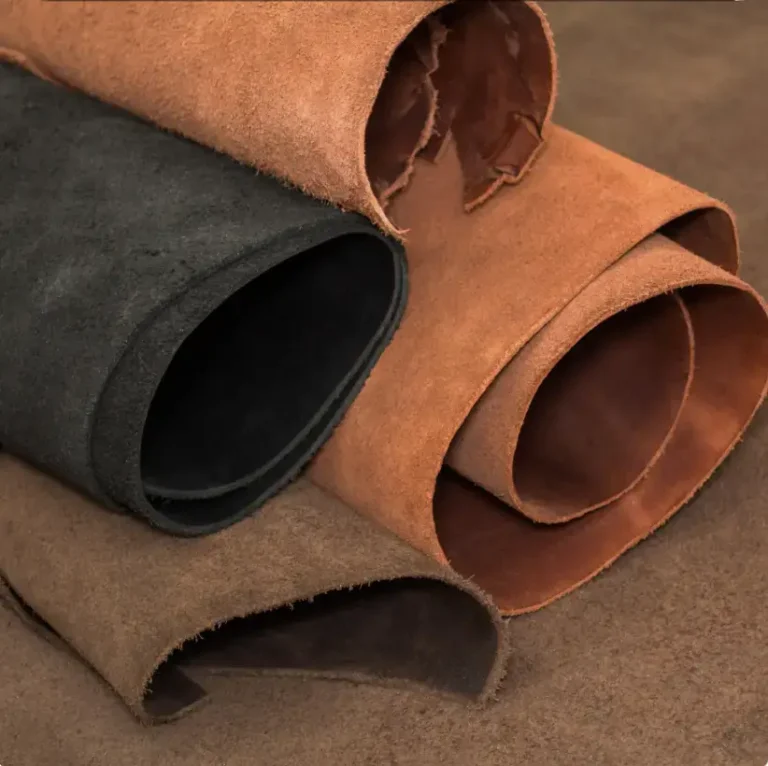
Cowhide welding gloves are commonly associated with robust, versatile glove construction. Cowhide is available as both grain and split leather and can be produced in different thicknesses from different areas of the hide.
It is frequently used for MIG, Stick, fabrication and other applications that require a practical balance of durability, insulation and abrasion resistance. However, dexterity depends heavily on the leather thickness, glove cut, internal lining and finger pattern.
Typical advantages:
- Generally durable
- Widely available
- Suitable for reinforced glove construction
- Available in grain and split forms
- Useful across several welding processes
Potential trade-offs:
- Heavy or insulated constructions can reduce finger control
- Quality varies by hide section, split layer, grading and tanning
- The term “cowhide” alone does not reveal the leather grade or finished glove quality
Cowhide is often used in gloves designed for heavier fabrication work. The correct construction still depends on the process, as explained in the MIG Welding Gloves Guide and Stick Welding Gloves Guide.
Goatskin Welding Gloves
Goatskin welding gloves are commonly selected when flexibility, tactile control and finger movement are important. Goatskin is often used in precision-oriented glove designs because it can support a close fit without requiring an excessively heavy leather construction.
It is particularly associated with TIG welding and lighter fabrication work. Goatskin may also appear in more protective glove designs when combined with suitable linings, cuffs and reinforced wear zones.
Typical advantages:
- Supple hand feel
- Good finger movement
- Suitable for close-fitting glove patterns
- Useful for work requiring controlled torch movement
Potential trade-offs:
- Thin constructions may provide less insulation than heavier lined gloves
- Not every goatskin glove is suitable for high-spatter welding
- Performance depends on the full glove construction, not goatskin alone
For more process-specific guidance, see the TIG Welding Gloves Guide.
Deerskin Welding Gloves
Deerskin welding gloves are recognised for their soft feel and natural flexibility. In a properly designed glove, deerskin can conform comfortably to the hand and support controlled movement during welding and fabrication tasks.
This material may be considered when comfort, flexibility and reduced hand restriction are important. However, deerskin should not automatically be treated as superior to cowhide, goatskin or other leather types. Its suitability depends on thickness, grade, lining, reinforcement and the intended welding process.
Typical advantages:
- Soft hand feel
- Flexible glove construction
- Comfortable for tasks requiring controlled movement
- Can adapt well to the shape of the hand
Potential trade-offs:
- Often positioned at a higher material cost
- Durability depends on leather grade and glove construction
- Availability and batch consistency may require closer quality control
- Softness alone does not establish heat or abrasion performance
Elkskin Welding Gloves
Elkskin welding gloves are generally found in premium or specialist glove constructions. Properly selected elk hide can combine flexibility with a substantial leather structure, making it suitable for selected demanding welding and fabrication applications.
Elkskin may offer a comfortable feel in a robust glove design, but its performance still depends on leather thickness, lining, seam construction, reinforcement and relevant product testing.
Typical advantages:
- Flexible feel in an appropriate glove construction
- Suitable for selected heavy-duty applications
- Can be used in robust, reinforced designs
- Often positioned as a premium leather option
Potential trade-offs:
- Higher material cost
- Less widely available than cowhide or goatskin
- Material consistency must be carefully controlled
- “Premium” does not automatically mean suitable for every welding process
Pigskin Welding Gloves
Pigskin welding gloves are used in some welding, fabrication and general industrial glove designs. Pigskin can provide useful flexibility and breathability and may be considered for workshops where humidity, moisture or oily handling conditions are relevant.
Its actual performance depends on leather thickness, tanning, surface treatment, lining and glove construction. A lightweight pigskin glove and a lined, reinforced pigskin glove should not be expected to perform in the same way.
Typical advantages:
- Flexible in suitable constructions
- Relatively breathable
- Useful in selected workshop environments
- Can support comfortable general-purpose glove designs
Potential trade-offs:
- Not automatically the best choice for intense spatter exposure
- Requires application-specific lining and reinforcement
- Performance varies according to treatment and thickness
- Less central to welding searches than cowhide or goatskin
Other Leathers Used in Welding Gloves
Other leathers may appear in specialist or less common welding glove constructions. Sheepskin can provide softness and flexibility but is not automatically suitable for heavy-spatter work. Kidskin, which comes from young goats, is typically thin and supple and may support precision-focused designs where fine hand control is important. Buffalo or bison leather may be used in robust industrial gloves because it can offer a substantial structure, although thickness, softness and consistency vary by hide and processing method.
Expert Point:
These materials should be evaluated according to the complete glove design rather than the animal species alone.
Welding Glove Leather Types Compared
| Leather Type | Relative Flexibility | Typical Durability | Common Application Direction | Main Consideration |
|---|---|---|---|---|
| Cowhide | Moderate, depending on construction | Generally strong | MIG, Stick, fabrication and multipurpose use | Thickness and leather grade vary considerably |
| Goatskin | High | Good for its weight | TIG and precision-focused work | Thin gloves may require additional insulation or reinforcement |
| Deerskin | High | Construction-dependent | Comfort and controlled hand movement | Usually more expensive than common cowhide options |
| Elkskin | Moderate to high | Suitable for robust constructions | Selected heavy-duty welding applications | Cost, availability and batch consistency |
| Pigskin | Moderate to high | Application-dependent | General fabrication and selected workshop conditions | Not suitable for every high-spatter application |
Cowhide is generally selected for robust and versatile glove construction, while goatskin and deerskin are often considered where flexibility and controlled movement are priorities. Elkskin may support selected premium heavy-duty designs, and pigskin may suit particular fabrication environments. These are general material tendencies, not certified performance ratings. The finished glove’s lining, reinforcement, seams, fit and test results remain essential.
ARASWELD Specialist Insight:
Based on 12 years of professional welding experience, a leather comparison should help narrow the choice, not make the final decision. Always evaluate the leather together with the welding process, heat and spatter exposure, glove fit, seam construction, reinforcement and tested protection levels.
For a broader process comparison, read Types of Welding Gloves: MIG vs TIG vs Stick.
Leather Qualities
Leather quality is influenced by more than the animal species. The area of the hide, fibre density, natural defects, thickness, split layer, tanning method, finishing, grading and cutting direction can all affect the finished welding glove. Even within one bovine hide, different areas may vary in stretch, structural consistency and usable cutting quality. Manufacturers must therefore select and position each leather panel according to the demands placed on the palm, fingers, thumb, back of the hand and cuff.
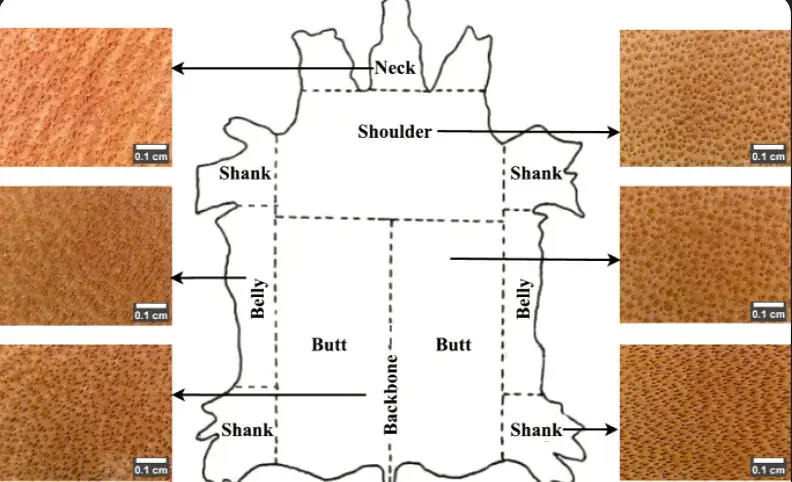
Where on the Hide Does the Leather Come From?
A bovine hide contains several areas with different cutting and structural characteristics. The butt and central back areas are often valued for consistency, while shoulder and belly areas have different fibre structures and cutting behaviour. However, no area should be selected by location alone. Its suitability depends on grading, thickness, tanning and the glove component being produced.
The term side leather does not identify one uniform anatomical area. In leather-trade terminology, a side is one-half of a whole hide after it has been divided along the backbone. It may contain parts of the shoulder, back, belly and other areas, which must still be individually graded.
Bovine Hide Areas and Leather Considerations
| Hide Area | General Characteristics | Quality Considerations | Possible Glove Relevance |
|---|---|---|---|
| Shoulder | Often useful and substantial but may contain wrinkles extending from the neck | Check fibre consistency, surface condition and usable cutting area | Flexible glove panels where the selected leather meets specification |
| Butt or back | Often among the more consistent and structurally dense areas | Useful where durability and uniform panel cutting are priorities | High-wear or structurally important glove panels |
| Belly | Generally more variable and more prone to looseness or stretch | Inspect thickness, fibre structure and consistency carefully | Selected lower-stress components when the leather meets specification |
| Neck | May contain wrinkles and greater structural variation | Requires careful grading and controlled panel placement | Limited or selected component use |
| Shank | Irregular in shape with potentially variable structure | Lower cutting efficiency and greater variation may occur | Application-dependent |
| Side | One-half of a whole hide divided along the backbone | Contains several anatomical areas rather than one uniform leather grade | Must be graded according to the actual section used |
The central back and butt areas often provide more consistent material for demanding glove panels, while shoulder, belly, neck and shank leather require application-specific grading. A hide area does not determine quality by itself; thickness, fibre structure, tanning, defects and panel placement must also be evaluated.
ARASWELD Tannery Expertise:
Matching Hide Areas to Glove ComponentsThe butt and central back areas are often valued for consistency, while shoulder and belly areas have different fibre structures and cutting characteristics. The suitability of any section depends on grading, thickness, tanning and the glove component being produced.
What Determines Welding-Glove Leather Quality?
Welding-glove leather quality is determined by consistent thickness, fibre structure, controlled defects, suitable flexibility, physical performance and tanning consistency. Correct grading and panel placement are also essential because palms, fingers, thumbs and cuffs experience different combinations of movement, abrasion, heat and mechanical stress.
Important quality factors include:
- Consistent leather thickness
- Appropriate softness and flexibility
- Fibre density and structural consistency
- Absence or controlled placement of natural defects
- Suitable tear and abrasion performance
- Response to repeated bending and flexing
- Tanning and finishing consistency
- Controlled moisture levels
- Batch-to-batch uniformity
- Correct panel placement during cutting
ARASWELD Expert Tip:
The most visually attractive leather area is not automatically the best area for every glove component. The palm, thumb, cuff, back of the hand and reinforcement panels experience different stresses and should be cut from leather selected for their specific function.
Careful leather assessment should form part of the wider product-selection process explained in how to choose welding gloves.
Grain Leather vs Split Leather for Welding Gloves
Grain and split leather come from different layers of the hide and provide different surface characteristics. Neither is automatically superior for every welding glove. The correct choice depends on the required flexibility, abrasion exposure, glove location, thickness, leather grade and overall construction.
Grain Leather
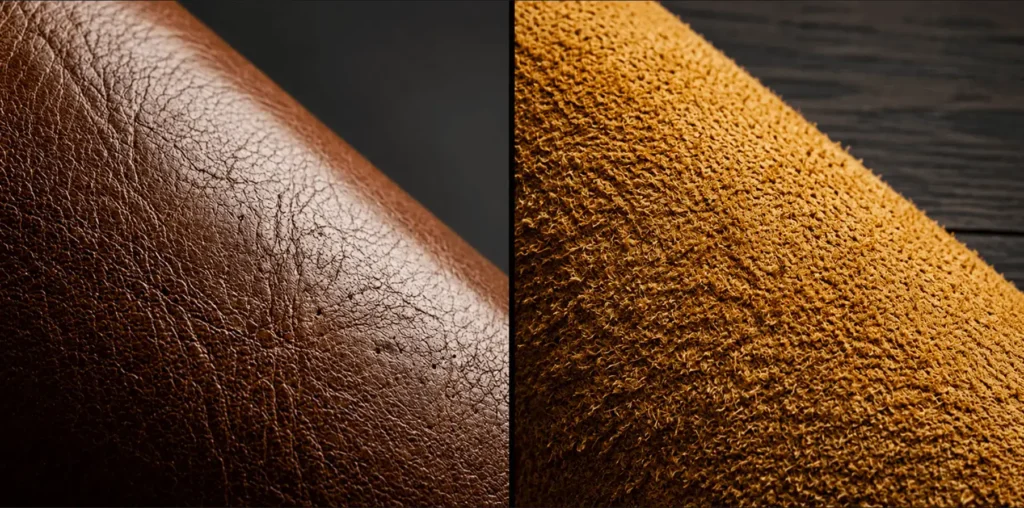
Grain leather comes from the upper layer of the hide and retains the natural grain surface. It normally has a smoother exterior than split leather and may be used where flexibility, grip, feel and surface behaviour are important.
In welding gloves, grain leather is often selected for palms, fingers or other areas where controlled hand movement is required. Its quality still varies according to the animal species, hide area, thickness, grade, tanning and finishing process.
Split Leather
Split leather is produced when a hide is divided horizontally into separate layers. The upper layer containing the grain surface is the grain split, while the lower layer is the flesh split. A sufficiently thick hide may also produce a middle split.
Split leather has a more fibrous surface and is commonly used in durable welding gloves, cuffs and heavy-duty protective panels. However, “split leather” is not one uniform quality grade. The source area, split level, thickness, fibre consistency and tanning must still be specified and controlled.
For standardised industry definitions of grain split, flesh split, middle split and side leather, see the Leather Working Group leather terminology guide.
Can One Glove Use Both Grain and Split Leather?
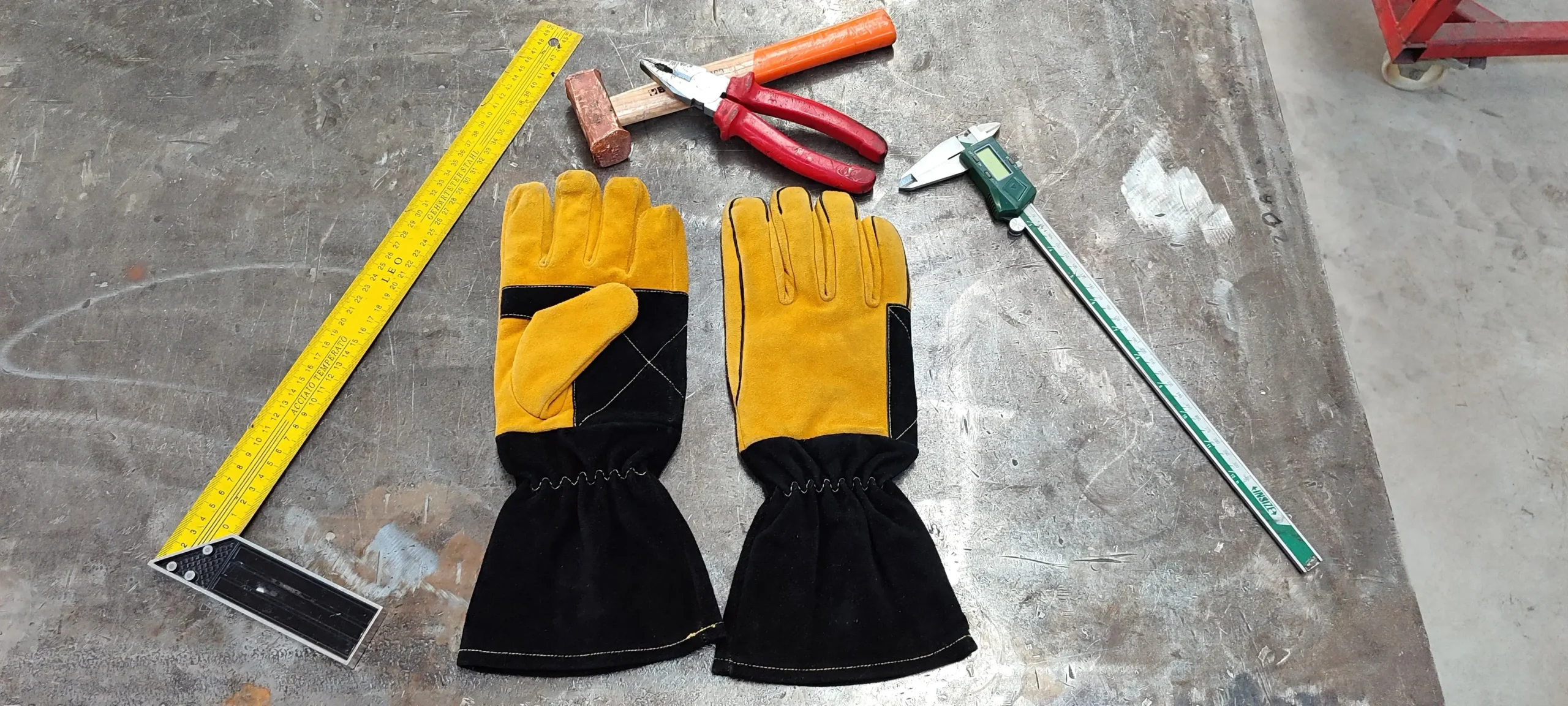
Yes. A welding glove can combine grain and split leather in different zones. Grain leather may support flexibility, grip and finger control, while split leather may be placed in areas exposed to abrasion, sparks or spatter. The final arrangement depends on protection, comfort, durability and cost requirements.
A mixed-leather construction may be selected according to:
- Dexterity requirements
- Spark and spatter exposure
- Abrasion levels
- Grip requirements
- Material cost
- Comfort and flexibility
- Reinforcement needs
Grain Leather vs Split Leather in Welding Gloves
| Feature | Grain Leather | Split Leather |
|---|---|---|
| Surface | Smoother exterior containing the natural grain surface | More fibrous surface from a lower hide layer |
| Common strength | Feel, flexibility and smoother surface behaviour | Robust and economical protective construction |
| Typical glove location | Palm, fingers or precision-focused areas | Back of hand, cuff or heavy-duty panels |
| Main caution | Quality, thickness and finishing still vary | The split grade, source area and consistency must be specified |
Grain leather is generally used where a smoother surface, flexibility and hand control are priorities. Split leather is commonly selected for robust, economical glove panels and cuffs. One welding glove may combine both materials to balance dexterity, abrasion resistance, spatter exposure, comfort and production requirements.
How Thickness, Lining and Construction Affect Performance
Thickness affects tactile control and the physical barrier, lining changes insulation and fit, and seams, reinforcements, finger geometry and cuff design influence durability and movement. The best construction is matched to the welding process, exposure level, hand-control requirements and verified product test results. Leather species alone does not determine welding glove performance.
Leather Thickness
Thin leather can improve tactile feedback and finger control, which is useful for precision work. Thicker leather can provide a more substantial physical barrier against abrasion, sparks and spatter, but excessive thickness may reduce flexibility and make tools, torches or electrodes harder to control.
Thickness should also remain consistent across critical panels. Unexpected variation in the palm, fingers or thumb can affect fit, movement and wear. The American Welding Society similarly distinguishes between lighter, close-fitting gloves for dexterity-focused GTAW work and heavier insulated leather gloves for processes with greater heat and spatter exposure.
Leather thickness alone does not establish a temperature limit or protection rating. The finished glove’s construction and relevant test results should take priority over assumptions based only on how thick the leather feels. See the EN 12477 welding gloves standard for further guidance on welding-glove requirements.
Lined vs Unlined Welding Gloves
When comparing lined vs unlined welding gloves, unlined constructions generally provide closer contact with the leather shell and greater finger sensitivity. They may be suitable where controlled movement is a priority and the working conditions do not require additional insulation.
Lined gloves can add thermal insulation, comfort or mechanical protection. However, a lining can also change:
- Internal glove volume
- Finger control
- Moisture management
- Break-in behaviour
- Overall fit
Because lining affects internal dimensions, check the Welding Gloves Size Guide before choosing a size.
Seams, Reinforcement and Glove Pattern
Leather quality cannot compensate for weak construction. Important design areas include:
- Thumb-crotch reinforcement
- Index-finger wear-zone protection
- Palm reinforcement
- Protected or welted seams
- Finger-seam positioning
- Pre-curved or ergonomic patterns
- Cuff construction and coverage
A well-designed glove places seams away from concentrated wear where possible and reinforces the areas that repeatedly contact tools, workpieces and welding equipment.
ARASWELD Specialist Insight: Critical Wear Zones Identified Through 12 Years of Professional Welding
Based on 12 years of professional welding experience, I have found that glove damage often begins at one concentrated wear point rather than across the entire leather surface. Inspect the thumb crotch, side of the index finger, palm contact zone, fingertips and exposed seams before judging overall durability.
Where Does Aramid Fit in Welding Glove Construction?
Aramid is an engineered fibre, not an animal leather or an alternative hide. In welding gloves, it can support the leather shell as sewing thread, a protective liner, a reinforcement layer or part of an engineered yarn structure. Its function depends on where it is placed and how it interacts with the rest of the glove.
Possible uses of aramid include:
- Heat-resistant sewing thread
- Seam reinforcement
- Cut-resistant liners
- Palm or fingertip reinforcement
- Composite protective constructions
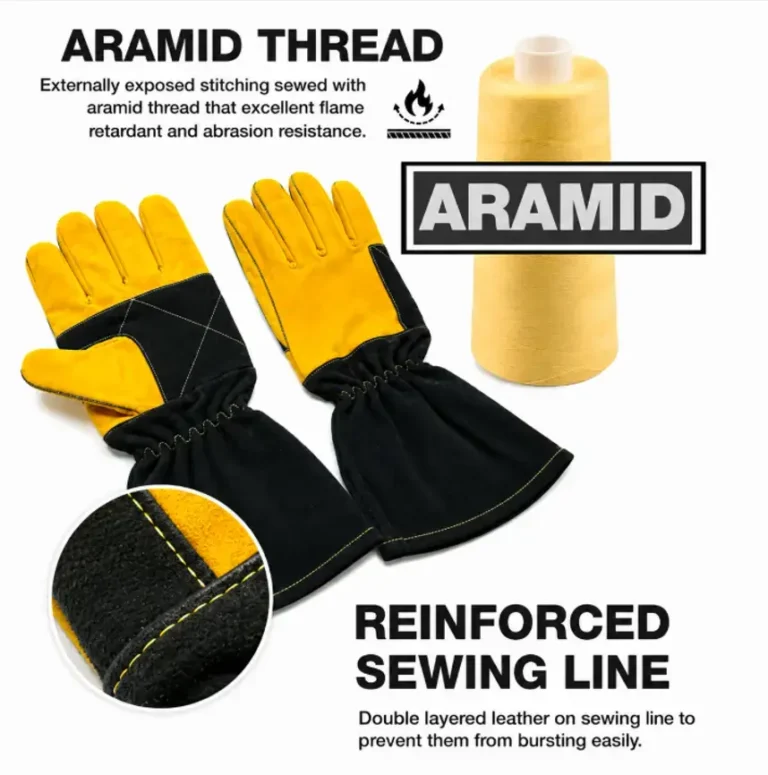
In aramid stitching welding gloves, the fibre is commonly used to join leather panels or reinforce seams exposed to heat and repeated movement. In aramid fibre welding gloves, it may also appear within a liner or reinforcement system. However, describing a glove as aramid-stitched does not mean the complete glove automatically achieves a particular heat, cut or abrasion rating.
DuPont describes Kevlar® as an aramid fibre used in industrial gloves and sleeves for thermal, cut and abrasion protection, including applications requiring strength at elevated temperatures. The actual protection of a finished glove still depends on its construction and test results.
Kevlar® should be used only when referring specifically to DuPont’s branded para-aramid fibre. It should not be used as a generic name for every aramid material or every heat-resistant thread for welding gloves.
ARASWELD Expert Tip:
Aramid stitching can improve seam durability, but it cannot compensate for weak leather, poor panel placement, insufficient reinforcement or an unsuitable glove design. The leather shell, thread, lining, seams and wear-zone construction must function together.
What Is the Best Leather for TIG, MIG and Stick Welding?
TIG welding usually prioritises dexterity and precise control, while MIG, flux-cored and Stick welding generally require greater protection from heat, sparks, spatter and abrasion. The glove should match the actual process, amperage, welding position, duty cycle, exposure level and working environment. There is no single best leather for every welding process.
The American Welding Society’s guidance on choosing welding PPE explains why close-fitting leather gloves are commonly used for dexterity-focused GTAW work, while heavier insulated constructions are generally required for higher-heat GMAW, FCAW and SMAW applications.
Leather for TIG Welding Gloves
TIG welding gloves commonly use goatskin, deerskin or another flexible grain leather because these materials can support close fit, finger movement and controlled torch handling. A relatively thin construction may improve tactile feedback where the hazard assessment and tested protection permit it.
Important construction details include:
- Close fit without restricting circulation
- Flexible finger and thumb patterns
- Seams positioned to reduce pressure and interference
- Adequate cuff coverage
- Reinforcement in areas exposed to repeated filler-rod contact
The American Welding Society notes that close-fitting goat, deer or sheepskin gloves can provide the dexterity required for GTAW and lower-amperage applications.
For process-specific selection, read the TIG Welding Gloves Guide or explore Precision and Specialized Welding Gloves.
Leather for MIG Welding Gloves
Cowhide welding gloves are widely used for MIG welding because cowhide can support durable, insulated and reinforced constructions. Selected pigskin, deerskin or mixed-leather designs may also be suitable when the complete glove provides the required protection.
Key features to evaluate include:
- Insulation appropriate to the application
- Palm and thumb-crotch reinforcement
- Protection around the index-finger wear zone
- Seams protected from direct spatter
- Sufficient wrist and lower-forearm coverage
MIG glove selection should balance heat and spatter protection with enough movement to control the welding gun. See the MIG Welding Gloves Guide and Impact and Abrasion Resistant Welding Gloves.
Leather for Stick and Flux-Cored Welding Gloves
Stick and flux-cored welding generally call for a robust leather construction because these processes can involve substantial heat, sparks, spatter and abrasion. Heavier cowhide, split-and-grain combinations or another suitable insulated leather system may be used.
Priorities commonly include:
- Thermal insulation
- Reinforced palm, thumb and index-finger zones
- Protected seams
- Extended leather cuffs
- Durable back-of-hand construction
- Less emphasis on fine tactile sensitivity than TIG gloves
AWS advises using heavier-duty gloves for FCAW and thick, insulated leather gloves for processes such as GMAW and SMAW.
Read the Stick Welding Gloves Guide or review High-Heat Protection Welding Gloves.
Welding Glove Materials by Process
| Welding Process | Common Material Direction | Main Priority | Construction Features to Evaluate |
|---|---|---|---|
| TIG/GTAW | Goatskin, deerskin or another flexible grain leather | Dexterity and precise control | Close fit, finger seams, flexibility and cuff coverage |
| MIG/GMAW | Cowhide or another suitable reinforced leather construction | Balance of heat protection and control | Lining, palm reinforcement, protected seams and cuff |
| Stick/SMAW | Heavier cowhide or robust split-and-grain construction | Heat, spatter and durability | Insulation, seam protection, reinforcement and extended coverage |
| Flux-cored/FCAW | Heavy-duty insulated leather construction | Spatter, heat and abrasion protection | Reinforcement, lining, protected seams and cuff coverage |
TIG gloves generally prioritise flexible leather and precise hand control, while MIG, Stick and flux-cored gloves require progressively more attention to insulation, spatter exposure, reinforcement and cuff coverage. These are general selection directions.
the final choice must reflect the actual welding conditions and tested glove performance.
For a complete process comparison, read Types of Welding Gloves: MIG vs TIG vs Stick.
How to Choose the Right Welding Glove Material
Choose welding glove material by matching the complete glove construction to the welding process, heat and spatter exposure, required dexterity, mechanical hazards and working environment. Leather species is only one factor; thickness, lining, fit, seams, reinforcement, cuff coverage and tested protection levels must also be considered.
For the complete decision process, follow the guide to choosing welding gloves.
Before selecting a glove, evaluate:
- Welding process
- Amperage and duty cycle
- Spark and spatter level
- Contact with recently welded material
- Required finger control
- Abrasion and cut exposure
- Glove size and fit
- Lining and insulation
- Seam positioning
- Cuff material and length
- Moisture, oil or other workshop conditions
- Tested protection levels
- Expected replacement frequency
- Individual use or workforce procurement
A precision welder may prioritise flexible grain leather and close fit, while a welder exposed to heavy spatter may need a robust, insulated and reinforced construction.
NOTE: Industrial buyers should also assess consistency across multiple pairs, sizes and production batches rather than evaluating only one sample.
Selection Need and Material Priority
| User Need | Material or Construction Priority | Related ARASWELD Guide |
|---|---|---|
| High finger control | Flexible grain leather and close-fitting construction | Welding Gloves Size Guide |
| Heavy spatter exposure | Robust leather, suitable insulation and protected seams | Types of Welding Gloves |
| Repeated abrasion | Reinforced leather in concentrated wear zones | Impact and Abrasion Resistant Welding Gloves |
| Heat-intensive work | Suitable tested material system and extended coverage | High-Heat Protection Welding Gloves |
| Team purchasing | Consistent thickness, grading, sizing and batch quality | Bulk and Wholesale B2B page |
The right welding glove material depends on the required balance of dexterity, insulation, abrasion resistance, spatter protection and fit. High finger control usually favours flexible, close-fitting constructions, while demanding heat and abrasion exposure requires stronger leather systems, protected seams and reinforcement in concentrated wear zones.
ARASWELD Expert Tip
Use EN 388 and EN 407 results to assess tested mechanical and thermal properties where applicable. Do not assume that cowhide, goatskin, deerskin or another leather species automatically provides a particular protection rating.
For further selection support, use the Welding Gloves Size Guide, compare EN 388 vs EN 407, and review the EN 12477 welding gloves standard. The Complete Guide to Welding Gloves provides a broader overview of glove types, materials and applications. For an in-depth look at the standards, you can read these articles about the EN 407 standard and EN 308 standard.
Consistent Quality Through the ARASWELD Tannery and Production Chain
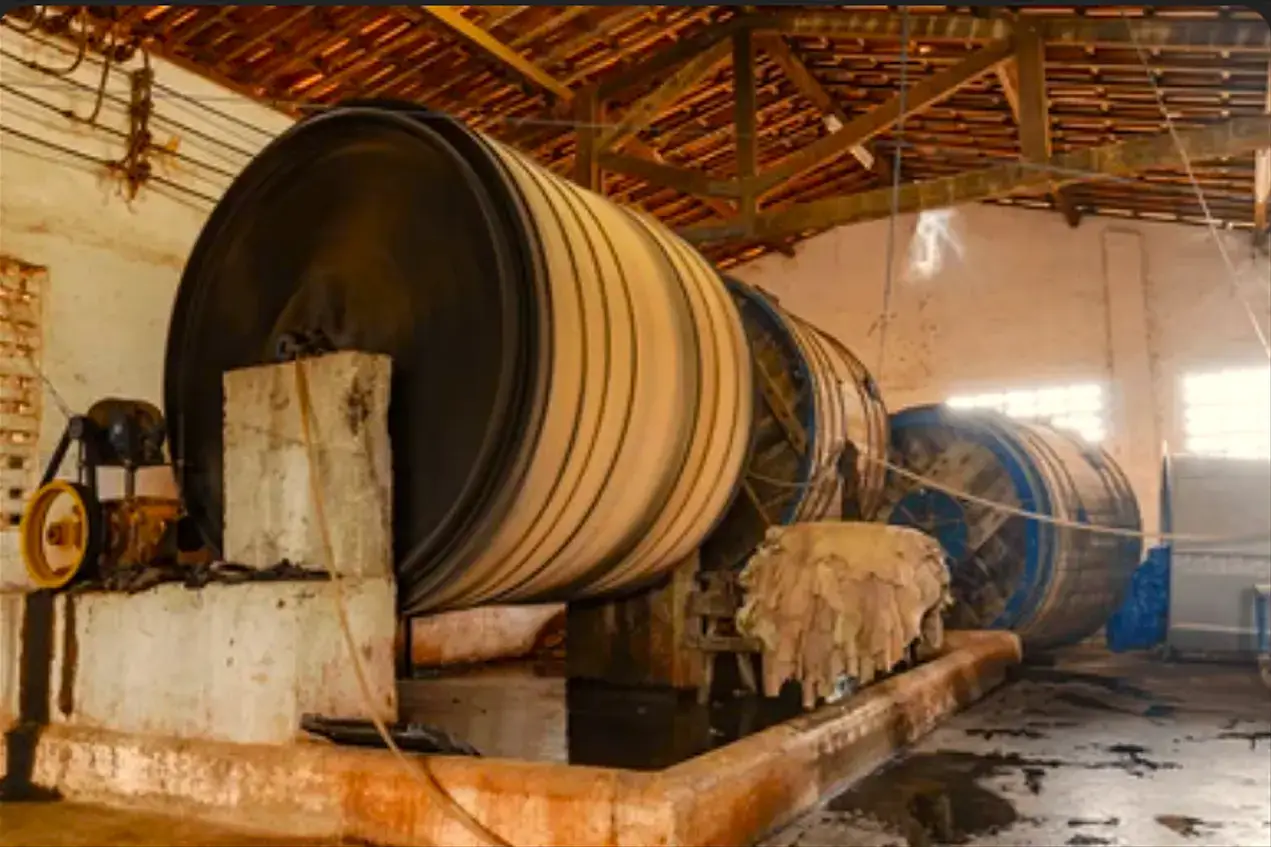
At ARASWELD, consistent welding-glove quality begins long before the leather panels are sewn together. Through our tannery and production operations in Pakistan, we maintain direct control over key stages of leather preparation and glove manufacturing—from hide selection and tanning to grading, cutting, sewing and final inspection.
This integrated production chain helps us evaluate the leather according to its intended function within the glove. Palm, thumb, finger, cuff and reinforcement panels experience different levels of movement, abrasion and heat exposure, so they should not all be cut or prepared in the same way.
Skilled Leather Preparation and Cutting
Our experienced leather craftsmen manage the tanning and preparation process to achieve the required balance of thickness, flexibility and structural consistency. After tanning, the leather is inspected and graded before it reaches the cutting stage.
ARASWELD’s skilled cutters assess the usable areas of each hide and position glove patterns according to the characteristics of the leather. This helps reduce unsuitable panel placement and supports more consistent performance across critical wear zones.
Important production controls include:
- Hide and leather-batch inspection
- Tanning and moisture control
- Thickness and flexibility checks
- Identification of wrinkles, looseness and natural defects
- Leather grading by usable area
- Correct cutting direction and panel placement
- Batch traceability throughout production
Skilled Sewing and Glove Construction
Our sewing specialists understand that glove durability depends on more than the quality of the leather. Seam positioning, thread selection, reinforcement placement and finger construction all influence how the glove performs during repeated welding work.
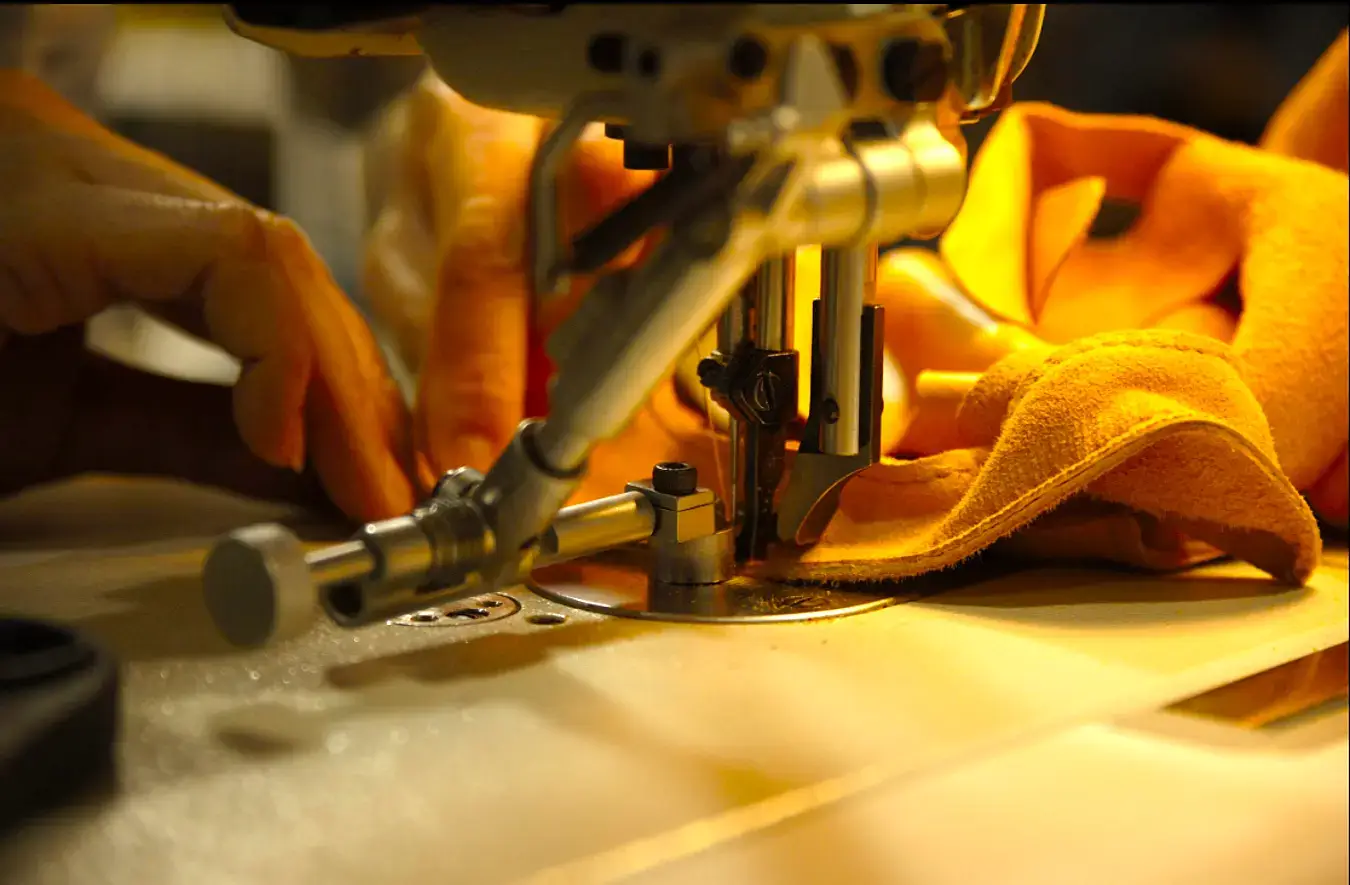
Particular attention is given to high-stress areas such as the thumb crotch, index finger, palm, fingertips and cuff connections. The finished gloves then undergo quality inspection for construction consistency, visible defects, fit and workmanship.
ARASWELD Tannery and Manufacturing Insight
Controlling tanning, grading, cutting and sewing within the ARASWELD production chain allows us to trace how the leather was prepared and where it was used in the finished glove. This supports consistent specifications across individual products and larger industrial orders.
What ARASWELD Controls During Leather Preparation
Leather preparation determines how consistently the material can be cut, sewn and used across different glove components. Within the ARASWELD tannery and production chain in Pakistan, our craftsmen inspect and prepare each leather batch before it reaches the cutting and sewing stages.
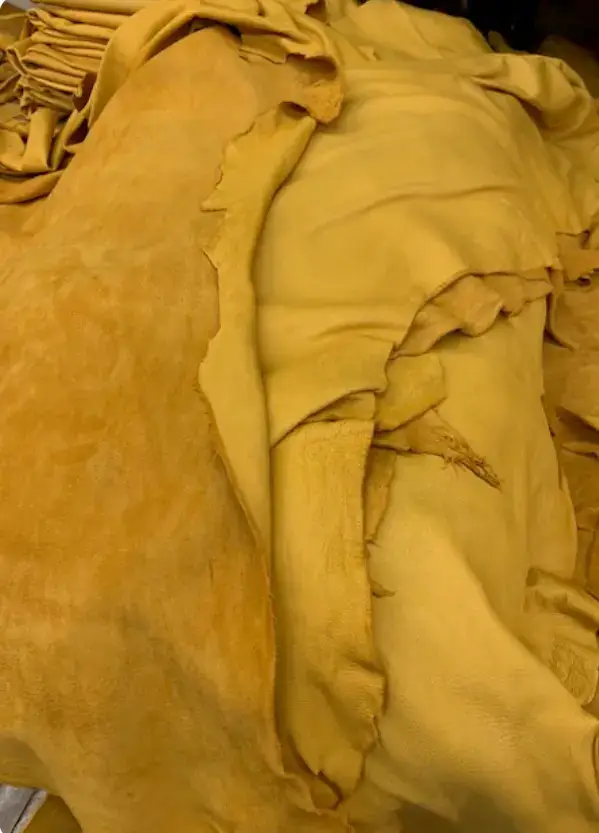
Key controls include:
- Incoming hide inspection for condition, visible damage and usable area
- Sorting by animal species and hide section
- Tanning process controls to support repeatable leather characteristics
- Target thickness and shaving according to the intended glove component
- Softness and flexibility checks
- Moisture control before cutting and production
- Inspection for surface and structural defects
- Colour and finish consistency, where these characteristics are relevant
- Batch identification for production traceability
- Final leather grading before panel cutting
These controls help direct suitable leather to the palm, fingers, thumb, back of the hand, cuff and reinforcement zones. The objective is not to make every hide identical, which is impossible with a natural material, but to apply consistent grading criteria and controlled production specifications.
Quality Control Before Glove Production
Leather quality must be checked at several stages rather than only after the welding glove is completed. ARASWELD evaluates the material from initial hide selection through tanning, splitting, grading, cutting, sewing and final inspection.
ARASWELD Leather Quality-Control Stages
| Production Stage | Control Point | Why It Matters for Welding Gloves |
|---|---|---|
| Hide selection | Animal species, condition and usable hide areas | Establishes the quality starting point and helps exclude unsuitable material |
| Tanning | Process consistency, moisture and chemical control | Influences leather flexibility, stability and production repeatability |
| Splitting and shaving | Target thickness and thickness consistency | Helps control glove fit, flexibility and panel performance |
| Grading | Defects, looseness, fibre structure and surface consistency | Directs leather to glove components that match its characteristics |
| Cutting | Panel location, grain direction and cutting accuracy | Supports consistency across palms, fingers, thumbs and reinforcements |
| Sewing | Thread, seam placement, stitch quality and reinforcement | Protects high-stress construction points and supports durability |
| Final inspection | Fit, construction consistency, workmanship and visible defects | Helps prevent unsuitable gloves from reaching customers or industrial buyers |
ARASWELD’s quality-control process follows the leather from hide selection to final glove inspection. Defined inspection stages, controlled thickness ranges, consistent grading criteria and careful panel placement help support repeatable welding-glove construction across different sizes and production batches.
Traceability and Batch Consistency
Leather is a natural material, so some variation is unavoidable. Effective quality control therefore depends on identifying, recording and comparing each production batch rather than assuming that all hides will behave identically.
Within the ARASWELD production chain, traceability can include:
- Identifying individual leather batches
- Recording relevant tanning and preparation information
- Documenting leather grading results
- Comparing thickness, flexibility and appearance across production lots
- Investigating deviations found during cutting, sewing or final inspection
- Connecting finished gloves to their production batch
- Supporting repeat orders with defined material and construction specifications
This is particularly important for larger B2B orders. An industrial customer may require welding gloves with consistent sizing, leather thickness, lining, reinforcement and construction across hundreds or thousands of pairs. Documented batch traceability and repeatable production specifications help ARASWELD evaluate whether later production runs remain aligned with the approved requirements.
ARASWELD Industrial Procurement Insight
For industrial procurement, evaluate more than one carefully selected sales sample. Consistency across multiple glove pairs, sizes and production batches is more important than the appearance of one individual glove. Buyers should confirm the agreed leather grade, thickness range, lining, reinforcement, sizing and inspection criteria before placing a large repeat order.
Choose Welding Gloves by Material and Application
Match the glove to the welding process, hazard level, fit, construction and tested protection. The correct material should provide an appropriate balance of heat protection, durability, dexterity and comfort for the intended application.
For Individual Buyers
Browse ARASWELD welding gloves by material, construction and application across our precision, high-heat and reinforced product categories.
For Industrial and B2B Buyers
Contact ARASWELD to discuss leather specifications, glove construction, product samples, workforce requirements and bulk-order quantities.
A Brief Note on Leather Used in Welding Clothing
Cowhide, goatskin and other suitable leathers may also be used in welding jackets, aprons, sleeves and related protective garments. However, welding gloves and welding clothing do not have identical construction or material requirements.
Clothing selection must consider body coverage, garment weight, worker mobility, ventilation, seam placement, welding position and the direction of sparks and spatter. A leather suitable for the palm or reinforcement panel of a welding glove is not automatically suitable for an entire welding jacket.
Frequently Asked Questions About Welding Glove Materials
What are welding gloves made of?
Welding gloves usually combine an outer leather shell with an internal lining, heat-resistant sewing thread, reinforced wear zones and an extended cuff. Cowhide, goatskin, deerskin, elkskin and pigskin are common shell materials. The glove’s protection and durability depend on how these components work together, not on the leather species alone.
What is the best material for welding gloves?
The best material depends on the welding process. Flexible grain leathers such as goatskin or deerskin are often used for TIG welding, while reinforced cowhide constructions are common for MIG and Stick welding. Heat exposure, spatter, abrasion, fit, lining and tested protection levels should determine the final choice.
Is cowhide or goatskin better for welding gloves?
Cowhide is generally preferred for robust, reinforced gloves requiring durability and greater protection from spatter. Goatskin is usually lighter and more flexible, making it suitable for precision work and controlled finger movement. Neither is universally better the correct choice depends on the process and glove construction.
Are goatskin gloves suitable for TIG welding?
Yes, goatskin gloves can be suitable for TIG welding because the leather is generally supple and supports close fit, finger control and precise torch movement. However, suitability also depends on thickness, seam positioning, cuff coverage and tested protection. Read the TIG Welding Gloves Guide for process-specific selection advice.
Is split leather good for welding gloves?
Split leather can be suitable for welding gloves, particularly in cuffs, back-of-hand panels and heavy-duty constructions. Its performance depends on the split grade, source area, thickness, fibre consistency, tanning and glove location. A finished glove should be selected according to its complete construction and relevant test results, not the term “split leather” alone.
What is the difference between grain and split leather?
Grain leather comes from the outer hide layer and retains the smoother natural grain surface. Split leather comes from a lower layer created when the hide is divided horizontally and usually has a more fibrous surface. Both can be used in welding gloves, depending on the required flexibility, durability, panel location and cost.
Why is aramid thread used in welding gloves?
Aramid thread is used because it can support seam strength and resist heat-related degradation better than many ordinary sewing threads. It helps join leather panels and reinforce high-stress areas. However, aramid stitching alone does not determine glove protection; leather quality, lining, reinforcement, seam placement and product testing remain essential.
Does the part of the hide affect leather quality?
Yes. Different hide areas can vary in fibre density, thickness, stretch, wrinkles and natural defects. Central back and butt areas are often more consistent, while shoulder and belly sections may require more careful grading. Skilled cutters select each area according to the requirements of the palm, fingers, thumb, cuff or reinforcement panel.
Can the same leather be used for welding gloves and clothing?
Yes, cowhide, goatskin and other suitable leathers may be used in both welding gloves and protective clothing. However, the construction requirements differ. Gloves prioritise hand movement, grip and concentrated wear zones, while jackets, aprons and sleeves must consider body coverage, garment weight, mobility, ventilation, seams and welding position.