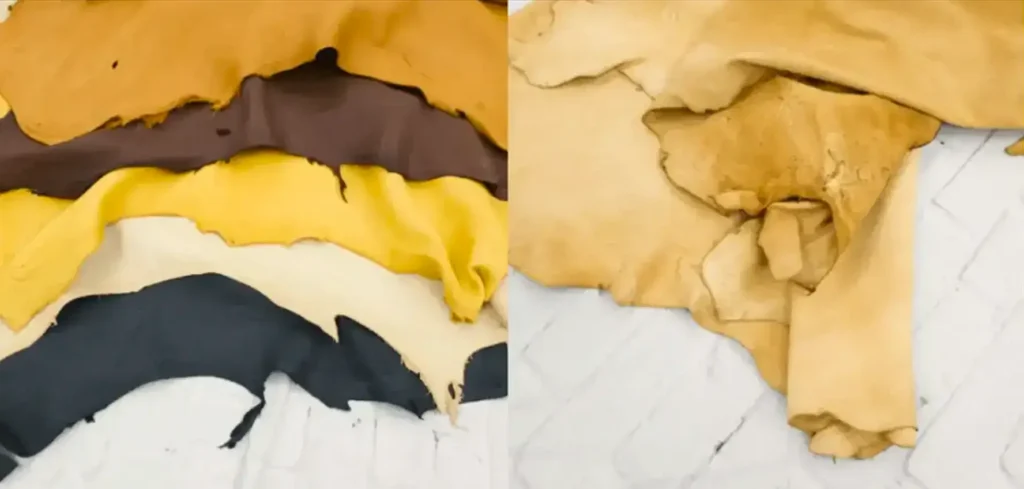
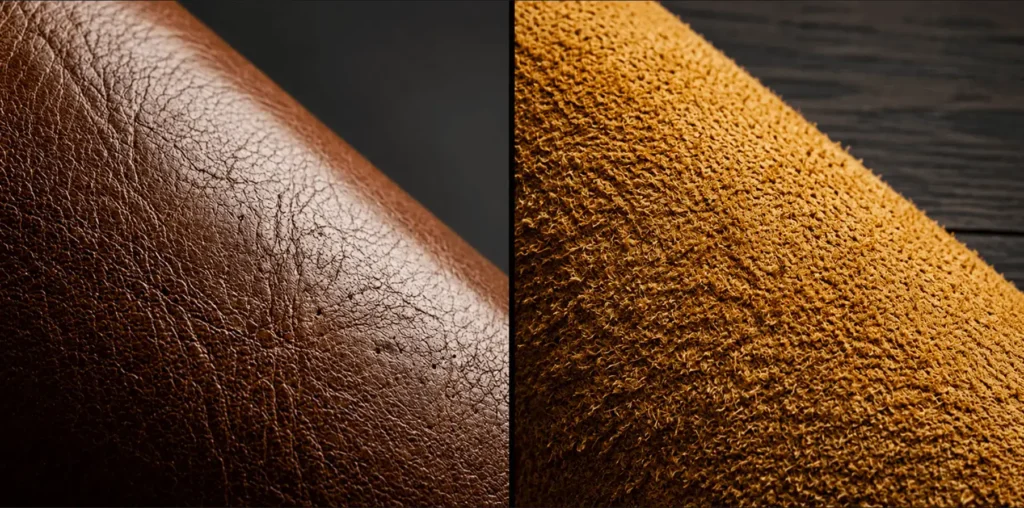
Cowhide vs Goatskin Welding Gloves: Heat, Dexterity and Durability Compared
Cowhide welding gloves are generally preferred for heavier-duty welding, rough material handling and higher abrasion exposure. Goatskin welding gloves are usually better when dexterity, flexibility and fingertip control are the priority. The final choice should also consider leather thickness, lining, reinforcement, glove fit and the complete glove construction.
Based on 12 years of professional welding experience, I have found that choosing between cowhide and goatskin is rarely as simple as selecting the stronger or softer leather. This comparison examines heat, welding spatter, dexterity, durability, comfort and suitability for TIG, MIG and Stick welding. Leather species alone cannot determine protection; the correct choice depends on the process, exposure level, construction, fit and required hand control.
Cowhide vs Goatskin Welding Gloves: Which Is Better?
Cowhide welding gloves generally perform better for heavier welding, abrasion exposure and rough material handling. Goatskin welding gloves usually provide greater flexibility, tactile sensitivity and fingertip control. Neither leather is automatically safer. Leather grade, thickness, lining, seam placement, reinforcement, fit and overall glove design can change the protection, comfort and control delivered during welding.
Cowhide vs Goatskin Welding Gloves
| Comparison factor | Cowhide welding gloves | Goatskin welding gloves | General selection |
|---|---|---|---|
| Dexterity | Moderate; thickness-dependent | Usually higher in thin gloves | Goatskin |
| Abrasion resistance | Strong for rough work | Good for its weight | Cowhide |
| Heavy spatter | Common in lined gloves | Construction-dependent | Cowhide construction |
| TIG control | Good if thin and fitted | Usually preferred | Goatskin |
| MIG welding | Common for medium or heavy MIG | Can suit lighter MIG | Exposure-dependent |
| Stick welding | Common in heavier gloves | Less common in thin designs | Cowhide construction |
| Initial flexibility | May require break-in | Usually soft and flexible | Goatskin |
| Rough handling | Well suited | Better for lighter precision work | Cowhide |
| Glove weight | Often heavier | Often lighter | Task-specific |
| Best general use | Heavy welding and fabrication | TIG and precision fabrication | Application-specific |
Cowhide is generally the stronger starting point for heavy MIG, Stick welding and rough fabrication, while goatskin is normally better for TIG and precision welding. Leather thickness, lining, reinforcement, fit and verified performance should still be evaluated before choosing either welding glove material.
Expert Perspective from 12 Years of Professional Welding Experience
I do not compare a thin goatskin glove with a thick, lined cowhide glove as though leather species were the only difference. A well-made goatskin glove can outperform poor cowhide construction in precision work. Flexibility does not prove suitability for heavy spatter, while greater thickness does not guarantee the control needed for precise welding.
What Is the Difference Between Cowhide and Goatskin Welding Gloves?
Cowhide and goatskin welding gloves differ mainly in their typical weight, surface feel, flexibility and common applications. Cowhide is widely used for demanding welding and rough fabrication, while goatskin is commonly selected for precision work. Final performance depends on the leather grade, processing method, thickness and how the material is incorporated into the complete glove.
Cowhide Welding Gloves
Cowhide is widely used in industrial welding gloves and is available in both grain and split leather. It is frequently selected for MIG welding, Stick welding, fabrication and rough material handling where durability and abrasion exposure are important.
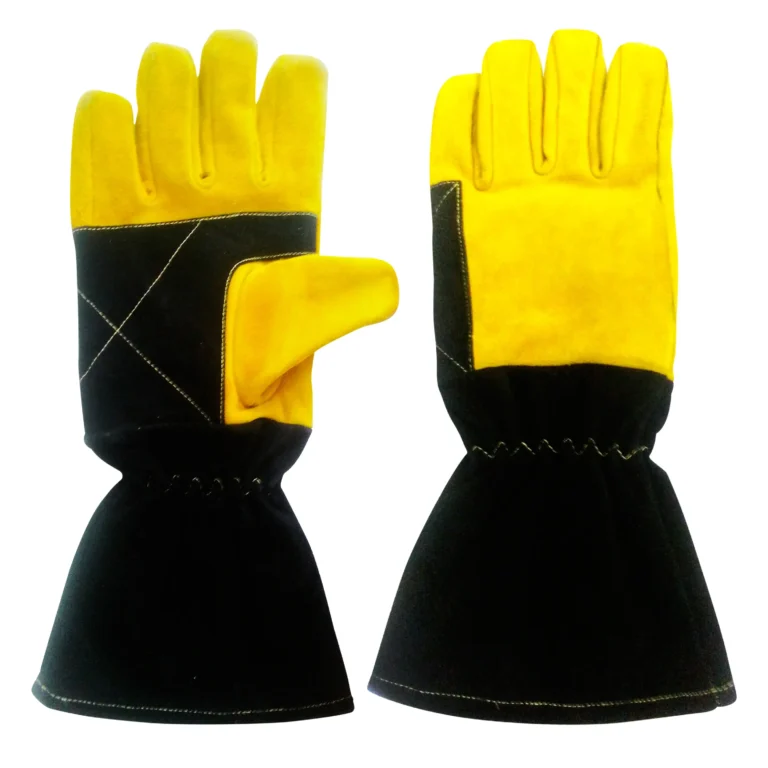
However, not every cowhide welding glove is thick or bulky. Thin grain cowhide can provide useful flexibility, while thick split cowhide and lined cowhide gloves serve heavier applications. The description “cowhide” alone does not explain the glove’s thickness, lining, reinforcement or intended level of use.
Goatskin Welding Gloves
Goatskin is naturally associated with softness, flexibility and a strong sense of touch. It is frequently used in precision welding gloves because it supports fingertip sensitivity, filler-rod control and torch movement, making it a common material in TIG welding glove construction.
Thin goatskin should not automatically be recommended for heavy heat or welding spatter. Its performance changes with leather thickness, lining, reinforcement and overall glove design. Reinforced or appropriately lined goatskin welding gloves can serve broader applications than lightweight, unlined precision gloves.
Why Complete Glove Construction Can Change the Result
The performance of cowhide and goatskin welding gloves can change according to:
- Leather grade and usable hide area
- Grain or split-leather construction
- Leather thickness and consistency
- Lining and insulation
- Reinforcement, seams and cuff design
Leather species should therefore be assessed as one part of the complete glove. For a broader explanation of cowhide, goatskin, deerskin, pigskin, elkskin and aramid, see the ARASWELD guide to elding glove materials.
Is Cowhide or Goatskin Better for Heat and Welding Spatter?
Cowhide is generally used more often in heavier, lined welding gloves because it can provide the thickness and durability needed for demanding work. Goatskin is more commonly selected when dexterity is the priority. However, leather species alone does not establish thermal protection; thickness, lining, seams, reinforcement, cuff coverage and verified test performance must also be considered.
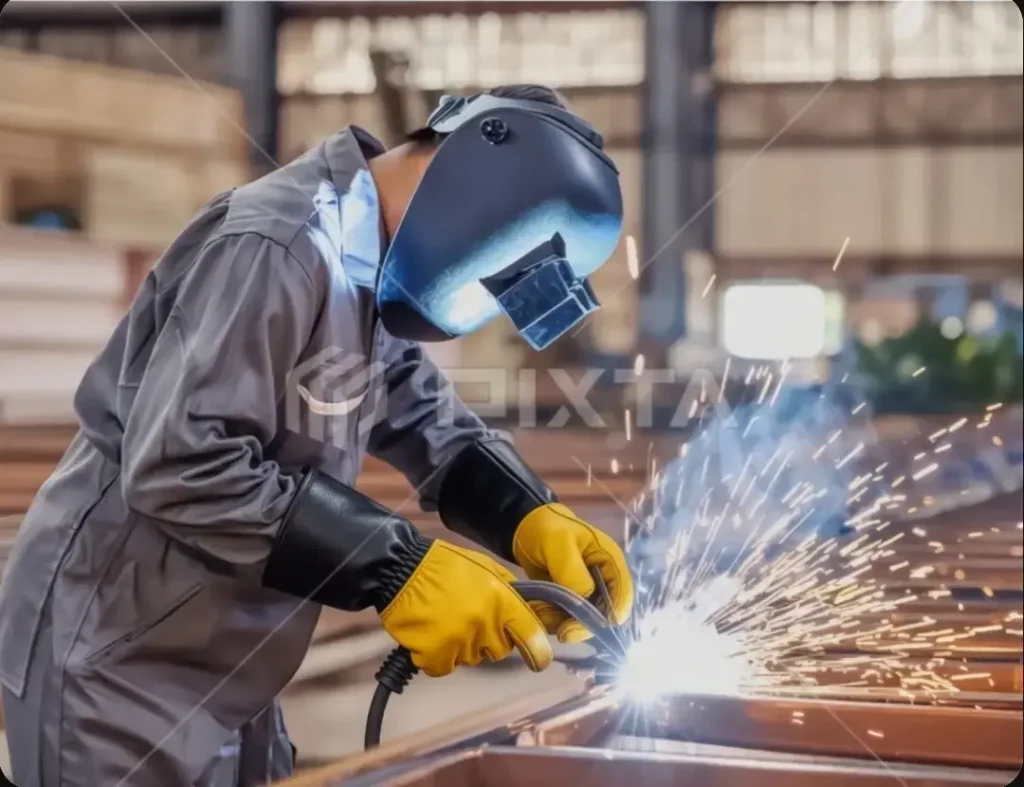
Cowhide for Heavier Heat and Spatter Environments
Thick split-cowhide leather is commonly used in substantial welding-glove designs intended for demanding fabrication. When combined with an appropriate lining, reinforcement and gauntlet cuff, cowhide can support medium-to-heavy MIG welding, Stick welding and rough material handling.
Cowhide is especially practical when welding is combined with repeated handling of abrasive steel components. However, increasing the glove’s leather thickness, insulation and reinforcement can also add bulk and reduce fingertip sensitivity. Cowhide should therefore be selected according to the actual welding task rather than assumed to be suitable for every heat exposure.
Goatskin for Controlled-Heat Precision Work
Goatskin welding gloves are commonly selected for TIG welding and lower-spatter precision work because thinner goatskin constructions can improve torch control, filler-rod handling and tactile sensitivity. TIG glove manufacturers frequently use top-grain goatskin in unlined or selectively reinforced designs intended to preserve hand control.
Thin construction provides less material between the hand and the welding hazard. However, reinforced or appropriately lined goatskin can serve broader applications. Goatskin must be judged by its complete specification—not softness or flexibility alone.
Why Leather Species Alone Does Not Determine Heat Protection
Evaluate these factors together:
- Leather thickness
- Lining material and coverage
- Palm and back-of-hand construction
- Seam position
- Thread material
- Cuff length and coverage
- Welding amperage and process
- Welding position
- Exposure time and duty cycle
- Declared and verified test results
For a more complete explanation, read are welding gloves heat resistant? and review how EN 407 thermal protection is evaluated.
Expert Tip:
During actual welding, heat exposure is not determined only by the electrode or process. Welding position, repeated contact with hot material, accumulated spatter and the time between welds can change what the glove must handle.
Which Leather Provides Better Dexterity and Welding Control?
Goatskin generally provides better tactile sensitivity, immediate flexibility and fingertip control, particularly for TIG welding. However, thin, well-patterned cowhide can still deliver suitable control for fabrication and MIG welding. In practice, glove fit, finger shape, thumb position, seam placement and excess material can affect dexterity as much as the leather species itself.
Goatskin for TIG and Precision Welding
During Gas Tungsten Arc Welding (GTAW/TIG), the welder must coordinate torch movement with controlled filler-rod feeding. Thin goatskin can support:
- Precise torch control
- Smooth filler-rod feeding
- Small-component handling
- Reduced finger bulk
- Immediate flexibility
- Detailed precision fabrication
Top-grain goatskin is frequently used in TIG gloves because it provides a close hand feel and tactile control. Product designs may also include reinforced fingertips, heat shields or split-cowhide cuffs to strengthen specific wear or exposure areas without making the entire glove excessively bulky.
When Cowhide Can Still Provide Useful Control
Grain cowhide should not be confused with thick split-cowhide construction. A correctly sized grain-cowhide glove can remain flexible enough for general fabrication, component positioning and MIG gun control.
Cowhide should not automatically be described as stiff or unsuitable for precision. Leather thickness, glove pattern, finger shape and material placement determine how easily the hand can move inside the glove.
How Fit and Finger Construction Affect Dexterity
Practical welding control can be reduced by:
- Excess space beyond the fingertips
- Loose leather across the palm
- Restrictive finger width
- Poor thumb placement
- Bulky internal or external seams
- Insufficient glove break-in
Selecting the correct size through the ARASWELD welding glove size guide can improve control and reduce unnecessary hand movement. Welders performing TIG or other control-focused work can also review ARASWELD precision welding gloves.
Expert Perspective from 12 Years of Professional Welding Experience:
In precision welding, I pay close attention to excess fingertip material and thumb position. A poorly fitted goatskin glove can reduce control more than a properly patterned cowhide glove, even though goatskin is generally the more flexible leather.
Which Is More Durable: Cowhide or Goatskin Welding Gloves?
Cowhide is generally the stronger default for rough handling, abrasive surfaces and heavy fabrication. Goatskin can still provide good service life when used for the precision work it is designed for. Durability should be evaluated according to leather thickness, grade, seam placement, reinforcement, glove fit and the actual task performed.
Abrasion and Rough Material Handling
Cowhide welding gloves are commonly selected for handling steel plate, structural components and materials with rough surfaces. They can also suit fabrication tables, construction environments and handling tasks associated with grinding operations.
However, welding gloves should not automatically be treated as task-specific cut protection. Sharp-edge, cut and puncture hazards must be assessed separately using the glove’s documented mechanical performance and the workplace risk assessment.
Seams and Reinforcement Frequently Fail Before the Leather
A glove’s service life often depends on more than the main leather panel. Buyers should inspect:
- Thumb-saddle reinforcement
- Palm overlays
- Fingertip protection
- Protected seam placement
- Aramid stitching
- Reinforcement at repeated flex points
Poorly positioned reinforcement can restrict movement, while exposed seams may wear rapidly where the glove repeatedly contacts steel, tools or the workbench.
Service Life Depends on Task and Construction
A thin goatskin TIG glove and a thick, lined cowhide glove are not an equal durability comparison. A precision glove should not be judged under heavy Stick-welding conditions for which it was not designed.
Leather drying, contamination, excessive heat exposure, mechanical wear and incorrect fit can all shorten usable life. Buyers should compare purchase price against practical service life, rather than selecting the lowest-priced glove alone.
Durability Factors Buyers Should Compare
| Durability factor | Why it matters | What buyers should inspect |
|---|---|---|
| Leather thickness | Changes wear resistance and flexibility | Consistency across the palm and fingers |
| Grain or split leather | Influences feel, surface and intended use | Material specification |
| Reinforced wear zones | Protects commonly damaged areas | Palm, thumb saddle and fingertips |
| Seam placement | Exposed seams may wear sooner | High-contact areas |
| Stitching material | Supports seam integrity | Product documentation |
| Lining attachment | Loose lining reduces comfort and control | Interior construction |
| Glove fit | Incorrect fit creates friction and fatigue | Size range and trial fitting |
| Intended process | Incorrect use accelerates failure | Application guidance |
Welding-glove durability depends on the relationship between material, construction and application. Buyers should compare leather thickness, reinforced wear zones, seams, stitching, lining, fit and intended welding process rather than judging cowhide or goatskin by leather species alone.
Welders working in demanding fabrication environments can also review ARASWELD impact and abrasion-resistant welding gloves.
ARASWELD Expert Opinion
In professional use, I evaluate where a glove fails, not only how long it lasts. Palm wear, damaged fingertips, open seams and hardened leather indicate different construction or application problems and should not all be treated as the same durability issue.
Cowhide vs Goatskin Welding Gloves by Welding Process
Goatskin is generally favored for TIG welding because it supports precision and filler-rod control. Cowhide is frequently used for medium-to-heavy MIG, Stick and flux-cored welding. Either leather may suit some applications when thickness, lining, reinforcement and glove design are appropriate. Selection should reflect heat, spatter, dexterity, welding position and duty cycle.
Cowhide or Goatskin by Welding Process
| Welding process or task | Main glove requirement | General material direction | Important qualification |
|---|---|---|---|
| TIG/GTAW | Dexterity and filler-rod control | Goatskin | Fit and fingertip construction remain essential |
| Light MIG/GMAW | Gun control with moderate protection | Goatskin or grain cowhide | Depends on spatter and lining |
| Heavy MIG/GMAW | Heat, spatter and durability | Cowhide | Complete construction must be evaluated |
| Stick/SMAW | Heat, sparks, spatter and cuff coverage | Heavy cowhide construction | Lining and gauntlet coverage matter |
| Flux-cored/FCAW | Higher spatter and demanding use | Heavy-duty cowhide construction | Select using actual exposure and test data |
| Fit-up and tack work | Control and repeated handling | Grain cowhide or reinforced goatskin | Assess sharp and abrasive surfaces separately |
| Rough material handling | Abrasion resistance and reinforcement | Cowhide | Welding certification may not cover every handling hazard |
Goatskin is commonly selected for TIG precision, while cowhide is generally preferred as welding heat, spatter and rough handling demands increase. The final choice must still account for glove thickness, lining, reinforcement, fit, welding position, exposure and documented protection.
TIG Welding
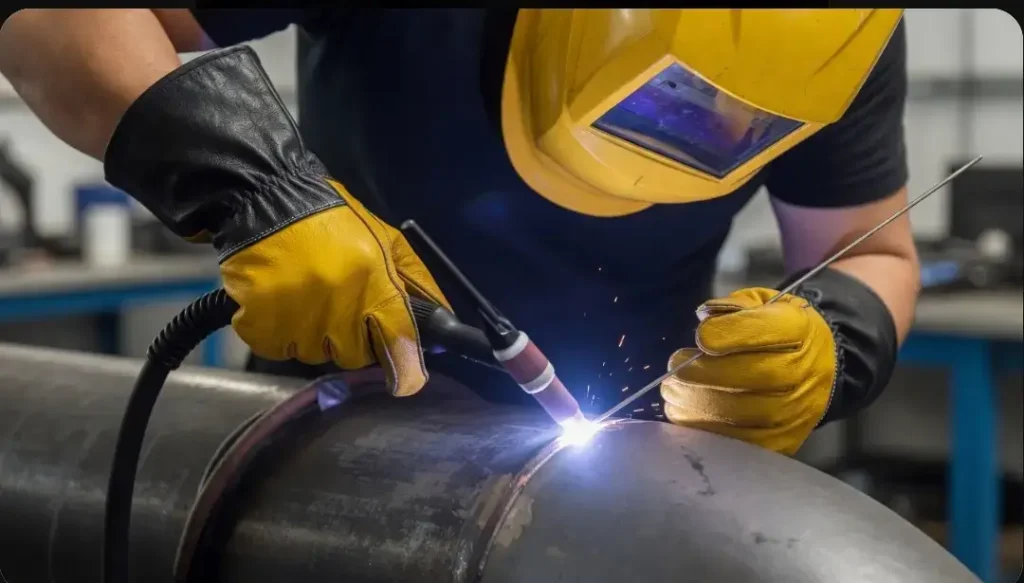
Goatskin is the common precision-oriented choice for Gas Tungsten Arc Welding (GTAW/TIG) because its thin, flexible construction can support filler-rod feeding, torch movement and detailed component handling.
However, a TIG glove should not be selected only because the leather feels soft. It must also provide appropriate cuff coverage, seam construction and protection for the actual work. Welders prioritizing control can review ARASWELD precision welding gloves.
MIG Welding
For Gas Metal Arc Welding (GMAW/MIG), cowhide is generally the heavy-duty starting point because MIG work can involve increased heat, spatter and repeated fabrication handling. Lined cowhide gloves are commonly used where protection and durability take priority.
Goatskin or grain cowhide may suit lighter, control-focused MIG work when the complete glove provides appropriate protection. Selection should account for spatter level, welding position, duty cycle, gun handling and lined or unlined construction. Read the ARASWELD guide to MIG welding gloves for process-specific guidance.
Stick and Flux-Cored Welding
Shielded Metal Arc Welding (SMAW/Stick) and Flux-Cored Arc Welding (FCAW) generally place greater emphasis on heat, sparks, spatter and cuff coverage than precision TIG work.
More substantial cowhide construction, protective lining and longer gauntlet cuffs are therefore common choices. These processes usually require less fine fingertip sensitivity than TIG, although the glove must still permit safe electrode handling and hand movement. ARASWELD high-heat welding gloves can be reviewed for demanding welding applications.
Mixed-Process Shops and Hybrid Gloves
Industrial facilities may need different gloves for different welding processes rather than one universal model. Some glove designs also combine materials—for example, a goatskin palm for control with a heavier split-leather back or cuff for additional coverage.
Standardization should occur only when the workplace hazard assessment supports it. Procurement teams should avoid forcing one glove to serve TIG welders, heavy MIG operators and material handlers when their requirements are materially different.
For a broader process comparison, see the ARASWELD guide to MIG, TIG and Stick welding gloves.
Expert Tip:
Based on 12+ years of professional welding experience In a mixed welding shop, one universal glove may simplify purchasing but reduce performance for individual welders. TIG operators, heavy MIG welders and material handlers can have materially different protection, control and durability requirements.
How Do Grain, Split, Lining and Glove Construction Affect Performance?
Leather species is only one part of welding-glove performance. Grain or split construction, leather thickness, lining, reinforcement, seam location, cuff design and glove pattern can change heat protection, durability, flexibility, comfort and control. Buyers should therefore compare the complete glove specification rather than choosing only by the words “cowhide” or “goatskin.”
Top-Grain Versus Split Leather
Grain leather retains the hide’s outer surface and is often used for a smoother feel and precision-oriented glove construction. Split leather comes from lower hide layers and is frequently selected where thickness and robust coverage are priorities. Quality still varies within both categories, so grain leather is not automatically superior to split leather.
Leather Thickness and Glove Lining
Thicker leather is not better for every welding process. It may add durability and coverage but can also increase weight and reduce tactile control. Full, partial and unlined constructions create different balances of protection, flexibility and bulk.
Buyers should confirm that the lining remains secure during use and review the glove’s declared specifications and verified test performance. A loose or shifting lining can reduce finger control, comfort and practical usability.
Palm, Thumb and Fingertip Reinforcement
The thumb saddle, palm contact zones and fingertips are common wear areas. Correctly placed overlays can extend service life, while excessive reinforcement may restrict grip, thumb movement and fingertip control.
From practical welding and glove-manufacturing experience, reinforcement should follow actual wear patterns rather than simply adding more leather. Durability improves most effectively when high-wear areas are protected without creating unnecessary stiffness.
Aramid Stitching and Protected Seams
Thread and seam placement influence glove service life because exposed seams can abrade before the main leather panels. Protected seams can reduce direct contact with steel surfaces, tools and fabrication tables.
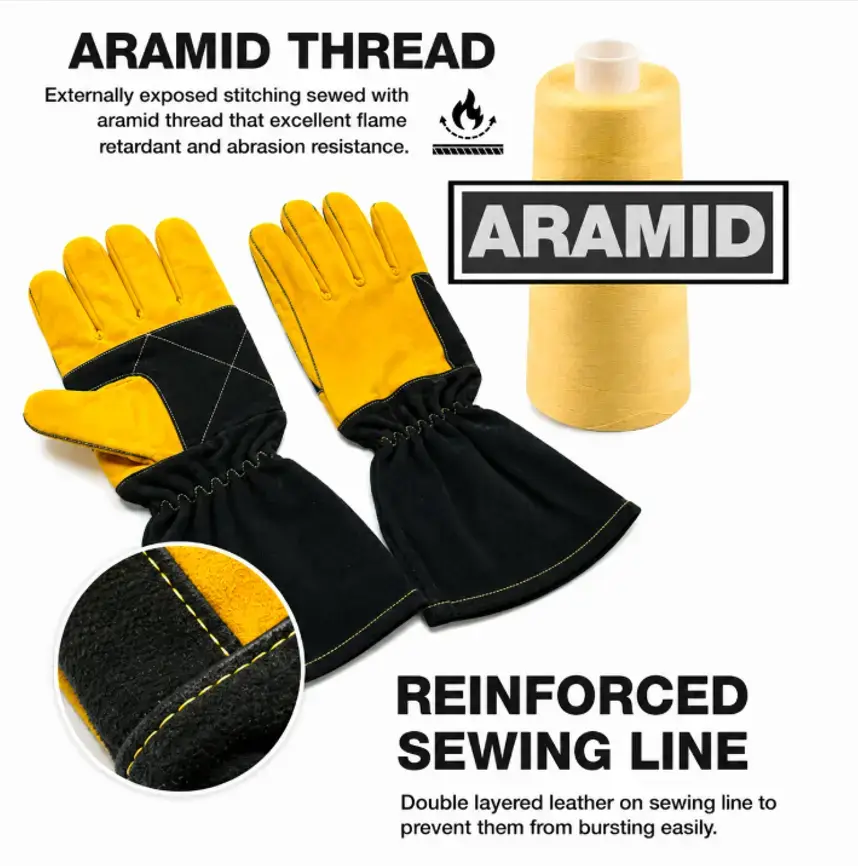
Aramid stitching is a valuable construction feature, but it is not a complete safety guarantee. Buyers should verify the stitching material, seam protection and construction details through accurate product documentation.
Cuff Length and Glove Pattern
Cuff length affects wrist and lower-arm coverage, while gauntlet construction should correspond to the welding process and expected exposure. Thumb position, finger shape and excess fingertip space also influence grip, control and hand fatigue.
A documented pre-curved pattern may improve natural hand movement. However, buyers should not assume that a glove uses pre-curved construction unless the feature is confirmed in its specification.
Construction Features That Can Change the Cowhide–Goatskin Decision
| Construction feature | Performance affected | Buyer question |
|---|---|---|
| Grain or split leather | Dexterity, surface feel and durability | Which leather layer is used in each glove area? |
| Leather thickness | Heat, abrasion, weight and control | Is the thickness consistent and documented? |
| Lining | Heat management, comfort and bulk | Is the glove fully, partially or selectively lined? |
| Palm reinforcement | Abrasion resistance and service life | Which palm wear zones are reinforced? |
| Thumb reinforcement | Grip, movement and durability | Does the reinforcement restrict thumb movement? |
| Stitching | Seam integrity and service life | What thread and seam protection are used? |
| Cuff | Wrist and lower-arm coverage | Is the cuff appropriate for the welding process? |
| Finger pattern | Dexterity, grip and hand fatigue | Does the glove leave excess fingertip space? |
Complete glove construction can outweigh the basic difference between cowhide and goatskin. Buyers should compare leather type, thickness, lining, reinforcement, stitching, cuff design, finger pattern and fit together rather than selecting welding gloves from the leather name alone.
Which Leather Is More Comfortable for Long Welding Sessions?
Goatskin generally feels softer and more flexible initially, while cowhide comfort depends more on thickness, pattern and break-in. During long welding sessions, comfort also depends on sizing, interior seams, lining stability, moisture, hand posture and the repeated grip needed to control welding equipment or tools.
Initial Softness, Flexibility and Break-In
Goatskin usually offers immediate flexibility, whereas thicker cowhide gloves may require a break-in period. Grain cowhide can still feel supple, while lined split-cowhide designs are bulkier.
However, softness should never replace suitability for the actual welding hazard. A comfortable glove must still provide appropriate construction for the expected heat, spatter and mechanical exposure.
Hand Fatigue, Moisture and Glove Fit
Excess weight, restrictive fingers, loose lining and incorrect sizing can increase grip pressure and hand fatigue. Damp or contaminated gloves may also reduce comfort and control and should be changed according to workplace procedures.
Expert Tip from 12 Years of Professional Welding Experience:
A glove that feels comfortable for one minute may not remain comfortable through repeated weld cycles. I evaluate fingertip control, thumb movement, grip pressure and internal movement before deciding whether it is suitable for use.
Should You Choose Cowhide or Goatskin Welding Gloves?
Choose cowhide welding gloves when durability, abrasion resistance and heavier-duty construction are the main priorities. Choose goatskin welding gloves when fingertip control, flexibility and reduced bulk matter more. A hybrid glove can balance different requirements across the hand. Always confirm the complete glove specification, documented performance and intended application before making the final selection.
Choose Cowhide Welding Gloves When…
- Heavy MIG, Stick or flux-cored welding is the principal process.
- The work includes rough steel or structural-component handling.
- Abrasion and repeated surface contact are important concerns.
- A heavier, lined welding glove is acceptable for the task.
- Durability is prioritized over maximum fingertip sensitivity.
Choose Goatskin Welding Gloves When…
- TIG welding or precision fabrication is the principal task.
- Filler-rod feeding and torch control are important.
- Reduced finger bulk and tactile sensitivity are required.
- Heat and welding-spatter exposure are comparatively controlled.
- The glove has appropriate construction and documented protection for the work.
Choose a Hybrid Glove Construction When…
- The palm requires greater flexibility and hand control.
- The back of the hand or cuff requires heavier coverage.
- Specific palm, thumb or fingertip wear zones require reinforcement.
- One leather alone does not provide the desired balance of protection, dexterity and durability.
Compare ARASWELD Welding Glove Categories
Compare each category according to the welding process, expected heat and spatter, mechanical exposure, required dexterity and complete product specification.
Precision/Specialized Welding Gloves
For control-focused TIG welding and precision applications where flexibility, filler-rod handling and reduced finger bulk are important.
View Precision Gloves
High-Heat Protection Welding Gloves
For welding applications requiring more substantial thermal, spatter and cuff protection, subject to documented product performance and the workplace risk assessment.
View High-Heat Gloves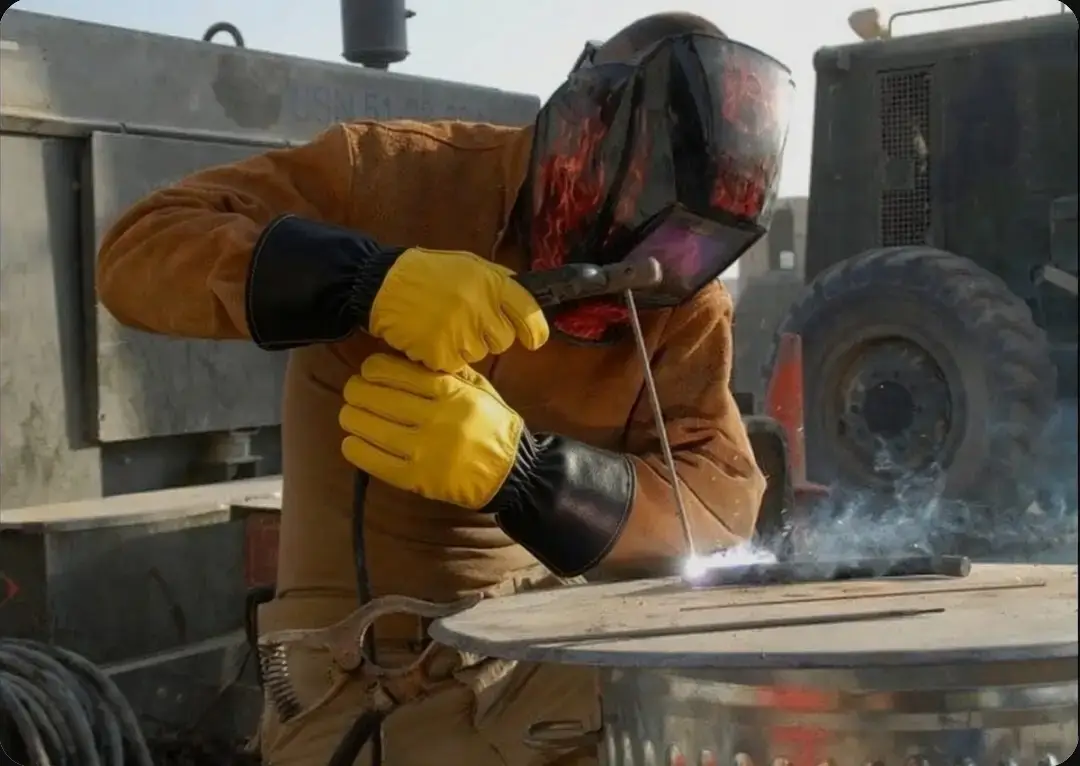
Impact and Abrasion Resistant Welding Gloves
For demanding fabrication and material-handling environments where mechanical exposure, reinforcement and resistance to repeated surface contact are important.
View Impact GlovesHow Should Industrial Buyers Compare Cowhide and Goatskin Gloves?
Industrial buyers should compare welding gloves by workplace application, declared test results, construction, available sizes, worker acceptance and usable service life—not leather species or unit price alone. Facilities that combine TIG, MIG, Stick welding, fit-up and material handling may need different glove configurations because each department has different requirements for heat protection, dexterity, abrasion resistance and cuff coverage.
Industrial Procurement Checklist
Procurement teams should:
- Identify every welding process used in the facility.
- Define expected heat, spatter and mechanical exposure.
- Separate welding hazards from handling, grinding, cut and puncture hazards.
- Review leather type and construction in the palm, fingers, back and cuff.
- Confirm lining, reinforcement and seam protection.
- Review applicable product specifications and test documentation.
- Check the complete size range.
- Conduct a controlled wearer trial.
- Record common glove-failure locations.
- Compare usable service life with purchase cost.
- Confirm replacement and reorder requirements.
- Avoid assuming one glove will suit every department.
Industrial glove selection should also be based on the hazards present in the actual workplace. Procurement teams can review OSHA guidance on personal protective equipment assessment when developing a task-specific PPE selection process.
Product Documentation and Specification Questions
Industrial buyers should request:
- Product specification sheet
- Leather and lining information
- Relevant test documentation
- Available sizes
- Cuff and glove dimensions
- Intended welding applications
- Packaging and quantity information
- Bulk availability
- Sample or trial availability, when offered
- Verified manufacturing and delivery information
Product documentation should describe the complete glove, not only identify it as cowhide or goatskin.
Workforce Sizing and Trial Evaluation
A controlled glove trial should include:
- TIG welders
- MIG or Stick welders
- Fit-up and tack-welding workers
- Material handlers
- Users with different hand sizes
- Left- and right-hand dominant workers where relevant
Trial feedback should evaluate fingertip control, thumb movement, grip pressure, lining movement, heat comfort, cuff interference and common wear areas. The trial should reflect normal workplace tasks rather than a brief visual inspection.
Industrial Procurement Comparison
| Procurement requirement | Cowhide direction | Goatskin direction | Verification needed |
|---|---|---|---|
| Heavy fabrication | Often suitable | Application-dependent | Construction and test documentation |
| TIG training or precision work | May suit thin constructions | Frequently suitable | Fit and fingertip control |
| Rough material handling | Frequently selected | May require reinforcement | Mechanical performance |
| Long welding cycles | Heavier construction may help | Lining may be required | Thermal performance and wearer trial |
| Mixed departments | One glove may not suit all | One glove may not suit all | Department-level assessment |
| Bulk purchasing | Compare service life and sizes | Compare control and worker acceptance | Specifications, quantities and sizing |
| Automotive or aerospace supply | Precision and documentation matter | Frequently relevant for control | Buyer-specific technical requirements |
| Welding schools | Useful for heavier-process training | Useful for TIG training | Process mix, sizing and replacement plan |
Industrial buyers should compare cowhide and goatskin welding gloves by department, process, construction, fit, documented performance and usable service life. Heavy fabrication may favor cowhide, while TIG and precision work may favor goatskin. Mixed facilities often require more than one glove configuration.
ARASWELD Expert Verdict
From 12+ years of professional welding experience, my practical conclusion is that cowhide is usually the stronger starting point for demanding MIG, Stick and abrasive fabrication work, while goatskin is generally better where TIG control, flexibility and fingertip sensitivity matter most. However, there is no universally superior leather, and I would never approve or reject a welding glove from the leather name alone.
Leather thickness, lining, seam construction, reinforcement, cuff coverage, glove pattern, fit and documented test performance must support the intended task. Construction and fit can reverse an oversimplified material recommendation. Buyers should evaluate the complete glove because workplace requirements and verified performance take priority over marketing language. For broader selection guidance, read the ARASWELD complete guide to welding gloves .
Frequently Asked Questions
Is Goatskin Better Than Cowhide for Welding?
No, goatskin is not universally better than cowhide for welding. Goatskin generally provides better dexterity, flexibility and TIG control, while cowhide is more commonly selected for heavier welding, abrasion and rough fabrication. The correct choice depends on leather thickness, lining, reinforcement, fit and complete glove construction.
Which Leather Offers Better Heat Protection?
Generally, cowhide is more commonly used in heavy, lined welding gloves designed for demanding heat and spatter exposure. However, leather species alone does not prove thermal protection. Leather thickness, lining coverage, seam construction, cuff design and verified test results must be reviewed before comparing heat performance.
Can Goatskin Gloves Be Used for MIG Welding?
Yes, goatskin gloves can be used for some lighter or control-focused MIG welding applications. They should have suitable thickness, lining, reinforcement and documented protection for the expected spatter and duty cycle. Heavy MIG work or higher spatter exposure may require a more substantial glove construction.
Are Cowhide Gloves Suitable for TIG Welding?
Yes, thin grain-cowhide gloves can be suitable for TIG welding when they provide a close fit and well-designed fingers. Thick split-cowhide gloves may reduce filler-rod control and fingertip sensitivity. Leather thickness, glove pattern, thumb position and seam bulk determine whether cowhide provides adequate precision.
Which Lasts Longer, Cowhide or Goatskin Welding Gloves?
Generally, cowhide has the durability advantage in rough, abrasive fabrication and material handling. Goatskin can still provide good service life when used for precision work. Actual longevity depends on leather grade, thickness, reinforcement, seam placement, fit and task suitability, so thin and thick gloves should not be compared equally.
Does Top-Grain or Split Leather Matter More Than Leather Species?
Generally, both leather species and grain-or-split construction matter. Grain or split type, leather thickness, lining, reinforcement and glove pattern can influence dexterity, durability and heat management as much as the animal source. Buyers should compare the complete glove specification instead of relying on a single material label.
Can One Welding Glove Be Used for TIG, MIG and Stick Welding?
Sometimes, one welding glove can be used for TIG, MIG and Stick welding, but compromises are likely. TIG work prioritizes dexterity and fingertip control, while heavy MIG and Stick welding require more substantial heat and spatter protection. Separate glove designs are often more appropriate for mixed-process work.
Which Leather Is Better for Bulk Industrial Orders?
Generally, the better leather for bulk industrial orders depends on the facility’s departments, welding processes and handling tasks. Cowhide is often preferred for heavy fabrication and abrasion exposure, while goatskin suits TIG and precision work. Mixed facilities may require more than one glove model, construction and size range.
Request Welding Glove Specifications and Bulk Information
ARASWELD supports welders and professional buyers comparing gloves for precision welding, heavy fabrication and demanding industrial environments. Product, size and specification enquiries can be submitted according to the welding process, workplace conditions and purchasing requirements.
Industrial buyers, procurement teams, welding schools, fabrication facilities, automotive or aerospace suppliers, distributors and wholesale buyers can contact ARASWELD regarding bulk availability, product documentation, available sizes, glove specifications and application-specific enquiries.
- Industrial Buyers
- Procurement Teams
- Welding Schools
- Fabrication Facilities
- Automotive Suppliers
- Aerospace Suppliers
- Distributors
- Wholesale Buyers