MIG Welding Gloves: Complete Guide to Heat, Spatter and Durability

MIG welding gloves are process-specific protective gloves designed to help shield a welder’s hands, wrists and lower forearms from heat, sparks, molten-metal spatter, hot workpieces and mechanical wear. They are generally built with heavier materials and more protective coverage than the thin gloves commonly selected for precision welding.

However, not every pair of leather welding gloves is suitable for every MIG application. The level of protection required can change according to the welding amperage, transfer mode, arc-on time, duty cycle, welding position, spatter level and additional handling tasks performed before or after welding.

A good MIG welding glove should provide a practical balance between:

  • Heat and spatter resistance
  • Leather durability
  • Palm, finger and thumb reinforcement
  • Heat-resistant stitching and protected seams
  • Wrist and forearm coverage
  • Grip, fit and welding-gun control
  • Task-relevant thermal and mechanical ratings

The goal is not simply to choose the thickest glove available. It is to select a glove that provides sufficient protection for the actual working conditions without unnecessarily limiting movement, grip or control.

For a broader overview of glove types, materials, hazards and safety standards, see the ARASWELD Complete Guide to Welding Gloves.

What Are MIG Welding Gloves?

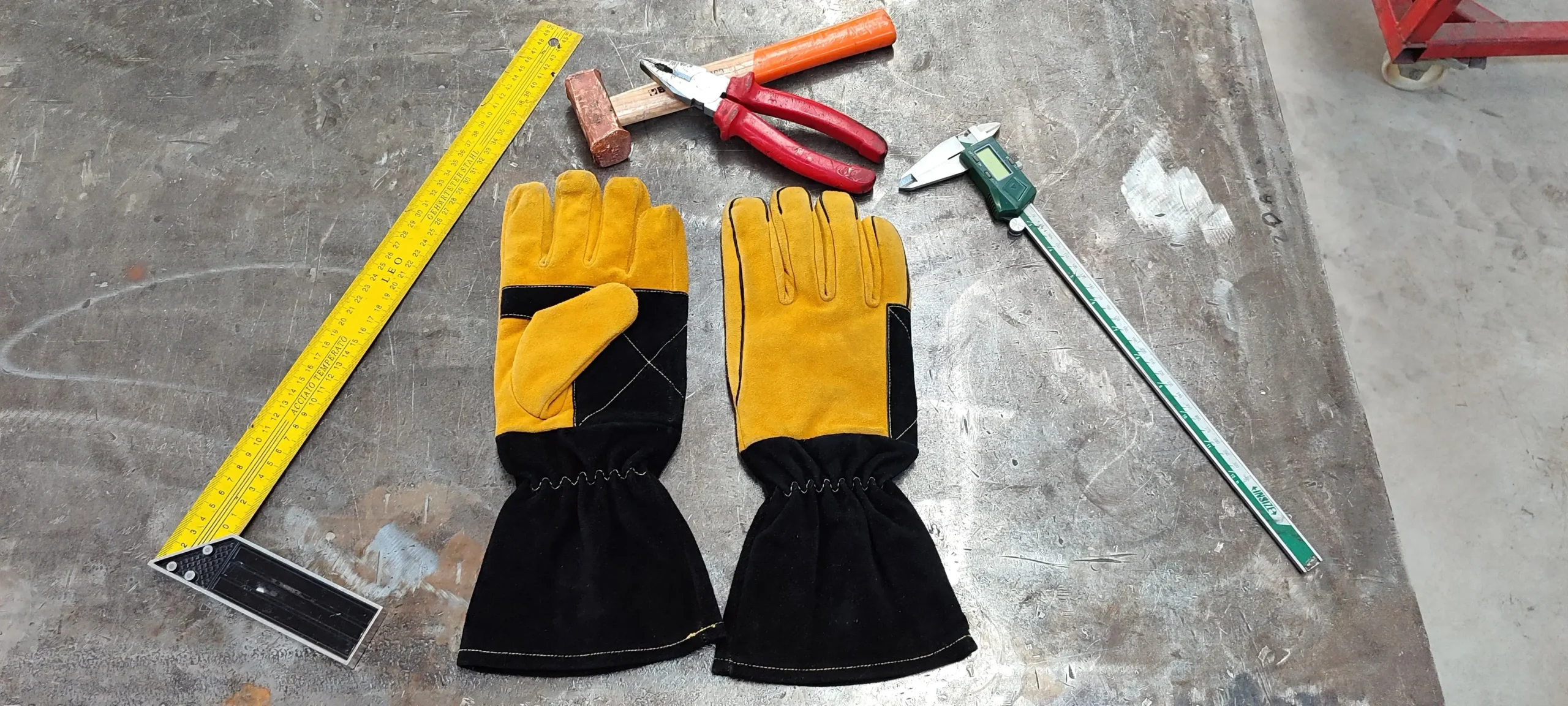
arasweld Professional welding glove with Premium Leather reinforced palm and split leather protection, Sewn with Kevlar thread . Which is located on a welding workbench, with a hand-held pliers, a ruler. and a welded piece next to it. By a professional welder who used Arasweld gloves.

MIG welding gloves are process-specific protective gloves designed for gas metal arc welding (GMAW), commonly called MIG or MIG/MAG welding. They help protect the hands, wrists and lower forearms from welding heat, sparks, molten-metal spatter and contact with hot or abrasive workpieces while preserving enough grip and movement to control the welding gun.

MIG welding, formally known as gas metal arc welding or GMAW, uses an arc between a continuously fed consumable wire electrode and the workpiece. An externally supplied gas or gas mixture normally shields the weld area from atmospheric contamination.

Because the welder must hold and guide a welding gun while working near the arc, the gloves need to provide both protective coverage and usable hand control. MIG welding gloves are therefore commonly positioned between lightweight TIG gloves, which prioritize fine dexterity, and heavier Stick welding gloves, which often prioritize protection against intense heat, sparks and slag.

The term MIG welder gloves does not describe one universal construction. Different models may use split cowhide, top-grain cowhide, goatskin, pigskin, thermal linings, reinforced palms, long gauntlet cuffs or protected seams. The correct construction depends on the hazards and conditions of the job.

This task-based approach is important because OSHA requires employers to select hand protection according to the hazards present, the work being performed, the conditions of use and the required duration of use. Welding PPE must therefore be selected through a proper workplace hazard assessment rather than solely by the name of the welding process.

What Do MIG Welding Gloves Protect Against?

MIG welding gloves primarily help reduce exposure to thermal and physical hazards around the hands and lower forearms. The exact level of protection depends on the glove’s materials, construction, coverage and verified performance ratings.

Depending on the model and the work being performed, MIG welding gloves may help protect against:

  • Welding heat: Exposure to heat generated near the arc, weld pool and recently welded components.
  • Sparks and molten-metal spatter: Hot particles that may land on the hands, wrists or lower arms during welding.
  • Brief contact with hot materials: Accidental contact with heated workpieces, fixtures or tools.
  • Abrasion and surface wear: Friction caused by handling steel, fabrication components and rough materials.
  • Minor cuts and puncture risks: Protection may be provided when the glove has suitable construction and verified mechanical ratings.
  • Wrist and lower-forearm exposure: A long or gauntlet-style cuff can provide more coverage than a short-cuff general work glove.
  • Wear around high-contact areas: Reinforced palms, fingers and thumbs can improve durability where repeated friction occurs.

OSHA identifies thermal burns, severe abrasions, cuts, punctures and harmful temperature extremes among the hazards that may require suitable hand protection. OSHA’s PPE guidance also notes that leather gloves can protect against sparks, moderate heat and contact with rough objects, while the nature of the operation should determine the glove selected.

MIG welding gloves should nevertheless be described as heat-resistant, not heatproof. No glove protects against every possible hand hazard, and protective performance can decline when the leather, lining, seams or reinforcement become damaged, contaminated or heavily worn.

For a more detailed explanation of thermal hazards and realistic glove limitations, read Are Welding Gloves Heat-Proof?.

Important safety note: Standard leather MIG welding gloves are not a substitute for approved electrical-insulating gloves. They must not be relied upon as primary protection when working on or near exposed energized electrical parts. Electrical hazards require equipment specifically selected, tested and maintained for electrical protection.

How Are MIG Welding Gloves Different from General Work Gloves?

General work gloves are often designed primarily for grip, abrasion resistance, cleanliness, material handling or limited cut protection. Those qualities can be valuable during fabrication, but they do not automatically make a glove appropriate for MIG welding.

A typical general-purpose glove may lack:

  • A heat-resistant leather shell
  • A protective thermal lining
  • A long gauntlet cuff
  • Reinforcement in high-wear areas
  • Protected or welted seams
  • Heat-resistant aramid stitching
  • Welding-specific thermal performance
  • Protection against repeated sparks and spatter

By comparison, well-designed leather MIG welding gloves usually prioritize a combination of thermal protection, spatter resistance, durability and hand control. They may include a lined leather construction, reinforced palm or thumb areas, protected seams and a cuff that extends beyond the wrist.

This does not mean that every thick leather glove is automatically suitable for MIG welding. A glove should be assessed according to its intended use, manufacturer documentation, construction quality, fit and relevant model-specific ratings. OSHA guidance emphasizes that glove selection must be based on the nature of the hazard and the operation being performed.

The distinction is also important when comparing process-specific gloves. TIG gloves generally emphasize fine movement and tactile control, while MIG gloves usually provide a stronger balance of heat protection, spatter resistance and durability. Stick welding gloves may use still heavier constructions for work involving significant heat, sparks and slag.

For a complete process comparison, see Types of Welding Gloves: MIG vs TIG vs Stick.

What Are the Best Gloves for MIG Welding?

The best gloves for MIG welding are leather welding gloves selected for the job’s actual heat, spatter, amperage, duty cycle and handling hazards. For demanding production or high-spatter work, a lined split-cowhide glove with reinforced wear areas, protected seams, heat-resistant stitching and a gauntlet cuff is often more suitable than a thin precision glove.

There is no single pair of best MIG welding gloves for every welder or application. A glove that performs well during short, light-duty welds may not provide the protection or durability required for repetitive fabrication, overhead welding or sustained high-amperage work.

In practical terms, the best gloves for MIG welding should be selected by evaluating the following features:

  • Leather type and construction: Split cowhide is commonly considered for demanding heat, spatter and abrasion exposure, while grain leather may provide greater flexibility depending on its thickness and construction.
  • Lining: A suitable lining can improve insulation and comfort during longer welding cycles, although additional insulation may reduce dexterity.
  • Palm and thumb reinforcement: Reinforcement can improve service life in areas exposed to repeated gun handling, workpiece contact and abrasion.
  • Stitching: Heat-resistant aramid stitching can provide better resistance to heat-related seam deterioration than ordinary thread.
  • Protected seams: Welted or otherwise protected seams can reduce direct exposure of the stitching to sparks, spatter and abrasion.
  • Cuff length: A gauntlet cuff helps cover the wrist and lower forearm, particularly during vertical, overhead or high-spatter work.
  • Fit and grip: The glove should remain secure without excessively restricting finger movement or welding-gun control.
  • Verified ratings: Thermal and mechanical claims should be confirmed using the manufacturer’s documentation for the specific glove model.

Specialist insight from arasweld 12 years of welding experience: During sustained MIG work at approximately 180–300 amps, particularly where arc-on time and spatter exposure are high, I generally prefer a thicker, well-constructed split-cowhide glove over a lightweight precision glove. However, amperage alone should not determine selection. Transfer mode, position, duty cycle, material temperature and handling tasks must also be considered.

For example, a welder performing short-circuit MIG on thinner material may prioritize flexibility and gun control. A welder performing repetitive production welding, spray transfer or high-spatter work may need more insulation, reinforcement and forearm coverage.The correct question is therefore not simply, “Which welding glove is thickest?” It is:Which glove provides the right combination of heat resistance, spatter protection, durability, fit and dexterity for this particular MIG welding task?The detailed selection criteria will be covered in the later section, How to Choose MIG Welding Gloves. For broader preliminary guidance, see How to Choose Welding Gloves.

Why Does MIG Welding Require Specialized Gloves?

MIG welding requires specialized gloves because the hands may be exposed to heat, sparks, molten-metal spatter, hot components and mechanical wear during the same task. Suitable MIG welding gloves must therefore balance thermal protection, durable construction, forearm coverage and welding-gun control according to the process settings, welding position and working conditions.

Heat, Sparks and Molten-Metal Spatter

The arc, weld pool and recently welded metal can expose the hands to radiant heat, sparks and hot spatter. Spatter may also reach the wrist or lower forearm, particularly during vertical, overhead or restricted-position welding.

For this reason, heat-resistant MIG welding gloves commonly use leather shells, protective cuffs, heat-resistant stitching and linings appropriate for the expected exposure. They should be described as heat-resistant rather than heatproof, because protection depends on the glove’s construction, condition and verified performance ratings.

Amperage, Transfer Mode and Welding Duty Cycle

Amperage is important, but it should not be considered alone. Transfer mode, arc-on time and welding duty cycle also affect the thermal load placed on the glove.

Short-circuit, globular, spray and pulsed transfer can produce different combinations of current, heat and spatter. Globular transfer may produce larger and less controlled droplets, while spray transfer commonly operates at higher current levels. Pulsed MIG can reduce average heat input compared with conventional spray transfer, but the correct glove still depends on the complete task.

A welder performing short, intermittent welds may not need the same construction as someone completing sustained production welds. High-amperage MIG welding gloves should therefore be selected according to both the welding settings and the length and frequency of exposure.

Abrasion, Cuts and Material-Handling Risks

MIG welders frequently handle plate, structural components, fixtures, welding guns and rough metal surfaces before and after welding. These activities can expose gloves to abrasion, surface wear and sharp edges, even when the arc is not active.

Reinforced palms, thumbs and fingers can improve durability in high-contact areas. However, leather thickness alone does not establish cut or puncture protection. Where these hazards are significant, the glove’s model-specific mechanical ratings should be checked.

OSHA 29 CFR 1910.138 Requires Hand Protection to be selected according to its performance in relation to the task, working conditions, duration of use and identified hazards.

Which Leather Is Best for MIG Welding Gloves?

Split cowhide is often a strong choice for demanding MIG welding because it can provide a practical balance of heat resistance, spatter protection, abrasion resistance and durability. Top-grain cowhide or goatskin may provide greater flexibility for lighter work, but the best leather depends on its thickness, quality, lining, reinforcement and overall glove construction.

arasweld Professional welding glove with Premium Leather reinforced palm and split leather protection, Sewn with Kevlar thread . Which is located on a welding workbench, with a hand-held pliers, a ruler. and a welded piece next to it. By a professional welder who used Arasweld gloves.

Split Cowhide for Heat, Spatter and Durability

Split cowhide MIG welding gloves are widely used for heavy-duty fabrication and production welding. The fibrous surface can perform well where the glove is repeatedly exposed to sparks, spatter and abrasive metal surfaces.

A lined, well-constructed split cowhide glove is often suitable for high-heat MIG welding, longer duty cycles and demanding industrial work. However, performance still depends on leather thickness, lining, seam design, reinforcement and verified thermal ratings.

Top-Grain Cowhide for Flexibility and Tool Control

Top-grain cowhide MIG gloves generally have a smoother surface and may provide better flexibility and welding-gun control than heavier split-leather constructions.

They can be useful for light- to medium-duty MIG welding where the welder needs a balance between protection and movement. However, a thin grain-leather glove should not automatically be treated as equivalent to a thicker, lined glove during sustained high-heat or high-spatter work.

When Goatskin May Be Suitable for MIG Welding

Goatskin MIG welding gloves may be appropriate for lighter or intermittent tasks where dexterity, grip and tactile control are priorities. Goatskin is commonly valued for its flexibility and strength relative to its weight.

For demanding production welding, overhead work or prolonged spatter exposure, goatskin should only be selected when the complete glove construction—including its lining, reinforcements, cuff and performance ratings—provides suitable protection.

Leather Typical Strength Potential MIG Application Main Consideration
Split cowhide Heat, spatter and abrasion resistance Heavy-duty, production and high-spatter welding May be less flexible when heavily lined
Top-grain cowhide Flexibility, grip and tool control Light- to medium-duty MIG welding Protection depends on thickness and construction
Goatskin Dexterity and tactile control Light or intermittent MIG welding May require suitable lining for greater thermal exposure

EXPERT POINT:
Based on ARSWELD 12 years of professional welding experience, I generally prefer thicker split cowhide construction for sustained MIG work around 180–300 amps, particularly when spatter and arc-on time are high. This is a task-specific preference—not a universal temperature or performance claim.

The best leather for MIG welding gloves must therefore be judged as part of the complete glove. A well-designed glove should provide sufficient protection without becoming so bulky that it reduces grip, comfort or safe control of the welding gun.

Lined vs Unlined MIG Welding Gloves

Lined and unlined gloves can both be suitable for MIG welding, but they serve different working conditions. The correct choice depends mainly on heat exposure, arc-on time, spatter level, required dexterity and the glove’s complete construction.

When to Choose Lined MIG Welding Gloves

Choose lined MIG welding gloves when the task involves sustained arc-on time, higher heat, frequent spatter or prolonged handling of warm tools and materials. A suitable lining can improve thermal comfort and slow heat transfer, but it should still allow the welder to maintain a secure grip and controlled movement of the welding gun.

Insulated MIG welding gloves are commonly preferred for production welding, high-spatter work and longer welding cycles. The lining should remain secure inside the glove, because loose or twisted material can reduce comfort and finger control.

When Unlined MIG Welding Gloves May Be Suitable

Unlined MIG welding gloves may suit short, light-duty or intermittent work where dexterity and tactile control are more important than added insulation. They should only be selected when heat and spatter exposure are limited and the glove’s leather, seams, cuff and overall construction remain suitable for the specific welding conditions.

An unlined glove may provide better flexibility, but it should not be chosen only because it feels more comfortable. Protection must remain appropriate for the task, particularly when welding position or transfer mode increases spatter exposure.

How Glove Linings Affect Heat Protection and Dexterity

Glove linings can improve insulation and comfort by slowing heat transfer to the hand, especially during longer welding cycles. However, thicker linings can also reduce finger movement, grip sensitivity and torch control. The best lining is therefore the lightest construction that provides adequate protection for the expected heat, spatter and duration of exposure.

Glove Construction Best Suited To Main Trade-Off
Lined MIG gloves Longer cycles, greater heat and frequent spatter More insulation but potentially less dexterity
Unlined MIG gloves Short, light-duty and intermittent welding Better control but less thermal insulation

How to Choose MIG Welding Gloves

Choose MIG welding gloves by matching the leather, lining, reinforcement, seams, cuff, fit and verified ratings to the actual heat, spatter, amperage, duty cycle and handling hazards. The best choice provides sufficient protection without unnecessary bulk, allowing the welder to maintain a secure grip, comfortable movement and controlled welding-gun operation.

At ARASWELD, MIG glove selection is approached according to the real application rather than relying on one feature such as leather thickness alone. The complete glove should support protection, durability and usable hand control under the intended working conditions.

ARASWELD heavy duty MIG welding gloves high heat protection sparks with Certificate EN407 and heat protection 932°F
ARASWELD High-Heat MIG & MAG Welding Gloves combine durable leather, heat protection, reinforced construction, and practical dexterity to support welders working with sparks, spatter, and repeated fabrication tasks.

Match the Glove to Heat, Spatter, Amperage and Duty Cycle

Consider the amperage, transfer mode, arc-on time, welding position and frequency of exposure together. Sustained production welding or frequent spatter generally requires more insulation and coverage than short, intermittent MIG work.

Check Palm, Finger and Thumb Reinforcement

Reinforcement can improve the life of areas exposed to repeated friction, welding-gun handling and contact with rough workpieces. It should add durability without creating excessive bulk or restricting finger movement.

Look for Heat-Resistant Stitching and Protected Seams
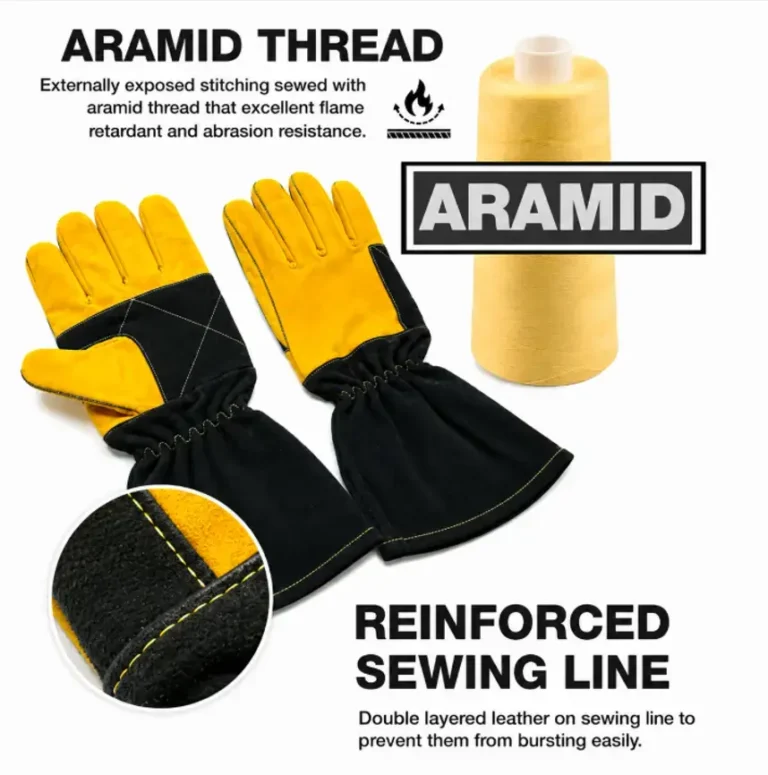
Heat-resistant aramid stitching and protected or welted seams can reduce direct exposure of the thread to sparks, spatter and abrasion. Seam placement is especially important around the thumb, palm and fingers.

ARASWELD welding gloves featuring reinforced stitching with aramid fiber (Kevlar®) thread, providing excellent heat resistance, high tensile strength, cut resistance, and long-lasting durability for professional welding applications.
ARASWELD Professional welding gloves constructed with aramid fiber (Kevlar®) reinforced stitching and high-performance thermal insulation materials designed for industrial heat protection, abrasion resistance, and extended service life.

Choose the Right Cuff Length and Forearm Coverage
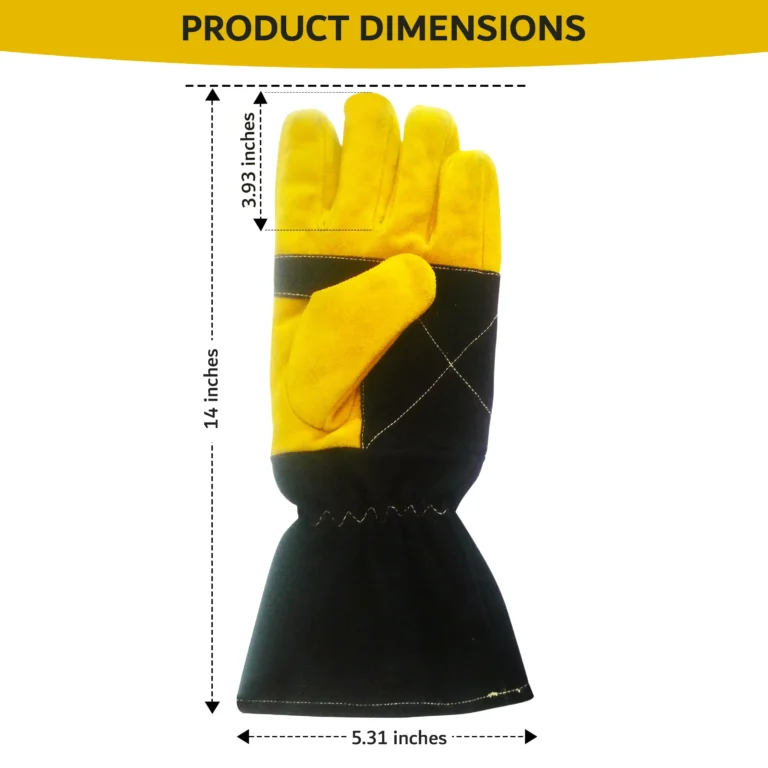
A long gauntlet cuff provides greater wrist and lower-forearm coverage during vertical, overhead and high-spatter welding. Shorter cuffs may improve movement but should only be used when the exposure level allows.

ARASWELD yellow and black leather welding glove product dimensions showing a 14.1-inch overall glove length, 3.93-inch finger length, and 5.31-inch cuff width for hand, wrist, and lower-forearm coverage.

Balance Protection, Dexterity and Torch Control

The glove should allow the welder to hold the gun securely, operate the trigger and reposition the hand without excessive effort. A glove that is too bulky can reduce control, while a glove that is too light may provide insufficient protection.

Select the Correct MIG Welding Glove Size
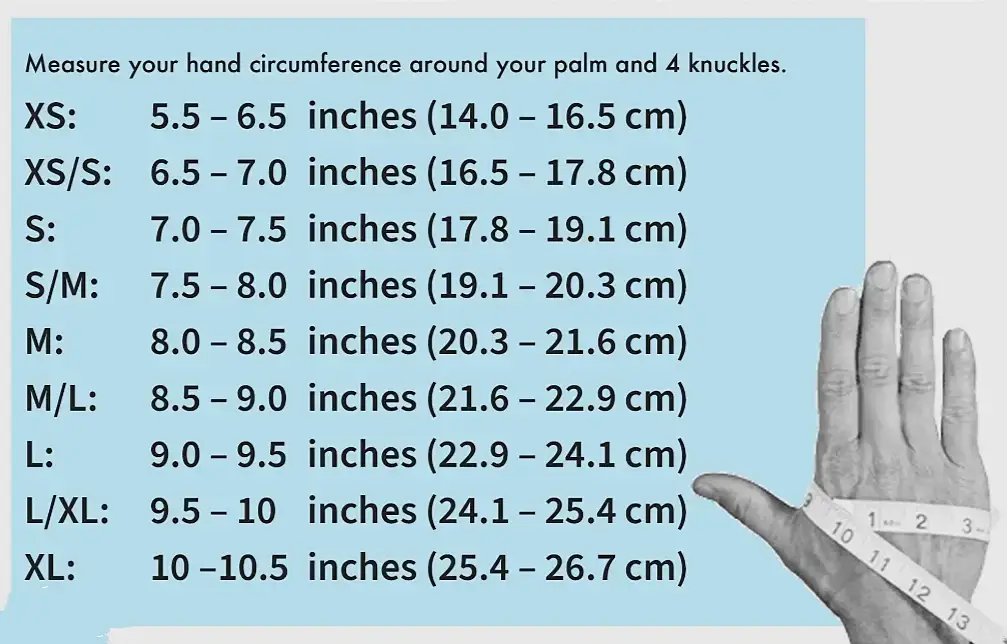
MIG welding gloves should fit securely without compressing the fingers or leaving excessive loose material. Follow the manufacturer’s size chart and check finger length, palm width, cuff fit and grip before use.

Welding glove hand circumference size chart showing how to measure around the palm and four knuckles, with recommended glove sizes from XS to XL based on inch and centimetre measurements.
Measure your hand circumference around the palm and four knuckles to identify your approximate welding glove size. Always confirm your final size using the size chart for the exact glove model, because leather thickness, lining, and construction can affect the fit.

Review Model-Specific Safety Ratings and Documentation

Review the documentation for the specific glove model, including applicable thermal and mechanical ratings. Do not assume that every welding glove from the same manufacturer has identical performance.

For a concise explanation of how thermal and mechanical standards differ, see EN 388 vs EN 407.

ARASWELD product consideration

For demanding MIG applications where heat, spatter and durability are priorities, explore the ARASWELD High Heat Protection Welding Gloves. Always confirm that the selected model, size and documented ratings are appropriate for the intended task and workplace risk assessment.

Best MIG Welding Gloves by Application

The best MIG welding gloves depend on the application’s heat, spatter, arc-on time, welding position and additional handling hazards. Light intermittent work may require greater flexibility, while high-amperage, overhead or repetitive production welding generally calls for stronger insulation, reinforced construction, protected seams and greater wrist and forearm coverage.

EXPERT POINT:
glove selection is based on the complete working environment—not simply the MIG or MIG/MAG process name.

Welders should assess the transfer mode, duty cycle, material temperature, welding position and any grinding or material-handling work performed during the same task.
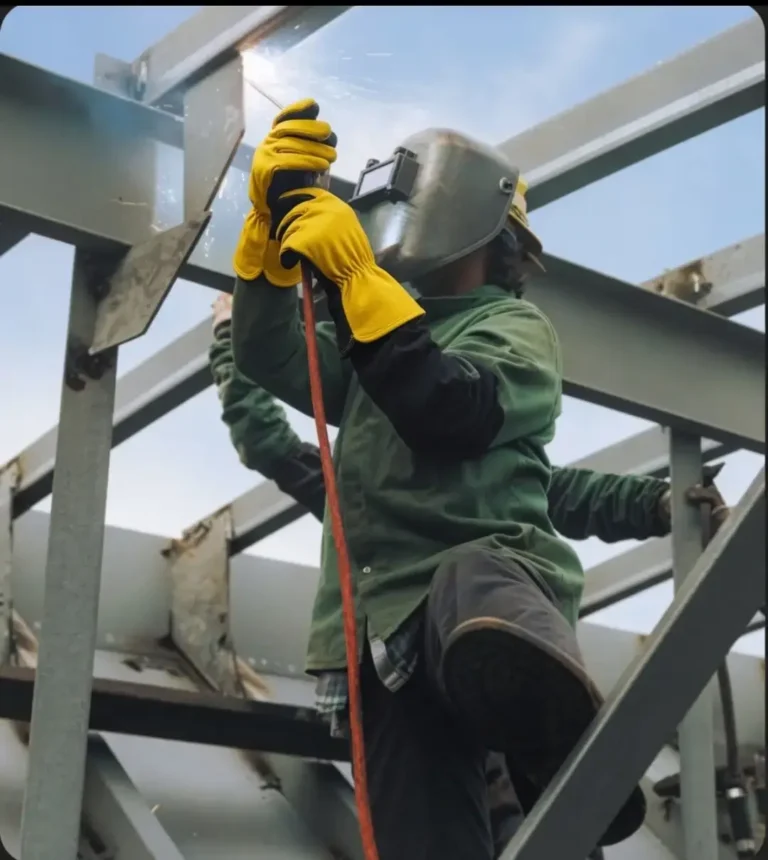
Light- to Medium-Duty MIG Welding

For short welds and moderate spatter exposure, choose a flexible leather glove that provides sufficient heat resistance without unnecessary bulk. Top-grain cowhide or suitably constructed goatskin may support better welding-gun control.

High-Amperage and High-Spatter MIG Welding

Heavy-duty MIG welding gloves should normally use a lined leather construction, durable split cowhide, protected seams, heat-resistant stitching and a long cuff. Amperage should always be considered together with arc-on time and spatter exposure.

Production and Repetitive MIG Welding

Production welding requires a balance of thermal comfort, durability and consistent grip. Reinforced palms and thumbs can reduce wear, while a stable lining may improve comfort during repeated welding cycles.

Short-Circuit, Globular, Spray and Pulsed MIG Welding

Short-circuit transfer may support lighter glove construction during controlled work. Globular and spray transfer can involve greater heat or spatter exposure, while pulsed MIG requirements depend on the actual current, duty cycle and application.

Vertical and Overhead MIG Welding

Vertical and overhead welding can direct sparks and spatter toward the hands and forearms. Select long-cuff MIG welding gloves with secure wrist coverage, protected seams and sufficient insulation for the expected exposure.

Arasweld Stick Split leather welding gloves With high quality cowhide leather Kevlar-stitched directly impacts heat insulation and finger control

MIG Welding in Fabrication and Structural Work

Fabrication and structural welding often combine heat exposure with rough steel surfaces and repeated component handling. Durable leather, reinforced wear areas and appropriate mechanical ratings should be considered together.

MIG Welding Combined with Grinding and Material Handling

A welding glove is not automatically suitable for every grinding, cutting or handling hazard. Where abrasion, cuts or punctures are significant, review the glove’s model-specific mechanical ratings and workplace risk assessment.

MIG Welding Gloves for Outdoor and Damp Working Conditions

Outdoor welding gloves should provide secure grip and suitable protection for changing conditions. Wet or heavily damp leather may lose comfort, flexibility and protective performance, so contaminated or water-saturated gloves should not remain in use until properly inspected and dried.

MIG Application Priority Features Main Selection Risk
Light or intermittent work Flexibility, grip and suitable heat resistance Choosing a glove that is too light for the actual exposure
High-amperage or high-spatter work Lining, split cowhide, reinforced areas and long cuffs Selecting protection based on amperage alone
Production welding Thermal comfort, durability and secure lining Ignoring accumulated heat from repeated cycles
Overhead or structural welding Forearm coverage, protected seams and reinforcement Insufficient protection against falling spatter

ARASWELD Protection for Demanding MIG & MAG Welding

Explore - ARASWELD welding gloves - developed for industrial applications where heat, spatter, leather durability and dependable hand coverage are important. Select each glove according to the intended task, working conditions and verified model-specific performance.

What Safety Standards Apply to MIG Welding Gloves?

MIG welding gloves are usually evaluated through EN 12477 for welding-specific performance, supported by EN 407 thermal tests, EN 388 mechanical tests and EN ISO 21420 general requirements. In US workplaces, OSHA requires hazard-based glove selection, while ANSI/ISEA 105-2024 classifies hand-protection performance. None of these standards makes a glove universally heatproof or electrically insulating.

Specialist insight from arasweld 12 years of welding experience:
No single marking describes every aspect of glove performance. Buyers should review the complete rating, manufacturer documentation and intended application for the specific model.

EN 12477 Protective Gloves for Welders

EN 12477 is the welding-specific standard for gloves used in manual metal welding, cutting and related processes. It combines relevant requirements for thermal protection, mechanical resistance, glove construction and dexterity.

It should not be presented as proof that welding gloves are completely heatproof. Learn more about realistic thermal limitations in Are Welding Gloves Heat-Proof?. AND To learn more about the EN 12477 standard, please refer to our guide What Is EN 12477? Welding Glove Standard.

EN 12477 Type A Welding Gloves

Type A welding gloves provide higher minimum performance in several protective categories but require less dexterity than Type B. They are generally considered for welding tasks where heat, spatter and mechanical protection take priority over fine finger control.

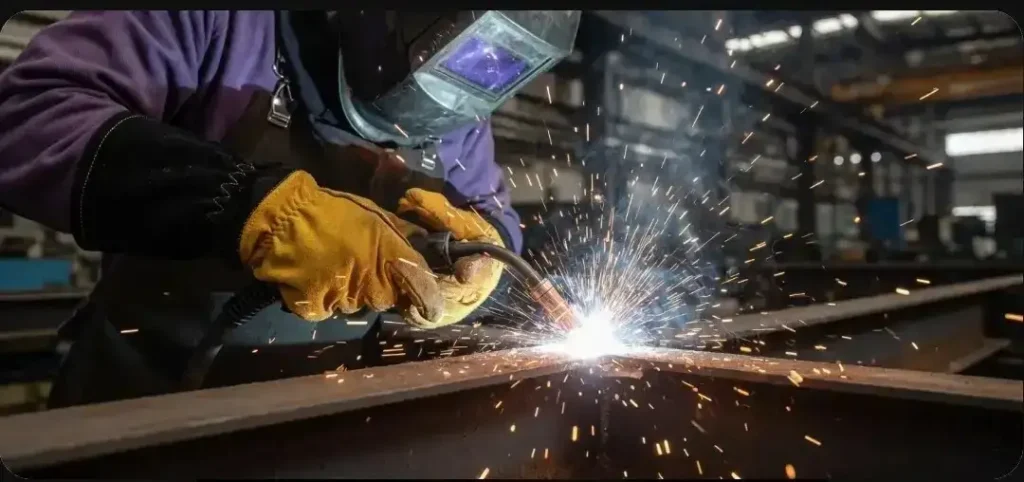
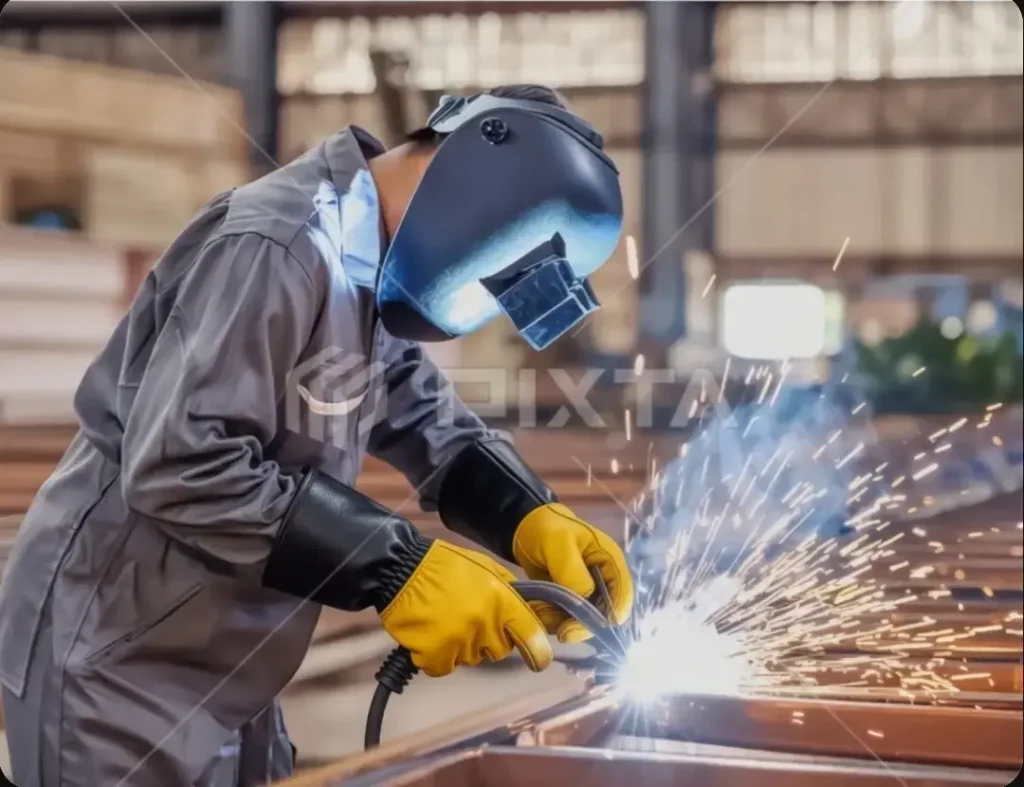
A welder is working on a Steel piece with sparks flying around it. He is working in a factory. He is wearing Arasweld heat-resistant welding gloves.

EN 12477 Type B Welding Gloves

Type B welding gloves require greater dexterity but have lower minimum requirements in several other performance categories. They may suit more precision-focused work, provided their complete ratings remain appropriate for the identified hazards.

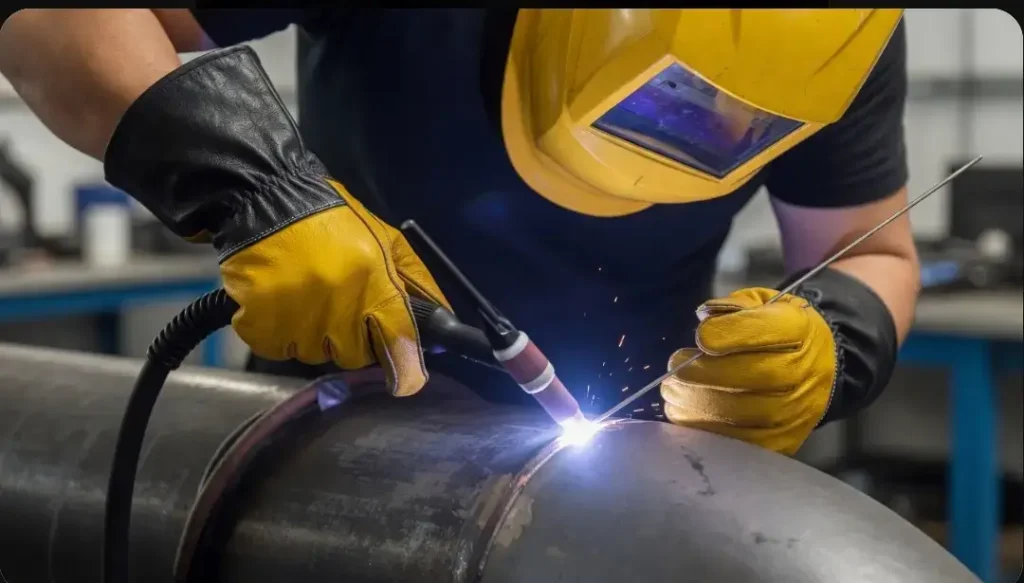
Arasweld TIG welding gloves made of thin premium Split cow leather for precision work flexibility and hand movement

Specialist insight from arasweld 12 years of welding experience:
Type A is not automatically suitable for every MIG task, and Type B is not automatically suitable only for TIG welding. Selection must remain application-specific.

EN 407 Thermal Protection
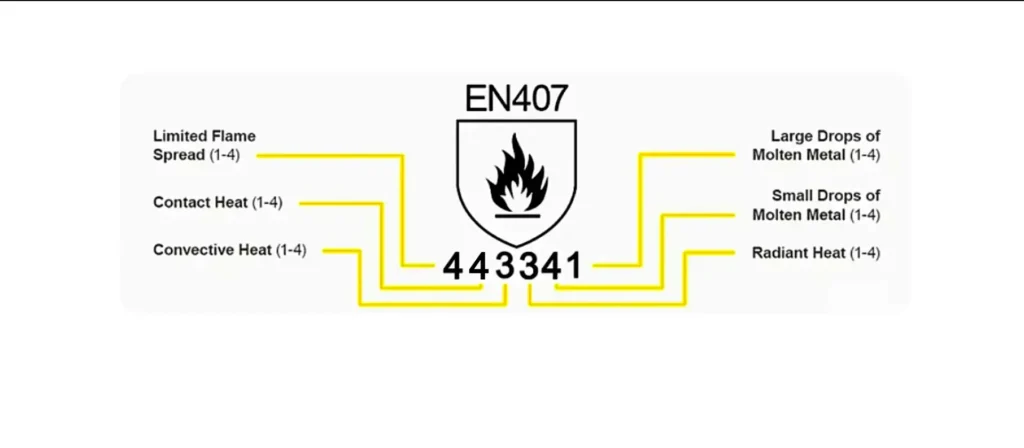
EN 407:2020 evaluates performance against thermal hazards such as:

  • Limited flame spread
  • Contact heat
  • Convective heat
  • Radiant heat
  • Small molten-metal splashes
  • Large quantities of molten metal

For welding gloves, these thermal results should be considered within the EN 12477 welding-glove framework, not as a replacement for it. For a clearer comparison, see EN 388 vs EN 407. AND To learn more about the EN 407 standard, please refer to our guide EN 407:2020 Standard Explained: Thermal Protection Tests, Ratings and Pictograms.

EN 407 standard heat resistance levels chart for ARASWELD welding gloves showing performance numbers 443341 for flame spread, contact, convective, radiant heat, and molten metal drops.
EN 407 ARASWELD welding gloves with performance levels explained.

EN 388 Mechanical Protection

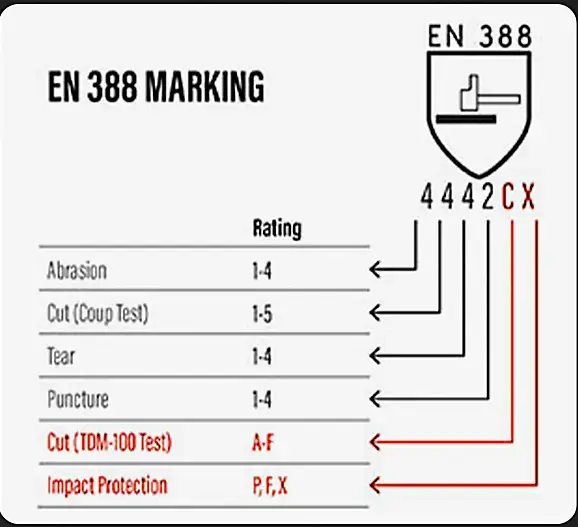
EN 388:2016+A1:2018 evaluates mechanical resistance against abrasion, blade cuts, tearing, puncture and optional impact protection.

These ratings are relevant when MIG welding includes rough-steel handling, fabrication or grinding-related tasks. However, EN 388 alone does not establish that a glove is suitable for welding or thermal exposure.

ARASWELD diagram explaining EN 388 rating 4X43CP for abrasion, Coup cut, tear, puncture, ISO 13997 cut and optional impact protection

EN ISO 21420 General Glove Requirements

EN ISO 21420:2020 covers general requirements for protective-glove design, construction, safety, comfort, sizing, marking and manufacturer information.

It does not provide thermal or mechanical protection levels by itself. It must be used with relevant performance standards such as EN 12477, EN 407 or EN 388.

OSHA Hand-Protection Requirements for US Workplaces

OSHA 29 CFR 1910.138 does not prescribe one universal MIG welding glove. Employers must select hand protection by evaluating:

  • The task being performed
  • Workplace conditions
  • Duration of use
  • Identified and potential hazards
  • The glove’s relevant performance characteristics

Therefore, a glove should not be selected only because it is labelled as a MIG welding glove.

ANSI/ISEA 105-2024 Hand-Protection Ratings

ANSI/ISEA 105-2024 provides US classifications for performance properties such as abrasion, cut and puncture resistance.

It is not a MIG-specific welding standard and does not replace EN 12477. It can support glove selection where welding is combined with fabrication, component handling or other mechanical hazards.

Why Welding Gloves Do Not Provide Electrical-Shock Protection

Standard leather welding gloves must not be treated as electrical-insulating gloves. Their main purpose is protection against welding-related heat, spatter and mechanical hazards.

EXPRT POINT:
Work involving exposed energized parts requires properly selected and tested electrical protective equipment, such as rated insulating rubber gloves where applicable. The glove manufacturer’s instructions and workplace electrical-safety procedures must always be followed.

Standard or Rule Main Purpose What It Does Not Prove
EN 12477 Welding-specific glove requirements That the glove is heatproof
EN 407:2020 Thermal performance Suitability for every welding task
EN 388:2016+A1:2018 Mechanical resistance Thermal or welding protection
EN ISO 21420:2020 General glove requirements Specific protective performance
ANSI/ISEA 105-2024 US hand-protection classifications Welding-specific suitability
OSHA 1910.138 Hazard-based workplace selection One universal glove recommendation

How Should MIG Welding Gloves Fit?

MIG welding gloves should fit securely without compressing the fingers, restricting circulation or leaving excessive loose material around the palm and fingertips. The welder should be able to grip the welding gun, operate the trigger and reposition the hand comfortably while the cuff remains stable and provides appropriate wrist and forearm coverage.

Use the manufacturer’s size chart and check the fit while holding the welding gun. For broader glove-selection guidance, see the ARASWELD Complete Guide to Welding Gloves.

Signs That MIG Welding Gloves Are Too Tight

Gloves may be too tight when they:

  • Compress the fingers or palm
  • Restrict finger bending
  • Create pressure around the thumb
  • Make the trigger difficult to operate
  • Pull tightly across the seams
  • Cause numbness or discomfort

Signs That MIG Welding Gloves Are Too Loose

Gloves may be too loose when:

  • Excess material gathers around the fingertips
  • The glove shifts while gripping the gun
  • The fingers do not align with the glove
  • The palm bunches during movement
  • The cuff slides excessively
  • Secure control becomes difficult

How Fit Affects Dexterity, Grip and Safety

Correct fit supports dexterity, grip and welding-gun control. Gloves that are too tight can restrict movement, while oversized gloves may reduce tactile control or catch on surrounding equipment. Protection, leather thickness and lining should not create unnecessary bulk.

ARASWELD specialist insight: Based on 12 years of professional welding experience, a secure fit with slight natural movement is usually preferable to either a compressed or excessively loose glove. The welder should be able to control the gun comfortably without the fingertips folding or the palm shifting.

How Long Do MIG Welding Gloves Last?

There is no fixed lifespan for MIG welding gloves. Service life depends on welding heat, spatter, duty cycle, leather construction, seam quality, reinforcement, handling tasks and maintenance. Gloves used for sustained production welding may wear faster than gloves used intermittently, so condition-based inspection is more reliable than replacing them on a fixed schedule.

What Affects MIG Welding Glove Lifespan?

MIG welding glove lifespan is affected by arc-on time, heat and spatter exposure, welding position, leather thickness, lining, reinforcement and contact with rough materials. Grinding, handling sharp steel, moisture, oil and poor storage can also accelerate deterioration. Two gloves used for different applications may therefore have very different service lives.

Signs That MIG Welding Gloves Need Replacing

Replace MIG welding gloves when holes, torn seams, exposed lining, hardened leather, severe thinning, damaged reinforcement or permanent contamination reduces protection or control. Gloves should also be removed from service when heat reaches the hand unusually quickly, the lining shifts significantly or the glove no longer fits and grips securely.

Inspect these high-wear areas before use:

  • Fingertips and finger sides
  • Thumb and thumb joint
  • Palm and reinforcement panels
  • Stitching and protected seams
  • Cuff and wrist area
  • Internal lining

How to Extend the Life of MIG Welding Gloves

Extend glove life by selecting the correct model for the application, avoiding unnecessary contact with hot metal, inspecting the gloves before use and storing them clean and dry. Do not continue using saturated, oil-contaminated or severely hardened leather. Follow the manufacturer’s cleaning instructions rather than applying unapproved chemicals or direct high heat.

ARASWELD specialist insight: In demanding MIG welding, the thumb, fingertips, palm and seam lines often show wear first. Regular inspection of these areas helps identify damage before the glove loses protective coverage or makes welding-gun control less reliable.

MIG Welding Glove Selection Checklist

Before choosing MIG welding gloves, evaluate the welding amperage, duty cycle, spatter level, position, leather construction, lining, reinforcement, seams, cuff length, fit and verified safety ratings. The correct glove should match the complete task—not only the welding-process name—while providing sufficient heat protection, durability, grip and controlled movement.

Selection Point What to Check Why It Matters
Amperage and duty cycle Current level, arc-on time and welding frequency Longer exposure can increase thermal load
Spatter exposure Transfer mode, settings and spatter direction Frequent spatter may require stronger coverage and insulation
Welding position Flat, horizontal, vertical or overhead welding Vertical and overhead work can increase falling-spatter exposure
Leather construction Leather type, thickness and overall quality Influences heat resistance, flexibility and durability
Lining Insulation level, stability and comfort Improves thermal protection but may reduce dexterity
Reinforcement Palm, thumb, fingers and high-wear areas Can improve durability during repeated handling
Stitching and seams Aramid thread and protected or welted seams Reduces direct heat, spatter and abrasion exposure
Cuff length Wrist and lower-forearm coverage Long cuffs provide greater coverage in higher-risk positions
Fit and sizing Finger length, palm fit, grip and cuff stability Correct fit supports control, comfort and safer movement
Safety ratings Model-specific thermal and mechanical documentation Confirms tested performance for relevant hazards

Explore ARASWELD Gloves for MIG Welding Applications

ARASWELD welding gloves are developed for industrial applications where heat, spatter, durable leather construction and reliable hand coverage are important.

Explore our high-heat MIG and MAG welding gloves for demanding work, or contact ARASWELD to discuss bulk and wholesale requirements for your workforce, distribution business or industrial operation.

Built for Demanding MIG & MAG Welding

Choose ARASWELD for industrial welding gloves designed around practical heat exposure, spatter resistance, reinforced leather construction and dependable coverage. Select the glove model and size according to your specific application and verified performance requirements.

Frequently Asked Questions About MIG Welding Gloves

MIG welding gloves are heat-resistant, not heatproof. They are designed to reduce exposure to welding heat, sparks and molten-metal spatter, but no glove can block unlimited heat or protect indefinitely. Performance depends on the leather, lining, seam construction, cuff coverage, condition and verified thermal ratings of the specific model. Heat can also reach the hand faster when gloves are wet, damaged, contaminated or compressed against hot metal. For realistic protection limits, read Are Welding Gloves Heat-Proof?.

MIG welding gloves should be insulated when the work involves sustained arc-on time, higher heat, frequent spatter or repeated production cycles. A stable lining can slow heat transfer and improve comfort, but excessive insulation may reduce finger movement, grip sensitivity and welding-gun control. Short, intermittent or lower-heat tasks may be suitable for lighter or unlined gloves when the complete construction remains appropriate. Choose the lightest lining that provides adequate protection for the actual duty cycle, welding position and exposure level.

TIG gloves can be used for some light MIG welding tasks, but they are often too thin for sustained heat and spatter exposure. TIG gloves usually prioritize dexterity and filler-rod control, while MIG welding gloves generally provide more insulation, reinforcement and cuff coverage. A TIG glove may be reasonable for short, controlled, low-spatter work only when its construction and ratings match the hazards. For demanding MIG, spray-transfer, overhead or production welding, use a glove selected for the higher thermal and spatter load. See MIG vs TIG vs Stick Welding Gloves.

MIG welding gloves can sometimes be used for flux-cored arc welding, but the glove must match the actual heat, spatter and slag exposure. Gas-shielded FCAW and self-shielded FCAW can create different working conditions, and self-shielded applications may involve heavier spatter and more demanding outdoor work. A lined split-cowhide glove with protected seams, reinforcement and a long cuff may be more appropriate than a lightweight MIG glove. Select by amperage, duty cycle, welding position and verified model-specific performance—not by the process label alone.

No, standard MIG welding gloves should not be relied upon as electrical-shock protection. Leather welding gloves are intended mainly for heat, sparks, spatter and mechanical hazards; they are not tested electrical-insulating gloves. Wet, damaged or contaminated gloves can further increase risk. Work on or near exposed energized parts requires properly rated electrical protective equipment, such as tested rubber insulating gloves with leather protectors where applicable, together with approved procedures. Welding machines, leads, holders, connectors and grounding arrangements must also be correctly inspected and maintained.

A long gauntlet cuff is usually the best choice when MIG welding sparks or spatter may reach the wrist and lower forearm. Greater coverage is particularly useful during vertical, overhead, high-spatter and production welding. A shorter cuff may improve movement for light, controlled work, but it should only be selected when the workplace hazard assessment supports reduced coverage. The cuff should overlap appropriately with protective sleeves, remain stable during movement and avoid creating gaps where hot particles can enter.

MIG welding gloves should fit securely without compressing the fingers or leaving excessive material around the fingertips and palm. The welder should be able to grip the welding gun, operate the trigger and reposition the hand without the glove twisting or bunching. Gloves that are too tight can restrict movement and pull against seams, while oversized gloves may reduce control or catch on surrounding equipment. Use the manufacturer’s size chart and test the fit while holding the welding gun whenever possible.

MIG welding gloves should be replaced according to their condition, not a fixed calendar schedule. Remove them from service when holes, torn seams, exposed lining, hardened leather, severe thinning, damaged reinforcement or permanent contamination reduces protection or grip. Replacement is also necessary when heat reaches the hand unusually quickly or the glove no longer fits securely. Inspect the fingertips, thumb, palm, stitching, cuff and lining before use. Production welding, frequent spatter and rough material handling can shorten glove life significantly.

Yes, cowhide is a strong material choice for many MIG welding gloves because it can balance heat resistance, spatter protection, abrasion resistance and durability. Split cowhide is often preferred for demanding, high-spatter or repetitive work, while top-grain cowhide may provide greater flexibility and welding-gun control. However, leather type alone does not determine performance. Thickness, lining, reinforcement, aramid stitching, protected seams, cuff design and tested ratings must also be considered. A thin cowhide glove should not automatically be treated as equivalent to a lined, heavy-duty construction.

EN 12477 Type A gloves prioritize higher minimum protection, while Type B gloves prioritize greater dexterity. Type A is commonly considered for general welding and cutting tasks where thermal and mechanical protection are more important. Type B is more suitable when fine finger movement is required, often during precision welding. Neither type is automatically best for every MIG application. The correct choice depends on heat, spatter, handling hazards, welding position and control requirements, together with the complete model-specific EN 12477, EN 407 and EN 388 results.

The best gloves for high-amperage MIG welding are usually lined, durable leather gloves selected for sustained heat, spatter and duty-cycle exposure. A thicker split-cowhide construction, reinforced palm and thumb, aramid stitching, protected seams and a long gauntlet cuff may be appropriate for demanding work. Based on 12 years of professional welding experience, these features become especially valuable during sustained welding around 180–300 amps. Amperage alone is not enough; transfer mode, arc-on time, welding position and material temperature must also be assessed.

MIG welding gloves may be used for limited grinding or material handling only when their mechanical ratings and construction match those hazards. A leather welding glove can resist sparks and rough surfaces, but it is not automatically cut-, puncture- or impact-rated for every fabrication task. Review the specific model’s EN 388 or ANSI/ISEA 105 ratings where relevant, and avoid loose, damaged gloves around rotating equipment. A separate task-specific glove may be required when grinding or handling hazards exceed the welding glove’s documented protection.

Shopping Cart
Scroll to Top