Split Leather vs Grain Leather Welding Gloves: What Is the Difference?
Choosing the right leather welding gloves often comes down to one important question: What is the difference between split and grain leather, and which one should I choose for my welding application? Both materials can provide reliable hand protection, but they have different characteristics that affect durability, heat exposure, abrasion resistance, flexibility, dexterity, comfort, and moisture resistance. The better choice depends not only on the leather type but also on your welding process, work environment, exposure to sparks and spatter, and the level of hand movement your work requires. Split leather welding gloves are commonly selected for demanding, heavy-duty work, while grain leather welding gloves can offer advantages where flexibility, comfort, and dexterity are important. Understanding these differences helps welders, industrial buyers, and procurement teams choose gloves that match the actual demands of their application rather than choosing based on leather type alone. Complete Guide to Welding Gloves →
Split Leather vs Grain Leather: What Is the Difference?
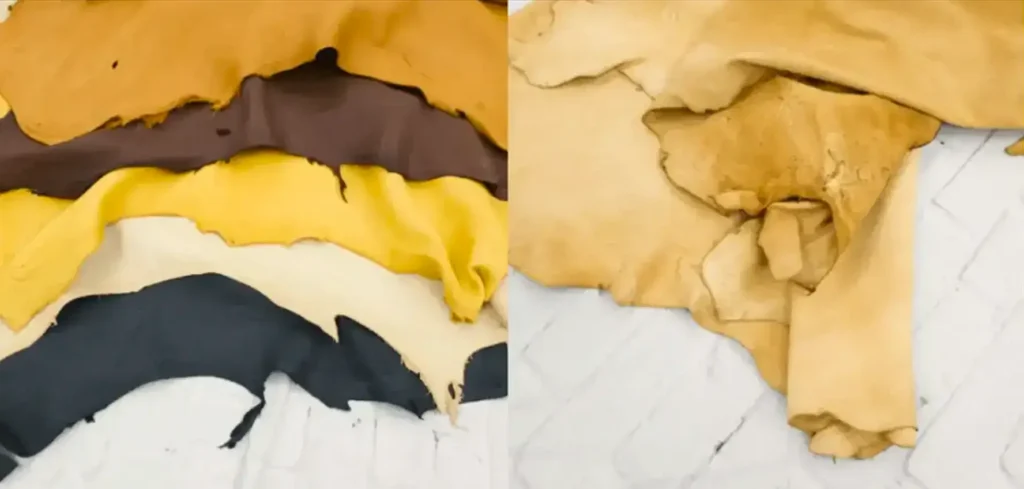
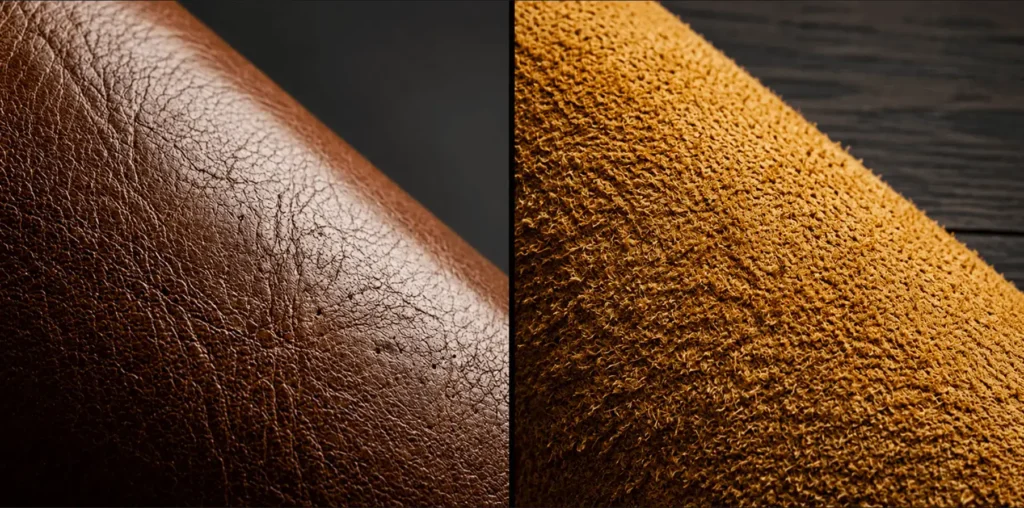
Split leather and grain leather are different layers of animal hide, and the main difference is where the leather comes from and how its fiber structure affects performance. Grain leather comes from the outer grain side of the hide and generally offers a smooth, dense surface with good flexibility and durability. Split leather is produced from the lower layers of the hide after the grain layer is separated, giving it a more fibrous surface. In welding gloves, these differences can affect durability, abrasion resistance, flexibility, dexterity, comfort, moisture resistance, and overall value. However, leather type alone does not determine glove performance; thickness, construction, lining, reinforcement, stitching, and the intended welding application also matter.
Full understanding Welding Glove Materials →
What Is Grain Leather?
Grain leather is leather made from the outer grain side of an animal hide, where the fibers are generally more tightly structured and the surface is naturally smooth. Full-grain and top-grain leather are examples of grain leather. In welding gloves, grain leather is often valued for its combination of durability, flexibility, comfort, and dexterity, particularly when controlled hand movement is important.
What Is Split Leather?
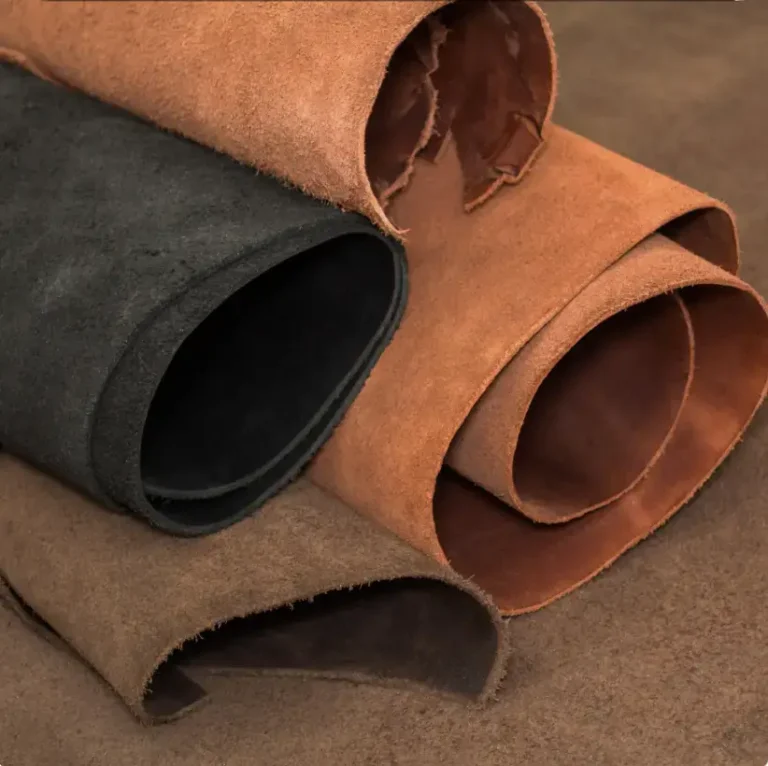
Split leather is produced from the lower layers of a hide after the outer grain layer has been separated. Its exposed surface has a more fibrous structure than grain leather. Split leather welding gloves are commonly used where abrasion resistance, durability, heat exposure, and heavy-duty protection are important. The actual performance depends on the leather thickness, treatment, glove construction, and intended application.
How the Leather Layers Affect Welding Glove Performance
The difference between grain leather and split leather matters because the structure of each leather layer can influence how a welding glove performs during repeated use. Grain leather generally has a denser outer surface, which can contribute to a smooth feel, flexibility, durability, and resistance to everyday wear. These characteristics can be useful when a welder needs both protection and precise hand movement.
Split leather has a more fibrous exposed surface because it comes from the lower portion of the hide. In appropriately constructed welding gloves, this can provide a practical balance of durability, abrasion resistance, and protection for demanding work environments. Split leather is therefore commonly associated with heavy-duty welding gloves, although the material itself should not be treated as a guarantee of a specific level of heat or abrasion protection.
For welding applications, the important point is that leather layer and glove construction work together. A thicker leather glove with reinforced palms, fingers, or stress points may perform very differently from a lightweight glove made from the same general leather category. Lining, stitching, cuff construction, reinforcement, and the overall design also affect durability and comfort.
From 12 years of professional welding experience,:
I have found that leather selection works best when it starts with the actual work conditions rather than the material name alone. A welder performing heavy MIG or Stick work may prioritize durability and resistance to abrasion and spatter, while a TIG welder may place greater importance on flexibility and dexterity. The right choice is therefore the leather and glove construction that best matches the welding process, exposure level, hand movement, and work environment.
Split Leather vs Grain Leather Welding Gloves: Key Differences
What is the difference between split leather and grain leather when used in welding gloves, and which should a welder choose? The answer depends on the balance between durability, heat exposure, abrasion resistance, flexibility, dexterity, comfort, moisture resistance, cost, and the welding application. Split leather can be a strong choice for demanding, heavy-duty work, while grain leather can be advantageous where flexibility, comfort, and hand sensitivity are important. Neither material is universally better for every welding task.
Durability and Abrasion Resistance
Split leather and grain leather can both be durable welding-glove materials, but their performance depends heavily on leather thickness, construction, reinforcement, and the quality of the finished glove. Split leather is often selected for demanding work because its fibrous structure and practical cost make it suitable for gloves designed for repeated contact and abrasion. Grain leather has a dense outer surface and can provide strong wear resistance while maintaining a smoother feel.
For heavy-duty applications, look beyond the leather name. Palm reinforcement, finger construction, stitching quality, leather thickness, and stress-point reinforcement can have a major effect on how long welding gloves remain usable.
Heat and Welding Protection
Neither split leather nor grain leather should be considered automatically superior for heat protection; actual protection depends on leather thickness, glove construction, lining, reinforcement, and the specific heat exposure. Both types can be used in welding gloves designed for heat and welding applications, but the glove must be selected according to the work environment and applicable protection requirements.
For frequent exposure to welding spatter, sparks, radiant heat, and hot materials, choose a glove specifically designed and rated for the intended conditions rather than relying only on whether it uses split or grain leather. Our guide to heat-resistant welding gloves provides more detail on selecting gloves for heat exposure.
Flexibility and Dexterity
Grain leather can offer an advantage when flexibility and dexterity are important, particularly in welding tasks that require precise finger movement. Its dense outer structure can provide a smooth, flexible feel when appropriately processed and constructed into a glove. Split leather can also be flexible, but its performance varies according to thickness, finishing, and glove design.
This distinction becomes particularly important for TIG welding, where precise torch control and hand movement are central to the work. A well-designed TIG glove should provide protection without unnecessarily restricting finger movement. For more application-specific guidance, see our TIG welding gloves guide.
Comfort and Breathability
Comfort depends on more than leather type; glove thickness, lining, fit, flexibility, and ventilation also influence how comfortable a welding glove feels during extended use. Grain leather can provide a smooth and flexible hand feel, while split leather can offer a practical balance between protection and comfort in heavier-duty designs.
A comfortable glove should allow the welder to maintain a secure grip without excessive stiffness or unnecessary bulk. Proper sizing is equally important because an incorrectly sized glove can reduce dexterity and increase hand fatigue. For help selecting the correct size, see the welding gloves size guide.
Moisture Resistance and Maintenance
Grain leather generally has a denser outer surface than split leather, but neither leather type should be assumed to be waterproof or moisture-proof without specific treatment or construction. Moisture exposure can affect leather feel, flexibility, drying time, and long-term durability.
For welding gloves, avoid choosing a leather solely because it is described as grain or split. Instead, consider the working environment, expected moisture exposure, leather treatment, and manufacturer instructions. Gloves should also be allowed to dry properly after use rather than being exposed to excessive heat during drying.
Cost and Overall Value
Split leather welding gloves are often a cost-effective choice for demanding work, while grain leather welding gloves can provide additional value when flexibility, comfort, and dexterity are important. However, the lowest purchase price does not necessarily represent the best value.
For industrial buyers, the better measure is performance over the glove’s usable service life. Consider the welding application, replacement frequency, durability, worker comfort, required protection, and overall glove construction. A slightly higher initial cost can be justified when a glove better matches the application and helps maintain productivity and consistent hand protection.
For broader guidance on selecting the right glove for a specific task, see our how to choose welding gloves guide.
Split Leather vs Grain Leather Welding Gloves Comparison
| Factor | Split Leather | Grain Leather |
|---|---|---|
| Durability | Strong durability when properly constructed; well suited to demanding work. | Durable with a dense outer surface; performance depends on leather grade and construction. |
| Abrasion resistance | A practical choice for heavy-duty abrasion exposure when properly constructed. | Good abrasion resistance, depending on leather grade, thickness, and construction. |
| Heat protection | Can provide heat protection when appropriate thickness, lining, and construction are used. | Can provide heat protection when properly designed and rated for the application. |
| Flexibility | Varies with thickness and finishing; heavier designs may feel less flexible. | Often offers good flexibility and a smooth hand feel. |
| Dexterity | Suitable for general and heavy-duty welding; very thick designs may reduce hand movement. | Often preferred when greater finger movement and precision are required. |
| Comfort | Can provide good comfort when properly fitted and designed for heavy-duty work. | Often provides a soft, flexible feel, particularly in precision-oriented gloves. |
| Moisture resistance | Depends on leather treatment and construction; should not be assumed waterproof. | The dense grain surface can offer useful resistance, but treatment and construction remain important. |
| Typical cost | Often more cost-effective for heavy-duty applications. | Often higher-priced when premium grain leather and precision construction are used. |
| Best suited for | Heavy-duty MIG, Stick, fabrication, construction, and high-abrasion work. | TIG, precision work, and applications where flexibility and dexterity matter. |
In simple terms, split leather welding gloves are often a practical choice for demanding, heavy-duty work, while grain leather welding gloves can be advantageous when flexibility, comfort, and dexterity are priorities. However, neither leather type is automatically better for every application. Leather thickness, reinforcement, lining, stitching, glove construction, and the required level of protection should all be considered when choosing between split leather and grain leather welding gloves.
Which Leather Is Best for Different Welding Applications?
The best leather for welding gloves depends on the welding process and working conditions. Split leather is often well suited to MIG and Stick welding where durability, abrasion resistance, and demanding exposure are priorities. Grain leather can be particularly useful for TIG welding where flexibility and dexterity matter. However, both materials can be used across different welding processes when the glove is properly designed for the application.
Split Leather for MIG Welding
Split leather welding gloves can be a practical choice for MIG welding because MIG work can involve repeated exposure to sparks, spatter, heat, and abrasion. A properly constructed split leather glove can provide the durability needed for general fabrication and demanding shop environments.
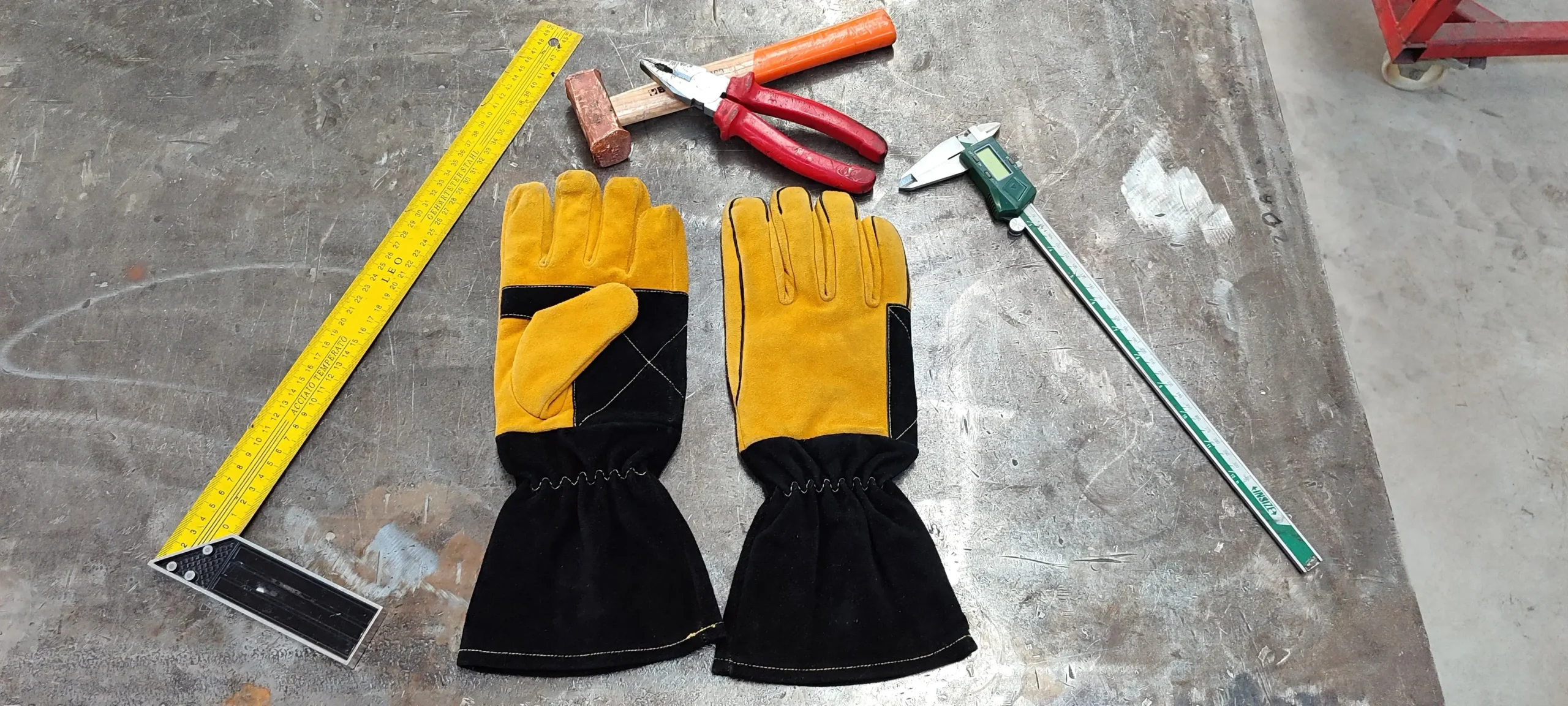
For MIG welding, however, don’t choose gloves based on leather type alone. Consider leather thickness, palm reinforcement, cuff length, heat protection, abrasion resistance, and fit. Our MIG welding gloves guide explains the key selection factors in more detail. Shop MIG welding gloves →
Split Leather for Stick Welding
Split leather is often well suited to Stick welding because SMAW work can expose the hands to substantial heat, sparks, spatter, and abrasion. Heavy-duty split leather welding gloves can therefore be a practical option for fabrication, construction, maintenance, and other demanding environments.
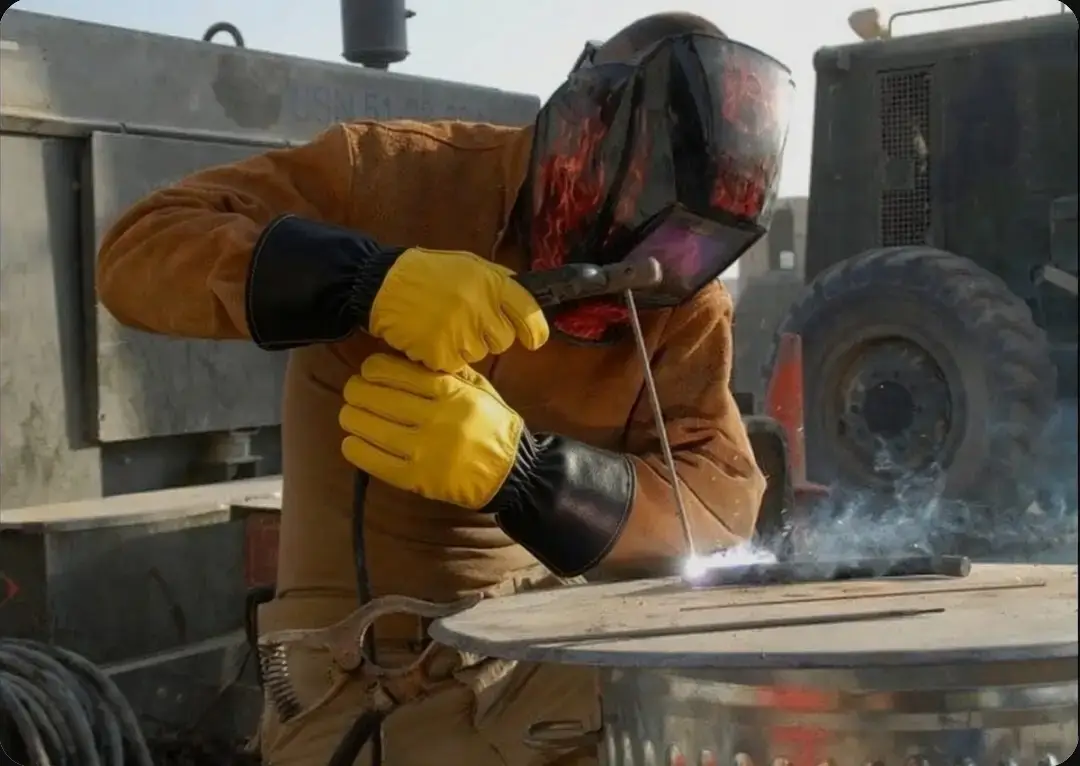
The correct glove still depends on the actual working conditions. For additional guidance on glove selection for Stick welding, see our Stick welding gloves guide.
Grain Leather for TIG Welding
Grain leather can be a strong choice for TIG welding when flexibility, dexterity, and precise finger movement are important. TIG welding requires careful torch control and fine hand movements, so an overly thick or stiff glove can interfere with precision.
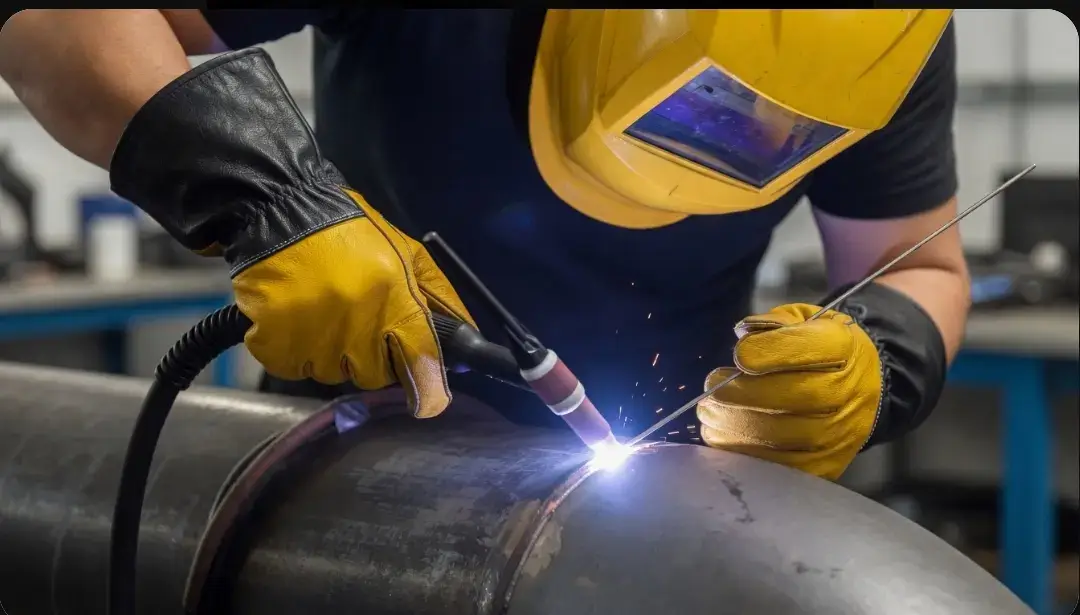
A well-designed grain leather TIG glove can provide a useful balance between hand protection and tactile control. For precision-focused applications, see the ARASWELD Precision Specialized TIG & EV Gloves. To learn about the uses of welding gloves TIG →
Can Grain Leather Be Used for MIG or Stick Welding?
Yes, grain leather welding gloves can be used for MIG or Stick welding when the glove is specifically constructed and rated for the required level of protection. Grain leather is not limited to TIG welding. The important factors are heat exposure, abrasion, spatter, glove thickness, reinforcement, cuff design, and the requirements of the specific welding application.
For a broader comparison of welding processes and glove types, see our guide to MIG, TIG, and Stick welding gloves.
Can Split Leather Be Used for TIG Welding?
Yes, split leather can be used for TIG welding, but the glove should provide sufficient flexibility and finger dexterity for the required level of precision. Lightweight split leather construction may work for some TIG applications, while thicker heavy-duty designs may restrict the hand movement needed for detailed work.
For TIG welding, the best choice is therefore not simply “split” or “grain.” Match the leather, thickness, construction, and fit to the precision and protection requirements of the job.
Split Leather or Grain Leather: Which Should You Choose?
Choose split leather when your welding work involves higher heat exposure, heavy fabrication, frequent spatter, and demanding handling. Choose grain leather when flexibility, comfort, and dexterity are more important. However, the best welding glove is determined by the complete glove design—not leather type alone. Thickness, lining, reinforcement, stitching, cuff length, fit, and applicable safety requirements all affect real-world performance.
Choose Split Leather When Protection and Durability Are the Priority
Split leather welding gloves are often the better practical choice for heavy-duty MIG and Stick welding, especially when thick sections, high heat input, sparks, and repeated spatter exposure are involved. In high-amperage work, particularly when welding thick components, the glove needs to provide an appropriate level of thermal and mechanical protection for the actual conditions.
For example, in my experience, MIG and Stick welding on thick sections at approximately 250–280 amps can create substantially greater heat and spatter exposure than lighter fabrication work. In these conditions, I generally prefer a properly constructed split leather glove designed for heavy-duty welding.
Choose Grain Leather When Dexterity and Comfort Are the Priority
Grain leather can be a better choice when the welding task requires greater finger movement, precision, and comfort. This is particularly relevant to TIG welding on smaller or thinner components, where the welder may need to manipulate the torch and filler rod with greater control.
For lighter TIG work, including thin aluminum sections, a well-fitting glove that extends to the wrist can provide the dexterity needed without unnecessary bulk. For more demanding TIG work, however, glove selection should change with the heat exposure and welding conditions.
Consider Glove Construction, Not Just Leather Type
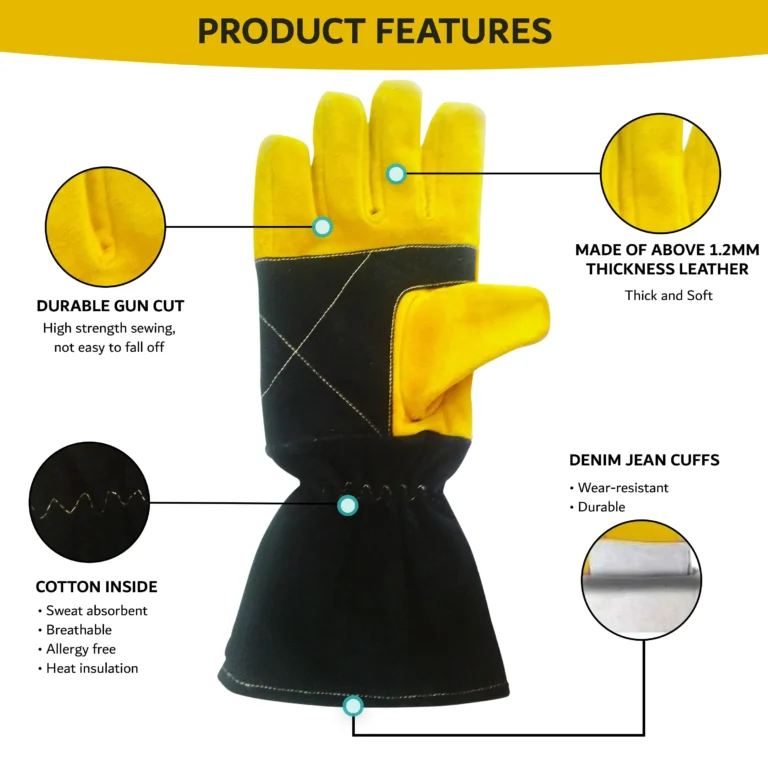
Leather type is only one part of welding-glove performance. Thickness, lining, palm and finger reinforcement, stitching, cuff design, fit, and the glove’s tested protection level can be equally important. A grain leather glove is not automatically a better glove, and split leather is not automatically better protection.
From 12 years of professional welding experience:
one of the most important practical considerations is matching the glove construction to the work rather than choosing based on leather type alone. I have worked with thick aluminum sections where the joint preparation requires repeated passes to build up the weld, increasing heat exposure as the work progresses. In high-amperage MIG, TIG, or Stick welding, heavier-duty glove construction can therefore become more important than simply choosing grain or split leather.
Cuff length also matters. For light TIG work, wrist-length gloves may be practical when the surrounding work conditions are controlled. For MIG and Stick welding with significant sparks and spatter, I prefer longer cuffs that extend over the forearm, because exposed skin can be burned when sparks or hot spatter reach the wrist or forearm. Protective clothing should also be selected as part of the overall welding PPE system.
What to Look for When Buying Leather Welding Gloves
The best leather welding gloves should match the welding process, required protection, fit, and working conditions—not simply the leather type. Before purchasing, consider how much heat and spatter you encounter, how much dexterity you need, how long the gloves should last, and whether you are buying for individual use or industrial procurement.
Match the Glove to Your Welding Process
Choose gloves according to the demands of MIG, TIG, or Stick welding. Heavy-duty MIG and Stick work may require greater protection against heat, sparks, spatter, and abrasion, while precision TIG welding often places greater emphasis on flexibility and dexterity. Our guide to choosing welding gloves provides a broader selection framework.
Check Fit, Dexterity and Cuff Design
A properly fitted glove should provide protection without unnecessarily restricting hand movement. Consider finger dexterity, palm fit, cuff length, and forearm coverage. For sizing guidance, see our welding gloves size guide.
Consider Reinforcement and Glove Construction
Look beyond leather type. Leather thickness, palm and finger reinforcement, lining, stitching, seams, and cuff construction can significantly affect durability, comfort, and protection.
Review Product Specifications and Documentation
For professional and industrial purchasing, review the glove’s materials, sizes, protection specifications, applicable standards, and product documentation before ordering. For welding gloves intended to meet European requirements, buyers can also review the BS EN 12477 standard for protective gloves for welders and verify that the manufacturer’s documentation supports the claims made for the specific product.
ARASWELD supports individual and bulk requirements through its welding gloves shop, with options for industrial buyers and organizations that need consistent specifications and supply.welding gloves shop → B2B Bulk →
To learn more about welding glove certifications and standards, you can read our articles.
Final Verdict: Split Leather or Grain Leather Welding Gloves?
Neither split leather nor grain leather is universally better for welding gloves. Split leather is often the practical choice when durability, abrasion resistance, heat exposure, and demanding working conditions are priorities. Grain leather can be preferable when flexibility, dexterity, and comfort are more important, particularly for precision-oriented work. Ultimately, the right choice depends on the complete glove construction and the welding application. Leather thickness, reinforcement, lining, stitching, cuff design, fit, and applicable protection requirements should all be considered before purchasing. Choose the glove that matches the actual demands of your welding process rather than selecting based on leather type alone.
Welding Gloves for Industrial and Bulk Procurement
ARASWELD is ready to support industrial buyers, welding schools, fabrication facilities, and suppliers that need reliable welding gloves for ongoing operations. We can support bulk availability and procurement requirements, including product specifications and documentation for organizations purchasing welding gloves at scale.
Have questions about sizes, product specifications, certificates, or shipping? Contact the ARASWELD team to discuss your requirements.
Frequently Asked Questions About Split and Grain Leather Welding Gloves
Is split leather better than grain leather for welding gloves?
Neither is universally better. Split leather is often a practical choice for heavy-duty welding where durability, abrasion resistance, heat exposure, and spatter are priorities. Grain leather can be preferable when flexibility, comfort, and dexterity matter more. The best choice depends on the welding process, glove construction, and working conditions.
Are grain leather welding gloves more durable than split leather?
Not necessarily. Both grain leather and split leather can produce durable welding gloves when the leather thickness, construction, reinforcement, stitching, and quality are appropriate. Grain leather has a dense outer surface, while split leather is often used in rugged glove designs. Durability should therefore be evaluated from the complete glove specification, not leather type alone.
Which leather is best for heavy-duty welding?
Split leather is often a practical choice for heavy-duty MIG and Stick welding, particularly when work involves thick sections, high heat exposure, sparks, spatter, and abrasion. However, leather type alone does not determine protection. The glove should also have suitable thickness, construction, reinforcement, cuff coverage, and protection specifications for the application.
Which leather offers better dexterity for welding?
Grain leather can offer an advantage for dexterity because it is often flexible and provides a smooth hand feel. This can make it suitable for precision-oriented welding such as TIG. However, dexterity also depends on glove thickness, pattern, fit, finger construction, and flexibility, so the complete glove design should be considered.
Are split leather welding gloves good for MIG welding?
Yes. Split leather welding gloves can be well suited to MIG welding, especially for fabrication and heavier-duty applications involving sparks, spatter, heat, and abrasion. The appropriate glove should be selected according to the actual welding conditions, including amperage, material thickness, heat exposure, required cuff coverage, and the glove's protection specifications.
Are grain leather welding gloves suitable for TIG welding?
Yes. Grain leather welding gloves can be suitable for TIG welding, particularly when flexibility, comfort, and finger dexterity are important. A properly fitted TIG glove should allow precise torch and filler-rod control while providing appropriate hand protection. For higher-heat TIG work, select the glove according to the actual heat exposure and construction requirements.