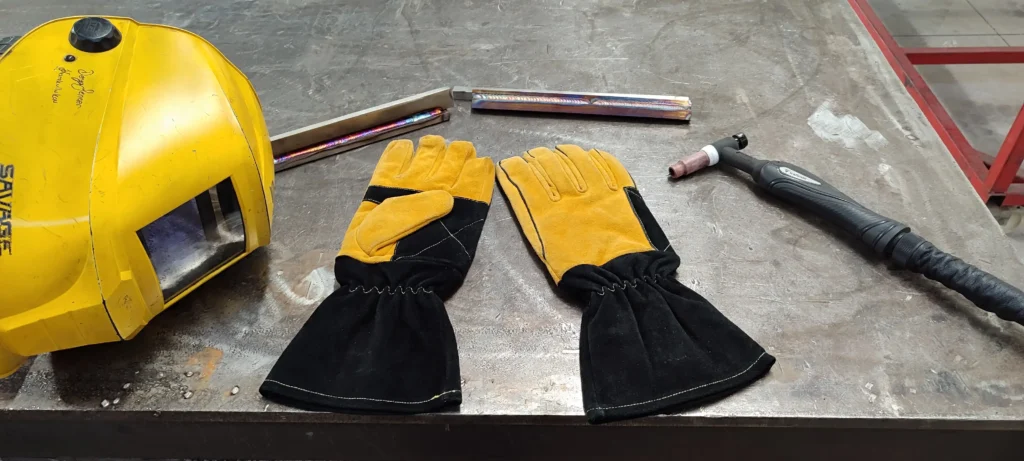
Welding Gloves Size Guide: How to Measure Your Hand and Choose the Right Fit
This welding gloves size guide explains how to measure your hand for welding gloves by checking hand circumference, hand length and finger position, then comparing the results with the manufacturer’s model-specific welding glove size chart. A nominal size such as Medium or Large may not feel identical across products because leather thickness, lining, palm reinforcement, seam placement and overall glove construction can change internal space, flexibility and fingertip reach. For broader selection guidance, see our complete guide to welding gloves.
What Size Welding Gloves Do I Need?
The correct welding-glove size should fit securely around the palm without restricting finger movement or leaving excessive space at the fingertips. Measure both hand circumference and hand length, then compare the larger or more restrictive measurement with the exact product chart. The final glove should remain stable while allowing a natural grip and full thumb movement.
The Quick Three-Step Sizing Method
- Measure the dominant hand around the knuckles.
- Measure from the wrist crease to the tip of the middle finger.
- Compare both measurements with the product-specific size chart.
Measure both hands whenever possible because one hand may be slightly larger. The dominant or larger hand should normally guide the final choice, since selecting from the smaller measurement can create pressure across the palm, knuckles or fingertips during normal working movements.
ARASWELD Welding Glove Sizing
How to Measure Your Hand for Welding Gloves
Record both hand circumference and hand length. Use a flexible measuring tape, measure both hands and compare the larger measurement with the size chart for the exact welding-glove model.
Measure Hand Circumference
Wrap the measuring tape around the widest part of your palm, just below the knuckles.
- Keep the thumb outside the measuring tape.
- Keep your hand relaxed rather than tightly clenched.
- Do not pull the tape tightly against the skin.
- Record the result in both inches and centimeters.
Measure Hand Length
Measure from the base of the palm at the wrist crease to the tip of the middle finger.
- Place your hand flat in a natural position.
- Keep your fingers straight without stretching them.
- Measure to the end of the middle fingertip.
- Record the result in both inches and centimeters.
Which measurement should determine your size?
Measure both hands and normally use the larger hand when comparing your results. If hand circumference and hand length indicate different sizes, choose the size that prevents palm restriction or fingertip pressure while still avoiding excessive internal movement.
Important: Welding-glove sizes are not universal. Leather thickness, lining, reinforcement, finger construction and manufacturing patterns can change how the same labelled size feels. Always use the product-specific size chart before ordering.
Step 1: Measure Your Hand Circumference
Wrap a flexible measuring tape around the widest part of your palm, across the knuckles and just below the finger joints. Keep your thumb outside the tape and hold your hand in a relaxed position. The tape should sit securely against the skin without squeezing the hand. Record the hand circumference in both inches and centimeters for an accurate comparison with the product chart.
Step 2: Measure Your Hand Length
Place your hand flat and relaxed, with your fingers naturally extended. Measure from the main wrist crease at the base of the palm to the tip of the middle finger. Keep the measuring tape or ruler straight, and record the hand length in both inches and centimeters so finger length can be checked separately from palm circumference.
Step 3: Compare Both Measurements With the Size Chart
Compare your hand circumference and hand length with the exact welding glove size chart for the product. Circumference may indicate one size while hand length indicates another. In that situation, prioritize the size that prevents restricted palm movement or insufficient finger length without creating excessive internal space. The model-specific chart should always take priority over a general glove-sizing reference.
What Should You Do If You Are Between Two Sizes?
Sizing up may be more appropriate when the smaller glove restricts finger movement, compresses the lining or pulls tightly across the palm and knuckles. However, the larger size should not leave excessive space at the fingertips, rotate around the hand or reduce grip control. Consider the glove’s lining, reinforcement and intended welding process before making the final choice.
Common Hand-Measuring Mistakes
Avoid these common errors when measuring your hand for welding gloves:
- Measuring over the thumb instead of keeping it outside the tape
- Pulling the measuring tape too tightly
- Measuring only one hand and ignoring natural size differences
- Clenching the hand instead of keeping it relaxed
- Using a rigid ruler to measure hand circumference
- Choosing a size from a different manufacturer’s chart
- Measuring palm circumference while ignoring finger length
- Measuring over another glove instead of directly around the hand
Measure both bare hands carefully and record the larger results before comparing them with the size chart for the exact welding-glove model.
Welding Glove Size Chart
This general welding glove size chart is a starting point only. When available, the model-specific ARASWELD size chart should always take priority over a general sizing reference.
| Glove Size | Common Numeric Size | Hand Circumference | Hand Length | General Fit Description |
|---|---|---|---|---|
| Small | 7 | Confirm per ARASWELD model | Confirm per ARASWELD model | Generally intended for smaller hands |
| Medium | 8 | Confirm per ARASWELD model | Confirm per ARASWELD model | Generally intended for smaller-to-medium hands |
| Large | 9 | Confirm per ARASWELD model | Confirm per ARASWELD model | Generally intended for medium-to-large hands |
| Extra Large | 10 | Confirm per ARASWELD model | Confirm per ARASWELD model | Generally intended for larger hands |
| 2XL | 11 | Confirm per ARASWELD model | Confirm per ARASWELD model | Generally intended for extra-large hands |
Important: This table is a general reference. Welding-glove sizing can vary by manufacturer, leather thickness, lining, reinforcement and internal construction.
Why Welding Glove Sizes Differ Between Manufacturers
Two gloves labelled Large can fit differently because manufacturers use different pattern cutting, finger proportions, palm widths and manufacturing tolerances. Leather thickness, lining, palm reinforcement and seam construction also change internal space and flexibility. A lined or heavily reinforced glove may therefore feel tighter than an unlined glove carrying the same nominal size. For reliable welding glove sizing, compare your hand measurements with the chart for the exact model rather than assuming that Small, Medium, Large or XL is universal.
How Should Welding Gloves Fit?
Welding gloves should fit securely without compressing the hand. The fingertips should sit close to the glove ends, the palm should not pull when the hand closes, and the glove should remain stable while gripping a torch, electrode holder or workpiece. Correct fit allows controlled finger and thumb movement without excessive internal sliding.
| Fit Condition | Fingertips | Palm and Knuckles | Grip and Dexterity | Likely Result |
|---|---|---|---|---|
| Correct Fit | Minimal unnecessary space | Secure without pressure | Controlled finger and thumb movement | Better comfort and tool control |
| Too Tight | Fingers press against the glove ends | Material pulls across the hand | Restricted movement | Hand fatigue and reduced dexterity |
| Too Loose | Excessive fingertip space | Glove shifts around the hand | Reduced precision and stability | Weaker grip and poor tool control |
Evaluate glove fit while repeatedly opening and closing your hand, making a fist and holding the tools normally used during work. A glove that feels acceptable with a relaxed hand may pull across the knuckles, bunch at the palm or shift at the fingertips once a working grip is applied.
Signs Your Welding Gloves Fit Correctly
A proper welding glove fit should provide the following:
- Your fingers reach close to the glove ends without pressing against them.
- The palm does not pull tightly when you make a fist.
- Your thumb can move naturally through its normal working range.
- The glove does not rotate or shift around your hand.
- You can grip a torch, electrode holder or workpiece securely.
- The gauntlet cuff does not interfere with normal wrist movement.
- The lining remains stable instead of pulling out or shifting around your fingers.
Signs Your Welding Gloves Are Too Tight
Signs that your welding gloves are too tight include:
- Pressure against the fingertips
- Tightness across the palm or knuckles
- Restricted thumb movement
- Seams pulling when the hand closes
- Difficulty gripping or repositioning tools
- Numbness, pressure or discomfort during use
The most important warning is restricted functional movement. Even before discomfort becomes severe, a tight glove may interfere with grip, finger control and natural hand closure.
Signs Your Welding Gloves Are Too Loose
Signs that your welding gloves are too loose include:
- Excessive space beyond the fingertips
- Glove movement around the palm
- Reduced torch or electrode-holder control
- Leather or lining bunching inside the palm
- Incorrect thumb alignment
- Difficulty handling smaller components
A loose glove may initially feel comfortable, but excessive internal movement can weaken grip stability, reduce precision and make detailed handling more difficult.
How Material, Lining and Construction Affect Welding Glove Fit
Two welding gloves with the same labelled size can feel noticeably different because leather type, lining, reinforcement, seam placement and pattern construction affect internal volume, flexibility and finger movement.
Split Leather vs. Grain Leather Fit
Split leather welding gloves may feel thicker, firmer or more structured depending on the hide section, glove pattern and number of protective layers used. Grain leather is often selected for precision-focused designs where flexibility and closer finger control are priorities. However, material type alone does not determine fit. Leather thickness, palm width, finger pattern, lining, reinforcement and seam placement must also be considered. Learn more in our guide to welding glove leather materials.
Lined vs. Unlined Welding Gloves
A lining occupies internal space, so lined or insulated welding gloves may feel tighter than unlined gloves carrying the same nominal size. Thick thermal linings can also reduce fingertip sensitivity, while loose or unstable lining may shift and interfere with finger control. Buyers should therefore not assume that a lined MIG or stick glove will fit like an unlined TIG glove, even when both are marked Medium or Large.
For a deeper explanation of thermal exposure, insulation and material performance, read our guide to how heat-resistant welding gloves work.
How Reinforcement and Seam Placement Affect Movement
Reinforced palms, reinforced thumbs and additional leather layers can improve durability in high-wear areas, but they also add thickness and may limit movement. Finger seams, internal seam bulk and stitching placement can create pressure points or reduce natural flexion when the hand closes. Effective glove construction should position reinforcement where protection is needed without allowing the added layers to distort thumb alignment, fingertip reach or grip.
For work involving repeated surface wear, rough materials or back-of-hand hazards, compare impact and abrasion-resistant welding gloves, while checking that the reinforcement does not restrict grip, thumb movement or natural hand closure.
How Gauntlet Cuff Length Affects Fit and Movement
Gauntlet cuff length does not determine the size of the hand compartment, but it can influence wrist movement, sleeve overlap and forearm coverage. A longer cuff may provide more overlap with work clothing, while a stiff or poorly positioned cuff can restrict wrist motion. The cuff should also allow practical glove removal and remain compatible with jackets, sleeves and other protective clothing.
Does Welding Glove Fit Change by Welding Process?
The basic hand size does not change by welding process, but the preferred fit can. TIG gloves usually prioritize close fingertip control and flexibility, while MIG and stick gloves often use thicker leather, insulation or reinforcement that changes internal volume. See our MIG vs. TIG vs. Stick welding gloves guide for process-specific differences.
| Welding Process | Preferred Fit Character | Typical Construction | Main Fit Priority |
|---|---|---|---|
| TIG | Closer and more flexible | Usually lighter and less insulated | Finger control and dexterity |
| MIG | Secure with moderate internal space | Often includes more reinforcement and heat protection | Balance of protection and control |
| Stick | Secure but not restrictive | Typically thicker and more insulated | Heat protection and electrode-holder control |
These are general process-based tendencies, not universal sizing rules. The correct TIG, MIG or stick welding glove size still depends on hand circumference, hand length and the exact product pattern. Leather thickness, lining and reinforcement can make two gloves with the same nominal size feel noticeably different.
Where an EN 12477 classification is available, Type A and Type B help explain the balance between protective performance and dexterity; see our EN 12477 welding glove standard guide for the complete comparison.
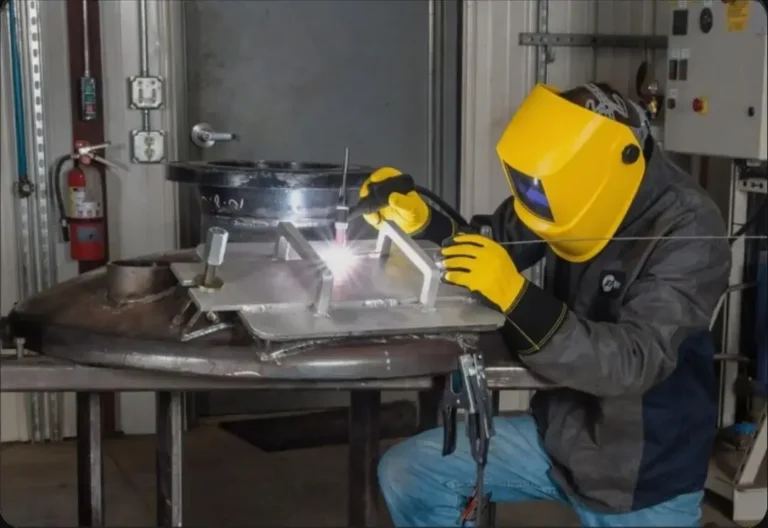
TIG Welding Glove Fit
A proper TIG glove fit should provide close fingertip control, natural thumb movement and minimal unnecessary internal bulk. The fingers should reach close to the glove ends without pressing against them, allowing the welder to control the torch and feed filler rod accurately. Excess fingertip space or poor thumb alignment can reduce precision, especially during detailed fabrication and small-component work.
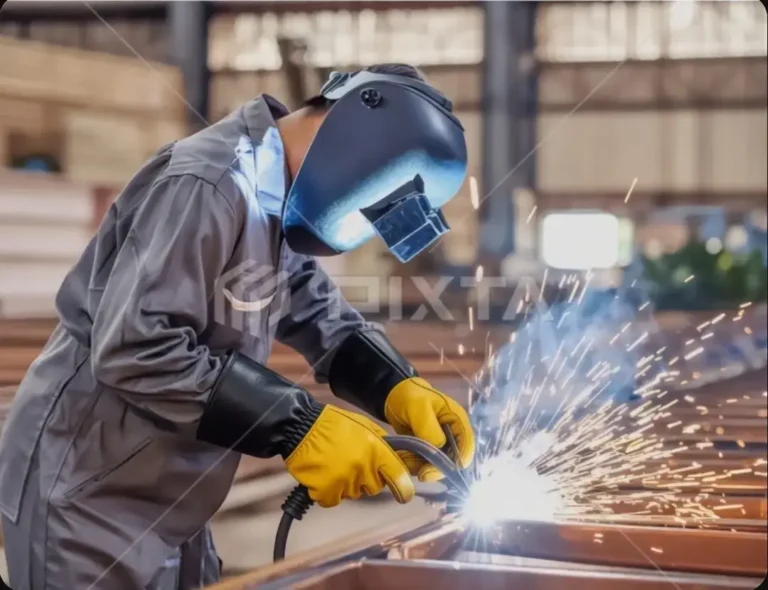
MIG Welding Glove Fit
A secure MIG glove fit should support trigger control while allowing the hand to open, close and reposition the torch naturally. Moderate insulation, palm reinforcement and additional protective layers may make MIG gloves feel fuller than precision-focused TIG gloves. However, finger construction should not be so bulky that it interferes with trigger operation, grip stability or normal thumb movement.
Stick Welding Glove Fit
A suitable stick welding glove fit should hold the palm securely while allowing enough movement to control the electrode holder and reposition the hand. Stick gloves often use thicker leather, insulation and reinforced construction for heavier thermal exposure. The glove should not compress the knuckles or fingertips, but it should also avoid excessive looseness that allows the hand to shift inside.
What Are the Best-Fitting Welding Gloves?
The best-fitting welding gloves are not simply the tightest or most flexible gloves. The correct choice matches the wearer’s hand circumference and hand length with the welding process, required protection, leather construction and need for grip, dexterity and comfort. The glove should remain secure without compressing the hand or restricting natural movement.
Best Fit for Precision Welding
For precision welding, choose a glove with close finger control, flexible construction, correct thumb alignment and minimal internal bulk. The fingertips should sit close to the glove ends so the wearer can control a TIG torch, filler rod or smaller component accurately. A flexible glove is useful only when its palm width, finger length and seam placement also match the wearer’s hand.
For precision-focused work, compare ARASWELD professional TIG welding gloves and review their finger construction, thumb position and available size information against your hand measurements.
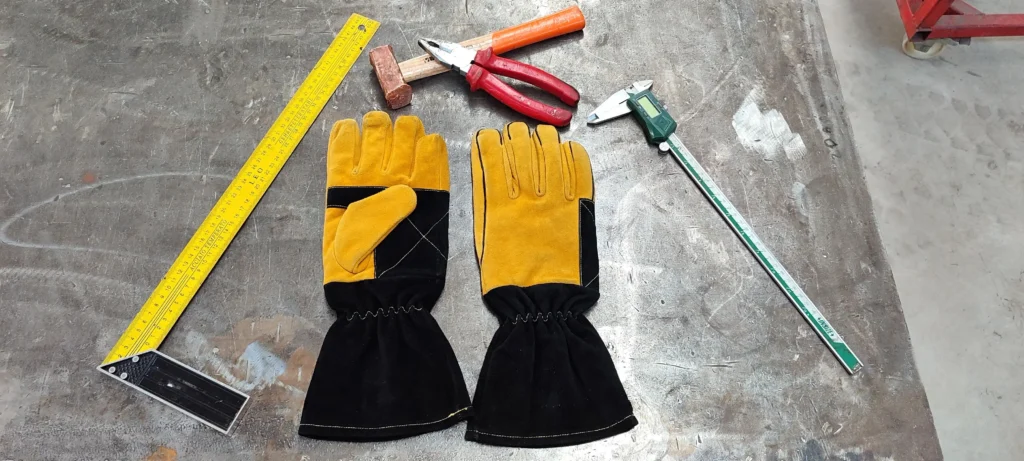
Best Fit for High-Heat and Heavy-Duty Welding
For high-heat and heavy-duty welding, thicker leather, heat-resistant lining and reinforced palms may provide the construction needed for demanding MIG, stick and fabrication tasks. These added layers can make the glove feel more structured or restrictive. Evaluate the fit with the hand fully closed, because a glove that feels acceptable when relaxed may pull across the knuckles during a firm working grip.
For demanding MIG, Stick, foundry or heavy-fabrication work, compare ARASWELD high-heat protection welding gloves and confirm the exact model’s lining, construction and available sizing before ordering.
Best Fit for Small, Wide or Long Hands
Welding gloves for small hands may require shorter fingers as well as a narrower palm. Wide hands may need additional palm volume without unnecessary finger length, while long fingers should be checked using hand length independently from circumference. Because one measurement cannot fully represent every hand shape, compare both dimensions and check thumb alignment, fingertip reach and palm movement before selecting a size.
Welding Glove Fit Checklist Before You Buy
This checklist helps turn your hand measurements, welding process and construction requirements into a practical purchasing decision before selecting an individual glove or preparing a workforce order.
After confirming the appropriate fit, use our guide to choosing welding gloves to compare the welding process, heat exposure, dexterity, leather construction, lining, cuff and other task-specific requirements.
| Check | Question to Ask | Why It Matters |
|---|---|---|
| Hand Circumference | Does my palm measurement match the product chart? | Helps determine the basic width of the glove. |
| Hand Length | Does my hand and finger length match the listed size? | Helps prevent fingertip pressure or excessive empty space. |
| Welding Process | Is the glove designed for TIG, MIG or stick welding? | Process-specific construction affects dexterity, insulation and bulk. |
| Lining | Is the welding glove lined or insulated? | Lining occupies internal space and may change how the size feels. |
| Reinforcement | Are the palm, thumb or other high-wear areas reinforced? | Additional layers may affect flexibility, grip and internal fit. |
| Cuff | Does the cuff work with my sleeves, clothing and task? | Cuff construction affects forearm coverage and wrist movement. |
| Product Chart | Am I using the size chart for the exact glove model? | Nominal sizes and internal dimensions vary between manufacturers and models. |
| Documentation | Are the relevant size and product specifications available? | Clear documentation supports individual purchasing and industrial procurement. |
Individual Buyer Checklist
Before choosing a welding-glove size:
- Measure both hands rather than assuming they are identical.
- Use the measurements from the larger hand.
- Check both hand circumference and hand length.
- Review the size chart for the exact glove model.
- Consider whether the glove is lined, insulated or reinforced.
- Test grip, thumb position and finger movement where possible.
- Avoid excessive space between your fingertips and the glove ends.
- Confirm the seller’s return or exchange policy where relevant.
Industrial Buyer and Safety Manager Checklist
Before purchasing welding gloves for a team:
- Collect representative worker hand-size data.
- Identify the welding processes performed by each team.
- Check model-specific size ranges and construction differences.
- Request available product and sizing documentation.
- Confirm which sizes are available for the selected model.
- Trial a representative sample-size mix before a large order.
- Record worker feedback on grip, dexterity and comfort.
- Avoid purchasing one universal size for the entire workforce.
How to Select Welding Glove Sizes for Teams and Bulk Orders
Bulk buyers should not order one glove size for an entire workforce. A more reliable approach is to collect representative hand measurements, review the resulting size distribution, identify the welding processes performed and test sample gloves in the required constructions before confirming a large order or long-term replacement plan.
Creating a Practical Size Mix for a Workforce
Collect hand circumference and hand length measurements from a representative group of workers and record how frequently each size occurs. Where necessary, separate teams according to TIG, MIG, stick or other work requirements because glove construction may affect fit. Include a practical range of sizes rather than assuming Large will suit most workers. Before full procurement, test representative samples to confirm palm fit, finger length, thumb movement, grip and compatibility with the tools used.
Sizing Welding Gloves for Welding Schools and Training Facilities
Welding schools and training facilities often need gloves for mixed user groups with different hand sizes and welding processes. Procurement planning should include a broad but evidence-based size range, clearly labelled storage areas and easy size identification. Stock records should also account for replacement frequency and changing class sizes. Shared glove use should not be assumed; sizing, hygiene procedures and glove allocation should follow the facility’s own safety and equipment policies.
Size Planning for Fabrication, Automotive and Aerospace Facilities
Fabrication, automotive and aerospace facilities may use different welding processes, glove constructions and workforce profiles across departments. Procurement teams should confirm the available size range, material construction, lining, reinforcement and product specifications for each selected model. They should also review available documentation, minimum order quantities and expected replacement needs. Aerospace-related purchasing should be based on the facility’s verified application requirements rather than general industry assumptions.
Procurement teams working in specialist Aerospace production environments can also review ARASWELD’s aerospace and defense welding glove guidance when comparing dexterity, construction, documentation and application-specific requirements.
Confirming Product Documentation and Size Specifications
Before placing a bulk order, procurement teams may need to confirm:
- Product data and model-specific size charts
- Leather, lining and material specifications
- Certification documentation where applicable
- Packaging and quantity information
- Minimum order requirements
- Sample availability or specification enquiries
The required documents may differ by glove model, buyer requirements and intended industrial application.
For the broader requirements covering protective-glove design, construction, comfort, efficiency, marking and manufacturer information, procurement teams can also consult ISO 21420:2020.
When reviewing certification documents, use our EN 388 vs. EN 407 comparison to distinguish mechanical-performance information from thermal-performance information before evaluating the complete glove specification.
Frequently Asked Questions About Welding Glove Sizing
Should Welding Gloves Fit Tight or Loose?
Welding gloves should fit securely but not tightly. They should remain stable around the palm while allowing natural finger and thumb movement. The glove should not compress the knuckles, slide around the hand or leave excessive space beyond the fingertips, as either extreme can reduce grip and tool control.
What Size Welding Gloves Do I Need?
Measure both your hand circumference around the widest part of the palm and your hand length from the wrist crease to the middle fingertip. Compare both measurements with the size chart for the exact welding-glove model, because nominal sizes such as Medium or Large are not universal.
Should I Measure My Dominant Hand?
Measure both hands because one may be slightly larger than the other. The measurements from the larger hand, which is often the dominant hand, should normally guide your size choice. This reduces the risk of pressure across the palm, knuckles or fingertips while the hand is gripping welding tools.
What If My Hand Measurements Fall Between Two Sizes?
Consider finger length, palm movement, lining thickness, reinforcement and internal construction before choosing. A larger size may be appropriate when the smaller glove restricts movement, but sizing up should not create excessive fingertip space or internal sliding. Always compare your measurements with the chart for the exact glove model.
Do Leather Welding Gloves Stretch Over Time?
Some leather welding gloves may soften and adapt slightly with regular use, but buyers should not choose an overly tight glove expecting substantial stretching. The glove should provide acceptable finger movement, palm comfort and thumb alignment from the beginning, especially when it includes lining, reinforcement or multiple leather layers.
Are Welding Glove Sizes the Same Across Every Brand?
No. Welding-glove sizes are not universal across brands or product models. Pattern cutting, palm width, finger length, leather thickness, lining and reinforcement can change how the same labelled size feels. Always prioritize the manufacturer’s product-specific size chart over a general glove-sizing reference.
Can I Use My Regular Work-Glove Size?
Your regular work-glove size can provide an initial reference, but it should not determine the final choice. Welding gloves may fit differently because they often include thicker leather, insulation, reinforced palms, gauntlet cuffs and different finger construction. Measure your hand and review the exact product chart before ordering.
Do TIG, MIG and Stick Welding Gloves Fit Differently?
They can feel different even when the nominal size is the same. TIG gloves generally use closer, more flexible construction for finger control, while MIG and stick gloves may feel fuller because of thicker leather, lining, insulation or reinforcement. Your basic hand size remains unchanged, but the preferred fit differs by process.
How Much Space Should Be Left at the Fingertips?
There should be minimal unnecessary fingertip space. Your fingers should sit close to the glove ends without pressing against them when the hand opens, closes or grips a tool. Excess space can reduce precision, while direct pressure against the ends may restrict movement and cause discomfort.
Choose Your Welding Glove Size With Confidence
Measure both hand circumference and hand length, then compare the results with the chart for the exact glove model. Check the fit while gripping the torch, electrode holder or tools used during work, and consider how the welding process, lining, leather thickness and reinforcement affect internal space. For model-specific sizing, product specifications or bulk requirements, contact ARASWELD before confirming your order.