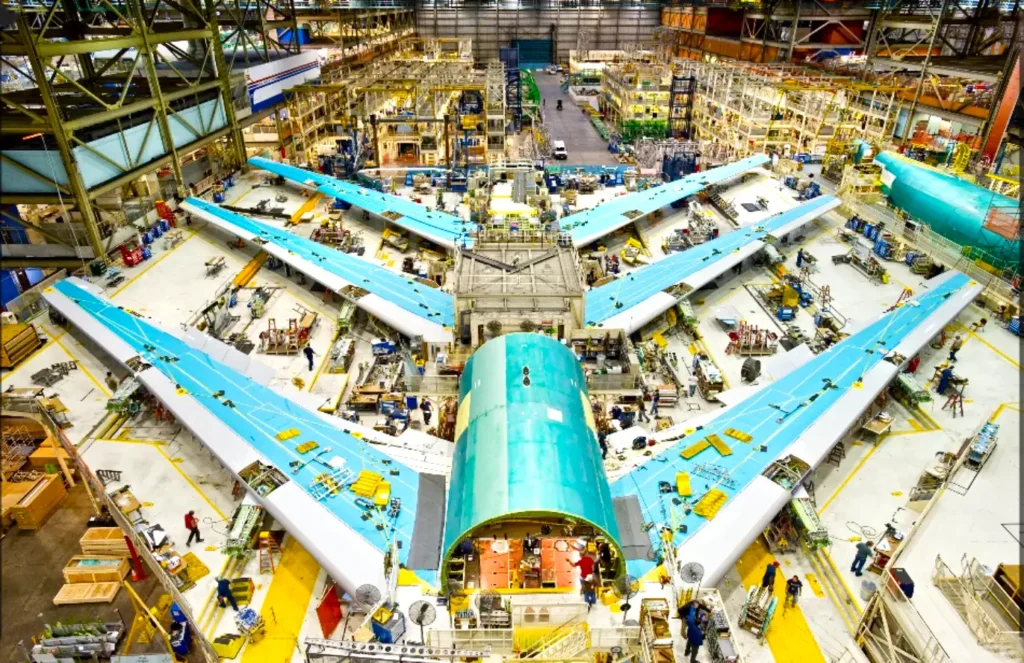
ARASWELD aerospace and defense welding gloves are EN 407 and EN 388 certified leather gloves designed for welding, fabrication, repair, and component-handling work where thermal and mechanical hazards may occur together.
These tasks can involve radiant heat, contact heat, sparks, molten-metal splash, sharp edges, abrasive surfaces, and repeated gripping. The right glove must provide verified protection while preserving the fit, grip, and finger movement required for the specific welding process.
Industrial Protection Summary: Aerospace and defense welding can expose hands to heat, molten-metal splash, sharp edges, abrasive surfaces, and repeated handling within the same workflow. Gloves should be selected according to the task’s documented EN 407 thermal protection, EN 388 mechanical protection, construction, fit, cuff coverage, and dexterity requirements.
For precision TIG/GTAW work, buyers may prioritize controlled finger movement and protection against radiant or convective heat. For MIG/GMAW, Stick/SMAW, repair, or heavier fabrication work, the glove may require stronger protection against splash, rough surfaces, abrasion, puncture, and prolonged industrial use.
Ensuring your specialized welding gear meets these combined certified parameters is non-negotiable for protecting operators working with flight-critical titanium airframes, Inconel engine assemblies, and high-hardness defense alloys.
Aerospace and defense welding gloves are industrial personal protective equipment used for tasks where workers may need thermal protection, mechanical resistance, and controlled hand movement at the same time. They may be used in component fabrication, repair, maintenance, inspection, and material handling where hot workpieces, sparks, sharp edges, fixtures, and abrasive surfaces are present.
This glove category is not defined by one leather type, one thickness, or one certification mark alone. The correct glove should be selected according to the individual task, including the welding process, heat exposure, material condition, mechanical hazards, required dexterity, cuff length, and workplace risk assessment.
For a broader task-based selection method, read our guide on how to choose welding gloves.
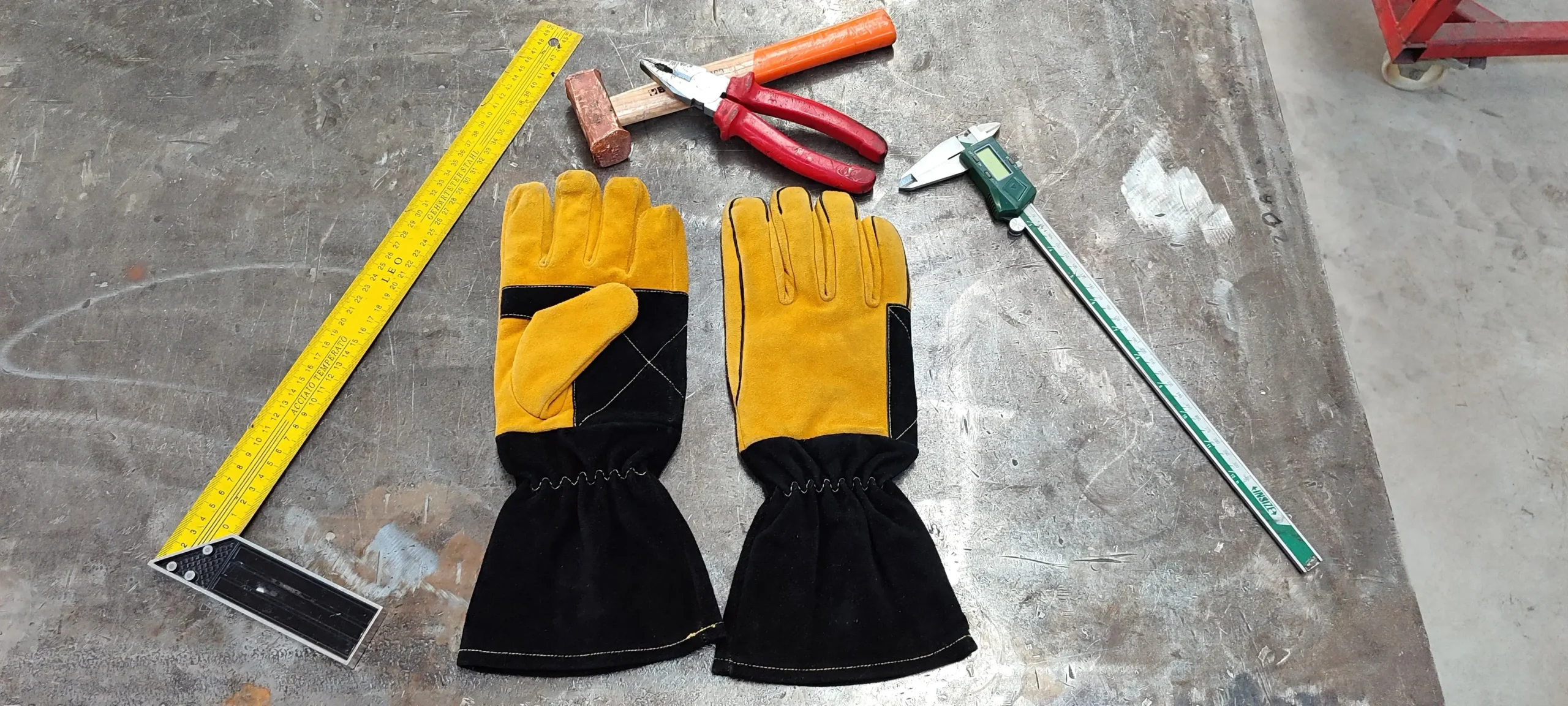
Standard industrial welding gloves are often selected for one dominant requirement, such as general heat resistance, durability, or basic handling protection. They may not provide the same documented balance of thermal protection, mechanical resistance, and dexterity needed for more complex aerospace and defense welding tasks.
In aerospace and defense work, welders may handle hot components, sharp machined edges, fixtures, and abrasive materials before, during, and after welding. Fabricators working with titanium, Inconel, and aluminum-lithium composites face higher radiant heat loads and more demanding arc conditions than mild steel work. The correct glove should therefore be evaluated for the specific task rather than selected only by thickness or a general “heat-resistant” claim.
Thermal and mechanical protection should be assessed separately. EN 407 and EN 388 protect against different welding-glove hazards, so buyers should review both sets of ratings when a task includes heat exposure as well as abrasion, cut, tear, puncture, or impact risks.
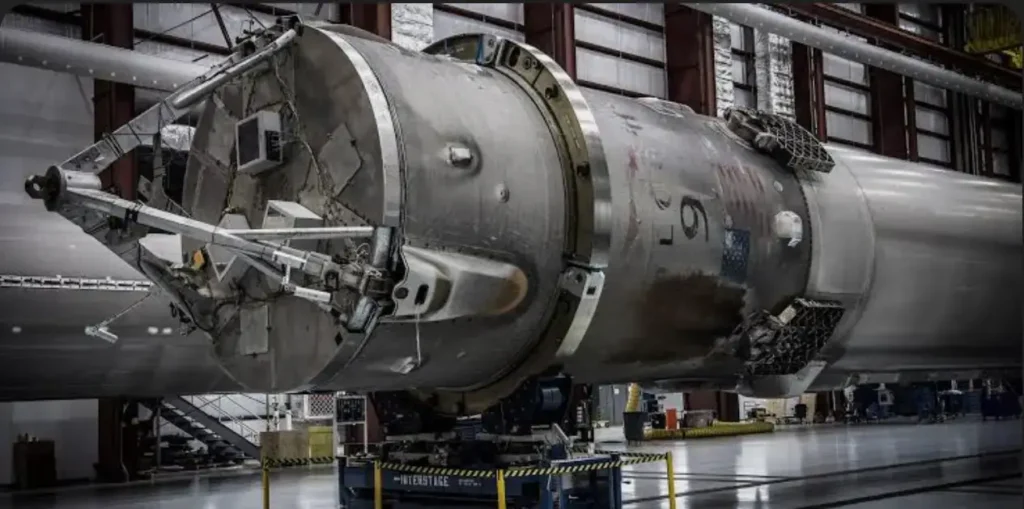
Aerospace and defense fabrication can combine tight process tolerances, sustained thermal exposure, sharp component edges, and repeated material handling within the same workflow. In these environments, glove selection affects worker protection, hand control, production consistency, and procurement confidence.
Certification is an important starting point, but the correct glove must still match the actual task. Buyers should evaluate the welding process, heat exposure, mechanical hazards, required dexterity, duration of use, and workplace risk assessment before selecting hand protection.
Aerospace welding can expose hands to several thermal hazards at once, including radiant heat near the arc, contact heat from hot workpieces or fixtures, convective heat, sparks, and molten-metal splash where applicable. A general heat-resistant glove may not provide the right documented protection for every combination of hazards.
For precision TIG/GTAW welding, close hand positioning and sustained weld passes can increase the importance of radiant-heat protection, convective-heat performance, and finger dexterity.
TIG welding on a titanium airframe section generates arc temperatures exceeding 3,000°C at the weld point. Radiant heat from the weld pool reaches the welder's hands throughout the entire pass - not just at contact. Titanium's low thermal conductivity means the workpiece retains localized heat long after the arc stops, creating contact heat risk during repositioning.
Hot workpieces and fixtures should also be considered during repositioning, inspection, and handling after the arc stops.
To understand how EN 407 evaluates thermal risks such as radiant heat, contact heat, convective heat, and molten-metal splash, read our guide to the EN 407 heat-protection standard. For a process-based comparison, see how MIG, TIG, and Stick welding glove requirements differ.
Mechanical risks can begin before welding starts. High-strength steels, hardened alloys, raw-cut sections, machined components, and fixtures may expose workers to sharp edges, burrs, abrasive surfaces, and puncture points during setup, positioning, welding, and inspection.
Under EN 388, abrasion, cut, tear, and puncture resistance are evaluated as separate performance areas. When a task combines welding with repeated contact against rough or sharp materials, buyers should assess mechanical protection alongside thermal protection rather than selecting a glove only for heat resistance.
A glove selected only for heat resistance may wear prematurely or provide insufficient mechanical protection where the work includes sharp edges, burr-heavy materials, abrasive contact, or repeated handling. For a detailed explanation of ratings and markings, see our guide to the EN 388 mechanical-protection standard.
Aerospace and defense procurement can involve more formal documentation requirements than general industrial purchasing. Depending on the buyer, contract, customer specification, and site procedure, procurement teams may request model-specific certification documents, test information, instructions for use, batch information, or PPE inspection and replacement records.
EN 407 and EN 388 certification can provide important evidence when buyers evaluate thermal and mechanical glove performance. However, the final PPE requirement should always be confirmed against the task hazard assessment and the customer’s specific procurement or safety requirements.
For procurement teams, the most important question is not simply whether a glove is described as heavy-duty or heat resistant. It is whether the selected glove model has verifiable protection data that matches the actual welding process, workpiece condition, mechanical hazards, fit requirements, and intended use.
An aerospace and defense welding glove must balance thermal protection, mechanical resistance, dexterity, and durability. The correct balance depends on the welding process, heat exposure, component condition, required hand control, duration of use, and the workplace risk assessment.
Buyers should not select gloves based on thickness or a general “heavy-duty” claim alone. They should review the glove’s documented EN 407 and EN 388 performance, construction, fit, cuff coverage, and intended use for the specific task.
Thermal protection is not one single feature. EN 407 evaluates protection against six thermal hazards, including limited flame spread, contact heat, convective heat, radiant heat, and small or large molten-metal exposure.
For precision TIG/GTAW welding, especially when working near the arc on titanium, Inconel, or other aerospace alloys, buyers may need to assess radiant heat, convective heat, and the dexterity required for controlled torch movement. For MIG/GMAW, Stick/SMAW, repair, or heavy fabrication work, molten-metal splash protection and cuff coverage may become more important where the task involves sparks, spatter, or hot material handling.
A strong result in one EN 407 category does not replace a weaker result in another category that is relevant to the task. Buyers should therefore read the full EN 407 rating and compare it with the actual heat exposure, workpiece condition, contact time, and workplace risk assessment.
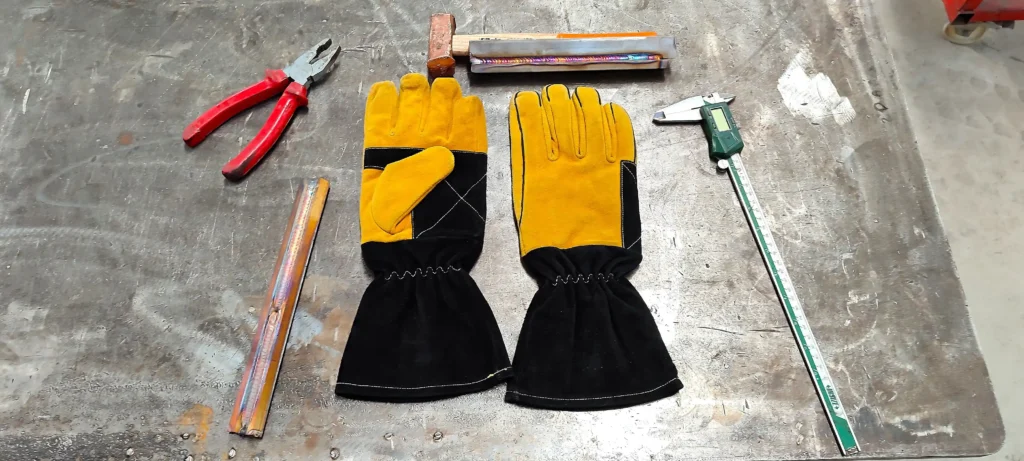
Key Point: Mechanical protection should be evaluated alongside thermal protection. A glove selected only for heat resistance may not provide the documented cut, puncture, abrasion, or tear resistance required for sharp or rough aerospace and defense materials.
Key Point: For quality-sensitive aerospace and defense welding, gloves should support safe hand control, consistent grip, and task-specific protection. Final glove selection should always match the approved work procedure, component geometry, welding process, and workplace risk assessment.
Durability affects both protection consistency and total cost of ownership. Heat, abrasion, repeated gripping, moisture, contamination, seam stress, and rough handling can gradually reduce glove performance during industrial use.
Buyers should review the glove’s leather construction, seam reinforcement, palm design, lining, cuff design, and care guidance alongside its EN ratings. Gloves should also be inspected regularly and replaced when visible wear, damaged seams, reduced grip, stiffness, contamination, or material failure could affect safe use.
Expert Tip: For PPE program managers, durability is a TCO metric. Selecting a suitable glove model and planning inspection and replacement cycles can reduce unnecessary replacement frequency, support more consistent protection, and simplify PPE stock planning across teams or work sites.

In aerospace and defense welding, certification provides verifiable evidence of glove performance. EN 407 and EN 388 are two key standards buyers can use to evaluate thermal and mechanical hand-protection requirements.
These standards do not replace a workplace risk assessment. Instead, they help procurement teams, safety managers, and welding supervisors compare the documented protection performance of a glove model against the actual hazards of the task.
Understanding what each standard tests in an aerospace context is what separates informed procurement from guesswork.
EN 407 evaluates protective gloves against six thermal hazards. Each result is shown separately, allowing buyers to identify which heat-related performance areas are relevant to the welding process, workpiece condition, and expected exposure.
EN 407 and EN 388 help buyers compare thermal and mechanical glove performance. For the wider European legal framework for personal protective equipment, see Regulation (EU) 2016/425 on personal protective equipment.
For precision TIG/GTAW welding, buyers may need to assess contact heat, convective heat, and radiant heat where the task involves close work near the arc, sustained welding exposure, or hot workpiece handling. For MIG/GMAW, Stick/SMAW, repair, and heavier fabrication work, small molten-metal splash and cuff coverage may become more important where sparks, spatter, or molten-metal exposure are present.
A strong EN 407 result in one thermal category does not replace a weaker result in another category that is relevant to the task. Buyers should read the complete EN 407 rating and compare it with the actual work process, contact time, heat source, workpiece condition, and workplace risk assessment.
For a full explanation of EN 407 testing, rating categories, and glove markings, read our guide to how EN 407 thermal ratings are tested and read.
EN 388 evaluates glove performance against key mechanical risks, including abrasion, blade cut, tear, and puncture resistance. It can also include a separate straight-blade cut test and optional impact protection where applicable.
Aerospace and defense welding is one of the few industrial contexts where thermal and mechanical hazards are simultaneous, not sequential. A fabricator welding a titanium airframe bracket faces radiant heat from the weld pool while the machined bracket edge presents active cut risk during repositioning - within the same task.
Where a task includes both heat exposure and mechanical risks, buyers should review EN 407 thermal ratings and EN 388 mechanical ratings together. This creates a more complete basis for selecting gloves according to the welding process, workpiece condition, expected exposure, required dexterity, and workplace risk assessment.
For a direct comparison of the two standards, read EN 388 vs. EN 407: what is the difference in welding glove safety?.
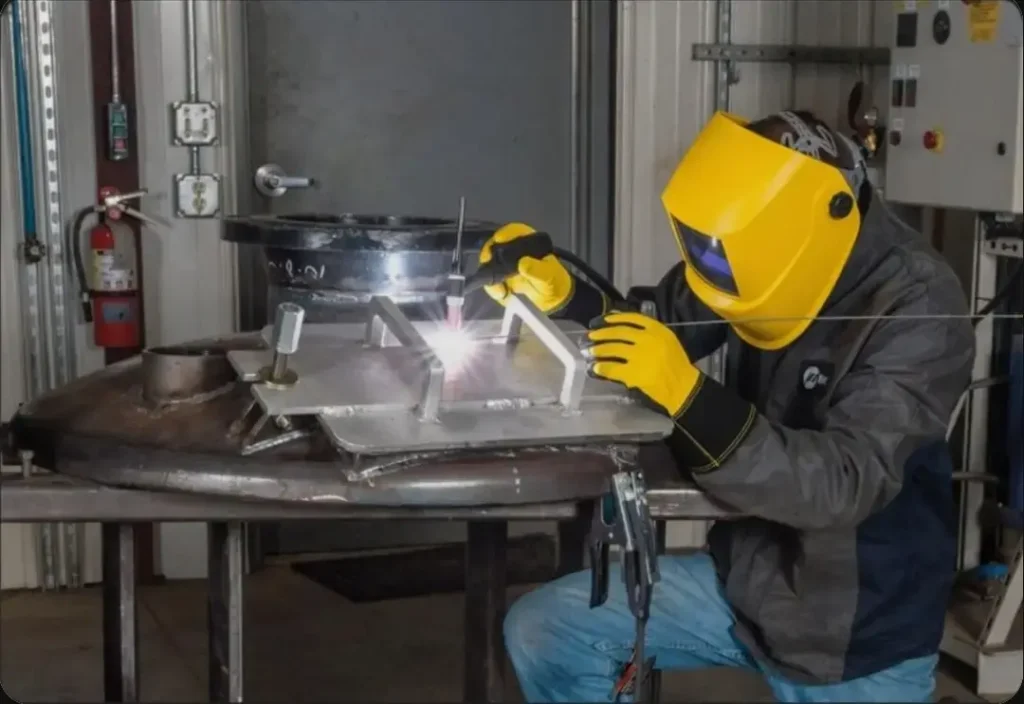
Aerospace and defense welding gloves may be used across fabrication, assembly, maintenance, repair, overhaul, inspection, and component-handling work where thermal and mechanical hazards can occur together.
The required glove should be selected according to the welding process, material condition, heat exposure, sharp-edge risk, expected dexterity, and workplace risk assessment.
Aerospace welding involves different materials, different heat conditions, and high dexterity requirements.
In these environments, buyers often evaluate EN 407 thermal protection and EN 388 mechanical protection together to support a more complete hand-protection decision.
Aircraft welding and fabrication can involve commercial aviation, military fixed-wing platforms, and rotary-wing aircraft. Typical activities may include fuselage-frame fabrication, structural repair, engine nacelle work, component assembly, and turbine or propulsion-system manufacturing.
Aerospace components may include titanium Ti-6Al-4V, Inconel 718/625, weldable aluminum alloys, and high-strength aluminum alloys such as 2024-T3 and 7075-T6 in surrounding structural or handling applications. The correct welding method and glove selection should always follow the approved material procedure, joint design, thermal exposure, and task-specific risk assessment.
For precision GTAW/TIG welding, buyers may need to assess radiant heat, convective heat, close hand-to-arc positioning, and the dexterity required for controlled torch movement and filler-wire handling. In these tasks, glove fit, finger articulation, cuff design, and documented EN 407 and EN 388 performance can all affect safe and consistent work.

MRO welding can be less predictable than controlled production welding. Welders may work on components with unknown service history, variable material condition, confined access, contamination, corrosion, and irregular edge geometry.
Military aviation battle damage repair (BDR) and corrosion-remediation work can create additional cut, abrasion, and puncture risks during component handling, surface preparation, repositioning, and repair. Damaged sections may contain burrs, degraded edges, rough surfaces, or mixed-material contact points that are not present in a controlled production environment.
For MRO tasks, glove selection should consider both thermal exposure and mechanical hazards.
Buyers should confirm that the selected glove model provides suitable EN 407 and EN 388 performance, fit, grip, dexterity, and durability for the actual repair process and worksite conditions.
Military equipment fabrication can involve one of the broadest mechanical hazard profiles in the aerospace and defense sector. Defense vehicle production for main battle tanks (MBTs), infantry fighting vehicles (IFVs), armored personnel carriers (APCs), and MRAP platforms may include structural fabrication, armor-related work, weapons-system manufacturing, armament-housing production, and field repair welding.
Materials such as Rolled Homogeneous Armor (RHA), high-hardness ballistic steel, structural steel, and composite armor systems can create abrasion, cut, puncture, and rough-surface contact risks during handling, fixture setup, positioning, welding, and inspection. Raw-cut sections, burrs, heavy components, and repeated gripping can place continuous mechanical stress on gloves throughout the work cycle.
Processes such as SMAW, FCAW, and high-current MIG/GMAW welding may also expose workers to radiant heat, sparks, spatter, and molten-metal splash. Buyers should assess relevant EN 407 performance areas, including radiant heat and molten-metal exposure where applicable, together with EN 388 abrasion, cut, tear, and puncture protection.
For spatter-heavy welding, hot workpieces, and heavier fabrication tasks, review our high-heat protection welding gloves. Where the work includes rough handling, abrasive contact, and sharp or burr-heavy materials, impact- and abrasion-resistant welding gloves may be relevant to the task-specific risk assessment.
Spacecraft and propulsion-system work can be among the most thermally demanding and quality-sensitive applications within aerospace manufacturing. Rocket motor casings, nozzle assemblies, combustion-chamber liners, and launch-vehicle structural frames may involve materials such as Inconel 718, maraging steel, and titanium Ti-6Al-4V.
These materials and component geometries can create demanding weld procedures, retained heat, close working positions, and stringent weld-quality and inspection requirements. Glove selection should therefore consider not only thermal protection, but also finger control, fit, seam placement, grip, and the dexterity needed for precision work.
GTAW/TIG welding is commonly used for precision welding on many aerospace and propulsion components. Close hand-to-arc positioning and detailed joint geometry can increase the relevance of radiant heat, convective heat, and controlled finger articulation during sustained welding work.
Beyond welding, positioning, inspection, and handling of thermally loaded parts may require buyers to assess EN 407 contact-heat performance. General handling gloves may not provide the documented thermal protection, glove construction, or dexterity needed for these tasks.
For precision welding and detail-critical hand movement, explore precision TIG and specialized welding gloves.

Naval defense fabrication can include submarine hull sections, destroyer and frigate superstructures, naval weapons-mounting systems, and shipboard equipment enclosures. These applications may involve structural steel grades such as HY-80, HY-100, and ASTM A131, welded or fabricated using processes including SMAW (Stick), FCAW, and Submerged Arc Welding (SAW).
Thick naval steel sections, high-energy welding processes, and repeated material handling can create a combination of radiant heat, sparks, spatter, hot workpiece contact, and molten-metal splash. Buyers should assess relevant EN 407 performance areas, including (d) radiant heat, (e) small molten-metal splash, and, where the task involves significant molten-metal exposure, (f) large molten-metal exposure. Contact-heat performance may also be relevant when welders reposition or inspect thermally loaded steel components.
Naval fabrication can also involve rough surfaces, sharp edges, heavy steel sections, fixture contact, and repetitive handling. For this reason, glove selection should consider EN 388 abrasion, cut, tear, and puncture resistance alongside thermal protection, cuff coverage, grip, and durability.
Submarine hull and other critical naval welding tasks may also be subject to non-destructive testing (NDT), customer specifications, and applicable classification-society or naval quality requirements. In these environments, gloves should support both task-specific protection and the hand control needed for consistent welding, inspection, and component handling.
Key Point: Naval defense welding gloves should be selected according to the actual welding process, steel thickness, heat exposure, mechanical hazards, required dexterity, and workplace risk assessment—not only by general “heavy-duty” positioning.
How should buyers use this table? Compare the welding process, heat exposure, mechanical risks, and dexterity requirements of each application before selecting a glove. The table is a practical selection guide, but the final choice should always match the workplace risk assessment, the glove model’s documented EN 407 and EN 388 ratings, and the intended use of the product.
Aerospace and defense PPE procurement requires structured, evidence-based comparisons rather than general product descriptions or broad “heavy-duty” claims. Buyers should compare glove construction, third-party certification evidence, thermal and mechanical protection, dexterity, durability, and process compatibility before selecting a model.
The three tables below help buyers compare split cowhide leather and synthetic materials, EN 407 and EN 388 certified versus non-certified gloves, and TIG, MIG, and Stick welding requirements for aerospace and defense applications.
In aerospace and defense welding, split cowhide leather and synthetic or engineered glove materials can serve different purposes. The correct choice depends on the exact welding process, thermal exposure, mechanical hazards, required dexterity, glove construction, and the documented EN 407 and EN 388 performance of the individual model.
Synthetic or engineered materials, including Kevlar blends, aluminized fabrics, and some composite material layers, may offer useful performance in selected applications. However, buyers should not select any glove material by category alone. For TIG/GTAW welding on titanium or Inconel, as well as high-amperage fabrication work, the buyer should compare heat exposure, tactile control, grip, leather thickness, lining, seam construction, and verified test data.
Which material is better for aerospace welding? There is no universal winner based on material category alone. Split cowhide leather can be a strong option for high-heat, high-amperage, abrasive, and heavy-duty welding where the glove’s documented EN 407 and EN 388 ratings match the work. Synthetic or engineered materials may also be suitable where their tested protection, grip, fit, and dexterity match the specific TIG, MIG, Stick, repair, or handling task.
A welding glove described as “heat resistant” or “heavy duty” without independent test evidence can create a verification gap for procurement teams. A product label alone may not show how the glove performs against the specific thermal and mechanical risks relevant to aerospace and defense work.
For buyers operating within AS9100, Nadcap, NATO, MIL-SPEC, customer-specific, or site-specific procurement systems, the exact documentation required depends on the contract, worksite, customer, and task. However, third-party EN 407 and EN 388 evidence can help buyers compare glove performance more clearly than self-declared product claims.
What does EN certification provide in practical terms? EN 407 and EN 388 certification gives buyers documented evidence to compare a glove’s thermal and mechanical protection against the real hazards of the task. Certification does not replace the workplace risk assessment, but it gives procurement teams, safety managers, and welders a more reliable basis for selecting gloves than broad self-declared “heat-resistant” or “heavy-duty” claims.
The most common glove-selection error in aerospace and defense procurement is applying one glove specification across multiple welding processes without considering their different hazard profiles. TIG/GTAW, MIG/GMAW, and Stick/SMAW can create different combinations of radiant heat, convective heat, molten-metal splash, contact heat, abrasion, sharp-edge exposure, grip requirements, and dexterity needs.
For a full process-by-process explanation, read our guide to MIG, TIG, and Stick welding glove types. The table below gives an aerospace and defense-focused selection summary.
Glove selection in aerospace and defense is a structured hazard-matching process, not a product-preference decision. The correct glove should match the welding process, base material, thermal exposure, mechanical hazards, required dexterity, duration of use, and buyer or site requirements.
Rather than selecting the thickest glove or the highest rating in every category, buyers should compare the documented EN 407 thermal protection and EN 388 mechanical protection with the actual conditions of the task.
Key Point: The best glove fit supports finger articulation, stable grip, task-specific protection, and the hand control needed for the welding process. Buyers should confirm that the selected glove’s size, construction, EN ratings, and intended use match the real work environment.
B2B & Wholesale | Aerospace & DefenseprocurementARASWELD welding gloves are designed for demanding industrial work where thermal exposure, mechanical hazards, repeated handling, and controlled hand movement may occur within the same workflow. Across the product range, buyers can compare split cowhide leather construction, reinforced high-wear areas, heat-resistant layers where specified, seam durability, fit, grip, cuff coverage, and documented EN 407 and EN 388 performance.
For aerospace fabrication, defense manufacturing, maintenance, repair, and heavy industrial welding, the correct glove should match the actual welding process, heat exposure, workpiece condition, mechanical risks, required dexterity, and workplace risk assessment.
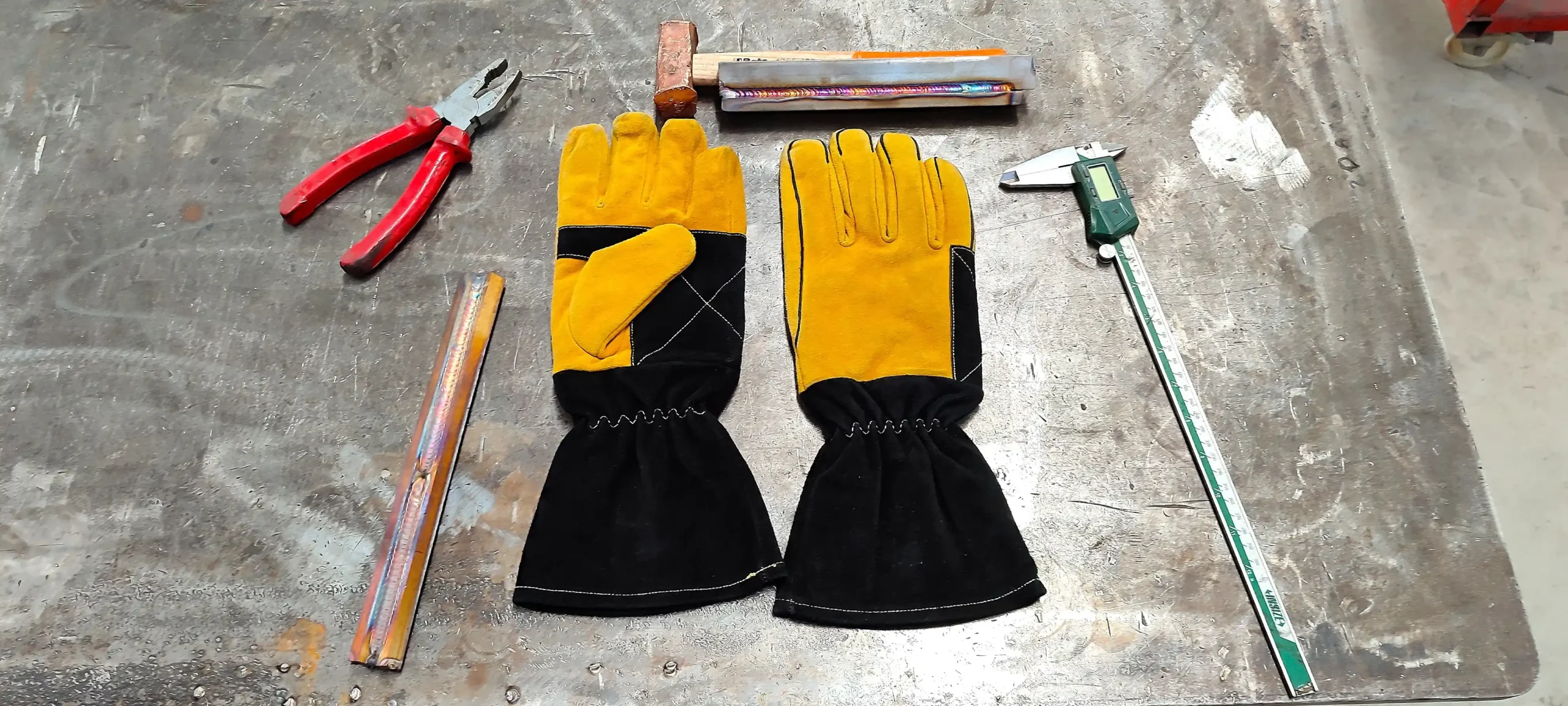
Selected ARASWELD welding glove models use premium split cowhide leather for demanding work involving MIG/GMAW, Stick/SMAW, heavy fabrication, steelwork, foundry-related tasks, and repeated material handling. Split cowhide construction can support a practical balance of heat resistance, abrasion durability, seam strength, and repeated industrial use when the glove’s construction and documented ratings match the task.
In aerospace and defense environments, welders may work around titanium, Inconel, aluminum-lithium structures, structural steel, hot fixtures, abrasive surfaces, and repeated gripping. Leather thickness, thermal lining, seam construction, palm reinforcement, cuff design, and glove condition all affect how suitable a glove is for the work.
For detailed TIG/GTAW work, a lighter and more flexible construction may be more appropriate where the heat and mechanical hazards allow it.For higher-amperage welding and heavy fabrication, a thicker split cowhide leather construction may be more appropriate than a lightweight, dexterity-first glove when the task involves sustained heat, spatter, hot workpieces, and repeated handling.
Key Point:
Leather type alone does not determine glove protection. Buyers should compare leather thickness, thermal layers, seam reinforcement, cuff coverage, EN ratings, fit, and intended use before selecting a welding glove.
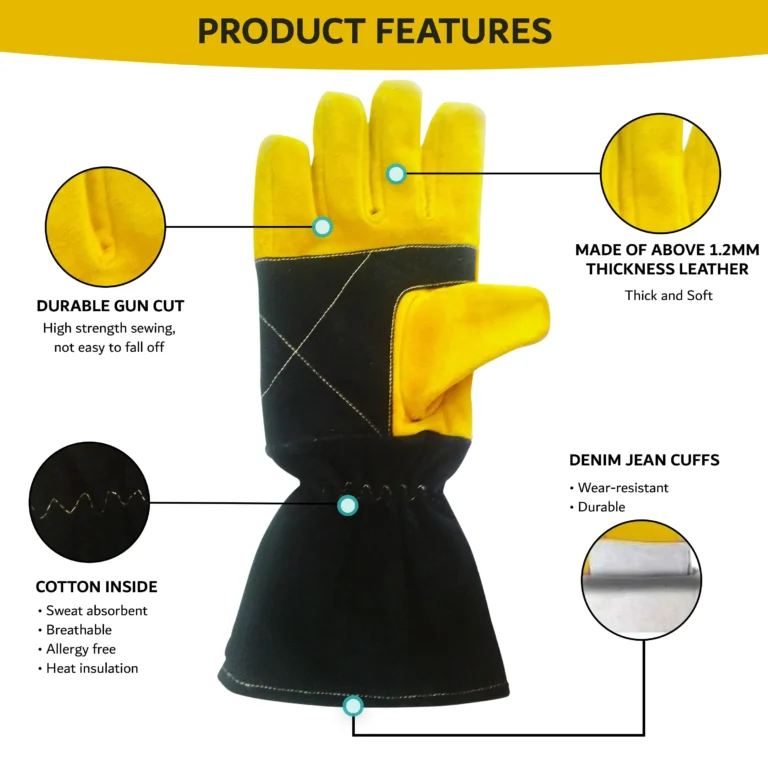
Choosing welding gloves for aerospace and defense work involves more than selecting a durable product. Buyers may need to consider EN 407 thermal protection, EN 388 mechanical protection, glove construction, task-specific fit, documentation, replacement planning, and supply reliability.
ARASWELD supports industrial buyers looking for welding gloves that combine certified protection, practical construction, and B2B supply options for fabrication, repair, maintenance, and heavy industrial work.
ARASWELD welding gloves are designed around EN 407 thermal protection and EN 388 mechanical protection for industrial welding environments where heat, sparks, abrasive surfaces, sharp edges, and repeated handling may occur together.
Buyers should always confirm the selected glove model’s exact EN ratings, intended use, and product documentation against the real welding process and workplace risk assessment.
For buyers operating in AS9100-controlled, Nadcap-accredited, defense, or customer-controlled environments, model-specific certification evidence and product information can support procurement review and PPE evaluation.
Aerospace and defense procurement often requires more than a general product description. Buyers may need to review certification information, glove construction, sizing, intended use, available quantities, product consistency, and replacement planning before selecting a welding glove supplier.
ARASWELD is structured to support industrial buyers evaluating welding gloves for aerospace fabrication, defense manufacturing, MRO operations, structural welding, repair work, and high-heat industrial applications.Customer, contract, site, and project requirements may also determine which certification records, technical information, or traceability details are requested during the procurement process.
Aerospace and defense programs can require welding gloves across multiple shifts, work areas, fabrication stages, repair teams, and replacement cycles. Bulk procurement should consider more than unit price alone.
ARASWELD’s B2B Bulk & Wholesale supply options are designed for buyers who need certified welding gloves, project-based quantities, product information, and more consistent sourcing for long-term industrial work.
For procurement teams, planned glove supply can help support PPE availability, replacement planning, stock control, and more consistent glove selection across welding and handling tasks.
Explore ARASWELD’s B2B Bulk & Wholesale options for aerospace and defense welding glove supply.
Aerospace and defense manufacturing can involve suppliers, fabrication sites, MRO facilities, and subcontractors across multiple countries.
ARASWELD supports international shipping inquiries for certified welding gloves used in aerospace, defense, fabrication, repair, and industrial welding applications.
Shipping availability, delivery timing, customs requirements, destination restrictions, and applicable export controls should be confirmed for each order before purchase.