TIG Welding Gloves: Complete Guide to Dexterity, Materials and Fit
TIG welding gloves are designed for the precise hand control required in gas tungsten arc welding (GTAW), where stable torch movement and accurate filler-rod feeding directly affect weld consistency. Unlike heavier general-purpose welding gloves, a well-selected TIG glove must balance dexterity, fingertip sensitivity and flexibility with suitable protection from radiant heat, hot workpieces, abrasion and sharp metal edges.This guide explains how to compare leather types, lined and unlined constructions, cuff lengths, reinforcement, fit and applicable safety standards so you can choose TIG welding gloves that match your process, workload and working conditions.
What Are TIG Welding Gloves?
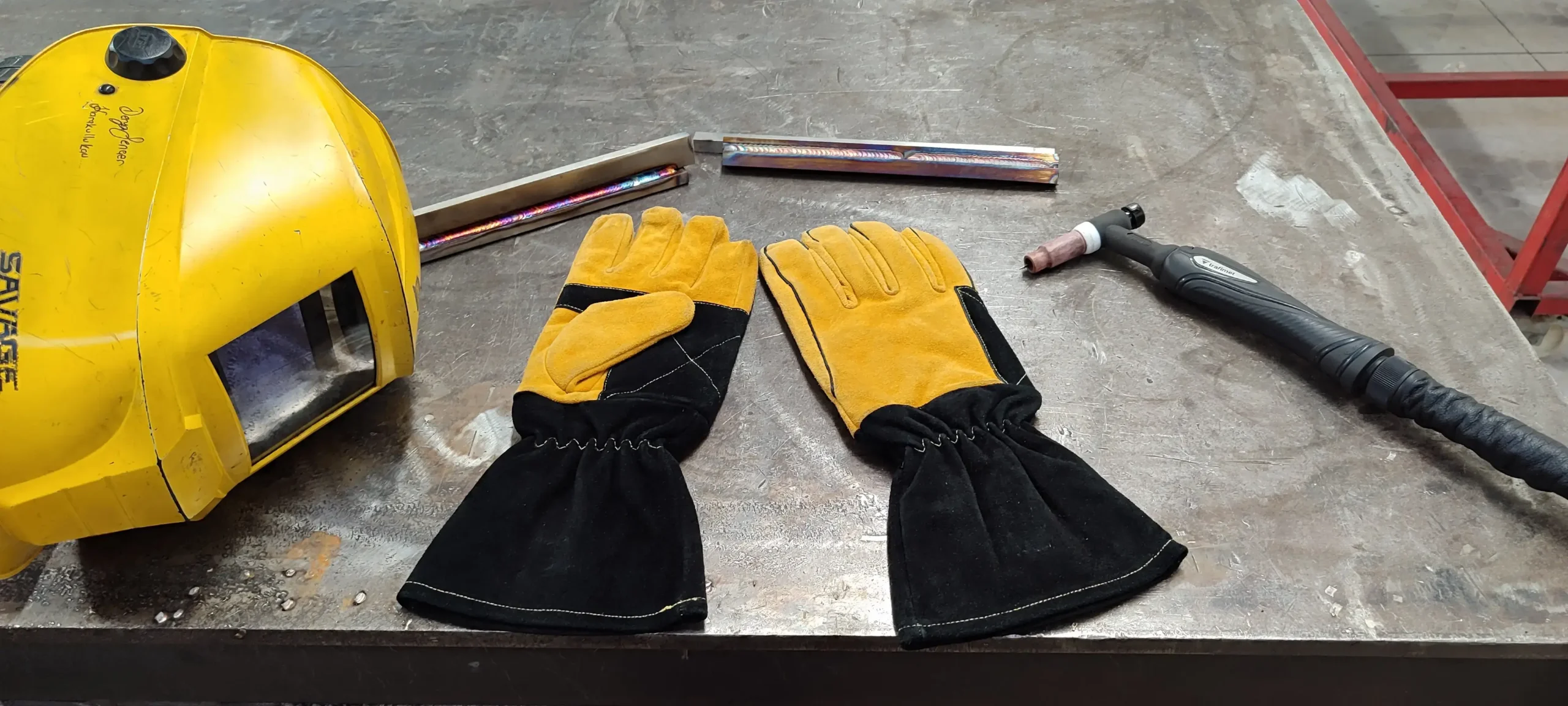
TIG welding gloves are close-fitting, flexible protective gloves designed for the precise hand movements required in gas tungsten arc welding (GTAW). They help the welder maintain stable torch control and feed filler rod accurately while providing task-appropriate protection from radiant heat, hot metal, abrasion, sharp edges and other mechanical hazards.
Compared with heavier general-purpose welding gloves, gloves for TIG welding normally prioritize fingertip sensitivity, controlled finger movement and a more precise fit. However, they must still provide enough thermal and mechanical protection for the amperage, arc-on time, workpiece temperature and handling conditions involved.
For a broader comparison of process-specific glove designs, see our guide to MIG vs TIG vs Stick welding gloves.
Why Does TIG Welding Require Specialized Gloves?
TIG welding requires specialized gloves because the process depends on coordinated torch movement, accurate filler-wire feeding and fine control around the weld joint. Precision TIG welding gloves must support dexterity and tactile feedback without leaving the hands inadequately protected from accumulated heat, hot components, abrasion or sharp metal edges.
Torch Control and Filler-Rod Handling
A TIG welder must control the torch angle with one hand while feeding filler rod smoothly and consistently with the other. Excess leather around the fingertips, stiff finger patterns or bulky internal seams can make these small movements less controlled.
A well-designed high-dexterity TIG welding glove should support:
- Fingertip sensitivity when gripping and repositioning filler wire
- Smooth, consistent filler-rod feeding
- Stable torch-angle control
- Accurate handling of small parts and thin components
- Natural finger and thumb movement
- Reduced hand fatigue during repetitive precision work
Dexterity does not depend only on using thin leather. Finger proportions, thumb position, seam placement, leather flexibility and glove fit all influence how accurately the welder can control the torch and filler rod.
Heat Exposure Without Heavy Spatter
TIG welding generally produces less molten-metal spatter than MIG welding, but this does not mean the hands are exposed to little or no heat. The welder may still encounter radiant heat, a heated filler rod, hot workpieces and thermal buildup during prolonged or repetitive welding.
Relevant hazards can include:
- Radiant heat from the arc and surrounding metal
- Heat transferred through the filler rod
- Recently welded or preheated components
- Longer arc-on time and repeated welding cycles
- Sharp sheet-metal edges
- Abrasion from fixtures, pipes and work surfaces
For this reason, the thinnest or lightest glove is not automatically the best choice. The glove must balance tactile control with protection appropriate to the welding position, workload, workpiece temperature and surrounding mechanical hazards.
Learn more about realistic thermal protection and glove limitations in Are Welding Gloves Heat Proof?.
What Are the Best Gloves for TIG Welding?
The best gloves for TIG welding provide enough dexterity for precise torch and filler-rod control while matching the task’s heat exposure, arc-on time, welding position and mechanical risks. Selection should also consider glove fit, finger and thumb construction, reinforcement, cuff length and verified safety-standard performance rather than choosing the thinnest glove automatically.
Lightweight vs Reinforced TIG Gloves
Lightweight TIG welding gloves are generally preferred for fine precision work where tactile feedback, filler-wire control and unrestricted finger movement are the main priorities. An unlined or lightly constructed palm can make small adjustments easier, especially when working with thin material, small components or short weld sequences.
However, lightweight construction may not provide enough durability or thermal buffering for every TIG application. Reinforced TIG welding gloves may be more suitable when the work involves:
- Moderate heat exposure or warmer components
- Longer or repeated arc-on cycles
- Repetitive production TIG welding
- Frequent contact with fixtures or work surfaces
- Positioning and handling metal between welds
- Abrasion around the palm, thumb or side of the hand
Reinforcement should be placed carefully. A TIG glove with a reinforced thumb or targeted high-wear panels can improve durability, but excessive material around the fingers and palm may reduce filler-rod sensitivity. The goal is not maximum thickness; it is the correct balance of dexterity, heat resistance and mechanical protection.
Short vs Extended Cuffs
Shorter cuffs generally provide greater wrist mobility and may feel less restrictive during bench welding or precision fabrication. However, the cuff must still overlap the welding jacket or sleeve correctly so that the wrist is not left exposed.
Long-cuff TIG welding gloves or gauntlet-cuff TIG welding gloves provide more forearm coverage and may be preferable during vertical, overhead or out-of-position welding. Extended cuffs can also help protect the gap between the glove and sleeve, but a cuff that is excessively stiff or bulky may restrict wrist articulation and torch positioning.
For a broader hazard-based selection method covering welding process, material handling and workplace conditions, read our guide on how to choose welding gloves.
Which Leather Is Best for TIG Welding Gloves?
There is no universally best leather for every TIG application. The most suitable material depends on leather grade, thickness, softness, glove pattern, reinforcement and the required balance between tactile control, heat protection and durability. Both goatskin TIG welding gloves and properly constructed cowhide TIG welding gloves can perform well when matched to the task.
Goatskin for Flexibility and Finger Control
Goatskin is commonly used in high-dexterity TIG welding gloves because it can provide a soft feel, flexible finger movement and a close fit without requiring an excessively bulky construction. These qualities can support accurate torch positioning and controlled filler-rod feeding during precision TIG work.
Goatskin may be particularly useful for:
- Thin-gauge welding
- Small-component fabrication
- Short or controlled weld sequences
- Applications requiring frequent filler-rod repositioning
- Work where tactile feedback is a high priority
However, goatskin TIG welding gloves are not automatically the best choice for every welder or application. Performance also depends on leather thickness, tanning quality, seam design, lining, reinforcement and the amount of heat or abrasion involved.
Top-Grain Cowhide for Balanced Control and Durability
Top-grain cowhide can provide a practical balance between flexibility and wear resistance, particularly in fabrication environments where the glove must support precise TIG work while tolerating repeated contact with components, fixtures and work surfaces.
A well-constructed top-grain cowhide glove may be suitable for:
- Moderate-heat TIG fabrication
- Repetitive welding operations
- Applications involving greater surface wear
- TIG work combined with light component positioning
- Welders who need more durability without moving to a bulky general-purpose glove
The term cowhide TIG welding gloves covers many different constructions. A soft, carefully patterned top-grain glove can provide significantly better control than a thick or stiff cowhide glove designed primarily for heavy spatter and heat.
Split Cowhide and Hybrid Leather Construction
Split cowhide is generally less suitable for areas where maximum fingertip sensitivity is required, but it can be valuable in glove zones where durability, heat resistance and structural support are more important.
It used in:
- Extended or gauntlet cuffs
- Thumb reinforcement
- Side-hand protection
- Back-hand panels
- High-wear contact areas
- Protective seam welts
A hybrid glove may combine a softer grain-leather palm with split-cowhide reinforcement, a stronger back-hand panel or a more durable cuff. This zoned approach can perform better than using one leather throughout because each part of the glove is designed around a different exposure.
ARASWELD specialist insight Based on 12 years of professional welding experience:
For example, the palm and fingers may prioritize flexibility and filler-rod control, while the cuff and reinforcement areas provide greater resistance to heat, abrasion and repeated wear. For this reason, buyers comparing the best leather gloves for TIG welding should examine the complete glove construction rather than judging the product by animal leather type alone.
For a broader explanation of cowhide, goatskin, split leather, grain leather and other welding-glove materials, see the material section in our
Complete Guide to Welding Gloves.
Lined vs Unlined TIG Welding Gloves
Unlined TIG welding gloves generally provide better tactile feedback and filler-rod control, while lined gloves provide additional insulation for longer welds and warmer components. The correct choice depends on arc-on time, workpiece temperature and required dexterity. Fully lined gloves may suit higher heat exposure, but additional bulk can reduce precision during delicate TIG work.
When to Choose Unlined TIG Gloves
An unlined construction is generally preferred when precise torch movement and maximum filler-wire sensitivity are more important than additional thermal insulation. Removing a thick palm lining allows the fingers to feel the filler rod more clearly and reduces material movement inside the glove.
TIG welding gloves with an unlined palm may be suitable for:
- Thin-gauge stainless steel, mild steel or aluminum
- Short or controlled welding sequences
- Fine filler-rod feeding
- Small-component fabrication
- Bench welding with limited workpiece heat buildup
- Applications requiring frequent finger repositioning
- Precision work where palm bulk would reduce control
An unlined glove is not automatically suitable for every low-spatter application. It generally provides less thermal insulation, so the welder must still consider radiant heat, arc-on time, welding position and the temperature of the workpiece.
When Partial or Lightweight Lining Is Better
Partial or lightweight lining can provide additional protection without creating the bulk associated with a fully insulated glove. This construction may be useful when the welder needs greater protection from accumulated heat but still requires enough dexterity for controlled filler-rod feeding.
A partially lined glove may include insulation across the back of the hand while maintaining an unlined or lightly lined palm. This zoned construction can help preserve tactile feedback while improving protection in areas exposed to radiant heat.
Partial or lightweight lining may be appropriate for:
- Longer arc-on periods
- Repeated weld cycles
- Moderate-heat TIG fabrication
- Aluminum or other workpieces that become warm during production
- Additional top-hand heat exposure
- Vertical or out-of-position TIG welding
- Repetitive production environments
Specialist insight from arasweld 12 years of welding experience:
Fully lined heat-resistant TIG welding gloves may be considered when thermal exposure becomes the primary concern. However, the additional lining can reduce finger sensitivity, increase internal movement and make small filler-wire adjustments more difficult.
but In some cases, a heavier crossover glove may provide better protection but may no longer deliver the control expected from a dedicated precision TIG glove.
How Does TIG Glove Construction Affect Dexterity and Durability?
TIG glove construction affects how naturally the fingers and thumb move, how accurately the welder controls the filler rod and how quickly high-wear areas deteriorate. Finger proportions, thumb position, seam placement, reinforcement and cuff attachment must work together. Adding more leather may improve durability, but excessive bulk can reduce tactile sensitivity and increase hand fatigue.
Finger, Thumb and Seam Design
A high-dexterity TIG welding glove should follow the natural shape of the hand closely enough to support controlled finger movement without creating pressure or excess material.
Finger length is particularly important. If the glove fingers are too long, loose leather can gather around the fingertips and interfere with filler-wire feeding. If they are too short, the fingertips may press against the internal seams, restricting movement and increasing discomfort.
Effective finger and thumb construction should consider:
- Accurate finger proportions
- Minimal excess material around the fingertips
- Natural finger flexion
- A correctly positioned thumb
- Thumb opposition and side-to-side mobility
- Controlled internal seam bulk
- Seam placement away from repeated pressure points
- Smooth movement around high-flex areas
The thumb should sit in a natural position rather than pulling inward or forcing the hand into an unnatural grip. Restricted thumb mobility can affect torch control, while excessive material around the thumb saddle may bunch during repeated movement.
Internal seam placement also matters. Bulky seams around the fingertips or along frequently flexed areas can reduce tactile feedback, create pressure points and increase hand fatigue during repetitive precision work.
Reinforcement, Stitching and Cuff Construction
Reinforced TIG welding gloves can provide better service life when reinforcement is limited to areas that experience repeated abrasion, heat or contact with fixtures. Common high-wear zones include the thumb saddle, side of the hand, palm edge and areas used to support or reposition components.
Useful construction features may include:
- Reinforced thumb or thumb saddle
- Selective palm reinforcement
- Protected or recessed seams
- Leather seam welts
- Heat-resistant stitching
- Reinforcement across high-contact zones
- Flexible cuff attachment
- Secure overlap between the cuff and welding sleeve
A TIG glove with a reinforced thumb may last longer during repetitive filler-rod handling or component positioning. However, a large reinforcement patch extending across the fingers or central palm can reduce tactile sensitivity and make the glove feel stiff.
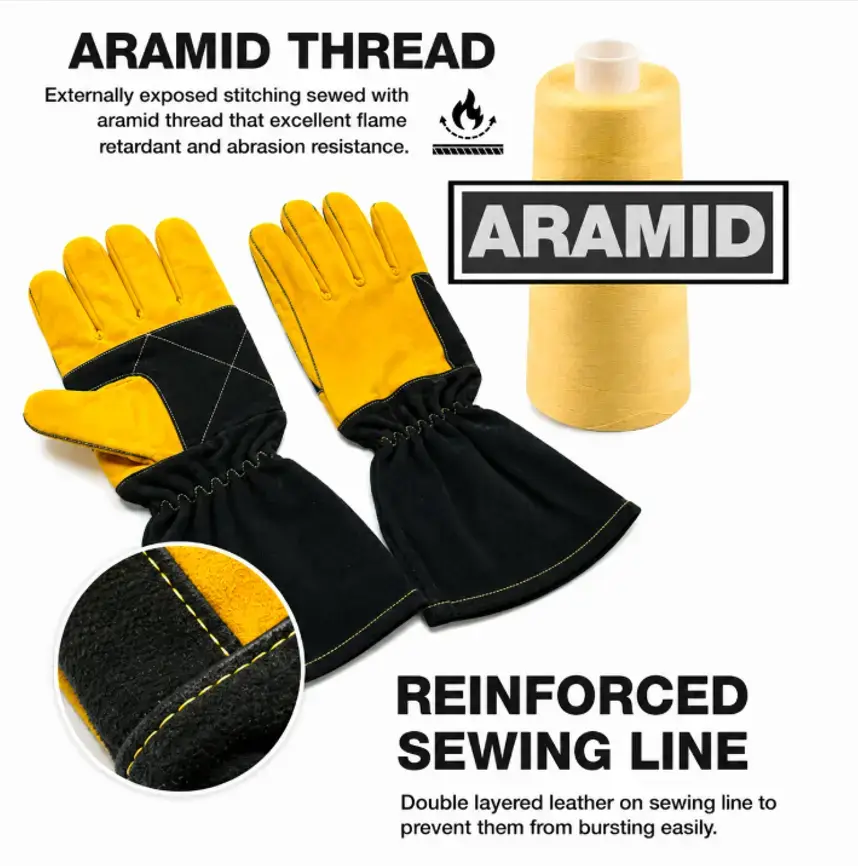
Heat-resistant thread can improve seam durability when exposed to heat and abrasion, but thread material alone does not determine glove performance. Stitch density, seam location, leather quality and protection of the thread from direct contact are also important.
Cuff construction should provide coverage without unnecessarily restricting wrist movement. A stiff cuff attachment can make torch positioning more difficult, particularly during pipe welding, vertical work or restricted-access fabrication. A well-designed cuff should overlap the sleeve securely while allowing the wrist to move naturally.
How Should TIG Welding Gloves Fit?
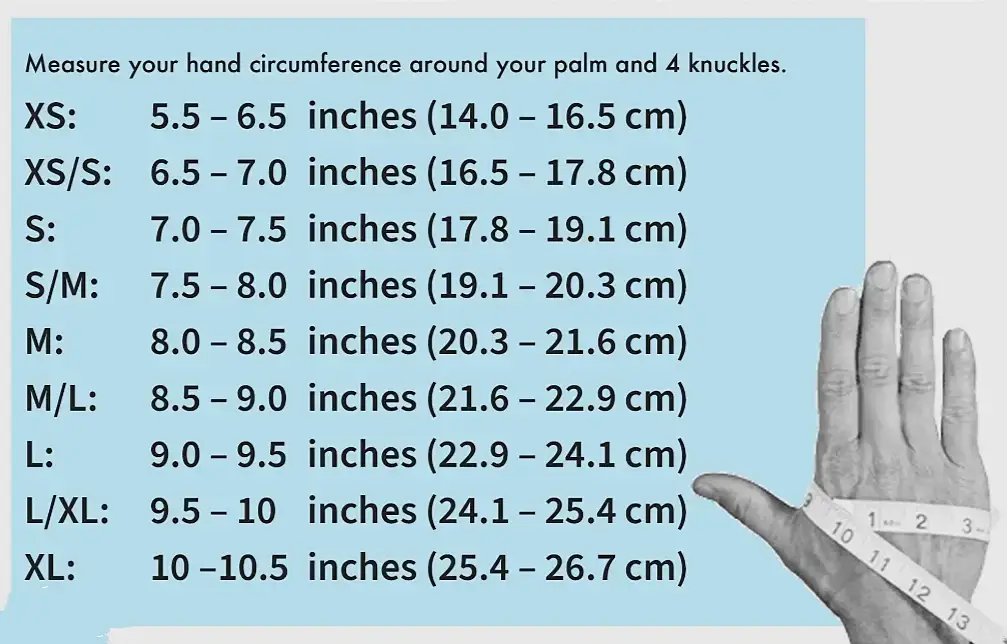
TIG welding gloves should fit closely without restricting finger, thumb or wrist movement. The fingertips should reach near the ends of the glove fingers without pressure or excess material. Correct sizing must account for both palm width and finger length so the welder can maintain stable torch control, filler-rod sensitivity and a secure grip.
Signs TIG Gloves Are Too Tight or Too Loose
A close fit supports precision, but the glove should not compress the hand or pull against the fingers when they bend. Fit problems can reduce dexterity, increase fatigue and place unnecessary stress on the glove’s seams.
Signs TIG gloves are too tight:
- Restricted finger or thumb movement
- Pressure against the fingertips
- Difficulty opening or closing the hand
- Visible tension across seams
- Faster hand fatigue during precise work
Signs TIG gloves are too loose:
- Excess material beyond the fingertips
- Reduced filler-rod control
- Rotation around the palm or wrist
- Liner movement or bunching
- An unstable torch grip
EXPER POINT:
Palm width and finger length must be evaluated together. A glove may fit correctly around the palm but still have fingers that are too long or too short. For high-dexterity TIG welding gloves, even a small amount of excess fingertip material can interfere with filler-wire feeding and small torch adjustments.
What Safety Standards Apply to TIG Welding Gloves?
TIG welding gloves should be assessed under EN 12477 for welding-specific performance, supported by relevant EN 407 thermal and EN 388 mechanical results. EN ISO 21420 addresses general protective-glove requirements, while OSHA and ANSI/ISEA guidance supports hazard-based selection in the United States. Always verify the exact standards, classification and ratings declared for the individual glove model.
EN 12477 Type A vs Type B
EN 12477 is the central European product standard for protective gloves used in manual welding, cutting and related processes. It classifies welding gloves as Type A or Type B according to their balance of protective performance and dexterity.
- Type A welding gloves prioritize higher minimum thermal and mechanical performance, but their minimum dexterity requirement is lower.
- Type B welding gloves prioritize higher minimum dexterity for precise hand movement, with lower minimum requirements in certain thermal and mechanical test areas.
Because TIG welding requires accurate torch positioning and filler-rod control, EN 12477 Type B TIG gloves are commonly associated with precision welding. However, this does not mean every TIG glove is automatically Type B or that Type B is suitable for every TIG application.
Longer arc-on time, heated workpieces, out-of-position welding, abrasion and component handling may require a more protective construction. Buyers comparing certified TIG welding gloves should verify the exact classification, complete performance ratings and supporting conformity documents for the individual glove model.
Type A and Type B are not quality grades. Neither classification is universally better; each represents a different balance between protection and dexterity.
Additional Thermal, Mechanical and General Requirements
EN 12477 works alongside other standards and workplace requirements. These supporting systems evaluate different parts of glove performance and should not be interpreted as interchangeable certifications.
For detailed explanations of testing, performance codes and certification limitations, read the ARASWELD guides to EN 12477 welding gloves,
EN 407 thermal protection and EN 388 mechanical protection and EN 388 vs EN 407.
TIG Welding Glove Selection Checklist
Use this checklist to compare professional TIG welding gloves according to the actual welding task rather than selecting by leather type, thickness or appearance alone. The correct glove should provide the required dexterity while matching the heat exposure, mechanical hazards, fit, construction and verified safety performance of the application.
Frequently Asked Questions About TIG Welding Gloves