How to Choose the Best Welding Gloves: Complete Buying Guide
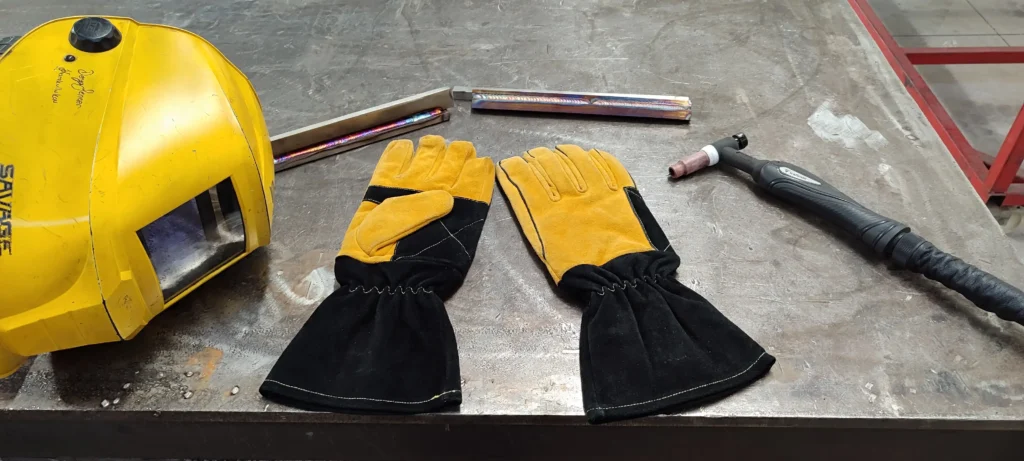
Choosing the best welding gloves starts with matching the glove to the work you actually do. The right pair depends on your welding process, heat exposure, sparks, spatter, sharp edges, abrasion risk, and the amount of dexterity you need for safe torch and material control.
A good welding glove should balance heat resistance, mechanical protection, comfort, fit, cuff length, lining, leather type, glove thickness, and seam construction. Before buying, also check the glove’s relevant safety standards, including EN 407 for heat and flame protection, EN 388 for mechanical risks, and EN 12477 for welding-glove requirements.
For professional use, do not choose gloves by price or thickness alone. Choose welding gloves based on the actual task: TIG welding needs control, MIG welding needs balanced protection, and Stick welding needs stronger heat, spark, and spatter protection.
For a broader overview of glove types, materials, safety standards, care, and buying factors, read our complete guide to welding gloves.
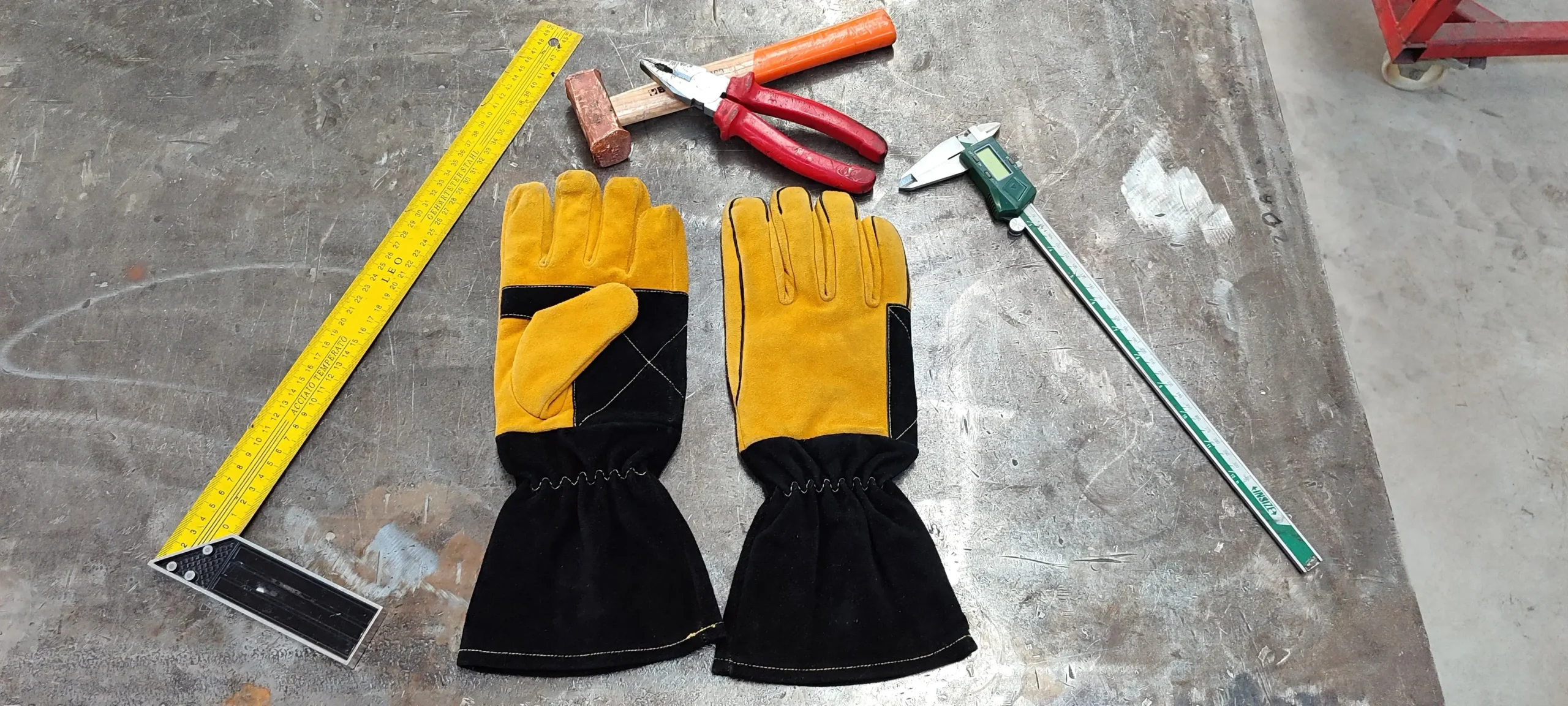
To choose the right welding gloves, start with the welding process, then match the glove to the real hazards of the job. The best welding gloves protect against heat, sparks, spatter, abrasion, cuts, punctures, and sharp edges while still giving the welder enough dexterity to work safely.
For most users, the choice is simple: TIG welding gloves are best for precision and finger control, MIG welding gloves are best for balanced protection, and Stick welding gloves are best for high heat, sparks, and heavy-duty welding.
Before buying, check the glove’s leather type, glove thickness, cuff length, lining, fit, seam construction, EN 407 rating, EN 388 rating, and EN 12477 welding-glove suitability.
For a deeper comparison of process-specific gloves, read our Types of Welding Gloves: MIG vs TIG vs Stick guide.
In simple terms:
choose welding gloves by matching the glove to the process, heat level, spatter exposure, mechanical risk, dexterity need, material, construction, fit, and safety standards. Do not choose only by price, thickness, or comfort. The right glove is the one that protects against the real hazards of the job while still allowing safe hand control.
The best way to choose welding gloves is to start with the welding process. TIG, MIG, and Stick welding create different levels of heat, sparks, spatter, slag, abrasion, and hand-control requirements.
A glove that works well for precision TIG welding may not provide enough protection for heavy Stick welding. A thick Stick glove may protect well, but it can feel too bulky for clean TIG work.
For a deeper comparison of glove types, read our Types of Welding Gloves: MIG vs TIG vs Stick guide.
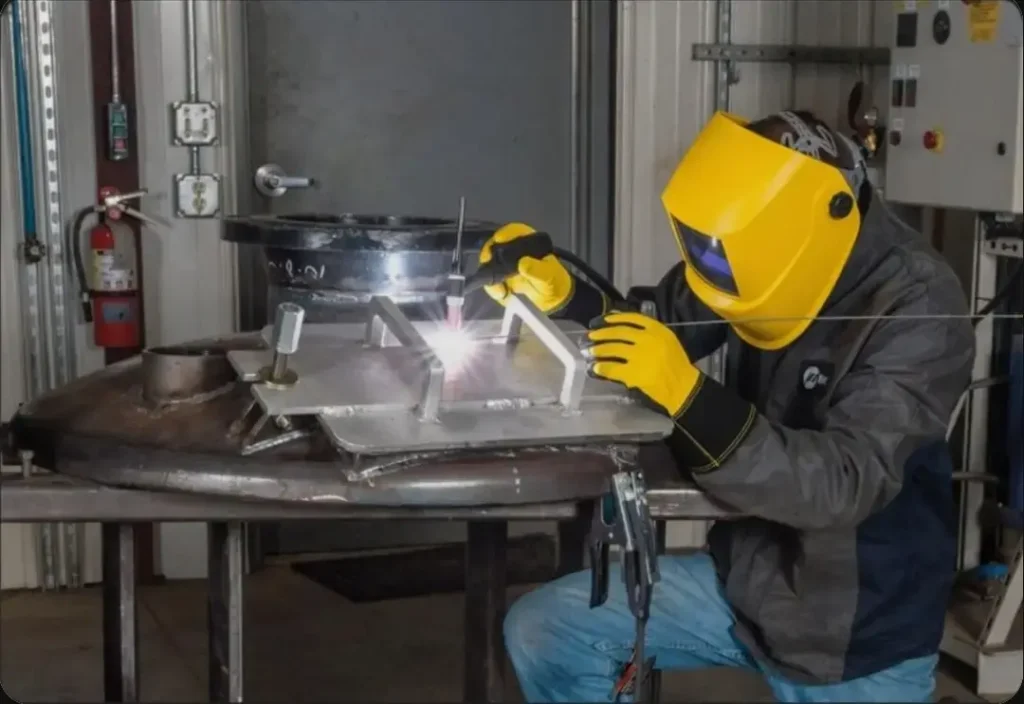
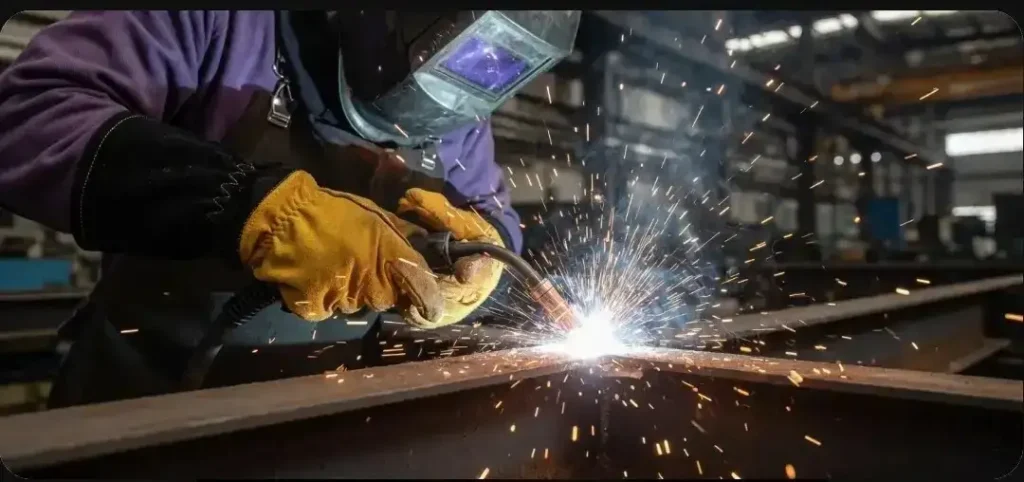
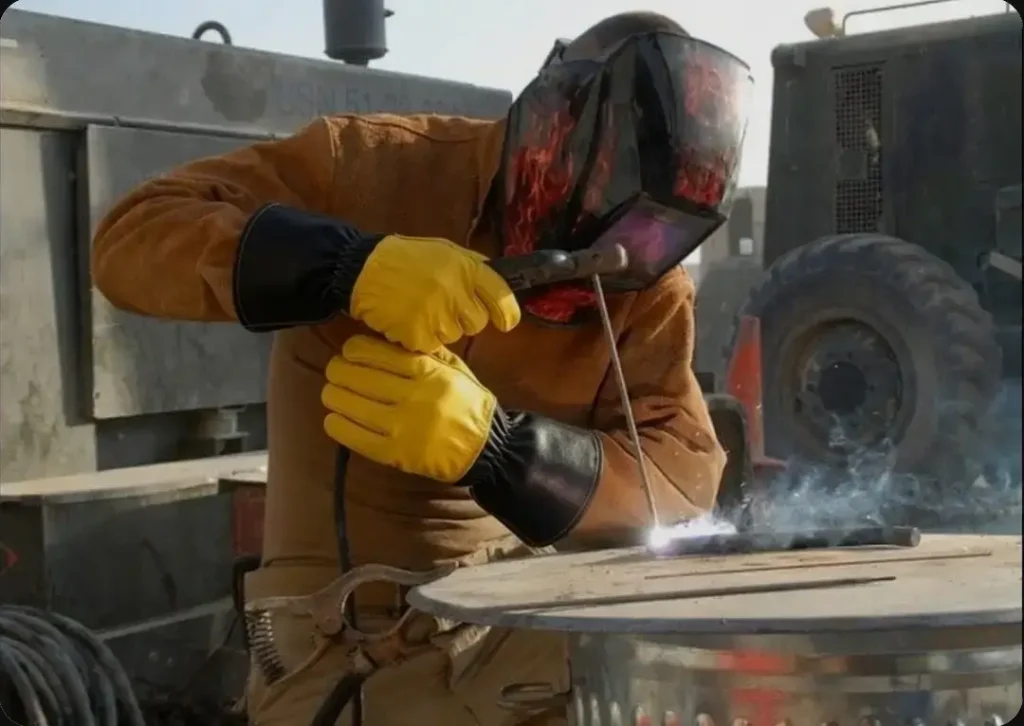
Use this table to compare the main differences between TIG, MIG, and Stick welding gloves before choosing a product.
In simple terms:
choose TIG welding gloves when you need precision and fingertip sensitivity, choose MIG welding gloves when you need balanced protection for heat and spatter, and choose Stick welding gloves when the work involves high heat, slag, sparks, long cuffs, and heavy-duty protection.
The best leather for welding gloves depends on the welding process, heat level, spatter exposure, abrasion risk, and how much hand control the welder needs. Leather affects heat resistance, durability, dexterity, comfort, grip, and glove lifespan.
In simple terms, goatskin leather is often better for TIG welding and precision work, cowhide leather is a strong all-around option for MIG welding and fabrication, and split cowhide leather is usually better for Stick welding, high heat, sparks, spatter, and heavy-duty industrial work.
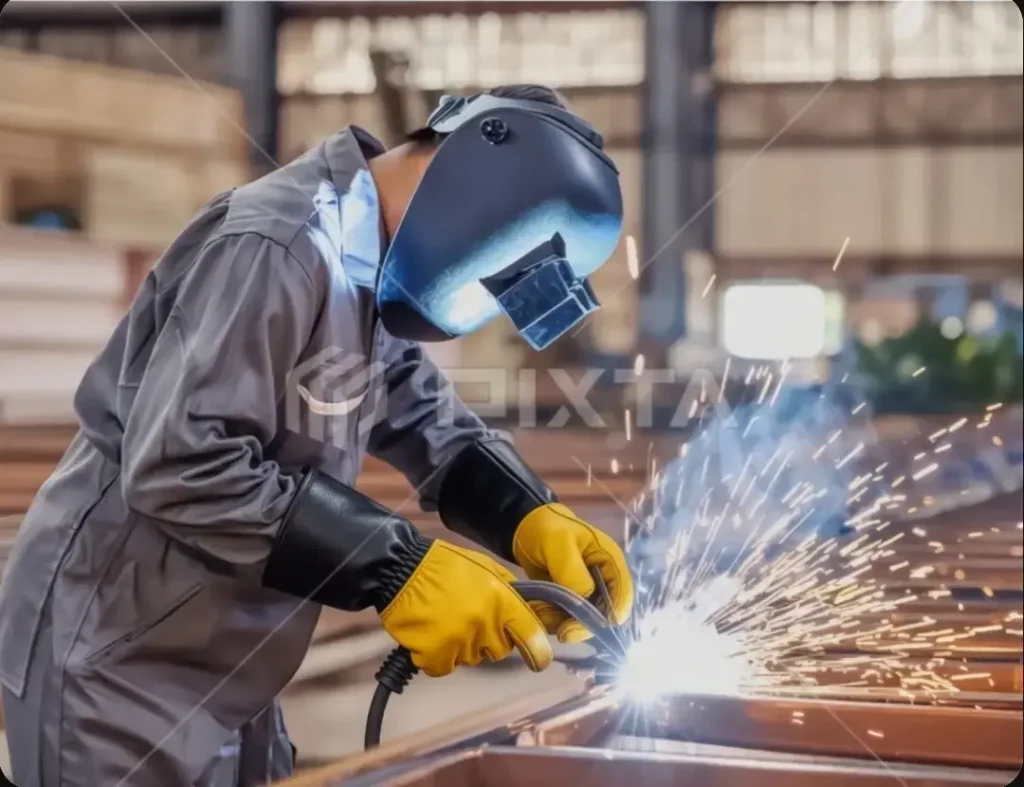
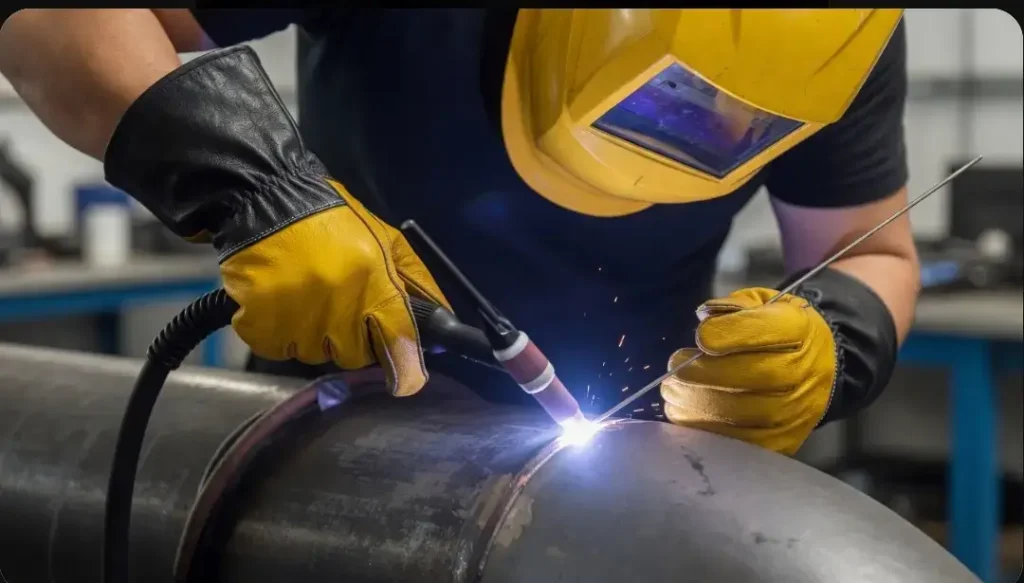
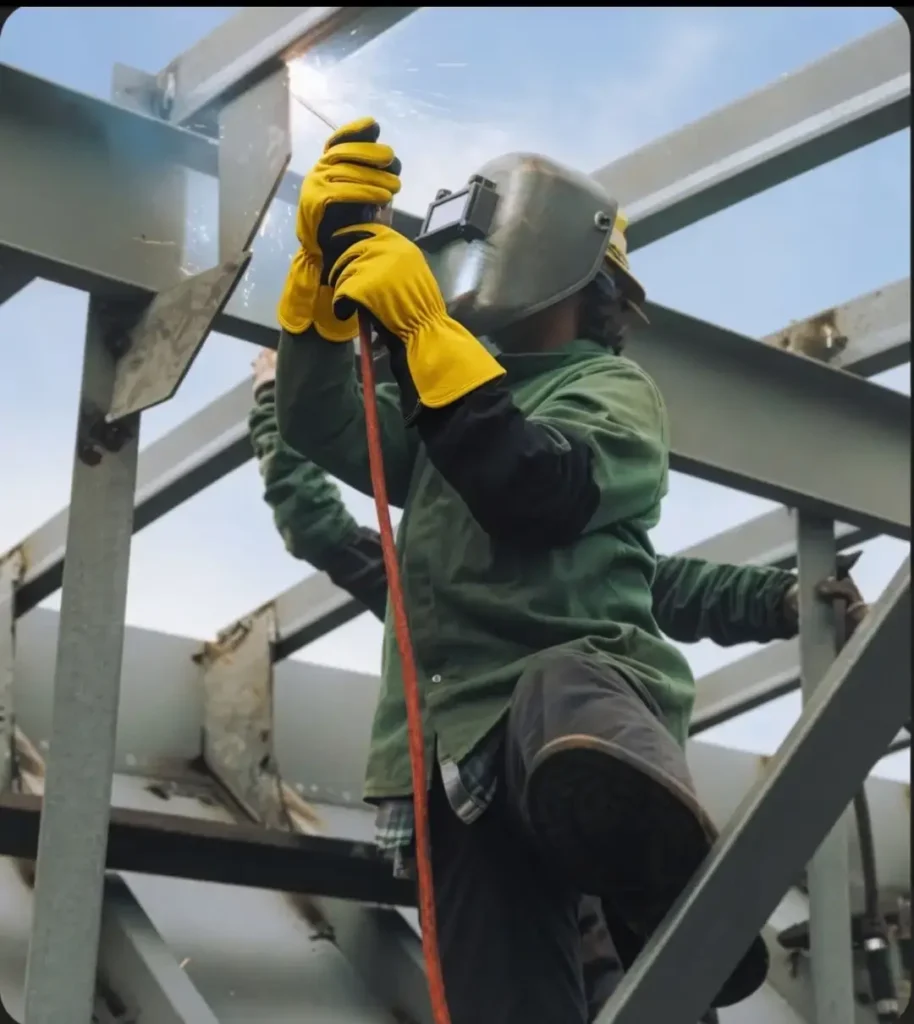
Use this table to compare the most common leather types before choosing the best welding gloves for TIG, MIG, Stick, fabrication, or industrial use.
In simple terms:
choose goatskin welding gloves when precision and dexterity matter most, choose cowhide welding gloves when you need balanced protection for MIG welding and fabrication, and choose split cowhide welding gloves when heat, sparks, spatter, abrasion, and heavy-duty protection are the main risks. Deerskin can be useful for comfort-focused welding, but it is usually less important for high-heat industrial work.
Before buying welding gloves, check whether the glove matches the real hazards of your work. A glove may look thick or durable, but appearance alone does not prove protection against heat, sparks, spatter, molten metal, abrasion, cuts, tears, punctures, or sharp edges.
The most important welding glove standards to understand are EN 407, EN 388, and EN 12477. These standards help buyers compare thermal protection, mechanical protection, and welding-specific glove suitability.
For a direct comparison, read our EN 388 vs EN 407 welding glove standards guide.
Use this table to understand the difference between the three main welding glove safety standards before choosing the best welding gloves for your task.
In simple terms:
EN 407 helps buyers compare heat and flame protection, EN 388 helps buyers compare mechanical protection, and EN 12477 helps identify gloves designed for welding work. For professional welding, do not check only one standard. The safest buying decision comes from matching the glove’s ratings to the real process, heat exposure, spatter level, sharp-edge risk, and required dexterity.
EN 12477 Type A and Type B welding gloves are designed for different balances of protection and dexterity. Type A gloves generally focus more on protection, while Type B gloves generally focus more on hand movement and finger control.
In simple terms, choose Type A welding gloves when the job requires stronger protection against heat, sparks, spatter, and rough industrial conditions. Choose Type B welding gloves when the job requires better dexterity for detailed welding, torch control, and filler-rod handling.
Do not choose Type A or Type B by name alone. Always check the glove’s actual EN 407 rating, EN 388 rating, material, thickness, lining, cuff length, stitching, and intended welding application.
For Type A and Type B classification, see NEN-EN 12477 protective gloves for welders.
Use this table to compare Type A and Type B welding gloves before choosing gloves for TIG, MIG, Stick, fabrication, or industrial welding work.
In simple terms:
choose EN 12477 Type A welding gloves when protection is the main priority, and choose EN 12477 Type B welding gloves when dexterity is the main priority. Type A is often better for demanding MIG, Stick, and industrial welding tasks, while Type B is often better for TIG and precision welding. Always confirm the glove’s actual EN 407, EN 388, EN 12477, material, thickness, cuff, lining, stitching, and intended use before buying.
The right welding glove size affects safety, comfort, grip, dexterity, torch control, and hand fatigue. Welding gloves should fit securely without restricting natural hand movement or leaving too much loose material around the fingers and palm.
A close fit is usually better for TIG welding gloves because precision and fingertip sensitivity matter more. Thicker MIG welding gloves and Stick welding gloves may need slightly more internal room because of leather thickness, lining, insulation, and longer working time.
For a full product overview after checking your size, explore our professional welding gloves.
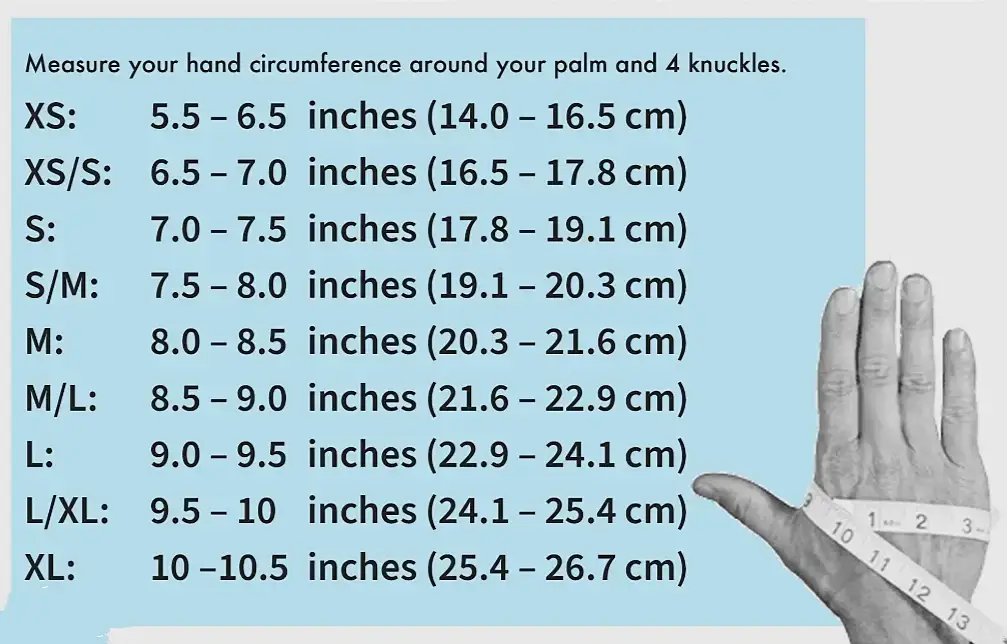
Use this welding glove size chart as a general guide. Always compare your hand measurement with the specific product size chart before ordering because leather type, lining thickness, insulation, cuff design, and glove construction can affect the final fit.
In simple terms:
choose a welding glove size that feels secure without pressure and allows safe hand movement. A glove that is too tight can reduce comfort and grip strength, while a glove that is too loose can reduce torch control and precision. Use palm circumference as a starting point, then confirm the fit based on glove type, lining, leather thickness, and welding process.
Two welding gloves can use similar leather but perform differently in real work. Cuff length, lining, Kevlar stitching, reinforced seams, palm reinforcement, thumb design, and insulation all affect protection, comfort, durability, and glove lifespan.When choosing the best welding gloves, do not look only at leather thickness. A thin TIG glove may need better finger control, while a heavy-duty MIG or Stick glove may need long cuffs, heat-resistant lining, reinforced palms, and aramid thread for stronger protection.
For more guidance on thermal protection, read our heat-resistant welding gloves guide.
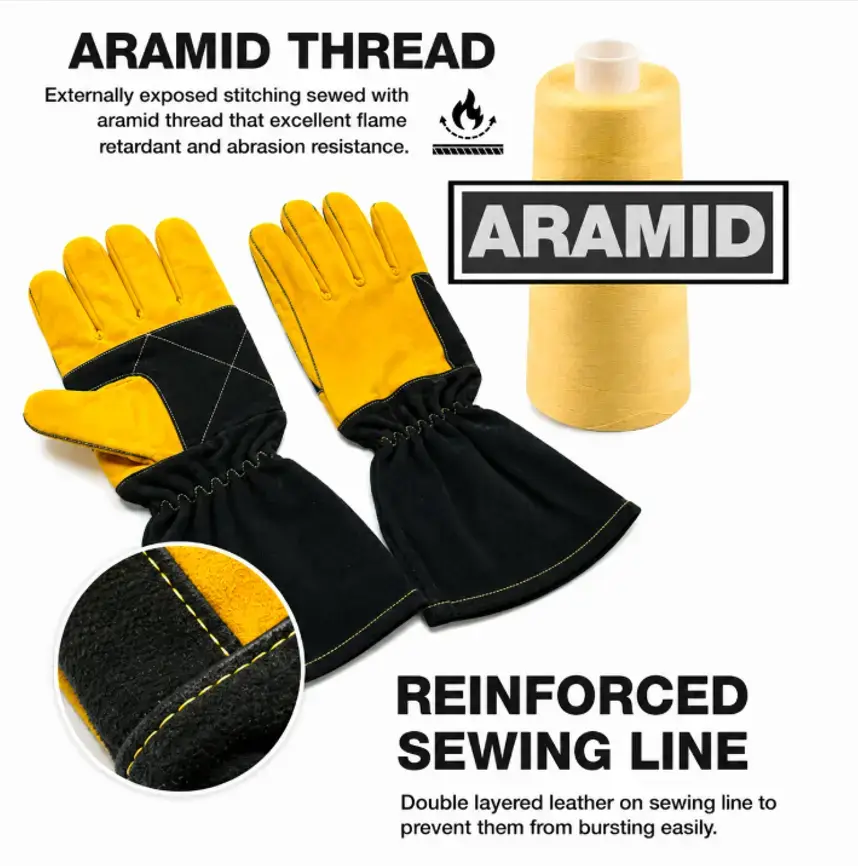
Use this table to compare the main construction features before choosing gloves for TIG, MIG, Stick, fabrication, high-heat welding, or industrial work.
In simple terms:
the best welding gloves are not defined by leather thickness alone. Strong protection comes from the full construction: cuff length, lining, Kevlar or aramid thread, reinforced palms, reinforced thumbs, welted seams, double stitching, and reduced seam exposure. For TIG welding, prioritize control and fit. For MIG, Stick, high-heat welding, and industrial fabrication, prioritize cuff coverage, lining, seam durability, and reinforcement.
The best welding gloves depend on more than the welding process. A TIG welder in automotive or EV manufacturing may need high dexterity, while a welder in construction, shipbuilding, oil and gas, or steel fabrication may need stronger heat protection, abrasion resistance, long cuffs, and reinforced seams.
Choose gloves based on the hazards of the work environment: heat, sparks, spatter, slag, sharp edges, rough steel, moisture, confined spaces, shift length, and repeated material handling.
For a broader product view, explore ARASWELD’s industrial welding gloves.


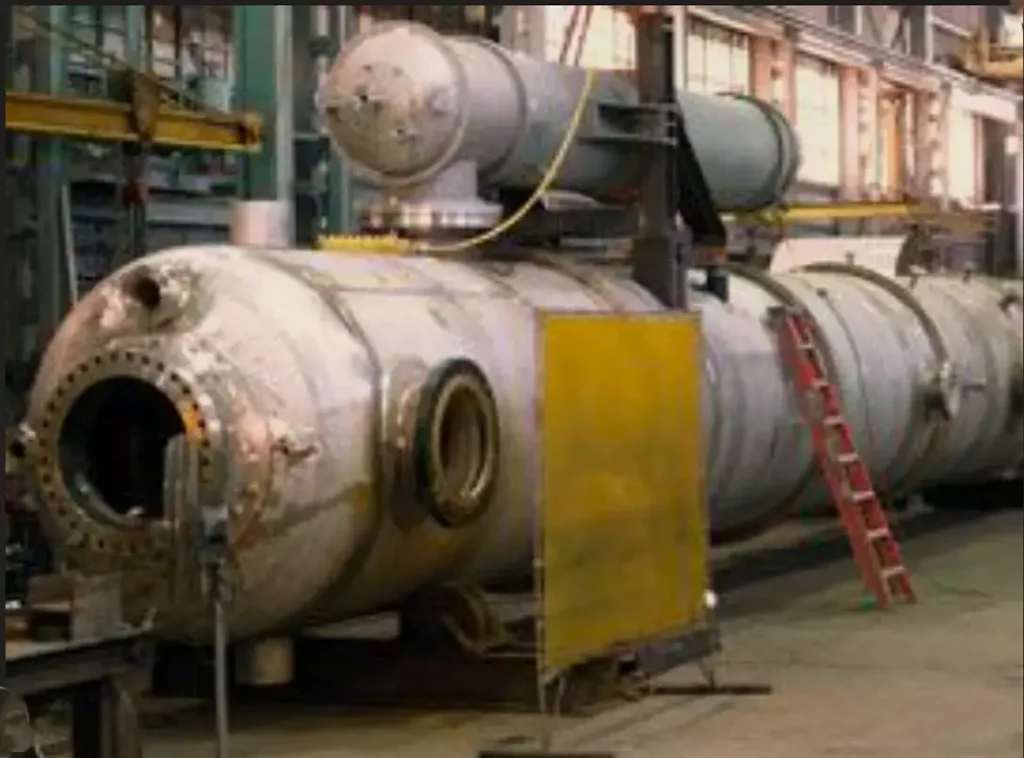


Use this table to compare the main hazards, recommended glove type, leather choice, and key construction features for industrial welding environments.
In simple terms:
the best welding gloves for industrial work depend on the environment, not only the welding process. Construction, shipbuilding, steel fabrication, foundries, and oil and gas usually need stronger heat protection, long cuffs, abrasion resistance, and reinforced seams. Automotive, EV, aerospace, and HVAC work often need more dexterity, grip, fit, and precision, but still require protection matched to the real heat and mechanical hazards.
The cheapest welding glove is not always the best value. A low-cost glove can become expensive if it wears out quickly, feels uncomfortable, or does not match the heat, sparks, spatter, abrasion, sharp edges, and working time of the job.When comparing professional welding gloves, look beyond price. Check leather quality, glove thickness, lining, cuff coverage, seam construction, reinforcement, expected lifespan, EN 407, EN 388, EN 12477, and cost per use.
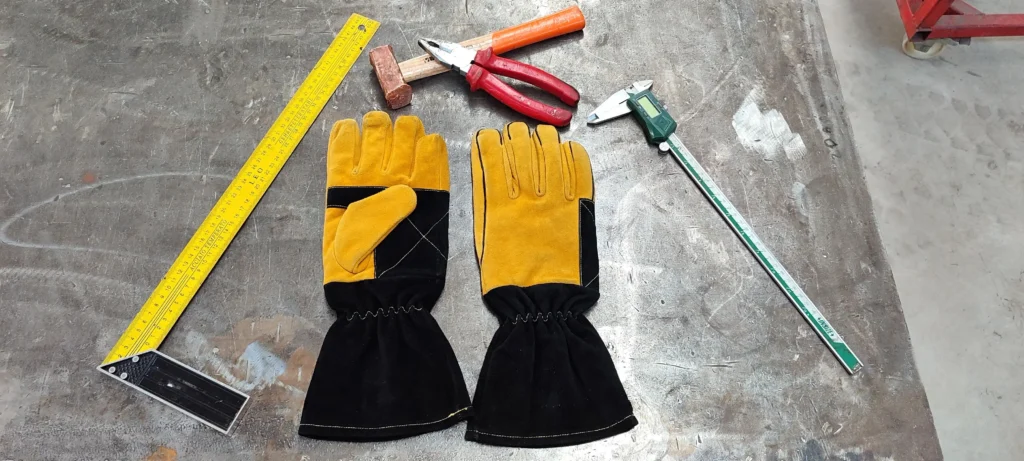
Use this table to compare budget, mid-range, premium industrial, and B2B welding glove buying levels before choosing a product.
In simple terms:
the best welding glove value comes from matching the glove to the real job, not from choosing the lowest price. Budget gloves can work for light tasks, mid-range gloves often provide the best value for regular welding, and premium industrial gloves are worth it when heat, spatter, abrasion, long shifts, or replacement costs are high. For B2B buyers, compare total cost of ownership, not only unit price.
Shop Professional Welding Gloves by Application
ARASWELD welding gloves are built for welders who need reliable protection, durable leather, practical comfort, and task-based performance. Choose the right glove for your welding process, heat level, dexterity needs, spatter exposure, abrasion risk, and work environment.
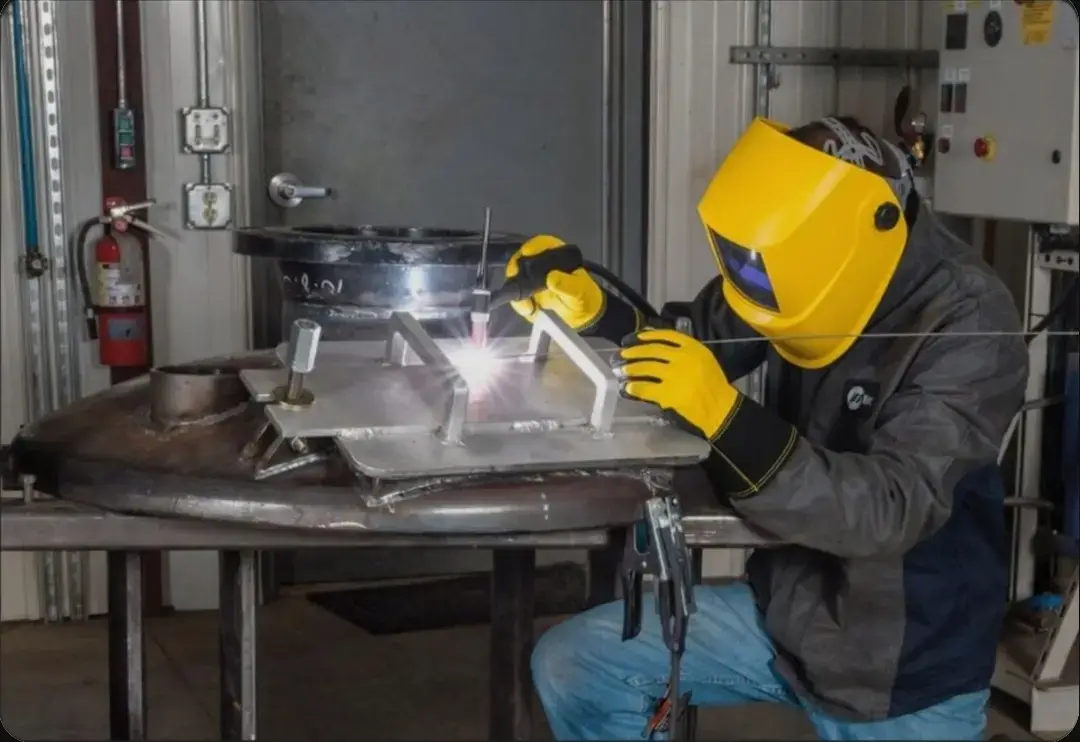
For TIG and Precision Welding
Choose flexible ARASWELD gloves when you need fingertip sensitivity, secure grip, comfort, filler-rod control, and precise torch movement for TIG welding, automotive work, EV manufacturing, and detailed fabrication.
Explore Precision TIG & EV Gloves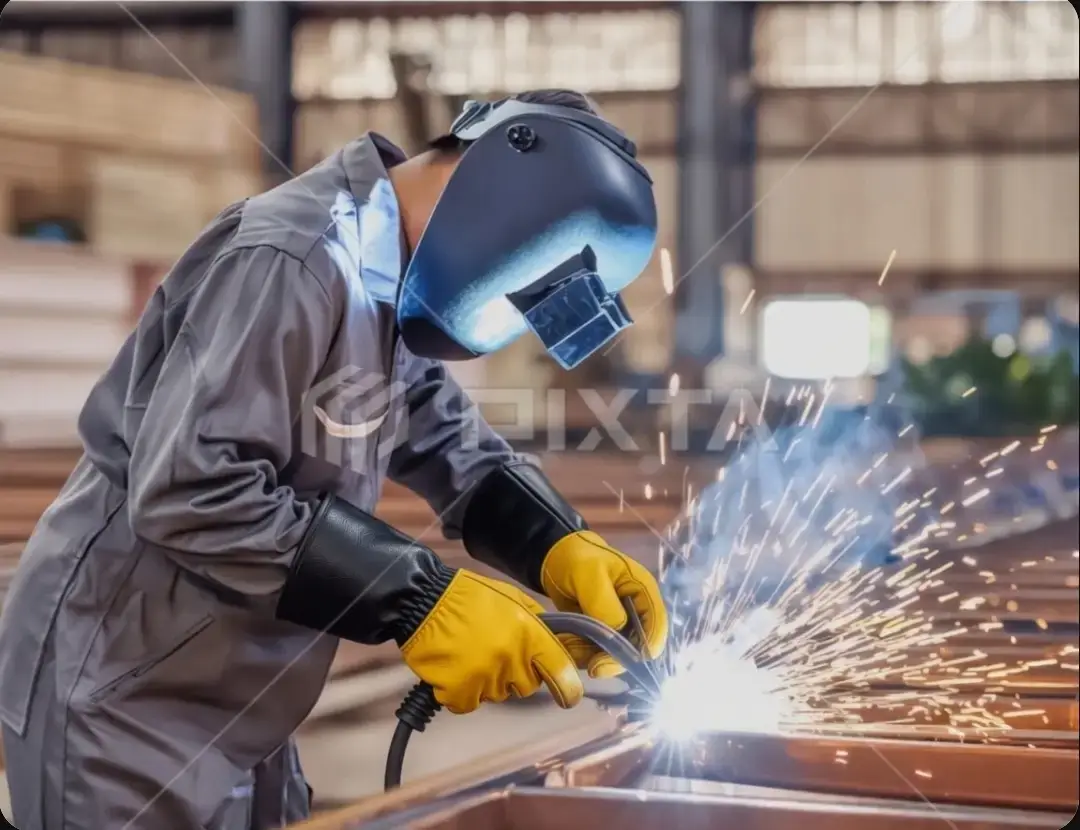
For MIG, MAG and High-Heat Welding
Choose durable ARASWELD gloves for MIG welding, MAG welding, high heat, sparks, spatter, structural work, heavy fabrication, and industrial welding.
Explore High-Heat Protection Gloves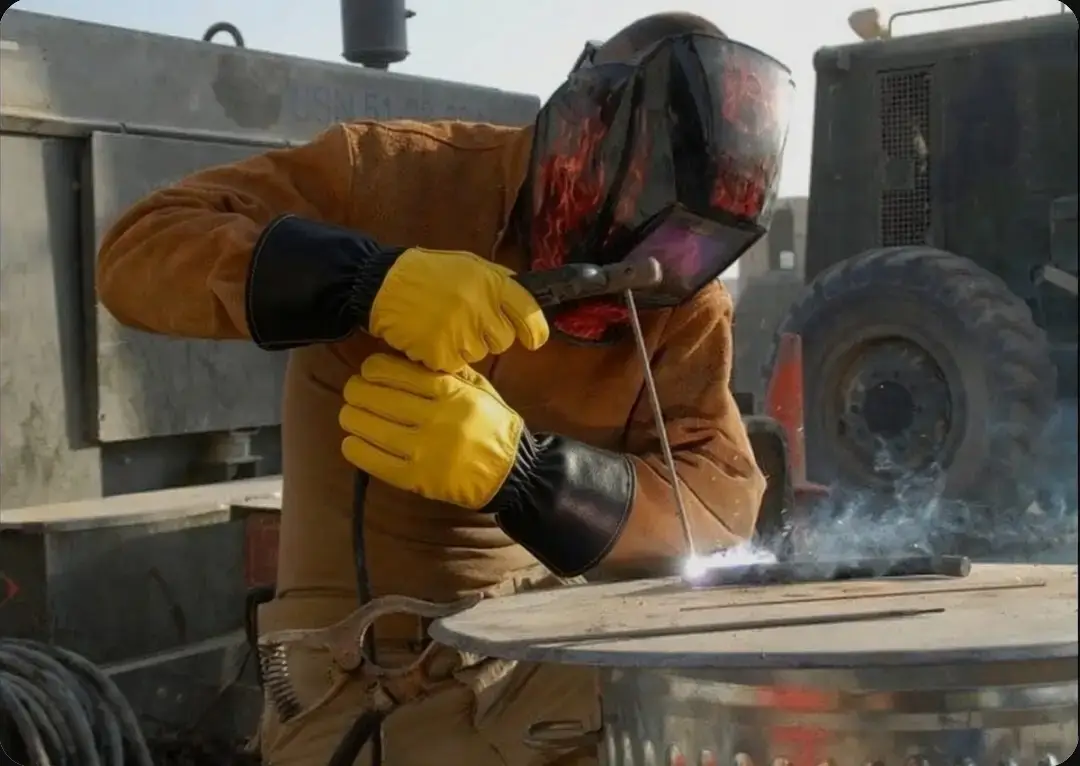
For Impact, Abrasion and Demanding Industrial Work
Choose reinforced ARASWELD gloves for abrasion, rough materials, repeated handling, sharp edges, impact risks, and demanding industrial tasks.
Explore Impact & Abrasion Gloves