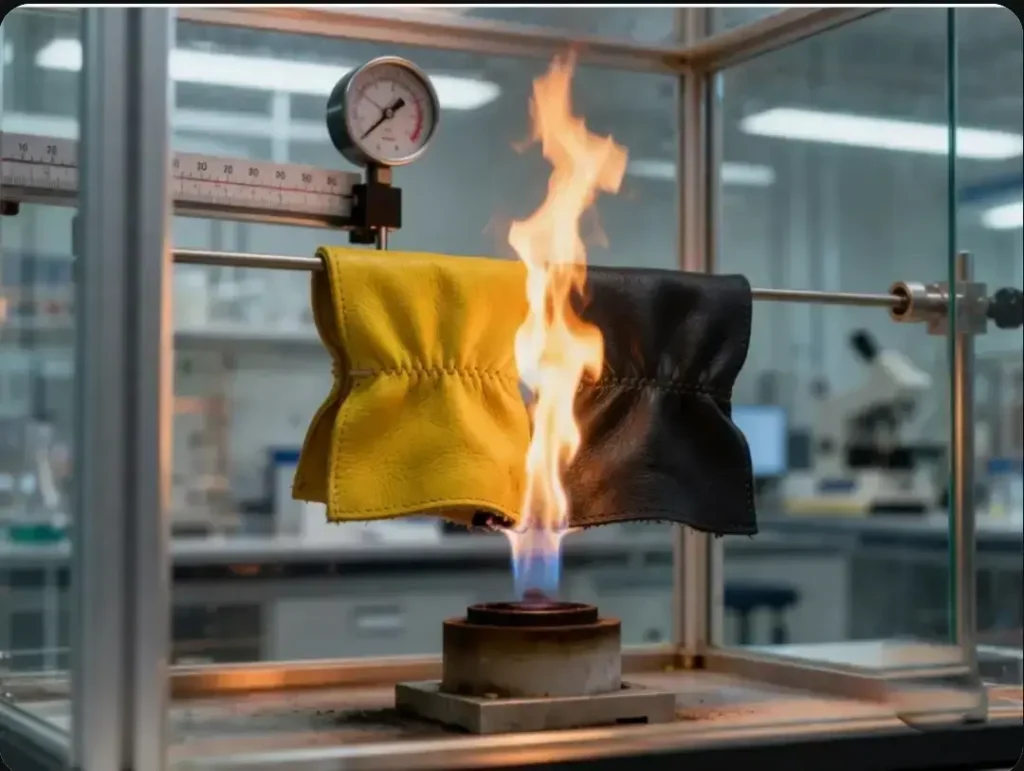
EN388 vs EN407: What’s the Difference in Welding Glove Safety Standards?
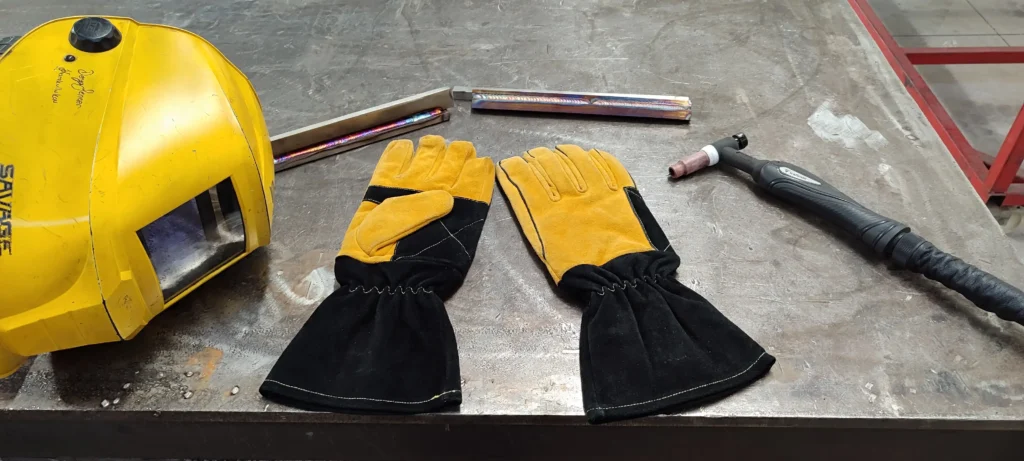
EN388 and EN407 are European safety standards used to evaluate the performance of protective gloves. EN388 focuses on mechanical risks such as abrasion, cut, tear, and puncture resistance, while EN407 measures heat and flame protection.
Choosing the right welding gloves depends on the type of hazards in your working environment.
Choosing the ultimate pair of welding gloves requires a data-driven evaluation of your specific workshop hazards, ensuring your team balances physical hand protection with the exact manual dexterity needed for the job.
Master Compliance Matrix Insights: This cross-referenced master index explicitly breaks down the structural relationship between EN 388 mechanical durability,insulation, and the EN 12477 industrial welding framework. Understanding this layout prevents procurement errors by clarifying that EN 388 and EN 407 are separate hazard-specific test blueprints, whereas EN 12477 acts as the master regulatory filter that synthesizes both standards. By evaluating how a glove balances numerical friction ratings with specialized thermal index points, safety compliance managers can accurately separate thick, defensive Type A gloves optimized for high-heat MIG/Stick environments from highly flexible Type B gloves engineered for high-precision TIG torch tracking.
The EN 388 standard is a rigorous European safety framework used globally to evaluate and certify the structural resistance of protective gloves against diverse mechanical hazards.
Rather than relying on subjective descriptions, this standard subjects safety fabrics to localized laboratory testing to measure exactly how well a material withstands intense physical abrasion, sharp edge cutting forces, structural tearing, and sharp object punctures.
Because heavy fabrication environments involve handling rough raw materials and sharp metal edges, an EN 388 certification is standard across the construction, metalworking, shipping, and heavy manufacturing sectors.
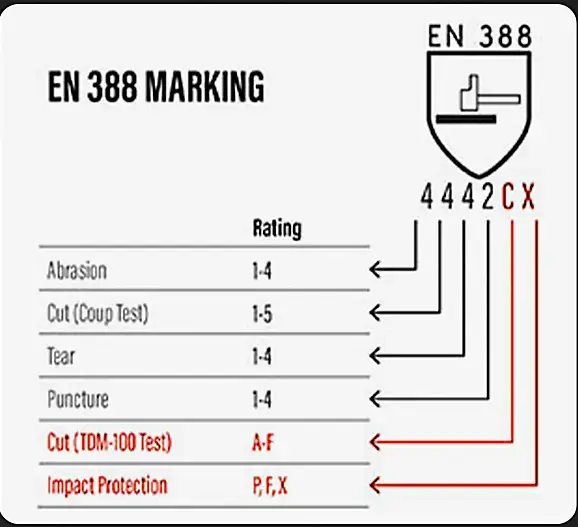
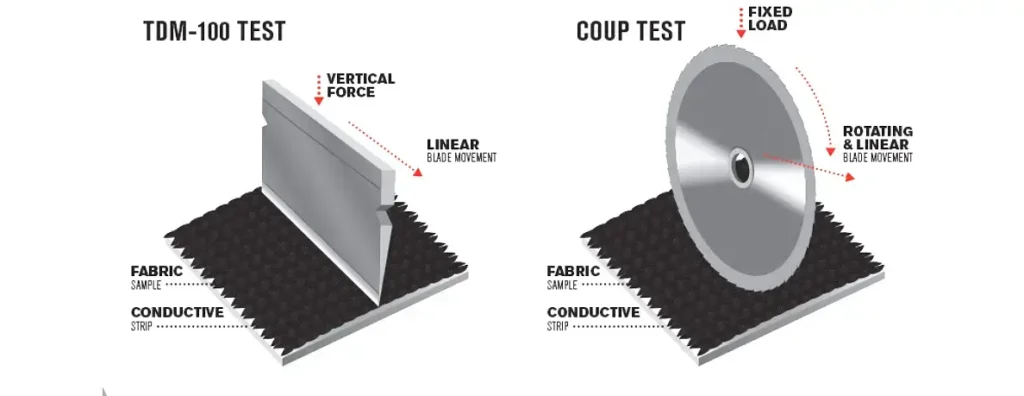
In industrial applications, a glove’s mechanical performance is displayed via a standardized shield pictogram accompanied by a string of indexing numbers and letters. Modern compliance protocols require distinguishing between legacy testing scores and modern mechanical criteria. To see the exact cycle counts, blade pressure metrics, and how the TDM-100 straight blade test is performed in a laboratory, read our comprehensive breakdown of the EN 388:2016 standards for mechanical protection gloves. Understanding these specific sub-ratings allows procurement officers to ensure their chosen equipment protects against real-world slicing and scraping forces without suffering premature wear.
The EN 407 standard is the definitive international safety benchmark engineered to evaluate, test, and rank the thermal performance of protective gloves against heat, flames, and extreme thermal energy.
This specialized regulation is critical for assessing equipment used in high-risk thermal zones where workers face direct exposure to extreme temperatures, convective air currents, radiant arc flashes, and explosive molten metal spatter.
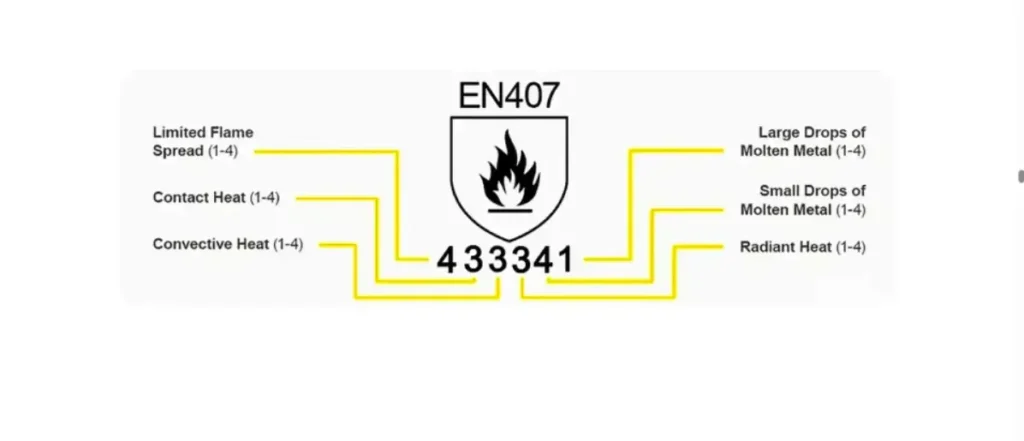
Rather than offering basic heat insulation, an official EN 407 certification provides an exact mathematical safety threshold across six distinct thermal hazard categories: burning behavior, contact heat resistance, convective heat transfer, radiant heat transmission, small molten metal droplets, and large quantities of liquid metal.
For welding applications, understanding the specific threshold levels within this framework is paramount to preventing severe contact injuries. While a Level 4 rating guarantees maximum safety against extreme temps up to 932°F, you can explore the complete laboratory testing procedures and threshold times in our deep-dive on the EN 407 standard heat resistance tests and ratings. By analyzing these distinct thermal data points, safety managers can accurately match their workspace heat levels to a certified glove barrier, guaranteeing that the protective leather will neither shrink, melt, nor structurally fail when subjected to intense operational heat.
Navigating industrial PPE compliance requires separating individual material test ratings from overarching global regulatory frameworks.
While individual EN 388 and EN 407 metrics pinpoint how a fabric reacts to isolated mechanical or thermal forces, true site compliance relies on understanding broader legal classifications like European PPE risk categories and performance tiers. By decoupling these interwoven standards, safety managers can accurately decode certification stamps, satisfy rigorous corporate liability audits, and ensure their facility gear matches the precise legal definitions governing complex industrial environments.
Under European PPE regulations, Category 3 (Complex Design) protective gloves are certified to shield workers against irreversible health damage, severe occupational injuries, or fatal risks.
Because welding involves hazardous exposures like open volcanic sparks, high-voltage arc flashes, and extreme thermal contact, compliant welding gloves must be audited and approved by an independent Notified Body to carry a valid Category 3 certificate. For B2B procurement managers, sourcing Category 3 gloves ensures that the equipment has undergone rigorous third-party quality control testing, guaranteeing life-saving reliability in high-risk fabrication zones.
A Level 5 performance rating represents the highest tier of protection traditionally achievable under specific industrial safety standards. For instance, in legacy EN 388 testing, a Level 5 score in the classic Coup Test signified maximum blade cut resistance before the industry transitioned to the modern TDM-100 straight-blade Newtonian force scale. When evaluating hand protection, understanding Level 5 metrics allows facility safety compliance officers to easily identify heavy-duty gear designed to withstand extreme mechanical abrasion and intense friction forces without suffering structural material failure.
The structural classifications detailed in this matrix outline the regulatory logic used to rank advanced personal protective equipment based on occupational risk severity. Category 3 certified gloves undergo strict, independent third-party audits by a Notified Body to verify that their material composition can shield workers from life-threatening risks, permanent health complications, or catastrophic thermal arc flashes. Concurrently, Level 5 ratings serve as an independent performance tier within standard-specific tests, establishing that the safety fabric has achieved the highest traditional durability threshold against intense mechanical friction forces and abrasive workshop wear.
The EN 12477 standard is the definitive, specialized European regulatory framework that governs all protective gloves engineered for industrial welding, metal cutting, and allied thermal operations.
Unlike standalone testing protocols, EN 12477 acts as an umbrella compliance standard—meaning it does not create unique tests on its own. Instead, it legally mandates that a glove must undergo and pass combined, stringent testing under both the EN 388 mechanical durability framework and the EN 407 thermal resistance framework to carry an official welding safety certification.
Furthermore, this comprehensive framework enforces a mandatory manual dexterity test (the EN 420 steel pin test) to guarantee that a glove's structural material thickness does not dangerously compromise an operator's control over heavy machinery or welding torches. By unifying mechanical toughness, thermal insulation, and physical flexibility into a single regulatory blueprint, the EN 12477 standard serves as the ultimate benchmark for validating industrial hand protection safety and compliance.
The classification matrix within the EN 12477 taxonomy eliminates the dangerous practice of using generic "one-size-fits-all" protective gear in industrial workshops. By establishing clear, legally binding boundaries between performance profiles, this specialized system forces procurement teams to audit the precise physical demands of their workspace. Rather than leaving glove selection to guesswork, safety compliance officers can use this regulatory taxonomy to accurately balance user safety with ergonomic efficiency, ensuring operators receive a tailored barrier that matches the exact physical parameters of their daily welding tasks.
This comparative engineering index highlights the mandatory minimum testing thresholds required to legally certify heavy-duty Type A (Heavy-Duty) versus flexible Type B (High Dexterity) welding gloves under the EN 12477 framework. The data emphasizes the strict trade-offs between physical protection and manual precision: Type A gloves enforce significantly higher physical thresholds for EN 388 abrasion, puncture resistance, and EN 407 convective heat insulation to safeguard operators during intense MIG or Stick welding. Conversely, Type B regulations lower those mechanical barriers to mandate a stringent Level 4 manual dexterity score (measured by the precise 6.5mm pin test), ensuring the tactile finger sensitivity required for intricate TIG welding torch tracking.
The core distinction between the EN 388 and EN 407 standards lies entirely within the specific category of industrial hazards they are engineered to test and certify. While EN 388 focuses strictly on quantifying mechanical durability—assessing how well a glove material resists abrasive wear, slicing cuts, tearing forces, and punctures—EN 407 explicitly evaluates thermal resistance, measuring a glove's ability to insulate against extreme heat, open flames, and molten metal exposure.
Because industrial welding environments are highly complex, premium hand protection cannot simply focus on one standard over the other. Heavy-duty personal protective equipment (PPE) must seamlessly combine high performance ratings across both certification frameworks to guarantee that operators remain completely shielded against overlapping mechanical and thermal trauma in extreme workshop environments.
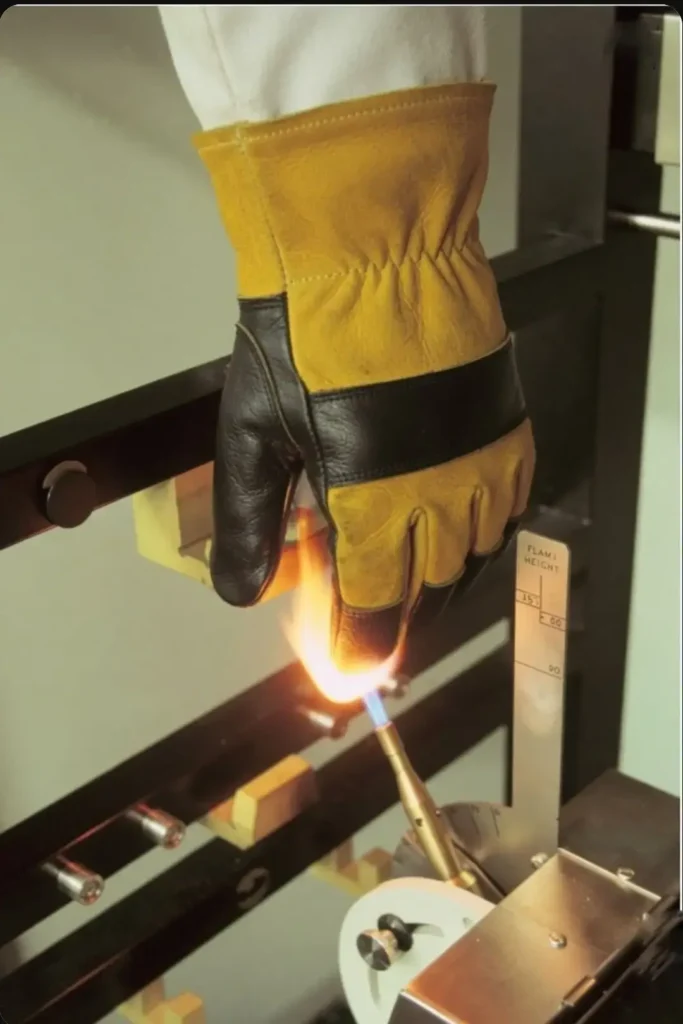
Industrial welding environments never introduce a single, isolated hazard; instead, they subject a technician's hands to a violent combination of simultaneous mechanical and thermal risks. A professional welder routinely handles raw, razor-sharp steel sheets, operates heavy mechanical clamps, clears rough slag, and encounters high-velocity showers of molten sparks and blinding radiant heat.
Requiring a glove to meet only one standard creates a critical vulnerability: an exceptionally thick heat glove might easily puncture on raw steel wire, while an ultra-tough cut-resistant glove could instantly melt when exposed to an open arc flash.
Securing dual compliance is an absolute operational necessity for hazardous heavy industries, particularly across high-risk sectors like oil and gas processing facilities, active shipyards, structural steel factories, and heavy foundry operations. In these unforgiving workspaces, failing to supply multi-certified protection leads to rapid material degradation, expensive compliance penalties, and severe workplace injuries. Because different welding disciplines introduce highly distinct operational environments, safety managers must understand how these ratings change when comparing the types of welding gloves like MIG vs TIG vs Stick to find the perfect, data-driven balance of manual dexterity and thermal mass.
Selecting the ultimate hand protection requires a systematic assessment of your facility's specific operational hazards. Rather than guessing, safety procurement teams must analyze the primary dangers of each application: for high-heat manufacturing, heavy arc tracking, or slag chipping, you must prioritize high EN 407 thermal index levels; conversely, when tasks shift toward manipulating sharp metal stampings, grinding rough edges, or pulling heavy cables, your selection criteria must focus heavily on high EN 388 mechanical performance numbers.
Ultimately, for full facility compliance and maximum worker safety, the single best procurement strategy is selecting premium industrial welding gloves certified under both standards simultaneously. This dual-protection approach ensures your team can smoothly transition between structural material handling and high-temperature arc execution without ever switching gear.
Looking to completely overhaul your facility's PPE compliance program? Read our ultimate Complete Guide to Welding Gloves for an all-in-one breakdown of material selection, leather thickness standards, and deployment strategies.