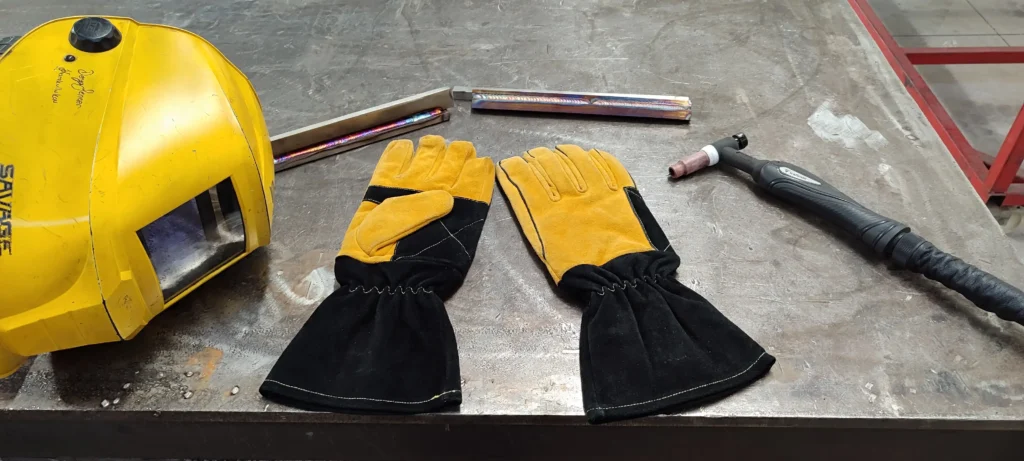
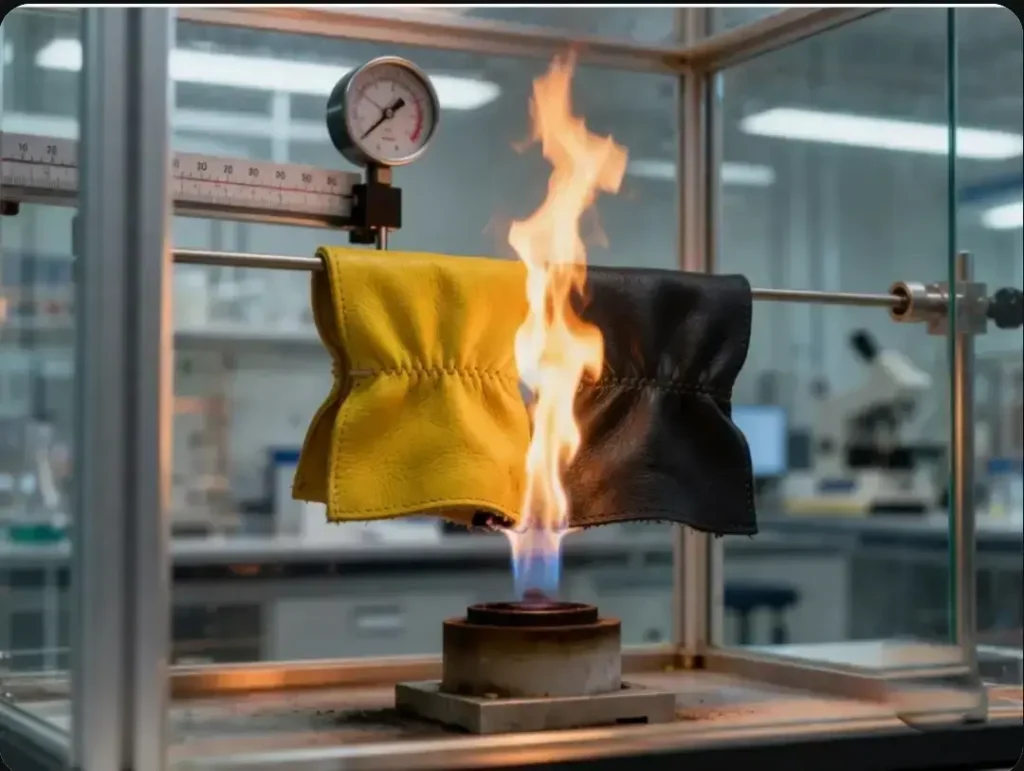
EN 388 and EN 407 evaluate different areas of protective-glove performance. EN 388 measures mechanical risks, including abrasion, cuts, tears, punctures, and optional impact, while EN 407 measures thermal risks such as flame, contact heat, convective heat, radiant heat, and molten metal. EN 12477 provides welding-specific requirements for protective gloves.
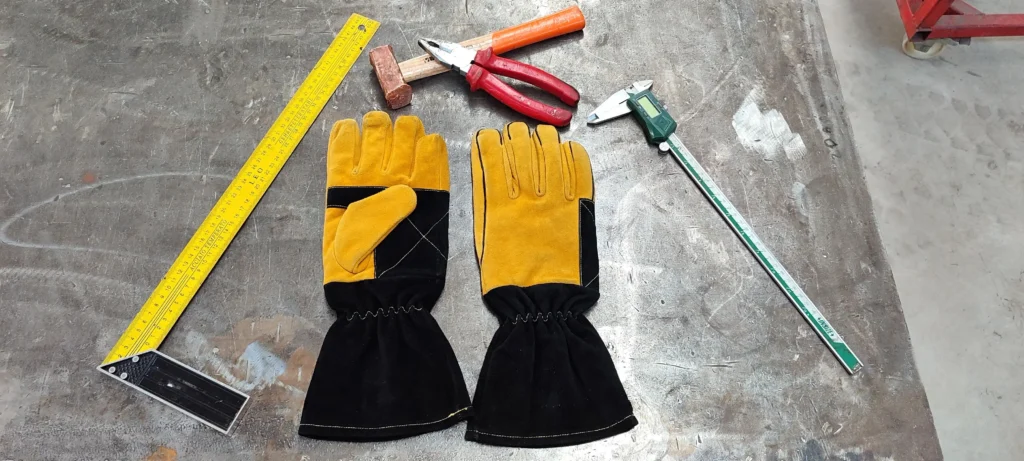
EN 388 and EN 407 measure different protective-glove hazards. EN 388 evaluates mechanical resistance to abrasion, cuts, tears, punctures, and optional impact, while EN 407 evaluates thermal protection against flame, contact heat, convective heat, radiant heat, and molten metal. Welding gloves may require results from both standards, depending on the workplace risks.
For a complete explanation of the individual tests and performance markings, read our EN 388 mechanical protection guide and EN 407 thermal protection guide.
EN 388 is the European standard used to evaluate protective gloves against mechanical risks. It assesses abrasion, blade-cut, tear, puncture and, where applicable, impact performance. The marking may also include ISO 13997 cut resistance, helping welders and industrial buyers compare model-specific protection against sharp, rough and abrasive materials.
For the official scope, publication details, and standard overview, see the BSI overview of EN 388 protective gloves against mechanical risks.
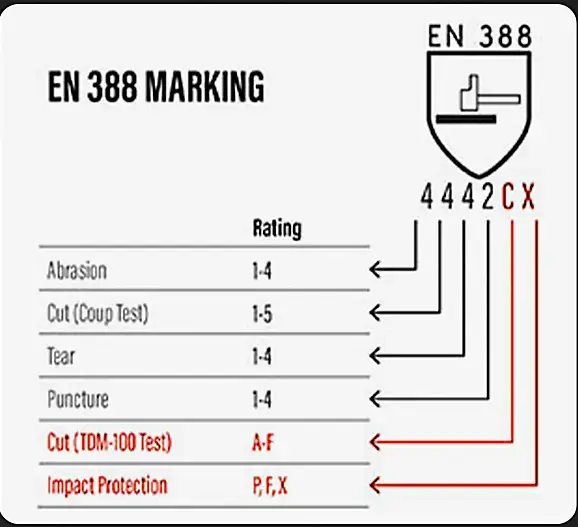
An EN 388 marking can contain four numerical positions, one letter and an optional impact marking. Each position represents a different test and must be interpreted separately.
X means that no performance level is declared for that test position. This may occur because the test was not performed, was not applicable or did not produce a suitable result for classification.
In the Coup blade-cut position, X commonly appears when blade dulling makes the circular-blade result unsuitable. In that situation, the ISO 13997 cut-resistance letter from A to F provides the more relevant cut classification.
P means that the glove passed the optional EN 388 impact-protection test in the tested area. Because impact testing is optional, the absence of P does not automatically mean that the glove failed; it may mean that no impact-protection claim was tested or declared.
Buyers should confirm which part of the glove was tested and review the model-specific technical documentation before relying on an impact claim.
Specialist tip:
A high EN 388 cut or abrasion rating does not prove heat resistance. Mechanical and thermal performance must be assessed separately and matched to the hazards of the welding task.
For a more detailed explanation of the tests, markings and mechanical protection levels, read our EN 388 mechanical protection standard guide.
EN 407 is the European standard that specifies requirements, test methods, markings, and information for protective gloves against thermal risks. It evaluates flame, contact heat, convective heat, radiant heat, and molten-metal exposure. Welding gloves are assessed under EN 12477, which uses relevant thermal requirements rather than EN 407 alone.
For the official scope, publication details, and standard overview, see the BSI overview of EN 407 protection against thermal risks.
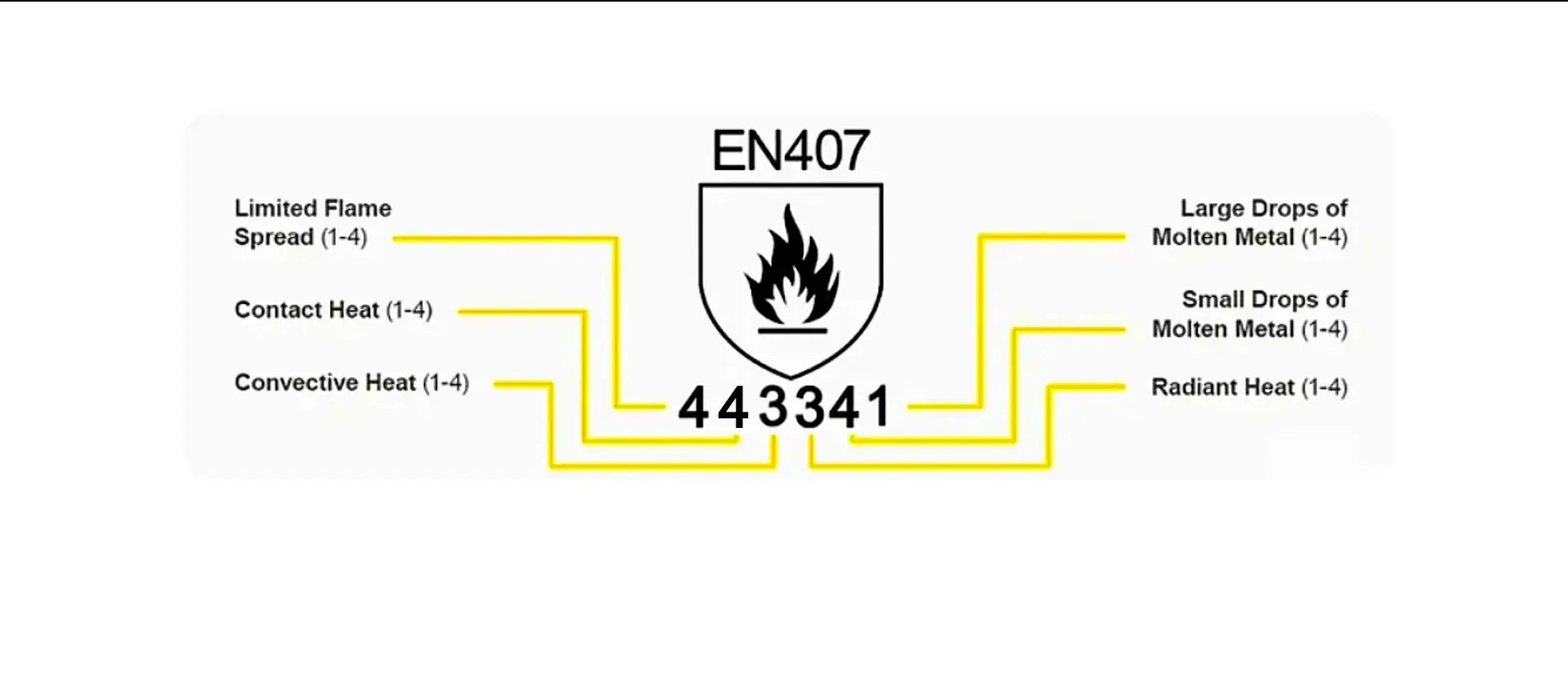
An EN 407 marking contains six positions, read from left to right. Each position relates to a different thermal test and is generally classified from Level 1 to Level 4, with Level 4 representing the highest classification for that test. An X means that no performance level is claimed for the relevant position.
No. EN 407 Level 4 does not mean that a wearer can safely or continuously hold an object at 500°C. Real-world protection also depends on contact duration, pressure, surface area, material conductivity, glove construction, lining, fit, moisture, wear, contamination, and the condition of the glove.
The wearer should stop contact before excessive heat transfers through the glove and must follow the manufacturer’s instructions, limitations, and workplace risk assessment.
Specialist tip:
Laboratory temperature ratings must always be interpreted together with exposure time and the complete glove construction. A 500°C contact heat test result is not an unlimited operating temperature or a guarantee against burns.
For a more detailed explanation of the six thermal tests, pictograms, rating positions, and performance levels, read our EN 407 thermal protection standard guide.
EN 388 and EN 407 performance codes must be read according to their own test positions. EN 388 uses numbers, a cut-resistance letter, and optional impact marking to report mechanical performance. EN 407 uses six positions to report separate thermal tests. The values do not represent one overall glove-safety score.
Read each marking from left to right beneath its standard pictogram. Every position represents a specific test, and the result applies only to that hazard. Buyers should therefore identify the standard first, locate the relevant code position, and then compare the model’s result with the hazards of the intended task.
EN 388 and EN 407 performance levels cannot be compared directly because they measure different hazards using different laboratory tests, thresholds, and classification scales. Even within the same standard, a Level 4 result in one code position does not represent the same type or degree of protection as Level 4 in another position.
The ratings should therefore be interpreted by standard, code position, test method, and intended workplace hazard—not as a single overall score.
EN 12477 is the welding-specific standard that brings relevant mechanical and thermal requirements together for protective gloves used in manual metal welding, cutting, and allied processes. It uses performance requirements associated with EN 388 and EN 407 while also addressing glove design, dimensions, coverage, construction, and dexterity.
EN 12477 specifies requirements and test methods for protective welding gloves. It assesses the combination of mechanical protection, thermal protection, glove construction, coverage, and dexterity needed for welding work. Gloves are classified as Type A or Type B according to their minimum protection and dexterity requirements.
EN 12477 Type A welding gloves prioritize higher minimum protection, while Type B welding gloves prioritize greater dexterity. Type A is generally associated with welding and cutting tasks requiring heavier protection. Type B is commonly associated with precision work such as TIG welding, where filler-rod control and finger movement are more important.
For broader information about EN 12477 welding gloves, Type A and Type B classifications, materials, safety standards, and glove selection, read our Complete Guide to Welding Gloves.
Welding gloves may need both EN 388 and EN 407 performance because welding exposes the hands to mechanical and thermal hazards during the same task. EN 388 addresses risks such as abrasion, cuts, tears, and punctures, while EN 407 evaluates heat, flame, radiant energy, and molten-metal exposure.
For a practical selection process based on welding type, heat exposure, mechanical hazards, glove construction, and dexterity, read our guide to choosing the right welding gloves.
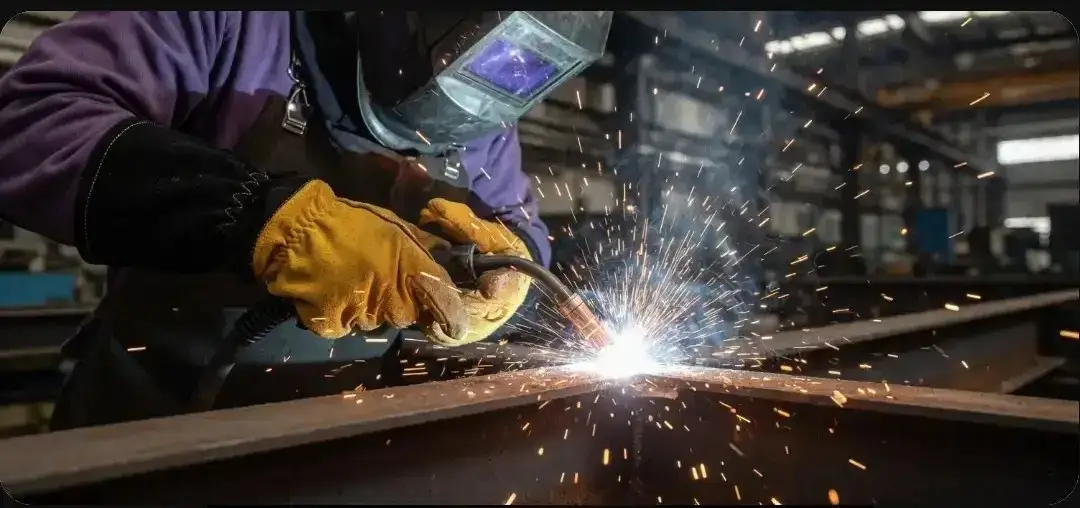
MIG, TIG, and Stick welding expose the hands to different combinations of heat, welding spatter, abrasion, sharp metal, and dexterity requirements. EN 388 helps assess mechanical protection, EN 407 evaluates thermal performance, and EN 12477 provides the welding-specific framework for selecting suitable protective gloves.
MIG welding gloves generally require a balance of heat resistance, welding spatter protection, abrasion resistance, grip, and durability. Cowhide or split-leather constructions with reinforced seams and thermal lining are commonly used because MIG welding can produce repeated sparks and molten-metal spatter while also requiring safe handling of rough fabricated parts.
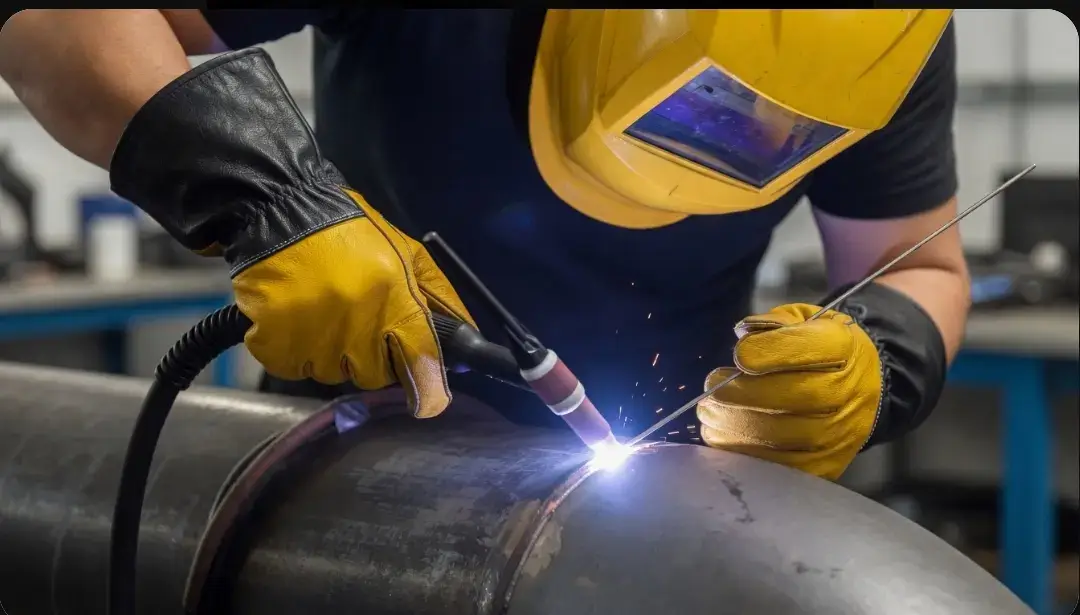
TIG welding gloves prioritize dexterity, tactile sensitivity, and precise control of the torch and filler rod. They are commonly made from flexible goatskin or other soft leather constructions. Although TIG welding usually creates less spatter than MIG or Stick welding, the glove must still provide appropriate mechanical and thermal protection for the actual amperage, position, and workpiece temperature.
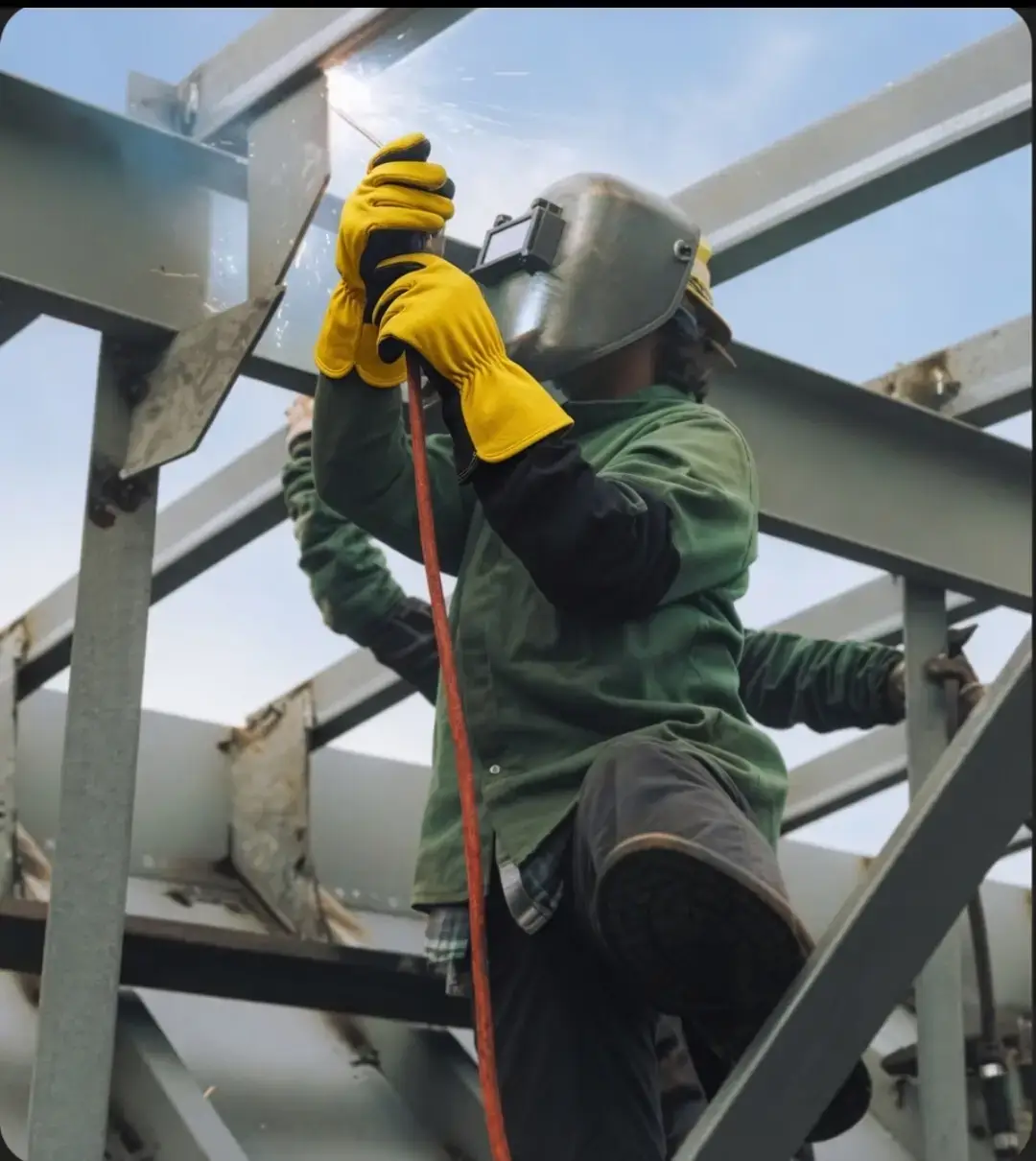
Stick welding gloves generally require heavier protection against high heat, sparks, slag, welding spatter, abrasion, and rough metal surfaces. Thick split leather, insulated linings, reinforced seams, and extended cuffs are commonly used to improve durability and wrist or forearm coverage, although heavier construction may reduce fine finger control.
For a detailed comparison of materials, heat protection, dexterity, and applications, read our MIG vs TIG vs Stick welding gloves guide.
Specialist tip:
Never select gloves only from marketing phrases such as “heat-proof welding gloves,” “cut-resistant welding gloves,” or “500°C welding gloves.” These descriptions do not replace the complete EN 388 and EN 407 performance codes, EN 12477 classification, exposure-time limits, manufacturer documentation, and workplace risk assessment.
For a complete process covering welding type, leather construction, heat exposure, fit, safety standards, and intended application, read our guide to choosing the right welding gloves.
EN 388 and EN 407 ratings are often misinterpreted as overall safety scores. In reality, each standard measures different hazards, and every number or letter applies only to a specific laboratory test. Welding glove ratings must be interpreted by standard, code position, exposure conditions, and intended application.
Final takeaway:
EN 388 identifies mechanical performance, EN 407 identifies thermal performance, and EN 12477 determines welding-specific requirements. The correct welding glove is the model whose complete ratings, construction, and limitations match the workplace risk assessment.