Types of Welding Gloves: MIG vs TIG vs Stick (Complete Industrial Guide)

For professionals and beginners alike, selecting the right type of welding gloves (MIG, TIG, or Stick) directly impacts safety, performance, and weld quality.

If you’re trying to quickly understand the difference:

  • TIG welding gloves → best for precision, control, and finger sensitivity
  • MIG welding gloves → ideal balance of heat protection and flexibility
  • Stick welding gloves → maximum protection for extreme heat and heavy-duty work

Choosing the wrong welding gloves isn’t just uncomfortable—it’s dangerous.

  • Burns from excessive heat exposure
  • Reduced control during precision welding
  • Faster glove wear and unexpected failure

TIG = control | MIG = balance | Stick = protection

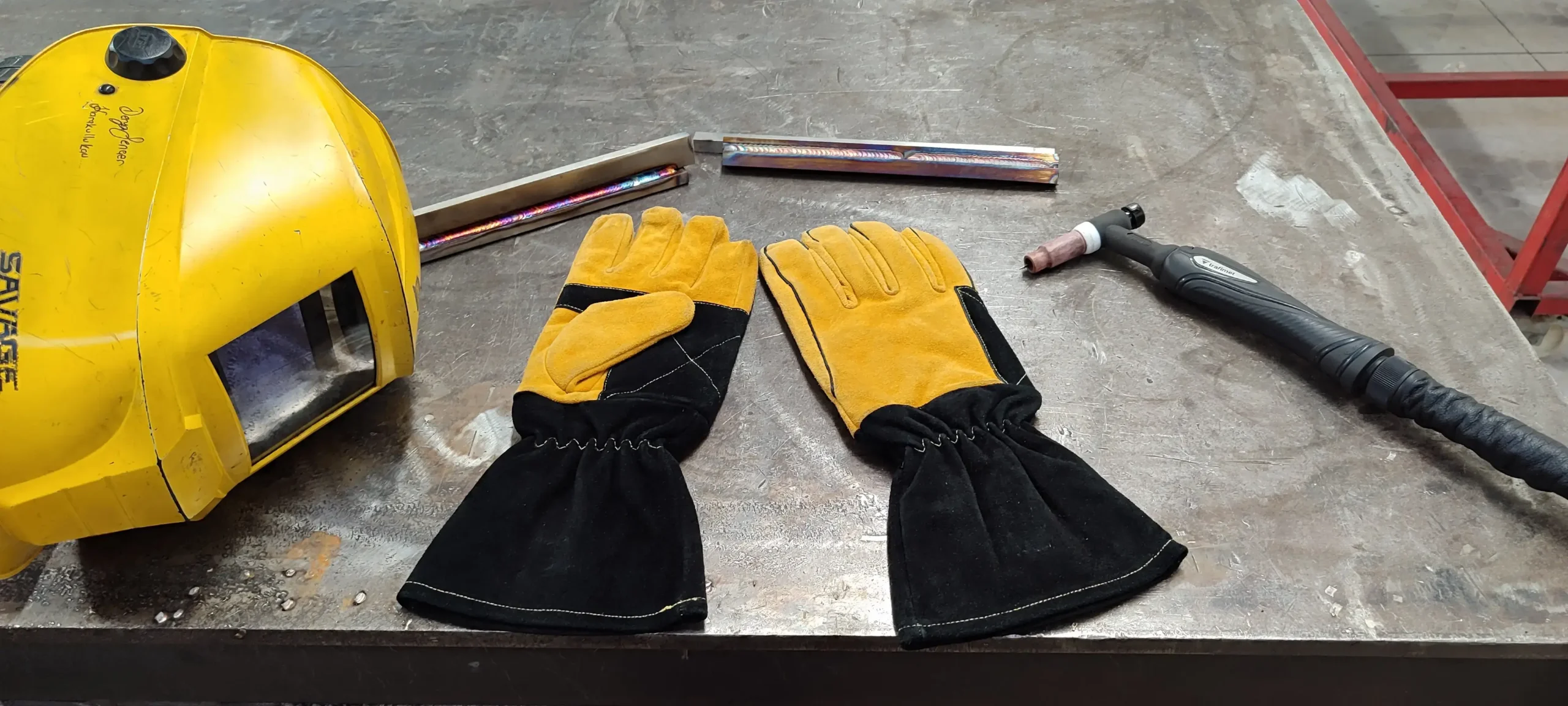
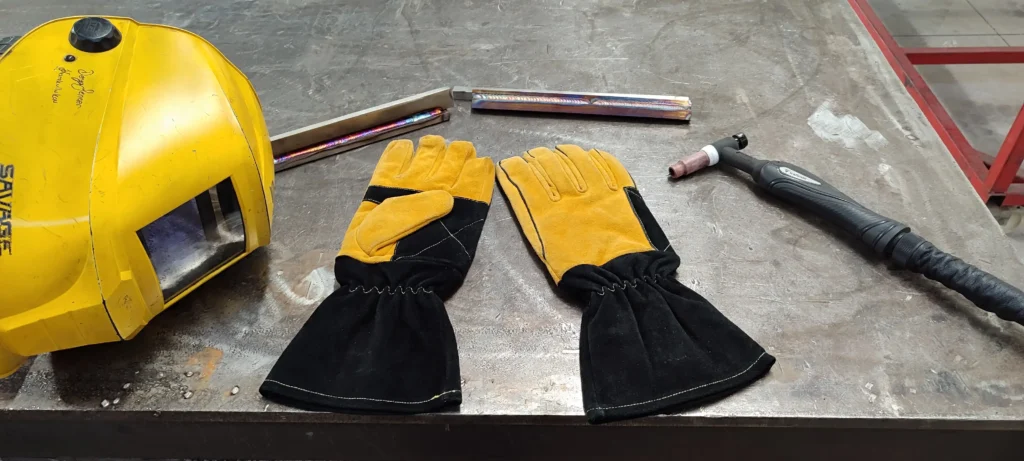
types of welding gloves with typs of leather protection used industrial welding process
Welding Glove Type Heat Resistance Dexterity (Control) Best For
TIG Welding Gloves Low to Medium High Precision Detailed, precision welding
MIG Welding Gloves Medium to High Moderate General fabrication & industrial work
Stick Welding Gloves Very High Low Heavy-duty & high-heat environments

When choosing welding gloves, it comes down to three key factors:

  • Heat resistance → How much temperature the glove can handle
  • Dexterity → How easily you can move your fingers and control the torch
  • Application → The type of welding you perform daily

Each welding method—TIG, MIG, and Stick—demands a different combination of these factors.

Professional welders don’t choose gloves randomly—they select them based on heat exposure, precision needs, and working conditions. Understanding these differences helps you avoid injuries and improve welding performance.

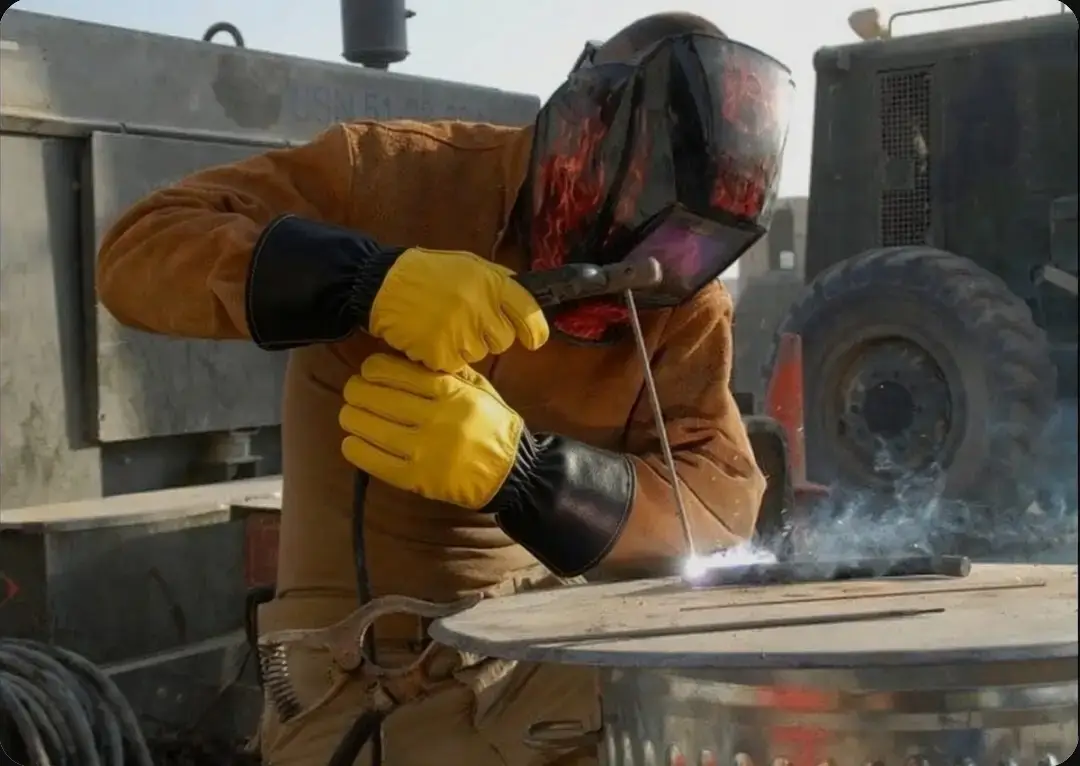
Stick welding gloves thick heat-resistant leather for high-temperature tasks
types of welding gloves with typs of leather protection used industrial welding process
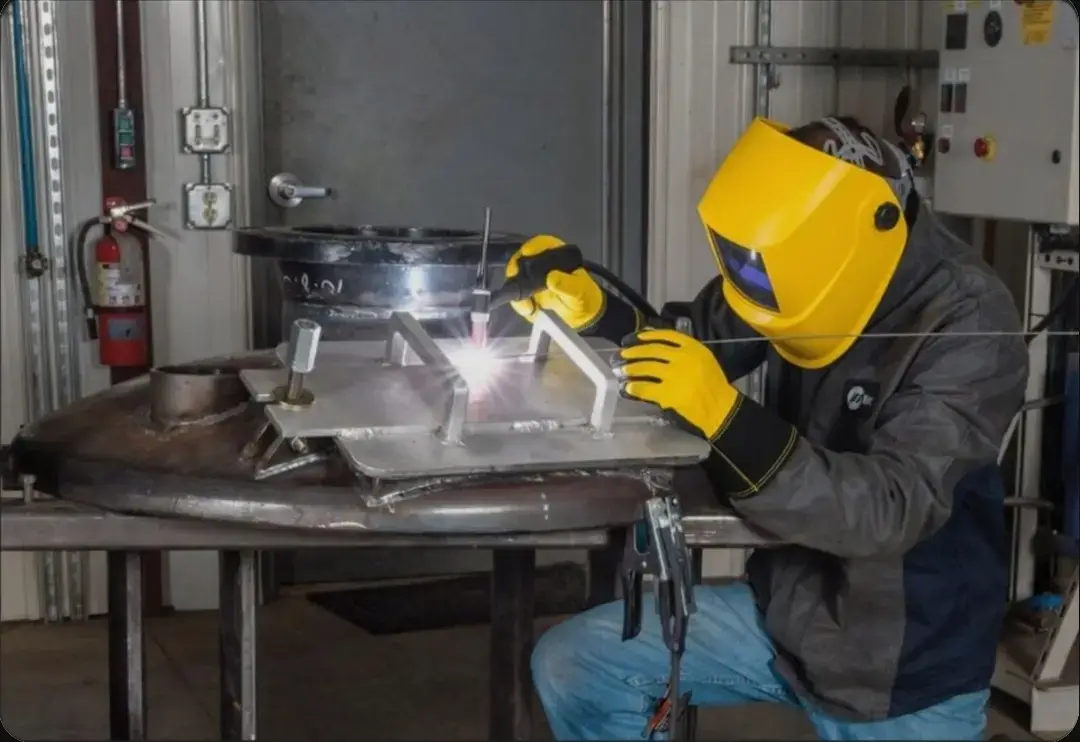
tig welding glove goatskin materials Offers the welder a balance between heat and agility

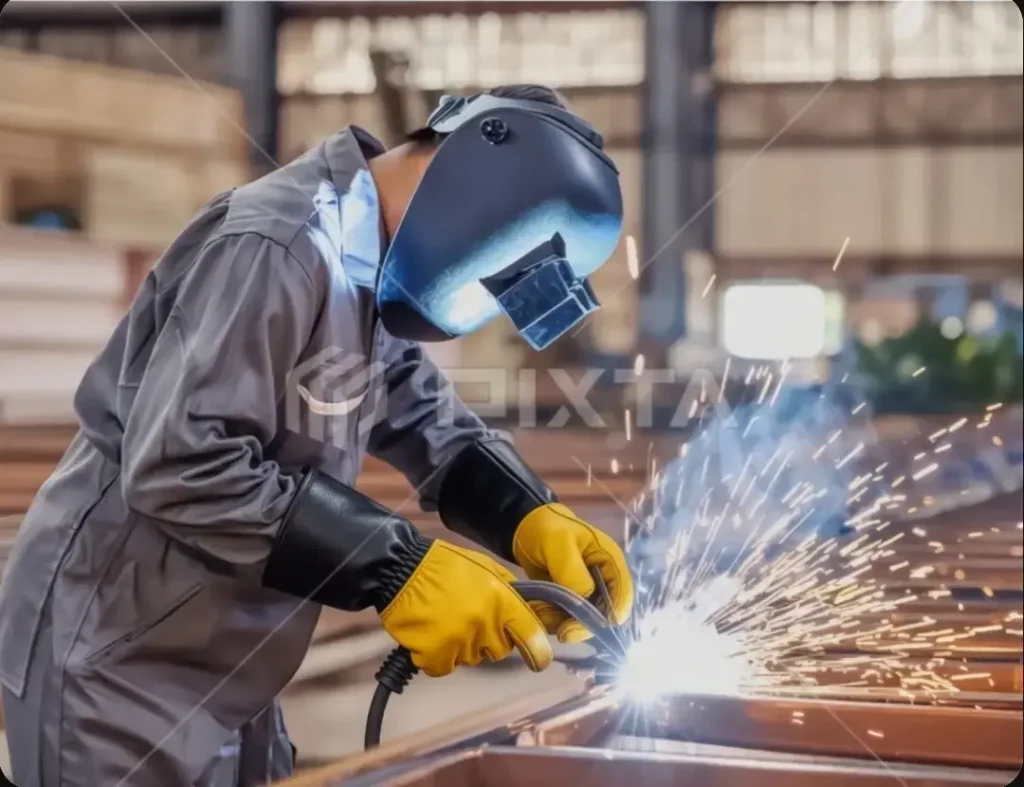
TIG, MIG, and Stick welding generate different heat levels and require specialized gloves for safety and performance

Before choosing your gloves, it’s important to understand:

  • What welding gloves actually are?
  • How safety standards affect protection?
  • Why material and thickness matter?

Let’s start with the fundamentals.

What Are Welding Gloves?

Welding gloves are specialized personal protective equipment (PPE) designed to protect the hands from extreme heat, sparks, molten metal, and mechanical hazards during welding processes.

They are engineered using heat-resistant materials, reinforced stitching, and protective designs to ensure both safety and performance.

Unlike regular work gloves, welding gloves are built to handle:

  • High temperatures from arcs and molten metal
  • Sparks and spatter that can burn or damage skin
  • Mechanical risks like abrasion and cuts
  • Prolonged exposure to harsh industrial environments

Because of these risks, welding gloves are classified as high-risk protective gear, not general-purpose gloves.


Key Functions of Welding Gloves:

  • Protect hands from thermal hazards (heat & flame)
  • Shield against welding sparks and molten splashes
  • Provide grip and control during welding operations
  • Reduce risk of cuts, abrasions, and burns
  • Ensure operator safety in industrial environments

Welding gloves are not one-size-fits-all. Their design varies depending on the welding process, balancing heat resistance and dexterity. Choosing the right type directly impacts both safety and welding precision.

Welding gloves fall under Category III Personal Protective Equipment (PPE).

What does this mean?

  • Designed for high-risk environments
  • Protect against serious or irreversible injuries
  • Must meet strict safety certifications and testing standards

This is why certified welding gloves are essential—not optional.

Cut Resistance & Protection Levels (EN 388)

You may also see welding gloves rated with cut resistance levels, such as:

  • Level 5 (or higher in modern standards) → High cut protection
  • Indicates resistance to sharp edges and mechanical hazards

These ratings are part of standardized testing and will be explained in detail in the Regulatory Breakdown section.

STICK welding gloves With high quality cowhide leather Kevlar-stitched directly impacts heat insulation and finger control
Welding gloves protect against extreme heat, sparks, and mechanical hazards in industrial environments

The Regulatory Breakdown

Welding gloves are classified and tested under strict European safety standards to ensure protection against mechanical risks, extreme heat, and welding-specific hazards. Understanding these certifications is essential for selecting the right glove for TIG, MIG, or Stick welding, as each process exposes hands to different levels of abrasion, heat, sparks, and molten metal.

These standards not only define protection levels but also directly impact safety compliance, workplace regulations, and product quality signals for buyers and search engines.

What Is the Regulatory Breakdown?

The regulatory breakdown refers to the combination of standards used to evaluate welding gloves across multiple risk categories. Instead of a single certification, welding gloves rely on a layered system:

  • EN 388 → Mechanical resistance (cut, abrasion, tear, puncture)
  • EN 407 → Heat and flame protection
  • EN 12477 → Welding-specific performance and classification
    Together, these standards create a complete safety profile, helping users match glove performance to real-world welding conditions.

What is the EN 388 standard?

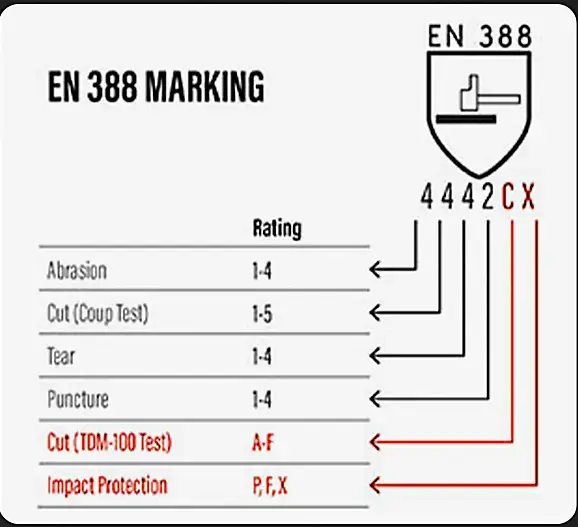
EN 388 is a European safety standard that measures a glove’s resistance to mechanical risks such as abrasion, cut, tear, and puncture. Updated in 2016, it includes ISO cut resistance testing (A–F levels) for more accurate protection ratings. Welding gloves tested under EN 388 ensure durability against sharp edges and rough materials, making them essential for industrial and fabrication work.

What is the EN 407 standard?

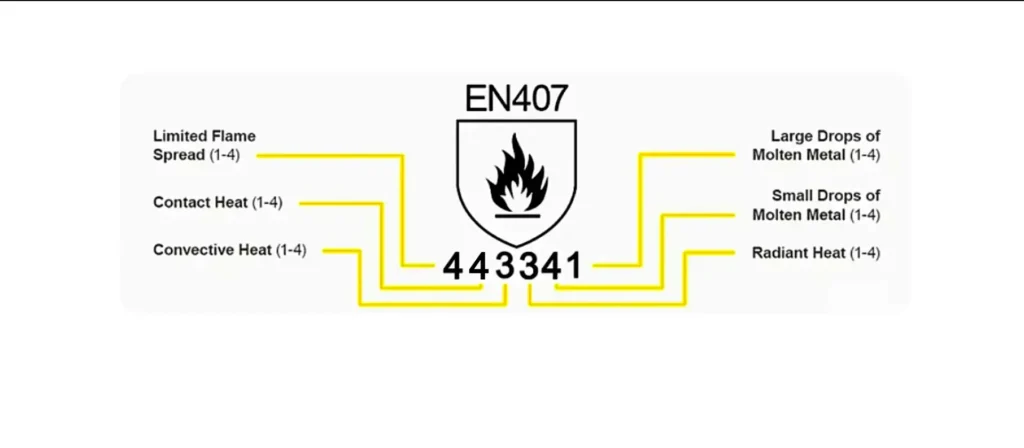
EN 407 is a European standard that evaluates a glove’s resistance to thermal hazards, including flame, contact heat, convective heat, radiant heat, and molten metal splashes. Each glove receives performance ratings based on these tests. EN 407 certification ensures welding gloves provide reliable protection against high temperatures and heat-related risks during welding operations.

What is the EN 12477 standard?

EN 12477 is a welding-specific European standard that combines EN 388 and EN 407 requirements to certify gloves for welding tasks. It classifies gloves into Type A (high protection, lower dexterity) and Type B (higher dexterity, lower protection). This standard ensures welding gloves meet both mechanical and thermal safety requirements for professional use.

Understanding EN 388 – Mechanical Protection

EN 388 measures how well welding gloves resist physical damage from sharp or rough materials. This is critical in welding environments where handling metal edges, tools, and surfaces is constant.

The standard uses a rating system that evaluates abrasion resistance, cut resistance (including Level 5 and beyond), tear strength, and puncture resistance.

  • Abrasion resistance (Level 1–4)
  • Cut resistance (Blade + ISO 13997 “Level A–F”)
  • Tear resistance (Level 1–4)
  • Puncture resistance (Level 1–4)
  • “Level 5” cut resistance = high cut protection (important for industrial use)
  • Essential for durability and long-term glove performance
EN 388 mechanical safety standard shield diagram breaking down performance ratings for abrasion, cut, tear, puncture, TDM-100 cut test, and impact protection.

Understanding EN 407 – Heat & Flame Resistance

EN 407 evaluates how well gloves protect against thermal hazards such as flames, contact heat, and molten metal splashes. This is especially important for Stick welding and high-heat MIG applications where exposure to extreme temperatures is constant.

  • Flame resistance (Level 1–4)
  • Contact heat resistance (up to 500°C depending on level)
  • Convective heat resistance
  • Radiant heat resistance
  • Resistance to small molten metal splashes
  • Resistance to large molten metal splashes
  • Critical for burn prevention and heat shielding
EN 407 thermal safety standard shield diagram showing heat resistance ratings for limited flame spread, contact heat, convective heat, radiant heat, and small or large molten metal splashes.

Understanding EN 12477 – Welding Glove Standard

EN 12477 is the primary welding glove certification that combines EN 388 and EN 407 requirements into a welding-specific standard. It ensures gloves meet both mechanical and thermal protection needs while also considering dexterity and usability.

  • Combines EN 388 + EN 407 standards
  • Specifically designed for welding applications
  • Defines glove types (Type A & Type B)
  • Ensures balance between protection and usability
  • Required for professional and industrial welding compliance

Understanding Type A vs Type B

EN 12477 classifies welding gloves into Type A and Type B based on protection level versus dexterity. This distinction is critical when choosing gloves for different welding techniques.

Type A (High Protection):

  • Higher heat resistance
  • Thicker material (usually cowhide)
  • Lower dexterity
  • Ideal for Stick welding and heavy MIG
  • Better for high-risk environments

Type B (High Dexterity):

  • Greater flexibility and finger control
  • Thinner material (often goatskin)
  • Lower heat resistance
  • Ideal for TIG welding
  • Better precision and control
Standard Focus Area What It Tests Rating System Best For SEO / Buyer Value
EN 388 Mechanical Protection Abrasion, cut, tear, puncture resistance 4-digit score + A–F cut scale Handling metal, sharp edges Durability signal, “cut-resistant gloves” keyword relevance
EN 407 Heat & Flame Flame, heat, molten metal resistance 6-digit heat rating scale High-heat welding (Stick, MIG) “Heat-resistant gloves” search intent
EN 12477 Welding Standard Combines mechanical + thermal performance Type A / Type B classification All welding applications Trust signal, compliance + authority (E-E-A-T)
Type A High Protection Heat resistance, durability Meets higher protection thresholds Stick, heavy MIG welding Safety-first buyers, industrial use
Type B High Dexterity Flexibility, precision handling Lower heat, higher dexterity TIG welding Precision-focused users, control-based tasks

The comparison table above is not just a visual summary—it reflects how different European safety standards work together to define the complete protection profile of welding gloves. Instead of evaluating gloves based on a single factor, modern PPE classification combines mechanical resistance (EN 388), thermal protection (EN 407), and application-specific requirements (EN 12477) to create a multi-dimensional safety framework. This layered approach helps both buyers and professionals understand not just what a glove is, but where and how it should be used safely, which is critical for both compliance and real-world performance in industrial welding environments.

What Are the Different Types of Welding Gloves?

Professional welders select gloves based on the welding process—not personal preference. Each glove type is engineered to match specific heat levels, arc intensity, and control requirements.

Type Thickness Flexibility Heat Protection Primary Use
TIG Thin High Low–Medium Precision welding
MIG Medium Moderate Medium–High Fabrication & general work
Stick Thick Low Very High Heavy-duty welding
  • TIG gloves prioritize control → needed for detailed welds
  • MIG gloves balance control and protection → versatile use
  • Stick gloves prioritize protection extreme heat environments

This trade-off between dexterity and heat resistance is the most important concept in choosing welding gloves.


Now that you understand the different types, the next step is critical:

How do these gloves actually compare in real performance?

We’ll break that down in detail—including:

  • Heat resistance
  • Materials
  • Dexterity
  • Real-world use cases


There are three main types of welding gloves, each designed for a specific welding process:

  • TIG welding gloves → precision and maximum dexterity
  • MIG welding gloves → balanced protection and flexibility
  • Stick welding gloves → maximum heat resistance and durability

Some manufacturers also offer general-purpose welding gloves, but professional welders typically choose gloves based on the welding method.


Each welding process generates different levels of heat, sparks, and control requirements.

That’s why welding gloves are not interchangeable—using the wrong type can:

  • Reduce welding accuracy
  • Increase risk of burns
  • Cause faster glove wear
  • Compromise safety

Choosing the correct glove type is critical for both performance and protection.


The 4 Main Types of Welding Gloves:

  • TIG Gloves (Tungsten Inert Gas)

    • Thin, flexible, high precision

  • MIG Gloves (Metal Inert Gas)

    • Medium thickness, balanced protection

  • Stick Gloves (SMAW)

    • Thick, heavy-duty, maximum heat resistance

  • General-Purpose Welding Gloves

    • Multi-use, less specialized, lower performance

What Are the Best Welding Gloves?

The best welding gloves depend on the welding process:

  • TIG welding: Thin, high-dexterity gloves (usually goatskin)
  • MIG welding: Medium-thickness gloves (cowhide or split leather)
  • Stick welding: Thick, heat-resistant gloves (split cowhide)

Best Welding Gloves by ApplicationChoosing the best welding gloves is not about brand — it’s about matching the glove to the welding process, heat exposure, and precision requirements.

TIG Welding Gloves (Best for Precision)

TIG welding gloves are designed for maximum precision and finger control, making them ideal for detailed welding tasks where accuracy is critical.

These gloves are typically made from thin, flexible leather that allows welders to maintain high dexterity while still providing moderate heat and spark protection. They are commonly used in applications where clean welds and fine motor skills are essential.

Key Features:

  • High finger dexterity for precise movements
  • Thin and flexible leather construction
  • Comfortable fit for long welding sessions
  • Ideal for low-heat environments
  • Enhanced finger control

Requirements:

TIG welding gloves are designed for precision and control, not maximum heat protection. Because TIG welding produces lower spatter but requires steady hand movement, gloves must be thin, flexible, and highly tactile. Welders need to feel the filler rod and torch clearly, which means bulkier gloves simply won’t work in this process.

Leather Type:

The most common material for TIG gloves is goatskin leather. It’s naturally soft, lightweight, and flexible, allowing excellent finger movement. Goatskin also offers decent durability while maintaining a smooth grain surface, which improves grip and control—critical for detailed welds.

  • Goatskin or soft grain leather
  • Lightweight and breathable
  • Provides strong tactile feedback

Industrial using:

TIG gloves are widely used in industries that demand clean, precise welds. This includes aerospace, automotive fabrication, pipeline work, metal art, and stainless steel manufacturing. Any application where weld quality and appearance matter will rely on TIG gloves.

  • Precision welding
  • Aerospace applications
  • Thin metal fabrication

Required Certificates:

High-quality TIG gloves often meet standards like EN 12477 Type B (for precision welding tasks) and EN 388 (mechanical protection). In the U.S., look for compliance with ANSI/ISEA 105 ratings. These certifications ensure the gloves provide a baseline level of heat resistance, abrasion protection, and safety without sacrificing dexterity.

  • EN 388 (Mechanical protection: abrasion, cut, tear, puncture)
  • EN 407 (Heat resistance: low to moderate heat exposure)
  • EN 420 (General glove safety requirements: fit, comfort, materials)
  • CE Marking (Compliance with EU safety standards)

Pros:

TIG welding gloves offer excellent dexterity, allowing precise control of the torch and filler rod. They are also comfortable for long sessions and provide a snug fit that reduces hand fatigue. Their lightweight design makes them ideal for detailed and intricate welding work.

  • Maximum dexterity and finger control
  • Lightweight and comfortable for long use
  • Ideal for precision and detailed welding
  • Excellent tactile feedback

Cons:

The main drawback of TIG gloves is their lower heat resistance compared to MIG or Stick gloves. They are not suitable for heavy-duty welding with high spatter. Additionally, because they are thinner, they may wear out faster under rough or prolonged use.

  • Lower heat resistance
  • Less protection against heavy sparks
  • Not suitable for heavy-duty welding
 

Best TIG Gloves

The best TIG welding gloves combine premium goatskin leather, reinforced stitching (preferably Kevlar®), and a snug ergonomic fit. Look for gloves with pre-curved fingers and minimal seams in high-contact areas for better control. A longer cuff can add extra wrist protection without reducing flexibility, making it a smart choice for both safety and performance.

TIG welding gloves made of thin goatskin for precision work

MIG Welding Gloves (Best Balance)

MIG welding gloves offer a balanced combination of heat protection, durability, and flexibility, making them suitable for a wide range of welding tasks.The best type of MIG welding gloves should be sewn with Kevlar thread.

They are thicker than TIG gloves but still allow reasonable hand movement, providing both safety and usability in medium to high heat environments.

Key Features:

  • Medium to high heat resistance
  • Reinforced stitching for durability
  • Balanced flexibility and protection
  • Suitable for continuous work

Requirements:

MIG welding gloves are built for high heat, heavy spatter, and durability. Unlike TIG, MIG welding produces more sparks and radiant heat, so gloves must be thicker, insulated, and protective. At the same time, they should still allow moderate dexterity for handling the torch and materials safely.

Leather Type:

The most common material for MIG gloves is cowhide leather, especially top-grain or split cowhide. Cowhide is tough, heat-resistant, and durable, making it ideal for handling high temperatures and rough environments. It also provides a good balance between flexibility and protection, which is essential for MIG welding tasks.

  • Cowhide or split leather
  • Thick outer layer for spark resistance
  • Long-lasting in industrial environments

Industrial using:

MIG gloves are widely used in construction, shipbuilding, automotive manufacturing, heavy fabrication, and repair workshops. These industries require gloves that can withstand continuous welding, high heat exposure, and rugged handling, making MIG gloves the go-to choice.

  • General fabrication
  • Construction work
  • Infrastructure work
  • Manufacturing environments
  • Workshop welding

Required Certificates:

Quality MIG gloves typically meet EN 12477 Type A standards, which are designed for less dexterity but higher protection welding tasks. They may also comply with EN 388 for mechanical resistance and ANSI/ISEA 105 for cut and abrasion performance. These certifications ensure reliable heat shielding and durability in demanding conditions.

  • EN 388 (Mechanical resistance for industrial use)
  • EN 407 (Heat and flame resistance: medium to high heat)
  • EN 12477 Type B (Welding gloves with higher dexterity)
  • CE Marking (Certified for workplace safety compliance)

Pros:

MIG welding gloves offer excellent heat resistance and durability, making them suitable for long, high-intensity welding sessions. They also provide better protection against sparks and spatter, reducing the risk of burns. Their thicker structure adds an extra layer of safety and longevity.

  • Balanced heat protection and flexibility
  • Strong durability for industrial use
  • Good resistance to sparks and spatter
  • Versatile for multiple welding tasks

Cons:

The main downside of MIG gloves is reduced dexterity compared to TIG gloves. Their thicker material can limit fine motor control, making them less suitable for precision work. They may also feel bulkier and heavier, especially during extended use.

  • Less precise than TIG gloves
  • Slightly bulkier design
  • Moderate dexterity only
 

Best MIG Gloves

The best MIG welding gloves are made from thick cowhide leather with heat-resistant lining and reinforced Kevlar® stitching for durability. Choose gloves with padded palms, extended cuffs for forearm protection, and an ergonomic fit for all-day comfort. Designed for high heat and moderate precision, MIG welding gloves provide the ideal balance between protection, durability, and control for professional and industrial use.

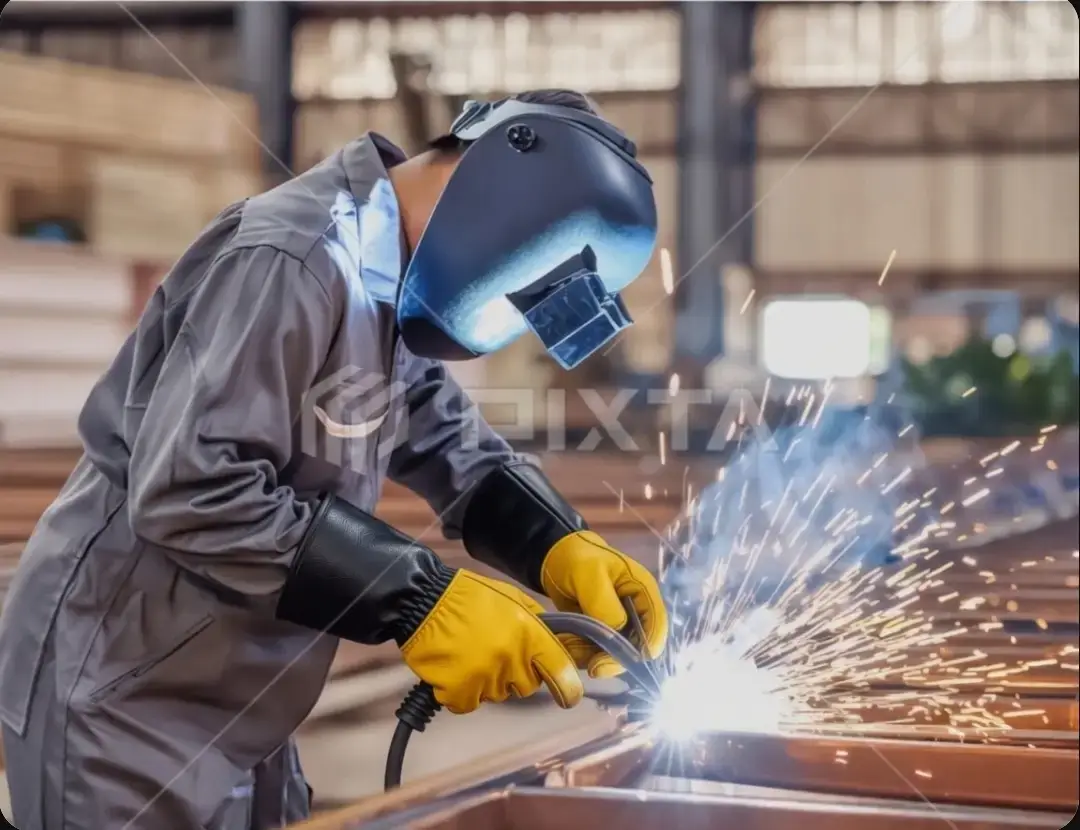
MIG welding gloves With high quality cowhide leather balanced dexterity and heat protection

Stick Welding Gloves (Best for Heat Protection)

Stick welding gloves are built for maximum heat resistance and protection, designed to withstand extreme temperatures, heavy sparks, and molten metal exposure. The best type of STICK welding gloves should be sewn with Kevlar thread.

These gloves are thick and heavily insulated, prioritizing safety over dexterity, making them essential for high-risk welding environments.

Key Features:

  • Maximum heat resistance for extreme conditions
  • Thick insulation to protect hands from burns
  • High resistance to sparks and molten spatter
  • Extended cuffs for forearm protection

Requirements:

Stick welding gloves are designed for extreme heat, heavy sparks, and slag exposure. Stick (SMAW) welding produces the highest levels of heat and spatter, so gloves must be thick, fully insulated, and highly durable. They should also include extended cuffs to protect the wrist and forearm from molten metal and sparks.

Leather Type:

The most suitable material for stick welding gloves is split cowhide leather due to its superior heat resistance and rugged durability. In some high-end gloves, elk skin or pigskin may be used for improved flexibility, but cowhide remains the standard because it can handle intense heat and harsh working conditions.

  • Heavy split cowhide leather
  • Multi-layer insulated lining
  • Reinforced stitching for durability

Industrial using:

Stick welding gloves are commonly used in construction, pipeline welding, shipbuilding, heavy equipment repair, and outdoor fabrication. These industries rely on gloves that can handle rough handling, outdoor conditions, and high heat intensity without failing.

  • Pipeline welding
  • Shipbuilding
  • Structural steel work
  • Outdoor and high-heat environments

Required Certificates:

High-quality stick welding gloves often meet EN 12477 Type A, which focuses on maximum protection over dexterity. They may also comply with EN 407 for thermal resistance and EN 388 for abrasion and tear strength. These certifications ensure gloves can withstand extreme welding environments safely.

  • EN 388 (High mechanical resistance: durability and protection)
  • EN 407 (Extreme heat and flame protection)
  • EN 12477 Type A (Welding gloves for heavy-duty protection)
  • CE Marking (Meets strict European safety regulations)

Pros:

  • Maximum heat and spark protection
  • Extremely durable and long-lasting
  • Ideal for harsh and heavy-duty environments
  • Excellent insulation against high temperatures

Cons:

  • Reduced finger dexterity
  • Heavier than TIG/MIG gloves
  • Less suitable for precision work
 

Best Stick Gloves

The best stick welding gloves feature thick split cowhide, multi-layer insulation, and Kevlar® stitching for heat resistance. Look for fully lined interiors, reinforced palms, and long gauntlet cuffs for maximum protection. A top-quality stick glove prioritizes safety, durability, and heat shielding, making it essential for demanding welding jobs.

Stick welding gloves thick heat-resistant leather for high-temperature tasks

General-purpose / Multi-use Gloves

Description:
General-purpose welding gloves are versatile options designed for light to medium-duty tasks, offering a balance between comfort, protection, and affordability. They are suitable for hobbyists, maintenance work, and

where extreme protection or precision is not required.

Key Features:

  • Versatile design
  • Comfortable fit
  • Cost-effective

Material:

  • Cowhide or synthetic blends

Industrial Using:

  • Maintenance tasks
  • DIY welding
  • Light fabrication

Required Certificates:

  • EN 388 (basic protection)
  • EN 407 (basic heat resistance)

Pros:

  • Affordable
  • Multi-functional
  • Easy to use

Cons:

  • Limited durability
  • Not suitable for high heat or precision work
Feature TIG Welding Gloves MIG Welding Gloves Stick Welding Gloves
Heat Resistance Low to Medium Medium to High Very High
Dexterity (Control) Excellent Moderate Low
Material Type Thin goatskin / soft leather Cowhide / split leather Thick split cowhide
Durability Moderate High Very High
Best Use Case Precision welding General fabrication Heavy-duty welding
Typical Industries Aerospace, automotive Construction, manufacturing Shipbuilding, pipeline

In simple terms, TIG welding gloves give you maximum control but less heat protection, making them ideal for detailed work. MIG gloves provide a balanced combination of durability and flexibility, while Stick gloves sacrifice dexterity to deliver the highest level of heat resistance and protection.

Choosing the wrong welding gloves is not just a comfort issue—it’s a safety risk.

MIG vs TIG vs Stick Welding Gloves(CORE COMPARISON)

Choosing the right welding gloves is not just about comfort—it directly affects your safety, control, and work quality. MIG, TIG, and Stick welding each produce different levels of heat, spatter, and precision demands, which is why their gloves are engineered differently.

TIG welding gloves prioritize precision and finger sensitivity, allowing welders to handle fine torch movements with maximum control. MIG welding gloves focus on balanced protection, offering moderate heat resistance while still maintaining usable dexterity for continuous work. Stick welding gloves, on the other hand, are built for extreme conditions—thicker, more insulated, and designed to withstand high heat, sparks, and heavy-duty environments.

Feature TIG Gloves MIG Gloves Stick Gloves
Heat Resistance Low to Moderate Moderate to High Very High
Dexterity Excellent (High precision) Good (Balanced control) Low (Limited finger movement)
Leather Type Goatskin / Deerskin Cowhide / Pigskin Thick Cowhide / Split Leather
Thickness Thin Medium Thick
Use Case Precision welding, thin materials General fabrication, medium-duty work Heavy-duty welding, outdoor & high heat

Understanding these differences helps you choose gloves that match your workflow, reduce fatigue, and improve both safety and performance in real industrial applications.

Understanding Material Science of Welding Gloves

Welding gloves are not just protective gear—they are engineered systems where material selection, thickness, and stitching technology directly control performance, safety, and usability. Understanding the material science behind welding gloves helps you choose the right glove for your process, balancing heat resistance, durability, and hand precision.

At a deeper level, glove performance is determined by three interacting variables:

  • Leather type → surface strength + flexibility
  • Thickness → heat insulation vs dexterity trade-off
  • Stitching → structural integrity under extreme heat

This section builds topical authority by explaining not just what gloves are made of, but why those materials behave the way they do in real welding conditions.

Leather Types Explained

Different welding processes require different leather properties. The choice of leather directly affects flexibility, heat resistance, and lifespan.

Feature Goatskin (TIG) Cowhide (MIG) Split Cowhide (Stick)
Texture & Feel Soft, flexible, smooth grain Balanced, slightly firm Rough, thick, fibrous
Heat Resistance Low to Medium Medium to High Very High
Dexterity Excellent Good Low
Durability Moderate High Very High
Best Use TIG Welding MIG Welding Stick Welding

This table clearly shows that leather type determines the fundamental behavior of welding gloves. Goatskin prioritizes precision and flexibility, cowhide provides a balanced performance, and split cowhide delivers maximum heat resistance and durability.

Goatskin (TIG Welding)

tig welding glove goatskin materials Offers the welder a balance between heat and agility
high quality goatskin leather determine flexibility, durability, and heat resistance in TIG welding gloves

Goatskin is a premium leather known for its natural softness, high tensile strength, and excellent tactile sensitivity. Its lanolin content gives it a slightly oily feel, improving flexibility and comfort.

  • Best for: TIG welding (precision work)
  • Why it works: Thin structure allows precise finger movement
  • Performance focus: Dexterity over insulation

Cowhide (MIG Welding)

MIG welding gloves With high quality cowhide leather balanced dexterity and heat protection
MIG welding gloves With high quality cowhide leather Kevlar-stitched directly impacts heat insulation and finger control

Cowhide is the most commonly used leather due to its balance between durability, heat resistance, and cost-efficiency. It performs well under moderate to high heat conditions.

  • Best for: MIG welding (general fabrication)
  • Why it works: Durable outer grain resists sparks and abrasion
  • Performance focus: Balanced protection + flexibility

Split Cowhide (Stick Welding)

STICK welding gloves With high quality cowhide leather Kevlar-stitched directly impacts heat insulation and finger control

Split cowhide is made from the inner layer of the hide, giving it a rougher texture and superior heat insulation. It is thicker and less flexible but extremely resistant to high heat and spatter.

  • Best for: Stick welding (heavy-duty, high heat)
  • Why it works: Dense structure absorbs and dissipates heat
  • Performance focus: Maximum protection over dexterity

Thickness vs Performance

Glove thickness is one of the most critical performance variables. It directly impacts how heat is managed and how much control the welder has.

  • Thin Gloves (0.6 – 1.0 mm)

    • High finger sensitivity
    • Better control for precision welds
    • Lower heat resistance
    • Ideal for TIG welding
  • Medium Thickness (1.0 – 1.4 mm)

    • Balanced performance
    • Moderate heat protection
    • Suitable for MIG welding
  • Thick Gloves (1.4 mm+)

    • Maximum heat insulation
    • Reduced finger movement
    • Best for high-heat environments
    • Ideal for Stick welding

Key Insight :
There is no “best” thickness—only the correct thickness for the welding process. Choosing incorrectly leads to either burn risk (too thin) or loss of control (too thick).

Feature Thin Gloves Medium Gloves Thick Gloves
Thickness Range 0.6 – 1.0 mm 1.0 – 1.4 mm 1.4 mm+
Heat Resistance Low Medium Very High
Dexterity Very High Balanced Low
Comfort High Balanced Lower Flexibility
Best Use TIG Welding MIG Welding Stick Welding

This table explains the core trade-off in welding gloves: heat protection vs hand control. Thin gloves maximize dexterity but reduce safety, while thick gloves provide insulation but limit precision.

Stitching Technology

Even the best leather fails if the stitching cannot withstand heat. That’s why high-quality welding gloves use heat-resistant thread technology.

Kevlar® Thread (Heat-Resistant Seams)

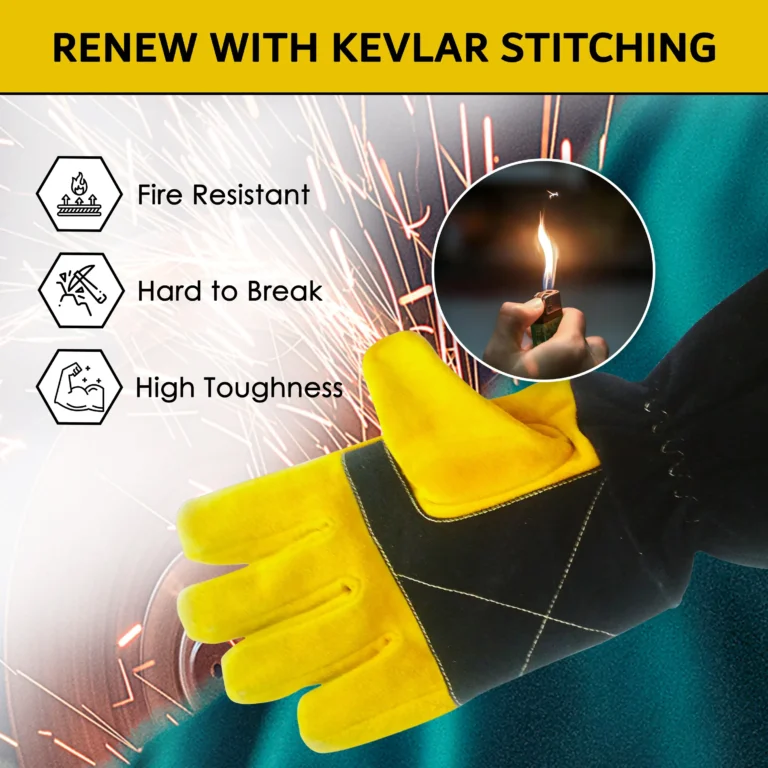
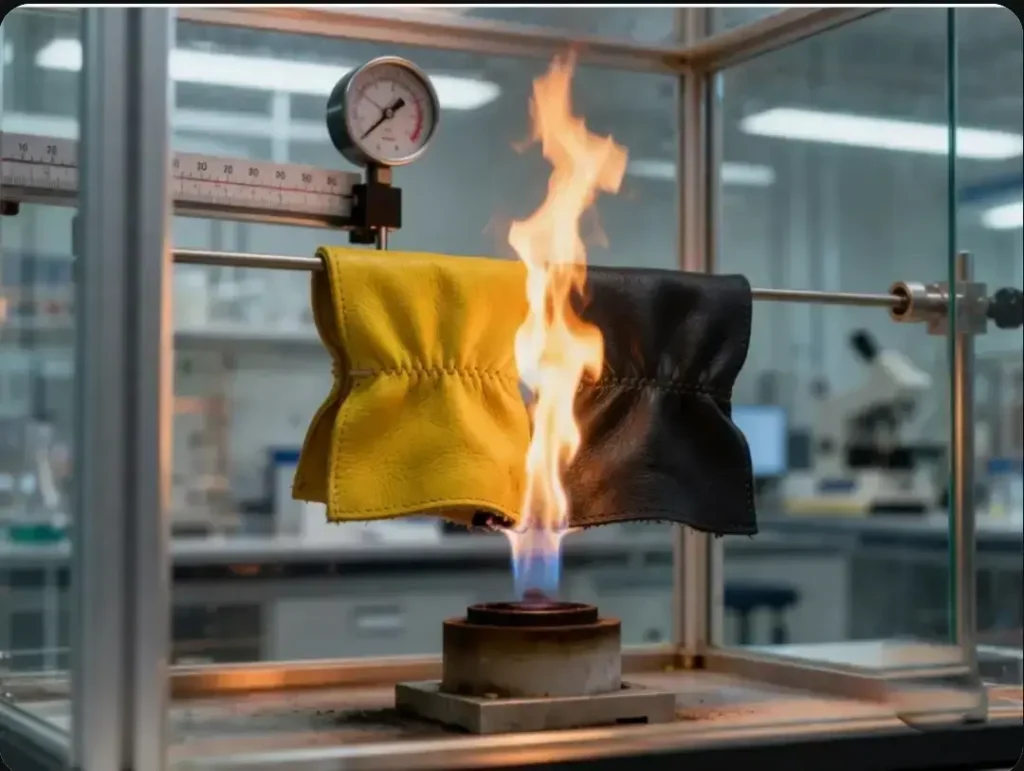
Kevlar® is an advanced aramid fiber known for its extreme heat resistance, tensile strength, and flame resistance. Unlike standard threads, it does not melt or weaken under welding temperatures.

  • Why it matters: Prevents seam failure under heat exposure
  • Performance benefit: Extends glove lifespan significantly
  • Safety impact: Reduces risk of glove separation during use

Insight:
Many low-quality gloves fail not because of leather, but because of weak stitching. Kevlar® seams are a key indicator of professional-grade welding gloves.

Feature Standard Thread Kevlar® Thread
Material Type Cotton / Polyester Aramid Fiber (Kevlar®)
Heat Resistance Low Extremely High
Melting Point Can melt under high heat Does not melt, highly stable
Durability Weak under stress High tensile strength
Safety Risk of seam failure High structural integrity
Glove Lifespan Shorter Extended lifespan

This table highlights a critical but often ignored factor: stitching quality. Even high-grade leather gloves fail if seams break under heat. Kevlar® stitching ensures long-term durability, safety, and resistance to extreme temperatures.

How to Choose Welding Gloves?

Choosing the right welding gloves depends on your job type, heat exposure, and precision needs. There is no single “best welding glove” for everyone—TIG, MIG, and Stick welding all require different levels of protection and dexterity. The key is to match your gloves to your working environment and welding process, ensuring both safety and performance.

Beginners

For beginners, the best choice is a balanced welding glove that offers both moderate heat resistance and decent flexibility. New welders often switch between techniques, so gloves that are not too thick but still protective are ideal.

What to Look For

  • Medium-thickness leather (cowhide or goatskin)
  • Basic heat resistance (EN 407 compliant)
  • Comfortable inner lining for longer practice sessions
  • Affordable and durable for training use

Key Insight:

Beginners should avoid overly thick stick gloves, as they reduce control and slow skill development.


Industrial Welders

Industrial welders working in high-production environments need gloves that prioritize durability, safety, and long-term wear resistance. These jobs often involve MIG or Stick welding, where heat and sparks are constant.

Best Fit for Industries

Key Features

  • Thick split leather (cowhide)
  • Reinforced palm and fingers
  • Kevlar® stitching for heat resistance
  • Extended gauntlet cuffs

Key Insight :

These gloves are designed for maximum protection, not precision.

Outdoor / Pipeline Work

Outdoor welders face extreme environments, including wind, dirt, moisture, and fluctuating temperatures. Gloves must be rugged, insulated, and weather-resistant.

Key Requirements

  • Heavy-duty insulation for high heat
  • Long cuffs for full arm protection
  • Resistance to abrasion and moisture
  • Strong grip even in dirty or oily conditions

Key Insight :

Stick welding gloves are usually the best choice for pipeline and field work.

Precision Work:

Precision welding, such as TIG welding, requires maximum control and finger sensitivity. Gloves should feel like a second skin, allowing accurate torch handling and filler rod control.

Best Fit for Industries

  • EV & Automotive Manufacturing
  • Aerospace & Defense
  • HVAC & Industrial Systems

Key Features

  • Thin goatskin or deerskin leather
  • High dexterity and flexibility
  • Minimal padding for better control
  • Tight fit for precision handling

Key Insight :

Thick gloves will reduce accuracy and should be avoided in precision tasks.

This table provides a clear, job-based comparison of welding gloves, helping you quickly identify which type—TIG, MIG, or Stick—is best suited for your specific work environment.

Feature Beginners Industrial Welding Outdoor / Pipeline Precision Work
Best Glove Type MIG (Medium) MIG / Stick Stick TIG
Primary Benefit Balanced protection & control High durability & heat resistance Maximum protection in harsh conditions High precision & dexterity
Heat Resistance Medium High Very High Low to Medium
Dexterity Medium Low to Medium Low Very High
Typical Industries Training, workshops Construction, Shipbuilding, Oil & Gas Pipeline, Field work, Refineries Automotive, Aerospace, HVAC
Main Trade-Off Not specialized Reduced dexterity Bulky & heavy Lower heat protection

It highlights the key differences in heat resistance, dexterity, durability, and industry use, making it easier for both beginners and professionals to choose the right gloves for safety, performance, and efficiency.

What welding gloves are best?

The best welding gloves depend on your job:

  • TIG gloves are best for precision work
  • MIG gloves are best for general-purpose welding
  • Stick gloves are best for high-heat, heavy-duty applications

Choosing the right gloves improves safety, welding accuracy, and overall performance, making it a critical decision for both beginners and professionals.

Buying Checklist welding gloves:

  • Choose TIG gloves for precision and light heat
  • Choose MIG gloves for balanced, all-purpose welding
  • Choose Stick gloves for extreme heat and heavy-duty work
  • Always check for EN 12477, EN 388, and EN 407 certifications
  • Prioritize fit, comfort, and stitching quality for long-term use

Common Mistakes When Choosing Welding Gloves

Choosing the wrong welding gloves can lead to serious safety risks, reduced performance, and faster glove wear. Many welders—especially beginners—focus on comfort or price, but overlook critical factors like glove type, certifications, and heat protection levels. Understanding these common mistakes helps you make a safer and more informed decision.

Wrong Glove Type (TIG vs MIG Misuse)

One of the most common mistakes is using the wrong glove type for the welding process. For example, using thin TIG gloves for MIG or Stick welding exposes your hands to excessive heat and sparks, increasing the risk of burns. On the other hand, using thick MIG or Stick gloves for TIG reduces precision and control, affecting weld quality.

Why This Matters

Each welding process generates different levels of heat, spatter, and control requirements, so gloves must match the process to ensure both safety and efficiency.

Ignoring Certifications

Many users ignore important safety certifications like EN 12477, EN 388, and EN 407, which indicate a glove’s heat resistance, abrasion strength, and overall protection level. Buying uncertified gloves may save money upfront, but increases the risk of injury and poor performance.

Key Certifications to Check

  • EN 12477 (Welding glove standard)
  • EN 407 (Thermal resistance)
  • EN 388 (Mechanical protection)

Choosing Comfort Over Protection

While comfort is important, prioritizing it over protection is a critical mistake. Soft and flexible gloves may feel better initially, but they often lack the thickness and insulation needed for high-heat welding. This can lead to hand fatigue, burns, and reduced safety over time.

Balance Is Key

The best welding gloves offer a balance between comfort, durability, and heat resistance, ensuring long-term usability without compromising safety.

Common Mistake What Happens Correct Choice
Using TIG gloves for MIG/Stick Burn risk due to low heat protection Use thick MIG or Stick gloves
Using thick gloves for TIG Poor control and inaccurate welds Use thin, high-dexterity TIG gloves
Ignoring certifications Unverified safety and durability Check EN 12477, EN 388, EN 407
Choosing comfort only Low protection in high heat Balance comfort with protection

This table highlights the most common mistakes when choosing welding gloves and explains how to avoid them by selecting the correct glove type, certifications, and protection level. It helps users quickly understand the risks of incorrect choices and the importance of matching gloves to the welding process for maximum safety and performance.

Checklist for choosing the right welding gloves for professional welders, procurement officers and beginners

For clear and crisp vision Use this quick checklist to choose the right welding gloves for your job:

  • ✔ Choose TIG gloves if you need high precision and dexterity
  • ✔ Choose MIG gloves for a balance of protection and control
  • ✔ Choose Stick gloves for maximum heat and spark protection
  • ✔ Always check EN 12477, EN 388, and EN 407 certifications
  • ✔ Prioritize protection first, then comfort
  • ✔ Match the glove to your work environment and industry

This checklist helps you quickly identify the best welding gloves based on your specific needs, ensuring the right balance of safety, performance, and durability.

FAQ welding gloves

What gloves are best for welding?

The best welding gloves depend on the welding process: TIG gloves are best for precision work, MIG gloves offer balanced protection and control, and Stick gloves provide maximum heat resistance for heavy-duty welding.

MIG gloves are medium-thickness for versatility, TIG gloves are thin for high dexterity, and Stick gloves are thick for maximum heat and spark protection.

Category 3 gloves are high-risk PPE designed to protect against serious hazards like extreme heat and mechanical damage. Welding gloves fall into this category because they protect against burns and injuries.

Level 5 gloves refer to the highest cut resistance level under EN 388 standards, offering maximum protection against sharp objects and abrasion.

EN 407 is a European safety standard that measures a glove’s resistance to heat and fire, including contact heat, flame resistance, and molten metal protection.

EN 388 is a standard that evaluates mechanical protection, including abrasion, cut resistance, tear strength, and puncture resistance.

Type A gloves provide higher protection but lower dexterity, while Type B gloves offer better flexibility and control with reduced heat resistance.

The best leather depends on the application: cowhide (split leather) is best for durability and heat resistance, while goatskin offers superior flexibility and tactile control.

Split cowhide is thicker and more heat-resistant, making it ideal for heavy-duty welding, while goatskin is thinner and more flexible, making it better for precision tasks like TIG welding.

Thicker gloves provide better heat resistance and durability, while thinner gloves improve dexterity and control, making thickness a key factor in performance.

Welding gloves should use Kevlar® stitching, which resists heat and prevents seams from burning or breaking under high temperatures.

Welding gloves are specialized protective gloves designed to protect hands from heat, sparks, molten metal, and mechanical hazards during welding operations.

No, TIG gloves lack sufficient heat protection for MIG welding and can lead to burns.

Welding gloves are thick to provide insulation against extreme heat, sparks, and molten metal.

Yes, higher-quality gloves offer better durability, safety certifications, and longer lifespan.

It depends on usage, but high-quality gloves typically last several weeks to months under regular use.

No, standard welding gloves are designed for heat and mechanical protection, not electrical insulation.

Choose a snug fit that allows movement without restricting circulation or reducing control.

Shopping Cart
Scroll to Top