What Is EN 388:2016+A1:2018? Glove Ratings, Tests and Markings Explained
EN 388:2016+A1:2018 is the European standard for protective gloves against mechanical risks. Often searched as “EN 388 certification,” it defines test methods and glove ratings for abrasion, blade-cut, tear and puncture resistance, plus ISO 13997 straight-blade cut resistance and optional impact protection. The marking helps compare tested performance, but it does not prove that a glove is suitable for every task, hazard or workplace.
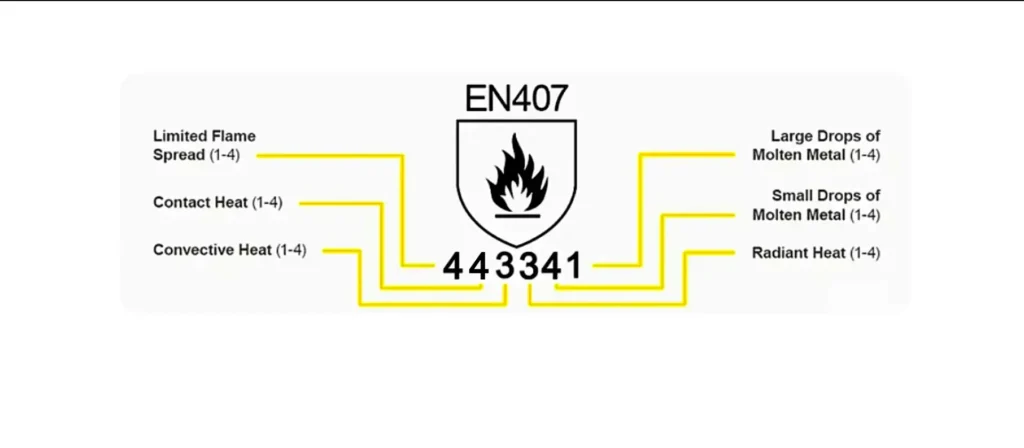
For welding applications, EN 388 should be considered alongside thermal and welding-specific requirements. The EN 388 vs EN 407 comparison explains the difference between mechanical protection and thermal protection for welding gloves.
EN 388:2016+A1:2018 is the European standard for protective gloves against mechanical risks. It specifies test methods, performance classifications, marking requirements and manufacturer information for abrasion, blade-cut, tear and puncture resistance, plus optional impact protection. EN 388 glove ratings allow individual mechanical properties to be compared, but they do not provide one overall protection score.
For the published scope and current status of the standard, see the BSI overview of BS EN 388:2016+A1:2018
EN 388 is a technical performance standard, not a certification body. It defines how protective gloves are tested, classified and marked, but EN 388 itself does not test products, issue certificates or approve glove models.
Testing and conformity claims must relate to an exact glove model and construction. An appropriate laboratory may perform the required tests, while certification or conformity-assessment responsibilities depend on the glove’s PPE risk category and the applicable procedure.
Regulation (EU) 2016/425 provides the legal framework for the design, manufacture and placement of personal protective equipment on the EU market. EN 388 supports that process by providing standardized mechanical-performance requirements and test methods, but compliance with EN 388 alone does not represent the entire EU PPE conformity process.
EU PPE design, manufacture and market requirements are governed by Regulation (EU) 2016/425, while EN 388 provides standardized mechanical-performance tests and classifications.
EN 388 covers the mechanical performance of protective gloves against abrasion, cutting, tearing and puncture, with additional classifications for ISO 13997 straight-blade cut resistance and optional impact protection. It does not directly evaluate thermal, chemical or electrical protection, general waterproofness, vibration, hypodermic-needle puncture or suitability for every welding task.
Expert tip:
Thermal hazards require separate evaluation. The EN 407 standard guide explains how protective gloves are assessed for heat and flame-related risks, while the guide to heat-resistant welding gloves explains how heat exposure, glove construction and welding conditions affect practical selection.
For welding applications, an EN 388 rating should be considered alongside thermal performance, welding-specific requirements, glove design and the workplace risk assessment. See EN 388 vs EN 407 for a direct mechanical-versus-thermal comparison, or consult the complete guide to welding gloves for broader guidance on glove types, materials, safety standards, care and purchasing.
Expert tip:
The technical framing above follows EN 388’s defined mechanical scope: abrasion, blade cut, tear, puncture and optional impact. Chemical risks are handled through chemical-specific requirements such as ISO 374, while OSHA requires glove selection to consider the task, workplace conditions, duration of use, and identified hazards.
The ISO 13997 cut method concerns resistance to sharp edges such as knives, sheet metal, glass, tools and castings; it should not be expanded into a claim of universal protection from all pointed or sharp objects.
Read an EN 388 rating from left to right. The marking contains five mechanical-performance positions followed, when applicable, by an optional P for impact protection. In the example 4X43CP, the characters represent abrasion, Coup blade cut, tear, puncture, ISO 13997 cut resistance and optional impact protection. Each character reports a separate test result—not one overall glove score.
In a numerical EN 388 position, a rating of 0 means the glove was tested but did not reach the minimum requirement for performance level 1 in that test.
A zero is still a reported test result. It must not be interpreted as high protection, and it is not interchangeable with X.
Key distinction: 0 means tested below level 1; X means not tested or not applicable.
X means that the relevant test was not performed or that the result was not applicable for classification. It does not mean the glove achieved zero protection, and it should not automatically be described as a failed test. Users should evaluate the remaining rating positions and consult the technical documentation for the exact glove model.
In the example 4X43CP, the X occupies the second position, so it refers specifically to the Coup blade-cut test. The ISO 13997 cut result is reported separately as C in the fifth position.
No. EN 388 provides separate performance classifications for different mechanical hazards. A glove can achieve strong abrasion resistance while having lower cut, tear or puncture performance. Every relevant position must therefore be reviewed individually and matched to the hazards of the task.
Once the full code has been interpreted, use a task-specific risk assessment rather than selecting the glove with the highest-looking combination of characters. The guide on how to choose welding gloves explains how to balance mechanical ratings with heat exposure, dexterity, construction, fit and intended use.
EN 388:2016+A1:2018 uses separate laboratory tests to classify abrasion, Coup blade-cut, tear, puncture, ISO 13997 straight-blade cut resistance and optional impact protection. Each result represents a different mechanical property, so the ratings are not interchangeable and must not be combined into one universal protection level.
Expert tip:
A laboratory abrasion rating is not a prediction of how many hours, days or months a glove will last. Actual wear depends on the surface, pressure, frequency of use, contamination, moisture, maintenance and the area of the glove exposed during work.
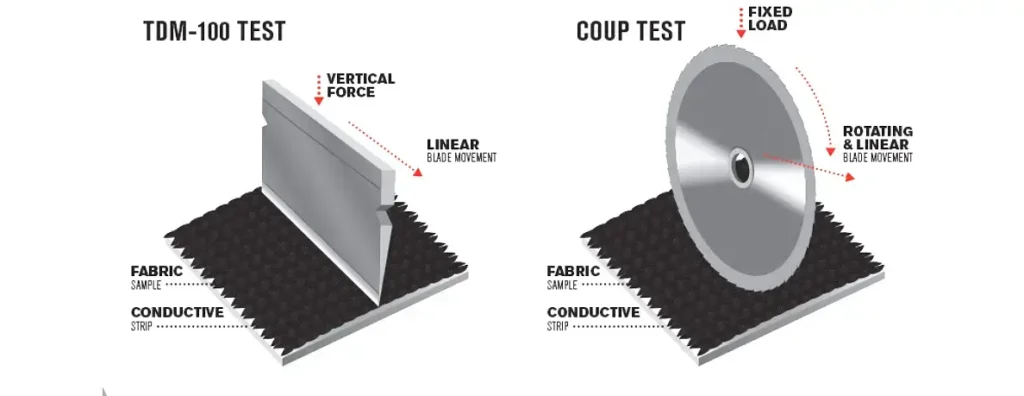
The EN 388 Coup test evaluates cut resistance using a counter-rotating circular blade that moves repeatedly across the test specimen under a specified load. The result is reported as a cut index from level 1 to level 5, or as X where a usable classification is not reported.
The cut index compares the blade’s performance on the glove material with its performance on a reference material. A higher index means that more repeated blade movement was required to cut through the tested specimen under the laboratory procedure.
Some modern cut-resistant materials contain hard fibres or components that can dull the circular blade during the test. Where blade dulling affects the reliability of the Coup result, the ISO 13997 TDM cut-resistance result becomes the more relevant reference, and the second EN 388 rating position may be shown as X.
The Coup test should not be described as incorrect or obsolete. It remains one of the EN 388 test methods, but it represents a repeated circular-blade action under defined conditions. It must not be directly converted into an ISO 13997 A–F result because the two methods measure cut resistance differently and their performance levels are not correlated.
Safety note: Higher tear resistance is not automatically preferable in every workplace. Where a glove could become caught in rotating or moving machinery, a material that resists tearing may increase the entanglement hazard. Glove selection must follow the machinery risk assessment and applicable safe-working procedures.
Level F is not the highest overall EN 388 rating. It is only the highest classification for the ISO 13997 cut-resistance position. Abrasion, Coup cut, tear, puncture and optional impact performance must still be evaluated separately.
Standards-version note: ISO currently lists ISO 13997:2024 as the current standalone edition of the cut-test method. However, EN 388:2016+A1:2018 contains a dated normative reference to EN ISO 13997:1999. The A–F values shown here are the classification thresholds specified within EN 388 for interpreting its glove marking.
EN 388:2016 introduced more detailed cut-resistance reporting than EN 388:2003. The revision retained the Coup blade-cut test, added an independent ISO 13997 cut-resistance classification from A to F, addressed blade dulling more clearly and introduced an optional P impact marking. The A1:2018 amendment forms part of the current designation, EN 388:2016+A1:2018.
Under EN 388:2003, the marking contained four numerical positions for abrasion, Coup blade cut, tear and puncture. The revised marking contains five principal positions—adding ISO 13997 cut resistance—followed by an optional P when the applicable impact requirement is achieved.
Choose an EN 388 rating by identifying the actual mechanical hazards first and then comparing the rating positions that correspond to those hazards. There is no universally best EN 388 code because abrasion, cut, tear, puncture and impact requirements differ between tasks. Grip, fit, dexterity, materials, glove condition and intended use must also be evaluated.
For welding work, mechanical ratings should not be assessed independently of heat and process-related risks. The guide to EN 388 vs EN 407 explains the difference between mechanical and thermal protection, while the complete guide to welding gloves covers glove types, materials, safety standards, care and buying considerations.
OSHA requires U.S. employers to base hand-protection selection on the glove’s performance characteristics relative to the work performed, workplace conditions, duration of use and identified hazards. An EN 388 code may support this assessment, but it does not replace it.
Machinery safety warning: Before selecting a tear-resistant glove for work near powered machinery, determine whether gloves may be worn at all. Gloves can become caught in drills, rotating shafts, conveyors and other moving parts, creating an entanglement hazard.
There is no single best EN 388 rating. The best rating is the combination that addresses the identified mechanical hazards while maintaining the fit, grip, dexterity, comfort and control required for the task.
For example, a glove with high cut resistance may still be unsuitable when it is too bulky for precise handling, lacks the necessary grip or does not address the task’s heat, chemical or electrical hazards. The complete glove—not one rating character—must be assessed.
No. A higher result in one EN 388 test does not make a glove superior in every respect. Higher protection may involve thicker or more complex materials that can reduce tactile sensitivity, flexibility or dexterity. The correct goal is appropriate protection for the identified hazard, not the highest possible rating in every position.
A glove should also fit properly and allow the wearer to control tools and materials safely. OSHA notes that PPE should be appropriately designed, maintained and fitted because poor fit can reduce its effectiveness.
EN 388 evaluates the mechanical-performance component of a welding glove, including abrasion, blade-cut, tear, puncture, ISO 13997 cut resistance and optional impact protection. It does not by itself establish protection against welding heat, flame, sparks, spatter or molten metal, and an EN 388 rating alone does not confirm that a glove is suitable for welding.
No. EN 388 alone is not enough to establish welding-glove suitability. It addresses mechanical hazards, while welding-glove selection must also consider thermal exposure, welding spatter, glove construction, cuff coverage, dexterity, fit and the welding-specific requirements addressed by EN 12477.
A welding glove may have strong mechanical ratings but still be unsuitable for a particular process when it lacks the required heat protection, dexterity or coverage. Similarly, a thermally protective glove may not provide the cut, puncture or abrasion performance required for material handling and fabrication.
For a detailed explanation of mechanical and thermal glove performance, see EN 388 vs EN 407.
These standards perform different roles and should not be treated as interchangeable:
EN ISO 21420:2020+A1:2024 establishes general requirements for protective-glove design, construction, innocuousness, comfort, efficiency, marking and manufacturer information, but it does not independently classify protection against a specific hazard.
EN 407:2020 addresses thermal risks involving heat and/or fire. However, BSI states that EN 407 does not itself apply as the standalone standard for welding gloves because welders’ gloves have their own specific standard. EN 12477 is the welding-specific standard.
Standards-status note: BSI currently lists BS EN 12477:2001 as current and under review and identifies its relationship to EN 12477:2001/A1:2005.
A welding-process name alone cannot determine the required EN 388 rating. The appropriate mechanical levels depend on the workpiece, sharp-edge exposure, material handling, fabrication and grinding tasks, impact risks and the workplace hazard assessment.
For example, TIG welding often prioritizes dexterity, but the workpiece may still present severe cut hazards. MIG and Stick/SMAW work may involve greater abrasion, rough material handling or spatter exposure, but this does not automatically prescribe a specific ISO 13997 A–F level.
EN 388 and ANSI/ISEA 105-2024 are different hand-protection classification systems. Both report mechanical-performance information, but their scope, test structures, rating scales and markings are not identical. Their classifications should therefore not be presented as direct certification equivalents.
ANSI/ISEA 105-2024 introduced standardized product labelling using a pentagon badge that displays cut, abrasion and puncture ratings. The cut rating appears at the top, abrasion on the left and puncture on the right; X may be shown where a classification was not tested or is not applicable.
Verify an EN 388 claim by matching the complete rating to the exact glove manufacturer, model, construction and supporting documentation. Review the glove marking, technical information, user instructions, applicable EU Declaration of Conformity, certificate and available laboratory evidence. An EN 388 rating shown on a webpage, catalogue or packaging should not be assumed to apply to every glove variation sold under the same brand.
A valid document is useful only when its manufacturer, product reference, rating, standard edition and scope match the glove being evaluated.
Verification rule: A genuine certificate or test report does not support a product claim unless its model number, construction, standard edition and rating match the exact glove being purchased.
EN 388 markings are frequently misinterpreted because the individual characters describe separate laboratory results, not one universal protection grade. Correcting these misunderstandings helps buyers avoid selecting gloves based on incomplete ratings, unrelated certificates or unsupported safety claims.